The area of a regular triangle—more commonly referred to as an equilateral triangle—is calculated using the formula Area = (√3 / 4) × s², where "s" represents the length of one side. Because all three sides of an equilateral triangle are of equal length and all internal angles are 60 degrees, this specific formula provides a streamlined method to determine the surface coverage without needing the height of the triangle.
Understanding the Geometry of Equilateral Triangles
In Euclidean geometry, a regular triangle, or equilateral triangle, occupies a unique position due to its high degree of symmetry. Unlike scalene or isosceles triangles, which may require more complex data points to determine their dimensions, the equilateral triangle is defined entirely by a single measurement: the side length.
The definition of a regular triangle dictates that all three sides have identical lengths and all three interior angles measure exactly 60 degrees. This property is mathematically significant because it allows us to derive a constant formula for area based solely on side length. By dividing an equilateral triangle into two right-angled triangles by dropping an altitude from one vertex to the midpoint of the opposite side, we create a 30-60-90 triangle. This geometric derivation is the foundation for the area formula used in modern mathematics.
Deriving the Area Formula
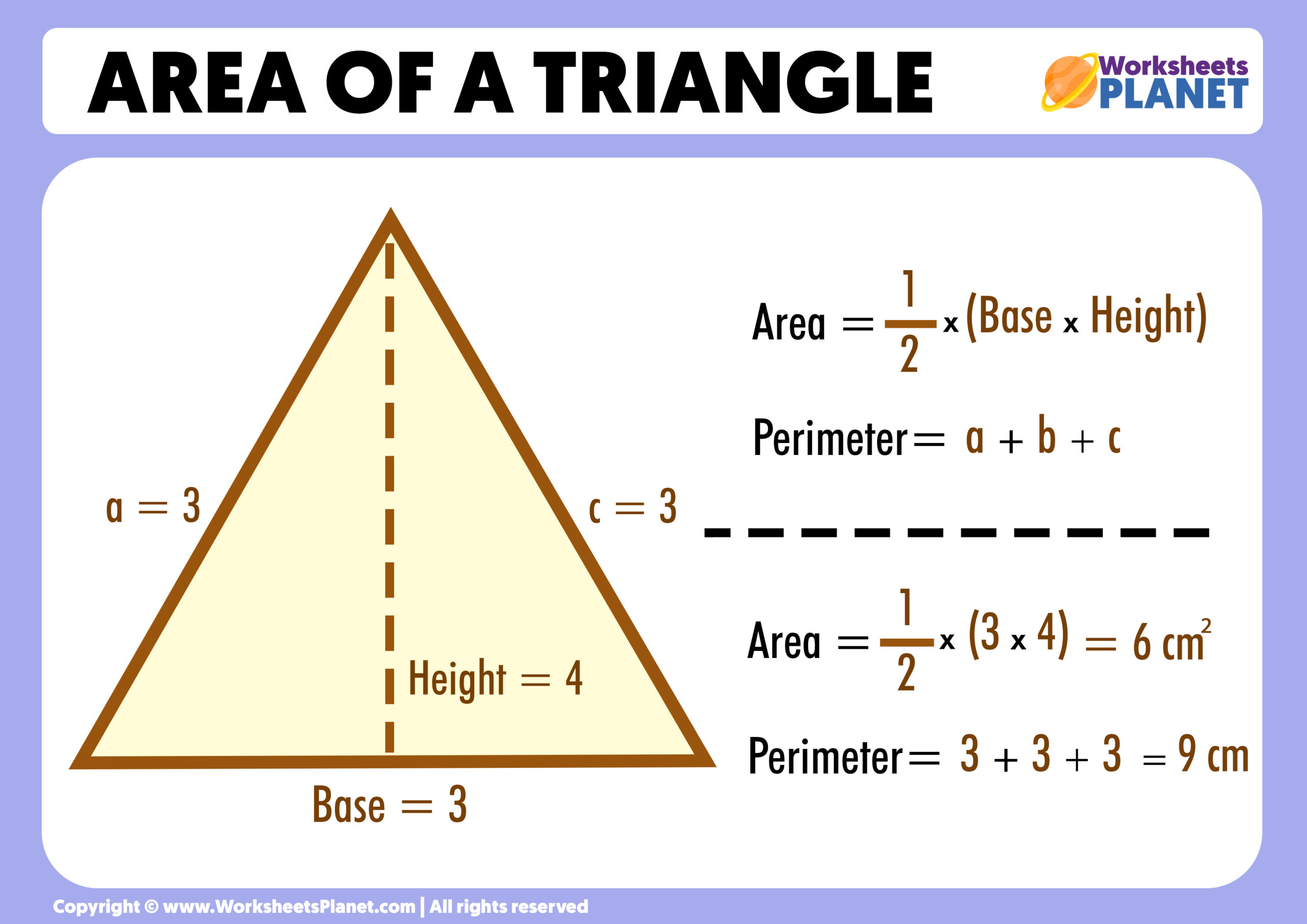
To appreciate why the formula (√3 / 4) × s² works, it is helpful to look at the relationship between the base and the height. The standard formula for the area of any triangle is:
Area = 1/2 × base × height
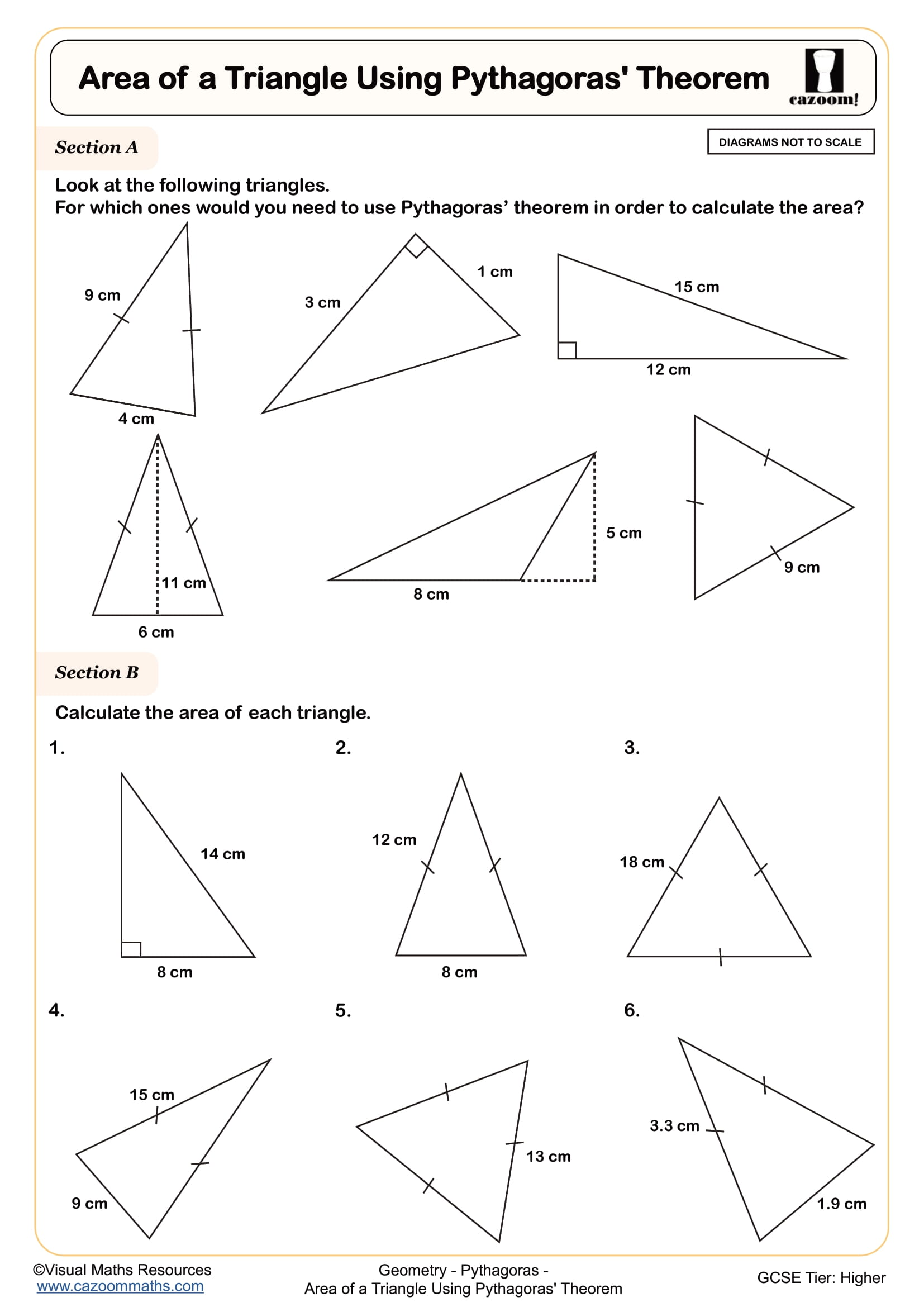
In an equilateral triangle where the base is "s," we need to find the height (h). By applying the Pythagorean theorem to one of the right triangles formed by the altitude, we know that:
(s/2)² + h² = s²
Solving for h: h² = s² - (s²/4) h² = 3s²/4 h = (s√3) / 2
Substituting this height back into the general area formula: Area = 1/2 × s × (s√3 / 2) Area = (s²√3) / 4
This derivation confirms that the area is always proportional to the square of the side length multiplied by a constant factor of approximately 0.433.
Practical Applications and Measurement
Knowing how to calculate the area of a regular triangle is essential across various professional and academic fields. In architecture and structural engineering, triangular geometry is often used in truss design for roofs and bridges, as the equilateral shape provides excellent load distribution. Understanding the area allows professionals to calculate the surface material requirements, such as the amount of glass for a triangular window or the quantity of steel sheeting for a gusset plate.
In fields such as interior design or landscaping, where geometric patterns are common, calculating the area of equilateral tiles or planting beds ensures accurate material procurement. Whether you are working with centimeters, meters, or inches, the formula remains constant; simply ensure that all measurements are converted into the same unit before performing the calculation to avoid errors in the final result.
Variables and Unit Consistency
One of the most frequent sources of error in geometric calculations is the mismatch of units. Before squaring the side length "s," verify that your unit of measure is consistent. If the side length is provided in meters, the resulting area will be in square meters. If the side length is in centimeters, the area will be in square centimeters.
When dealing with large-scale projects, such as site planning, converting units to a common baseline is a critical prerequisite. For example, if a design plan specifies one side in decimeters and another in meters, calculate the area only after converting both to the same standard metric or imperial unit. Using a calculator for the square root of 3 (approximately 1.732) is standard practice, but for precision-critical engineering tasks, keep the value in its radical form (√3) for as long as possible before converting to a decimal to minimize rounding errors.
Comparison of Methods
There are alternative ways to calculate the area of a triangle if you do not have the side length. Depending on the information available, you may use different trigonometric or geometric formulas.
| Given Information | Formula | Use Case |
|---|---|---|
| Side Length (s) | (√3 / 4) × s² | Most common for equilateral triangles. |
| Base (b) and Height (h) | 1/2 × b × h | General triangles or if height is measured. |
| Two sides and included angle | 1/2 × a × b × sin(C) | Trigonometric approach for non-equilateral. |
| Three side lengths (Heron's) | √[p(p-a)(p-b)(p-c)] | If the triangle is not perfectly equilateral. |
While Heron’s formula and the trigonometric approach are valid for any triangle, they are unnecessarily cumbersome for an equilateral triangle. Using the specific equilateral formula saves time and reduces the risk of calculation errors.
Common Mistakes and Troubleshooting
Even with a simple formula, errors can occur. Below are common pitfalls to avoid when calculating the area of a regular triangle:
- Forgetting to square the side length: A common mistake is multiplying the side length by (√3 / 4) before squaring it. Always square the side length first.
- Using the perimeter instead of the side length: Ensure you are using the length of a single side (s), not the perimeter of the triangle (3s). If you are given the perimeter, divide it by 3 to find "s" before proceeding.
- Incorrect decimal rounding: In manual calculations, rounding the square root of 3 to 1.7 can lead to a significant discrepancy in large-scale calculations. Aim for at least 1.732 or use the exact radical form.
- Height-Area Confusion: Students often confuse the height of the triangle with the side length. Remember that in an equilateral triangle, the height is always shorter than the side length by a factor of √3/2.
If your results seem consistently off, re-check your input values. If you are calculating the area of a physical object, verify that the corners are truly 60 degrees. If the angles vary even slightly, the object is not a regular triangle, and the formula (√3 / 4) × s² will provide an incorrect result.
Frequently Asked Questions
What if I only have the perimeter of the regular triangle? Divide the perimeter by 3 to find the side length. Once you have the side length, plug it into the area formula (√3 / 4) × s². For example, if the perimeter is 15 cm, the side length is 5 cm, and the area is (√3 / 4) × 25.
Can this formula be used for an isosceles triangle? No. This formula is specific to regular (equilateral) triangles. If the triangle is isosceles (two sides are equal), you must use the standard 1/2 × base × height formula or the Pythagorean theorem to find the height first.
Does the area change based on the orientation of the triangle? No. The area of a geometric shape is an invariant property. Rotation or reflection does not change the surface area of the triangle.
Why is the constant √3 / 4 used? This constant is derived from the height of an equilateral triangle, which is (s × √3) / 2. Since the area is 1/2 × base × height, the calculation results in (s × s × √3) / 4.
How accurate is the result if I use 1.732 for √3? Using 1.732 is generally sufficient for most school and construction applications. However, for high-precision engineering or computer-aided design (CAD), you should use the full calculator precision of √3 to ensure structural integrity.
Next Steps for Accuracy
To ensure the most accurate results for your specific project, follow these steps:
- Confirm that your triangle is truly equilateral by measuring all three sides.
- Ensure all measurements are in the same units.
- Use a high-precision calculator to perform the final multiplication.
- Verify your work by cross-referencing with the base-height formula (1/2 × base × height) if you have access to a reliable measurement of the triangle's height.
If you are working on a professional project, such as architectural planning or manufacturing, document your source measurements and the conversion factors used. This creates a transparent calculation trail that can be audited if adjustments to the design are required later in the 2026 project cycle.