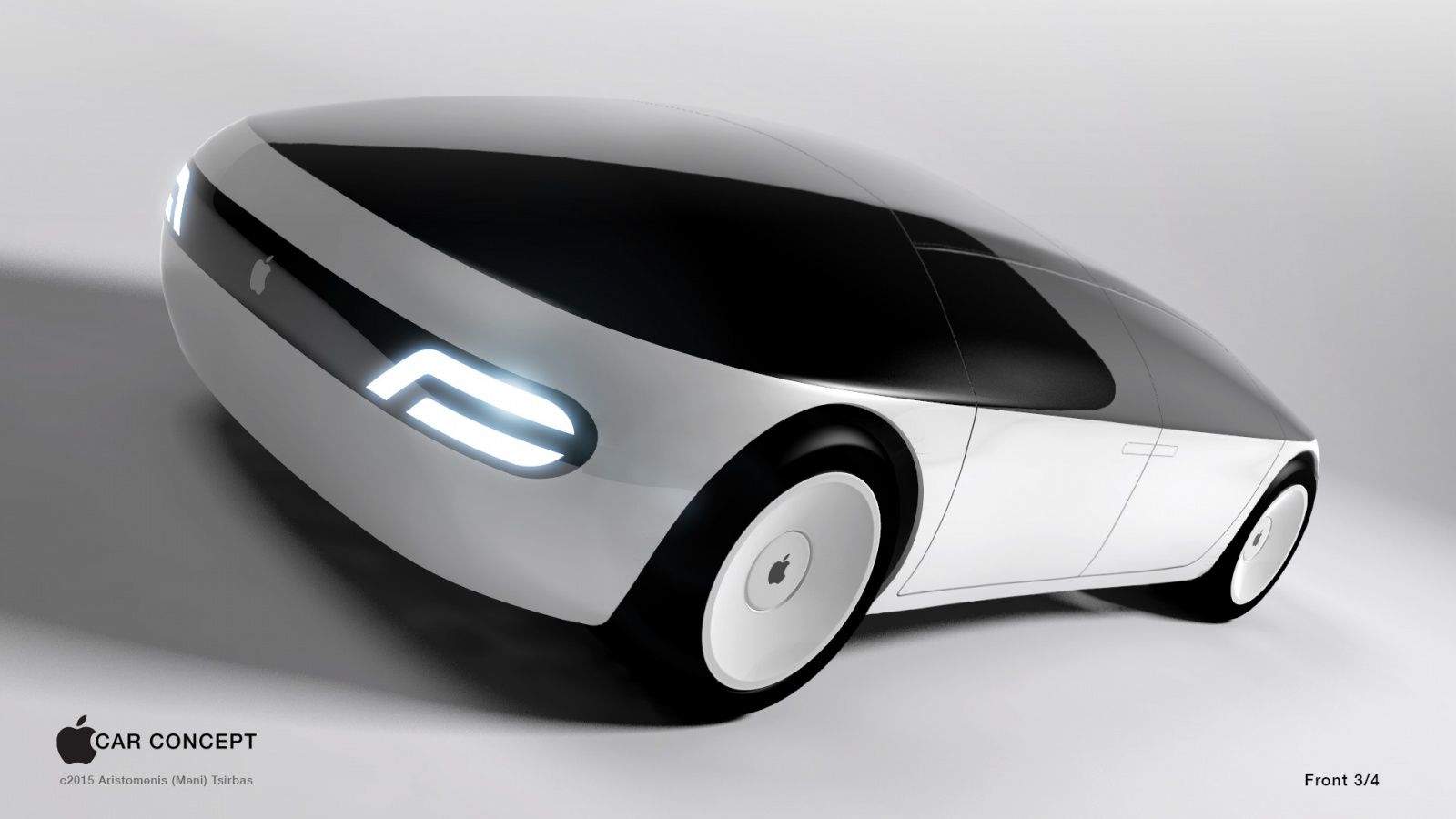
Apple’s self-driving car initiative, internally known as Project Titan, was a decade-long endeavor aimed at revolutionizing personal transportation through autonomous electric vehicle (EV) technology. Launched in 2014, the project saw numerous leadership shifts and strategic pivots before its official cancellation in February 2024. While a physical vehicle never reached consumers, the project’s legacy persists through Apple's advancements in artificial intelligence and the expansion of the CarPlay ecosystem.
The Genesis of Project Titan (2014–2015)
The seeds of Apple's automotive ambitions were planted shortly after the passing of Steve Jobs, but it wasn't until 2014 that CEO Tim Cook officially greenlit "Project Titan." At its inception, the goal was audacious: to build a fully autonomous electric vehicle from the ground up that would redefine the automotive industry much like the iPhone redefined mobile telephony.
During 2015, Apple began a massive hiring spree, poaching talent from Tesla, Ford, Mercedes-Benz, and battery technology companies like A123 Systems. At its peak, the project employed over 1,000 engineers and designers at a secret facility in Sunnyvale, California. The early vision focused on a "Level 5" autonomous vehicle—a car with no steering wheel or pedals, where passengers would sit in a lounge-like environment. This period was characterized by high optimism and a belief that Apple’s vertical integration of hardware and software could solve the immense complexities of robotic driving.
Leadership Shuffles and Strategic Pivots (2016–2018)
By 2016, the project encountered its first significant hurdles. Internal disagreements surfaced regarding the project’s direction: should Apple build a complete car or develop an autonomous driving platform to sell to other manufacturers? Steve Zadesky, the initial lead, departed the company, and retired Apple executive Bob Mansfield was brought back to oversee the team.
Under Mansfield, the focus shifted toward the underlying autonomous system rather than the physical vehicle. This led to a period of increased transparency regarding Apple’s testing efforts. In 2017, Apple received a permit from the California Department of Motor Vehicles (DMV) to test autonomous vehicles on public roads. These tests utilized a fleet of white Lexus RX450h SUVs outfitted with an array of LIDAR (Light Detection and Ranging) sensors, cameras, and radar units.
In 2018, the project saw another major leadership change when Doug Field, a former Apple executive who had spent several years as a top engineer at Tesla, returned to Cupertino. His arrival signaled a renewed interest in designing an actual vehicle, blending the software-first approach with high-end automotive engineering.
Testing, Acquisitions, and Refinement (2019–2021)
The years 2019 through 2021 were a mix of contraction and refinement for Project Titan. In early 2019, Apple laid off or reassigned nearly 200 employees from the team, which analysts interpreted as a "clearing of the decks" to focus on a more viable path forward. However, later that year, Apple acquired the autonomous driving startup Drive.ai, securing both intellectual property and additional engineering talent.
Technically, Apple’s testing data submitted to the California DMV showed a fluctuating "disengagement rate"—the frequency with which a human driver must take control. While Apple’s system was improving, it remained behind industry leaders like Waymo in terms of total miles driven and autonomous reliability.
By late 2020, leadership shifted again to Kevin Lynch, the executive credited with the success of the Apple Watch. Lynch’s appointment was seen as a move to bring a "product-focused" discipline to a project that had arguably spent years in a research-and-development loop. Under Lynch, reports surfaced that Apple was aiming for a 2025 or 2026 launch window, focusing on a high-end consumer vehicle priced around $100,000.
The Final Years and Cancellation (2022–2024)
As 2022 and 2023 progressed, the reality of the technical and economic challenges began to set in. Developing a car that was "Level 5" (fully autonomous in all conditions) proved more difficult than almost any tech company had anticipated. Apple eventually scaled back its ambitions to "Level 4" (full autonomy in specific conditions like highways) and eventually to "Level 2+" (advanced driver assistance similar to Tesla’s Autopilot).
The project faced a "make or break" moment in early 2024. The EV market had cooled significantly, and the capital expenditure required to bring a car to market—potentially billions more in manufacturing and supply chain logistics—was deemed too risky relative to the projected profit margins.
In February 2024, Apple officially announced internally that Project Titan would be wound down. Most of the 2,000 employees remaining on the team were moved to Apple’s Generative AI division. This pivot reflected the company’s strategic realization that while a physical car might not be the future of Apple, the artificial intelligence required to drive one would be the foundation of the next decade of consumer technology.
Historical Timeline of Key Milestones
| Year | Phase | Key Development |
|---|---|---|
| 2014 | Initialization | Tim Cook approves "Project Titan" with a 1,000+ member team. |
| 2015 | Expansion | Aggressive hiring from Tesla and traditional automotive OEMs. |
| 2017 | Public Testing | Apple receives California DMV permit for autonomous SUV testing. |
| 2018 | Leadership Shift | Doug Field returns from Tesla to lead the hardware/software integration. |
| 2019 | Consolidation | Acquisition of Drive.ai; restructuring of the Titan workforce. |
| 2021 | Product Focus | Kevin Lynch takes over; target for a 2025 consumer launch set. |
| 2023 | Strategy Pivot | Downscaling of autonomy goals from Level 5 to Level 2+/4. |
| 2024 | Termination | Official cancellation of the project; shift toward Generative AI. |
Technical Challenges: Why Autonomy is Hard
The failure of the Apple Car to reach production was not due to a lack of resources, but rather the sheer complexity of "edge cases" in autonomous driving. Apple’s high standards for safety and brand reputation meant they could not release a product that was only "mostly" safe.
- Sensor Fusion: Coordinating data from LIDAR, radar, and cameras in real-time requires immense processing power. Apple developed custom silicon for this, yet the software required to interpret "noisy" environments (like heavy snow or unpredictable human behavior) remained elusive.
- Mapping and Localization: Autonomous vehicles require high-definition maps that are accurate to the centimeter. Keeping these maps updated globally presents a massive logistical hurdle that few companies, other than perhaps Google (Waymo), have managed to scale.
- Regulatory Landscape: Unlike smartphones, cars are subject to stringent, fragmented federal safety standards. The lack of a clear regulatory framework for steering-wheel-less vehicles in the United States and Europe significantly hampered Apple's original design vision.
The Legacy of Project Titan in 2026
Standing in 2026, the influence of the Apple Car project is still visible, even without a physical vehicle. The billions spent on R&D were not entirely lost; they paved the way for several current technologies.
Advanced CarPlay (CarPlay 2.0)
Apple transitioned many of its vehicle interface designs into the next-generation CarPlay. This system now takes over every screen in a vehicle, including the instrument cluster and climate controls. By partnering with manufacturers like Porsche and Aston Martin, Apple has achieved "software-only" dominance in the vehicle cabin, avoiding the low-margin risks of manufacturing hardware.
Apple Intelligence and Computer Vision
The machine learning algorithms developed for detecting pedestrians and predicting traffic patterns were repurposed for Apple Intelligence. The spatial computing capabilities seen in the Vision Pro headset also owe a debt to the LIDAR and depth-sensing research conducted during the Titan years.
The Talent Ripple Effect
The dissolution of Project Titan led to a massive influx of experienced autonomous systems engineers into other sectors. Many former "Titan" engineers now lead AI startups or have bolstered the autonomous divisions of traditional automakers, accelerating the industry as a whole.
Frequently Asked Questions
Can I still buy an Apple Car?
No. Apple officially canceled its autonomous car project in February 2024. The company does not manufacture or sell a physical vehicle. Instead, Apple focuses on the "CarPlay" software experience and providing AI-driven services to existing automakers.
Why did Apple stop working on the car?
The decision was driven by two main factors: technical difficulty and economic viability. Achieving "Level 5" autonomy proved harder than expected, and the profit margins for manufacturing a physical car were significantly lower than Apple’s typical hardware margins (like the iPhone or Mac).
What happened to the people who worked on Project Titan?
A significant portion of the team was moved to Apple's Generative AI and Machine Learning departments. Others left for roles at companies like Waymo, Rivian, or Zoox. The move underscored Apple’s shift in priority toward competing in the rapidly evolving AI landscape.
Is Apple still testing autonomous software on roads?
As of 2026, Apple has significantly scaled back its public road testing compared to its 2018–2021 peak. While they may still maintain permits for specialized R&D, their focus has shifted toward refining the "user experience" inside other vehicles rather than the "driving" aspect itself.
How does the Apple Car project affect the current CarPlay?
The extensive research into cabin ergonomics, voice control (Siri), and sensor integration directly informed the "all-screen" version of CarPlay. This software allows users to have an Apple-designed dashboard in supported vehicles, providing a glimpse of what the Apple Car interface might have looked like.
Next Actions for Interested Consumers
If you were waiting for an Apple-branded vehicle, your best course of action in 2026 is to look toward vehicles that offer Next-Generation CarPlay support. Many high-end EVs and luxury sedans now allow for the deep integration of Apple’s ecosystem, covering everything from navigation to vehicle diagnostics. Additionally, following Apple’s developments in "Apple Intelligence" will provide insight into how the company is using its former automotive R&D to improve daily software interactions through vision and predictive AI.