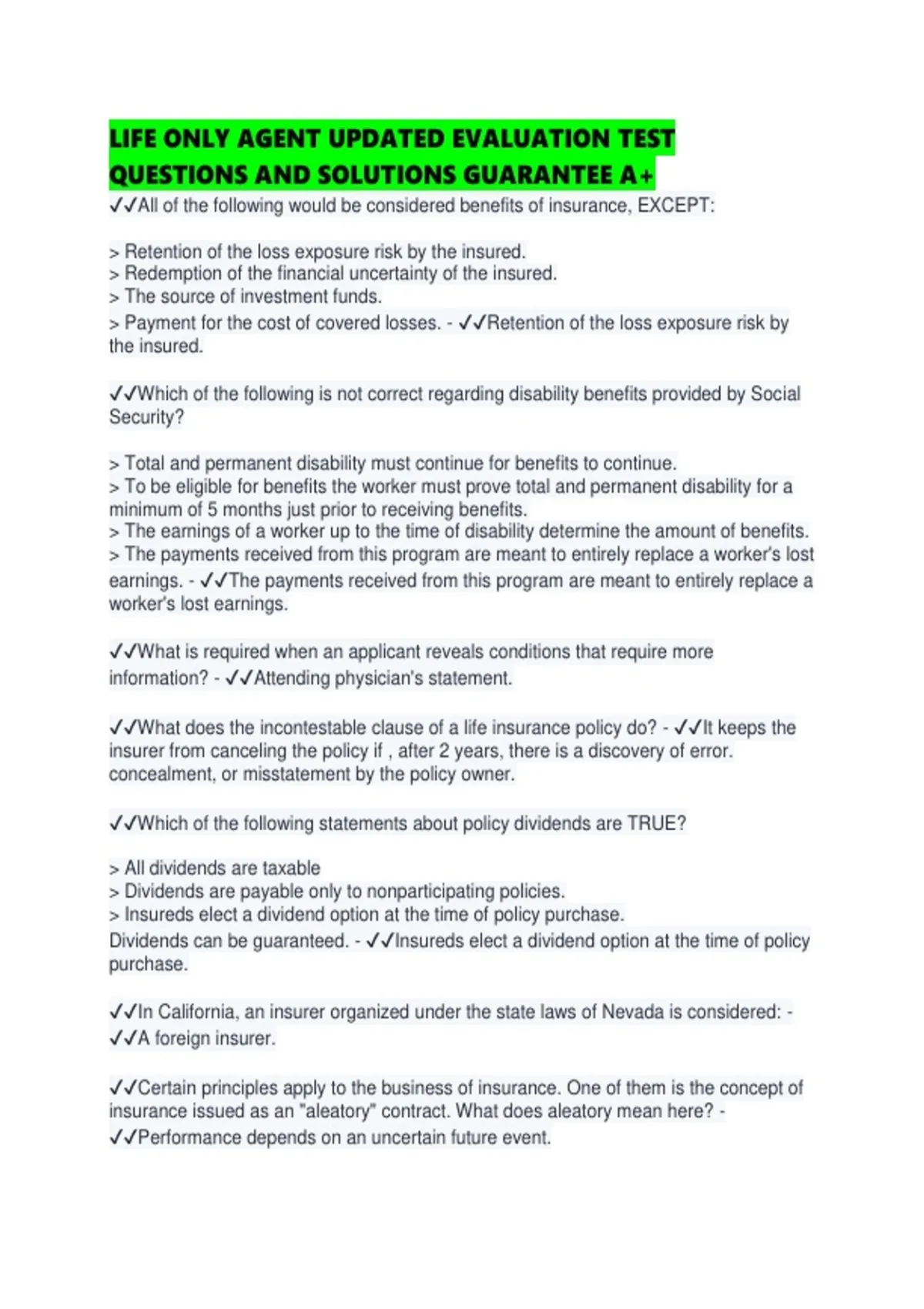
An applicant for a life-only agent license is an individual seeking legal authorization to solicit, negotiate, or effectuate life insurance and annuity contracts. In the 2026 regulatory environment, this process requires completing mandated pre-licensing education, passing a state-proctored examination, submitting a formal application to the Department of Insurance, and undergoing a comprehensive background check.
The term "applicant" in the context of life insurance frequently refers to two distinct entities depending on the situation: the individual seeking a professional license to sell insurance, or the consumer applying for coverage through such an agent. Navigating the requirements for either role requires a precise understanding of state insurance codes, fiduciary responsibilities, and the specific limitations of the "life-only" designation.
Defining the Life-Only Agent in 2026
A life-only agent is a specialized insurance professional authorized to transact insurance coverage on human lives, including benefits of endowment and annuities. Unlike a full "Life, Accident, and Health" agent, a life-only agent is restricted from selling disability income, long-term care, or medical expense insurance. This specialization allows agents to focus deeply on the complexities of estate planning, wealth transfer, and mortality-based risk management.
As of 2026, the distinction remains a cornerstone of professional licensing in jurisdictions like California and others following the National Association of Insurance Commissioners (NAIC) guidelines. For the applicant, this means the scope of the examination and the subsequent professional practice are confined strictly to life products. This includes term life, whole life, universal life, and various annuity structures. However, unless the agent also holds a Series 6 or Series 7 securities license, they are generally prohibited from selling variable life products, which are tied to the performance of the stock market.
The "applicant" status is a temporary legal phase. During this time, the individual is under scrutiny by state regulators to ensure they possess the requisite "character and fitness" to handle consumer funds and sensitive personal data. This scrutiny has intensified in 2026 due to the increased use of digital signatures and automated underwriting systems, which require agents to be even more vigilant against fraud and identity theft.
Prerequisites for the Life-Only Agent Applicant
Before a candidate can even submit an application to the state, several foundational requirements must be satisfied. These are designed to ensure that the agent enters the field with a baseline of technical knowledge and ethical grounding.
Pre-Licensing Education Requirements
Most states require a minimum number of classroom or certified online hours dedicated to life insurance concepts. In 2026, the standard remains approximately 20 hours of life-specific study, often supplemented by a mandatory 12-hour course on ethics and the local Insurance Code.
This education covers:
- General Insurance Principles: The concept of risk, insurable interest, and the law of large numbers.
- Policy Provisions: Grace periods, incontestability clauses, and suicide clauses.
- Taxation: The federal tax treatment of premiums, death benefits, and cash value accumulation.
- Annuities: The mechanics of immediate versus deferred annuities and their role in retirement.
The Examination Process
The life-only examination is a proctored, high-stakes test. Applicants must demonstrate proficiency in both general insurance knowledge and specific state statutes. In 2026, many jurisdictions have moved to a "competency-based" testing model that uses situational scenarios rather than simple rote memorization. An applicant must typically achieve a score of 70% or higher to move forward. If the applicant fails, there are often mandatory waiting periods before a retake is permitted, emphasizing the need for thorough preparation.
Background and Fingerprinting
Integrity is the most critical attribute of an insurance agent. All applicants must submit to live-scan fingerprinting. The state Department of Justice and the FBI review the applicant’s criminal history. Common grounds for denial include "crimes of moral turpitude," which include fraud, embezzlement, or perjury. Under 18 U.S.C. § 1033, individuals convicted of certain felonies involving dishonesty or breach of trust are federally prohibited from engaging in the business of insurance without a specific written consent from the Insurance Commissioner.
Step-by-Step Application Workflow
The transition from an applicant to a licensed agent follows a rigid sequence. Missing a single step can lead to significant delays in the ability to earn commissions or represent carriers.
- Completion of Education: Obtain a certificate of completion from an approved pre-licensing provider. This certificate is often valid for only 12 months.
- Examination Scheduling: Register through a third-party testing vendor (such as PSI or Pearson VUE). In 2026, remote proctoring via secure home environments is a standard option for most applicants.
- Submission of Formal Application: This is usually done via the National Insurance Producer Registry (NIPR) or the specific state’s Department of Insurance portal.
- Payment of Fees: Application fees vary by state but generally range from $150 to $200 for a two-year licensing period.
- Carrier Appointment: Holding a license does not allow an agent to sell products immediately. The agent must be "appointed" by an insurance company. The company files a notice with the state affirming that the agent is authorized to represent them.
The Consumer as the Applicant
When the term "applicant" refers to the consumer seeking a policy from a life-only agent, the context shifts to the underwriting and legal formation of the insurance contract. In this scenario, the applicant is the person requesting coverage, who may or may not be the "insured" or the "owner."
The Application as a Legal Document
The application is the primary source of information used by insurance company underwriters to determine risk. It is divided into several parts:
- Part 1: General Information: Name, age, gender, occupation, and beneficiary designations.
- Part 2: Medical History: Detailed questions regarding past illnesses, surgeries, and family health history.
- Part 3: Agent’s Report: The agent’s observations of the applicant and the source of the premium funds.
In 2026, "accelerated underwriting" has become the norm. For many applicants, a physical medical exam (paramedical) is no longer required if their data profile—including pharmacy records and credit-based insurance scores—meets certain criteria. However, the applicant remains legally responsible for the "utmost good faith" (uberrimae fidei) of their disclosures. Material misrepresentations can lead to a rescission of the policy within the first two years (the contestability period).
Comparison of License Scopes (2026 Standards)
The following table outlines the differences in authority for various agent license types, helping applicants understand the boundaries of their professional reach.
| License Type | Life Insurance & Annuities | Disability Income | Long-Term Care (LTC) | Health/Medical Expense |
|---|---|---|---|---|
| Life-Only Agent | Yes | No | No | No |
| Accident & Health Agent | No | Yes | Yes (with training) | Yes |
| Full Life, Accident & Health | Yes | Yes | Yes (with training) | Yes |
| Variable Contracts (Add-on) | Yes | No | No | No |
Challenges and Troubleshooting for the Applicant
The path to licensure or policy issuance is rarely without hurdles. Understanding common pitfalls can help an applicant navigate the process more efficiently.
Licensing Delays
The most frequent cause of delay for an agent applicant is an incomplete background disclosure. Applicants often mistakenly believe that "expunged" records do not need to be reported. However, for licensing purposes, most Departments of Insurance require the disclosure of every arrest and conviction, regardless of the final legal disposition. Failing to disclose a minor incident from years ago can be interpreted as a "material misstatement" on the application, leading to an automatic denial.
Examination Failure
The life-only exam has a high technical barrier. Applicants often struggle with the "Taxation of Life Products" and "Annuity Non-forfeiture Options." In 2026, many states have introduced "Proportionality Questions" where several answers might be technically correct, but the applicant must choose the best answer according to the specific scenario.
Policy Underwriting Issues
For the consumer applicant, the most common hurdle is "Medical Impairment." If an applicant is rated as "Substandard," the premiums will be higher than the initial quote. In 2026, agents are encouraged to use "field underwriting" to manage client expectations, checking height/weight charts and tobacco usage before submitting the formal application to avoid surprises.
Ethics and Fiduciary Duties in 2026
The role of a life-only agent has shifted toward a more fiduciary-like standard. While not all agents are legally "fiduciaries" (unless they are also Investment Advisers), the 2026 regulatory landscape demands that agents act in the "Best Interest" of the consumer. This means an agent cannot recommend a policy solely because it pays a higher commission if a lower-cost or more suitable product is available.
For the applicant, this means the training process must emphasize:
- Suitability: Ensuring the policy's face amount and premium structure match the client’s financial goals.
- Full Disclosure: Explaining the limitations of a policy, such as surrender charges on annuities or the lack of cash value in term life.
- Replacement Rules: If an applicant is replacing an existing policy, the agent must provide a "Notice Regarding Replacement" to ensure the consumer isn't losing valuable benefits or restarting a contestability period unnecessarily.
Frequently Asked Questions
What happens if a life-only agent tries to sell a health insurance policy?
Transacting insurance outside the scope of one's license is a serious regulatory violation. The agent may face administrative fines, license suspension, or revocation. Furthermore, the insurance carrier may refuse to honor the contract, and the agent could be held personally liable for any claims that should have been covered.
How long does it take to become a life-only agent in 2026?
From the start of pre-licensing education to the issuance of the license, the process typically takes between 4 to 8 weeks. This timeline depends heavily on the speed of the background check and the availability of examination slots. Digital licensing in 2026 has reduced the administrative "wait time" significantly compared to previous decades.
Can a life-only agent sell "Variable Universal Life" (VUL)?
Not with a life-only license alone. Because VUL policies involve underlying investment sub-accounts that fluctuate with the market, they are considered securities. An applicant must hold both the state life-only license and a federal registration with FINRA (Financial Industry Regulatory Authority), typically a Series 6 or Series 7.
Does an applicant need a physical office to get a license?
In 2026, many states allow for "virtual offices." However, the applicant must provide a "Business Address of Record" to the Department of Insurance. This address is public information and is where legal service of process would occur. It can be a home office, provided it meets local zoning and state insurance department regulations.
What is the "Free Look" period for a policy applicant?
The Free Look period is a consumer protection right that allows a policy applicant to review the issued policy and return it for a full refund of all premiums paid. In 2026, the standard is usually 10 to 30 days, depending on the state and whether the applicant is a senior citizen. This period begins only after the policy is physically or electronically delivered to the owner.
Are continuing education (CE) requirements different for life-only agents?
Yes. A life-only agent must typically complete 24 hours of CE every two years. At least 3 of those hours must be dedicated specifically to ethics. Some states also require specific "Annuity Training" or "Life Settlement" modules if the agent intends to transact those specific products.
Practical Recommendation
For those embarking on the journey of becoming a life-only agent, the key to success lies in meticulous documentation. Ensure that every educational certificate is saved digitally and that every detail of your background—no matter how minor—is disclosed on the initial application. For consumers applying for a policy, transparency is equally vital. In the age of AI-driven underwriting, discrepancies between your application and your digital footprint can lead to higher rates or immediate denials. Consult the National Association of Insurance Commissioners (NAIC) for the most current multi-state standards and reciprocity agreements if you plan to operate in more than one jurisdiction.