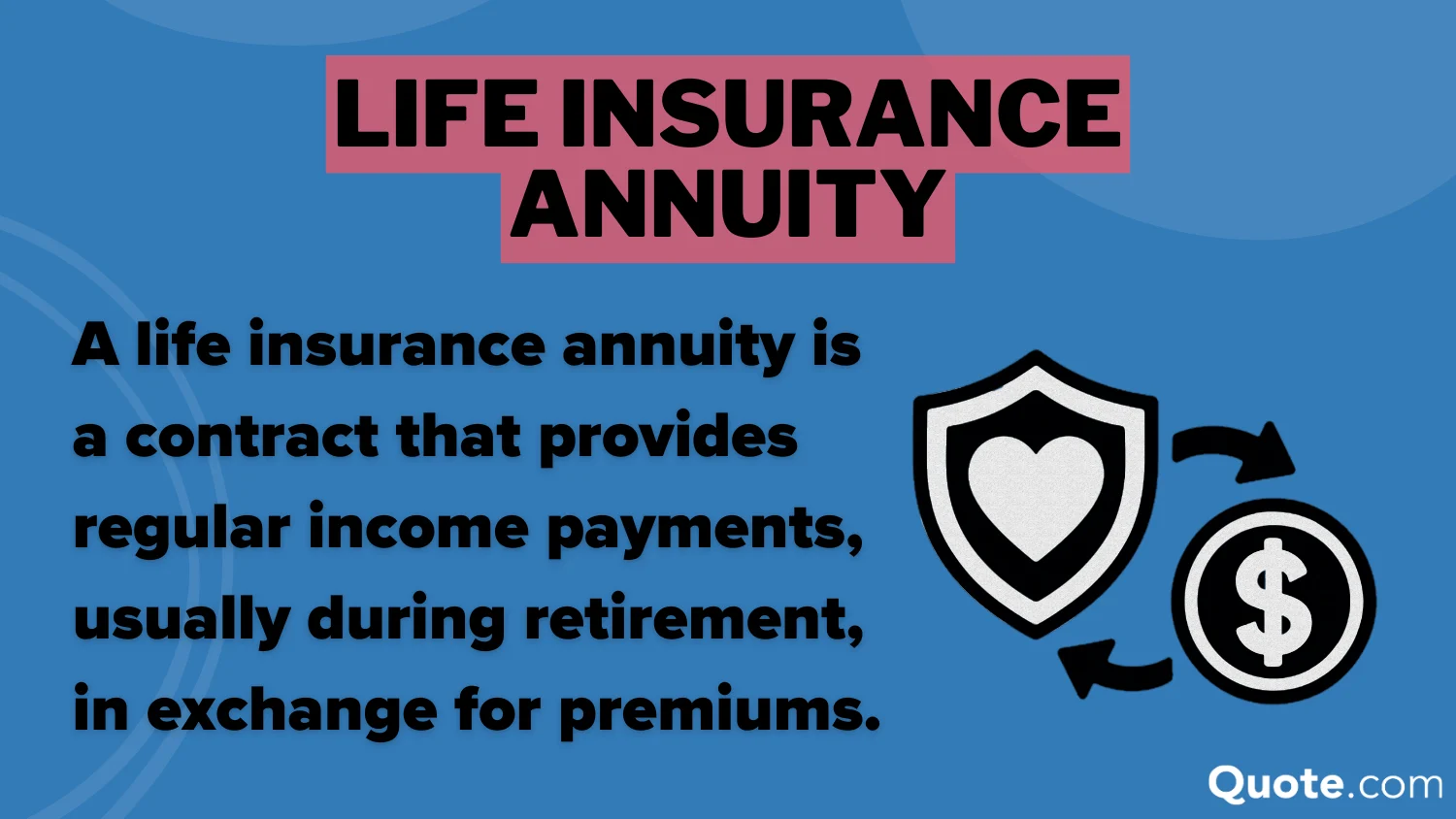
Determining if an annuity integrated into or attached to a life insurance policy is worth it depends on whether your primary objective is death benefit protection or guaranteed lifetime retirement income. While these products offer tax-deferred growth and potential longevity protection, they often come with high administrative costs, complex surrender charges, and limited liquidity that may not suit every financial profile.
Understanding the Intersection of Life Insurance and Annuities
At their core, life insurance and annuities serve opposite financial functions. Life insurance is designed to protect your beneficiaries against the risk of premature death, providing a lump-sum payout to mitigate financial loss. Conversely, an annuity is a retirement tool designed to protect the policyholder against the risk of outliving their assets by providing a stream of income during their later years.
When individuals ask if an annuity "in" a life insurance policy is worth it, they are often referring to one of two scenarios: purchasing a hybrid product (like a combination life and long-term care policy with an annuity rider) or utilizing the cash value of a permanent life insurance policy to purchase an annuity later in life. Understanding this distinction is the first step in determining if these instruments align with your financial goals.
The Mechanism of Hybrid Financial Products
In the current 2026 marketplace, insurance carriers often package various riders to create "multipurpose" policies. A common example is a permanent life insurance policy—such as Whole Life or Universal Life—that includes riders allowing for the conversion of cash value into an income stream.
The appeal of these products lies in their perceived efficiency. By paying a single premium or a series of premiums, you secure a death benefit for your heirs while maintaining the option to pivot toward a retirement income stream if your financial situation changes. However, this flexibility typically comes at a premium. The administrative costs, agent commissions, and mortality and expense charges embedded in these products can be significantly higher than if you were to manage life insurance and retirement savings as separate, independent vehicles.
Analyzing the Cost-Benefit Equation
To evaluate whether these products are "worth it," you must break down the internal costs of the policy. Most insurance contracts carry a "surrender charge" period—a timeframe, often lasting 7 to 15 years, during which you will pay a significant financial penalty if you cancel the policy or withdraw your funds prematurely.
Furthermore, the "cost of insurance" (COI) increases as you age. If you hold a permanent life insurance policy for decades, the portion of your premiums allocated to maintaining the death benefit may grow, potentially eroding the cash value that you had hoped to eventually convert into an annuity. Before committing to such a policy, you should request a formal "in-force illustration" from your provider. This document projects the future performance of your cash value based on current interest rates and fees, providing a clearer picture of whether the product will realistically meet your income needs.
Comparing Standalone Products vs. Bundled Policies
The most common mistake consumers make is assuming that bundled products are inherently more efficient. In practice, separating your life insurance and your annuity often provides greater control and lower costs.
| Feature | Standalone Life Insurance | Standalone Annuity | Bundled/Hybrid Policy |
|---|---|---|---|
| Primary Goal | Death Benefit / Legacy | Retirement Income | Mixed / Flexible |
| Liquidity | High (Policy Loans) | Low (Surrender Charges) | Variable / Restrictive |
| Management | Independent | Independent | Integrated |
| Fees | Lower / Transparent | Moderate | Higher / Complex |
By keeping these products separate, you can shop for the most competitive life insurance rates based on your health profile and select an annuity that offers the best payout rates or specific features like inflation protection or long-term care integration. A bundled policy forces you to accept the internal fees and performance metrics of a single carrier, which may not be optimal for either component.
When Is a Hybrid Approach Actually Worth It?
Despite the potential for higher costs, there are specific scenarios where integrating these concepts proves beneficial.
- Estate Planning Efficiency: For high-net-worth individuals, using a life insurance policy to provide liquidity at death while using the cash value to supplement income can simplify the estate settlement process.
- Tax-Advantaged Growth: Both life insurance and annuities offer tax-deferred growth. For individuals who have already maximized contributions to 401(k)s, IRAs, and other qualified accounts, these policies can serve as an additional tax-sheltered vehicle for assets that would otherwise be held in taxable brokerage accounts.
- Simplified Management: Some policyholders prefer the convenience of having their death benefit coverage and their retirement income plan under one roof. For those who prioritize simplicity over absolute cost minimization, the convenience factor holds real, albeit subjective, value.
Prerequisites for Consideration
Before moving forward with any policy that combines insurance and annuity features, ensure you have completed the following due diligence:
- Verify your timeline: If you require access to these funds in under ten years, the surrender charges associated with most permanent life insurance and annuity contracts will likely make them a poor choice.
- Confirm your insurance need: Do not purchase a life insurance policy with an annuity component if you do not actually have a long-term need for a death benefit. The cost of the life insurance coverage acts as a "drag" on your investment return.
- Assess your health: Life insurance premiums are heavily dependent on your health profile. If you have significant health issues, the cost of the underlying life insurance may be prohibitively expensive, undermining the value of the entire package.
Common Pitfalls and Troubleshooting
The primary frustration reported by policyholders is the "underperformance" of the cash value relative to initial sales illustrations. It is important to remember that most projections are based on non-guaranteed interest rates. If the market underperforms, the insurer may lower the crediting rate on your policy, forcing you to pay more in premiums just to keep the policy from lapsing.
If you are already in a policy and feel it is not working as intended, do not simply cancel it. Cancellation often triggers a taxable event if the cash value exceeds the premiums paid. Instead, talk to a fee-only financial planner about a "1035 exchange," which allows you to move the cash value from one policy to another without triggering immediate income tax liability, provided the transaction meets specific IRS requirements.
Professional Advice Limitation
The financial products discussed herein are subject to state insurance regulations, which vary significantly by jurisdiction. Furthermore, the tax implications of withdrawing funds or converting a death benefit to an income stream can be complex and are highly dependent on your specific tax bracket and the structure of your policy. This article provides a conceptual framework for analysis; it does not constitute legal or tax advice. You should consult with a qualified, independent financial advisor who has a fiduciary obligation to your interests before making any changes to your insurance portfolio.
Frequently Asked Questions
Does a permanent life insurance policy automatically include an annuity? No. A permanent life insurance policy may have the option to convert cash value into an annuity, but it is not an automatic feature. You must verify that your specific contract contains a "settlement option" or a specific annuity rider that allows for this transition.
Will I pay taxes if I convert my life insurance cash value to an annuity? Generally, a 1035 exchange allows you to move funds from a life insurance policy to an annuity tax-free. However, if you withdraw the cash value directly and then buy an annuity, you may be liable for income taxes on the "gain"—the difference between the cash value and the premiums you paid into the policy.
Can I get a fixed income stream from any life insurance policy? No. Only permanent policies with a cash value component can support an annuity-like income stream. Term life insurance policies provide death benefit coverage only for a set period and do not accumulate cash value, meaning they cannot be converted into an annuity.
Are the annuity rates inside an insurance policy competitive? Often, no. Insurance companies may offer lower payout rates on internal conversions compared to standalone annuities sold on the open market. It is important to compare the proposed income stream against quotes for a Single Premium Immediate Annuity (SPIA) from several top-rated carriers.
How do I find out the current cash value of my policy? Log into your insurance provider's online portal or call their customer service department to request an "in-force illustration." This report will detail your current cash value, the death benefit, the annual costs, and projections for future performance based on current data.
Next Actions
If you are currently evaluating a proposal for a hybrid life insurance and annuity product, your next step should be to request a "ledger of costs." This document must explicitly detail every fee, including commissions, mortality charges, and administrative expenses. Once you have this, compare it against the cost of purchasing a term life insurance policy for the death benefit coverage you need and investing the difference in a separate retirement account or a standalone annuity. By performing this side-by-side comparison, you can mathematically determine if the convenience of a combined policy is worth the potential trade-off in higher costs and lower flexibility.