No, ants and termites are not the same. While they share certain similarities—such as living in organized social colonies and occasionally swarming—they belong to entirely different biological orders. Ants are closely related to bees and wasps within the order Hymenoptera, whereas termites are more closely related to cockroaches within the order Blattodea.
Understanding the Taxonomic Divide
The confusion between ants and termites is widespread, primarily because both insects are small, social, and frequently encountered in homes or yards. However, from a scientific perspective, the differences are profound.
Ants evolved from wasp-like ancestors millions of years ago. Their social structure is defined by a queen and specialized worker castes, all of which are female. They undergo complete metamorphosis, passing through four distinct stages: egg, larva, pupa, and adult. This developmental cycle is vastly different from that of termites, which undergo incomplete metamorphosis, moving directly from egg to nymph and finally to adult.
Termites, conversely, represent a specialized group of social cockroaches. Their ability to digest cellulose—the primary component of wood—is facilitated by symbiotic microorganisms in their gut, a trait they share with other wood-feeding insects but not with ants. Recognizing this phylogenetic distinction is the first step in identifying which insect you are dealing with on your property.
Morphological Comparison: How to Tell Them Apart
Identifying whether you have an ant infestation or a termite invasion requires a close look at physical characteristics. If you can catch a specimen, observing these three key anatomical features will allow for a definitive identification.
1. Antennae Shape
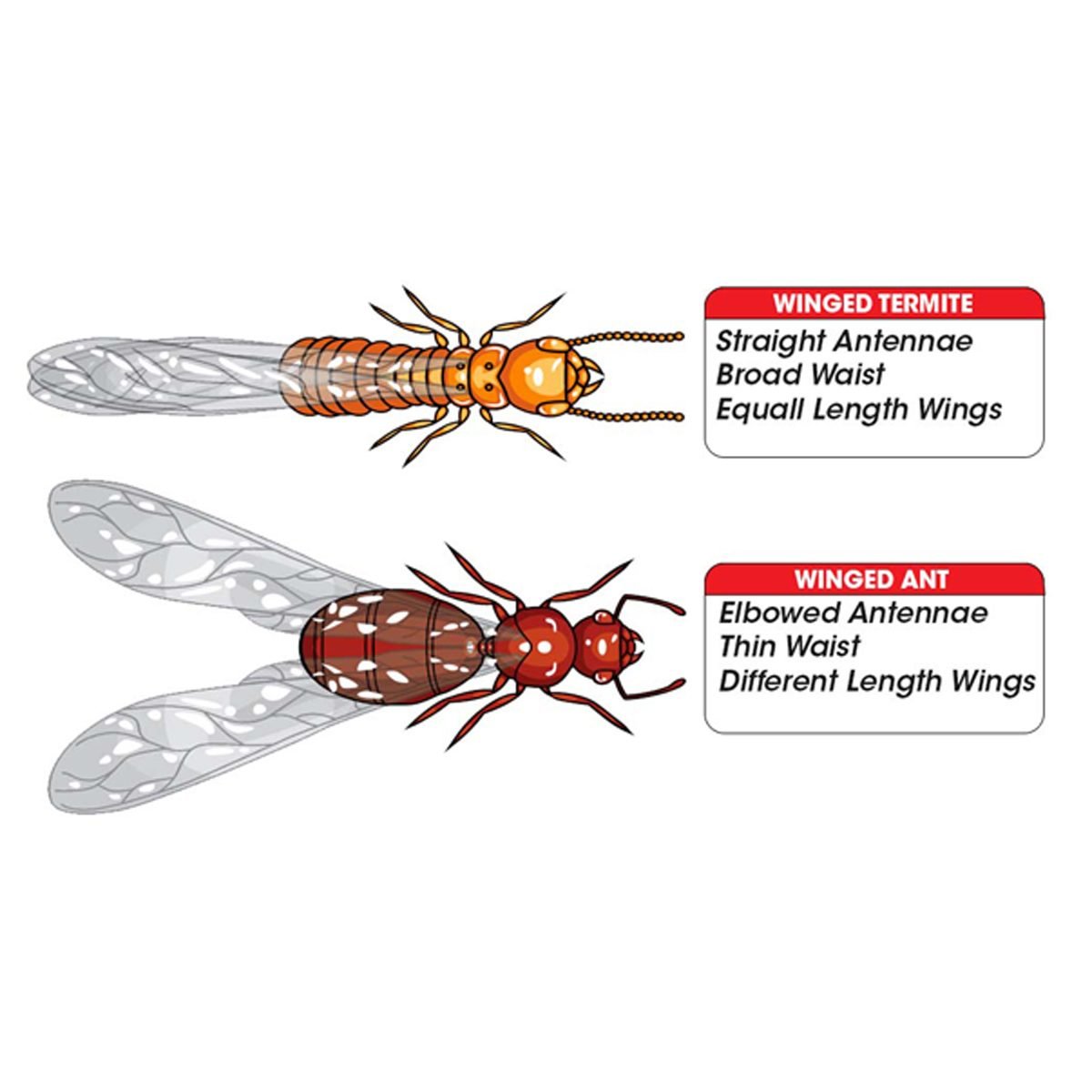
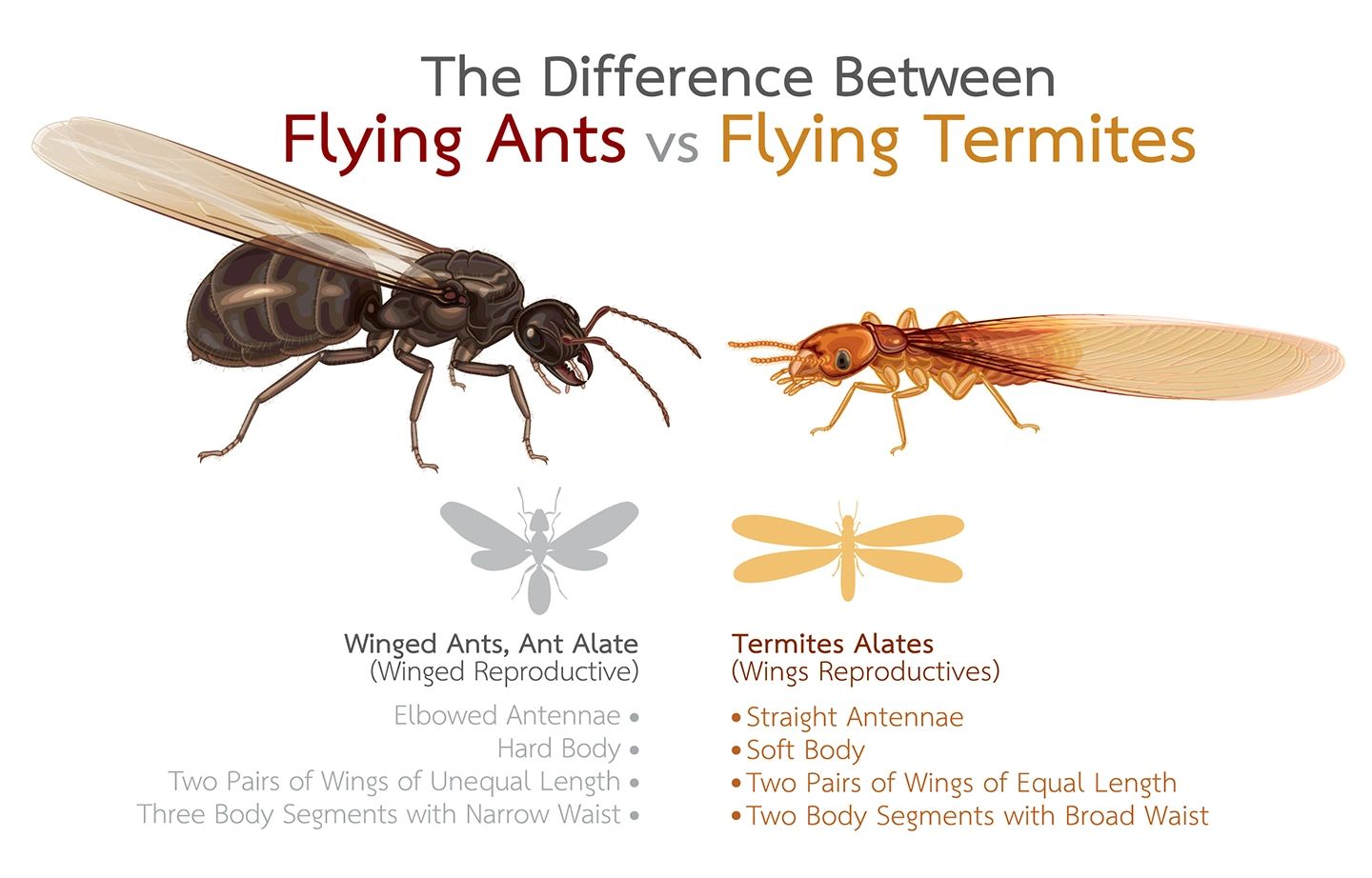
The most reliable way to distinguish the two is by looking at their antennae. Ant antennae are "elbowed," featuring a distinct bend or knee-like joint in the middle. Termite antennae are straight, appearing like a string of small, uniform beads that do not bend.
2. Waistline Structure
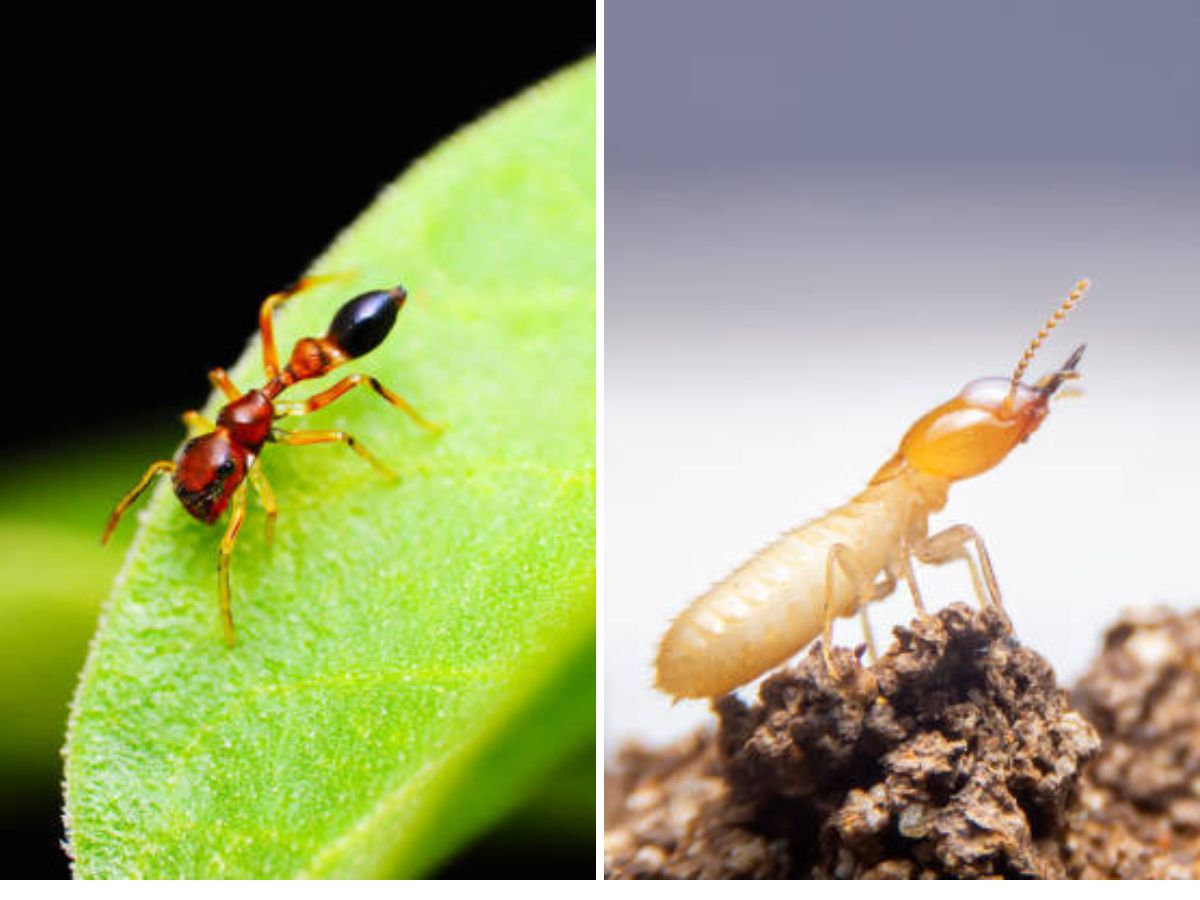
Ants have a very narrow, constricted waist (the pedicel) between their thorax and abdomen, giving them a segmented, hourglass-like appearance. Termites have a broad, thick waist, making their body appear essentially as one continuous section from head to tail.
3. Wing Characteristics
During swarming seasons, both ants and termites may produce winged reproductives. If you are looking at winged specimens, check the wing length and vein structure. Ants have two pairs of wings, with the front pair being significantly larger than the back pair. Termites, when they have wings, possess two pairs of wings of equal size and shape, which often extend well beyond the end of their bodies.
Behavioral and Ecological Roles
The environmental impact of these two insects varies significantly, which is why homeowners often view them with different levels of concern.
Ants are typically considered a nuisance pest. While certain species, such as carpenter ants, can cause structural damage by excavating galleries in wood for nesting, they do not consume the wood for nutrition. They prefer soft, damp, or decaying timber and are often a sign of existing moisture issues within a home.
Termites are "structural pests" in the truest sense. Because they feed on cellulose, they actively break down the structural integrity of houses, including joists, studs, and subflooring. Unlike ants, which are frequently seen foraging in kitchens or on countertops for food scraps, termites are secretive and avoid light. They build mud tubes—small, pencil-sized tunnels made of soil and saliva—to move safely between their underground colonies and their food source (your home).
Comparison Table: Ants vs. Termites
| Feature | Ants | Termites |
|---|---|---|
| Antennae | Elbowed (bent) | Straight (beaded) |
| Waist | Thin/constricted | Thick/broad |
| Wings | Front pair longer than back | All four wings equal in length |
| Diet | Varied (sugar, protein, crumbs) | Cellulose (wood, paper, plants) |
| Metamorphosis | Complete (larva/pupa stage) | Incomplete (nymph stage) |
| Structural Damage | Mostly nests in existing wood | Actively consumes and digests wood |
Why Misidentification Leads to Failed Treatments
One of the most common mistakes in pest control is applying the wrong treatment strategy. If you attempt to treat a termite infestation with common ant baits or spray, you will likely fail.
Ant baits are designed to be carried back to the colony to eliminate the queen. Termites, however, generally do not respond to these baits. Termite control usually requires professional-grade barrier treatments, baiting stations that specifically target termite social behavior, or wood-injection treatments. Treating a termite colony with an "ant spray" might kill a few foragers, but it will leave the thousands of termites remaining in the wall voids or underground, allowing the destruction of your home's structural components to continue unabated.
When to Consult a Professional
If you observe signs of wood damage, such as "sawdust" (frass) left by carpenter ants or mud tubes consistent with subterranean termites, it is often necessary to contact a licensed pest control professional.
By 2026, many professional services utilize advanced diagnostic tools, including thermal imaging and moisture meters, to locate nests behind walls without causing unnecessary damage to your home. Professionals can accurately identify the species—not just the insect type—which is critical because some species, like Formosan termites, require far more aggressive remediation efforts than native subterranean species.
Frequently Asked Questions
Can ants kill termites? Yes, ants are natural predators of termites. In some instances, they may attack and eat termite colonies. However, you should never rely on ants as a form of pest control, as their presence usually indicates their own search for nesting sites and food, which can lead to a secondary infestation problem.
Do all termites have wings? No, only the reproductive termites, known as "swarmers" or "alates," develop wings. These individuals leave the colony to mate and establish new colonies. Once they find a location, they shed their wings, meaning you might find discarded wings near windowsills or baseboards as a sign of an active infestation.
Why do ants swarm in my house? Ants typically swarm when the colony is mature and environmental conditions are right for mating. It is a reproductive event, not an indication that they are feeding on your home, but it is a clear sign that a large, established nest is nearby.
How do I know if the "dust" is from ants or termites? If you see a pile of debris, check the content. Carpenter ant frass usually looks like wood shavings and may contain parts of other insects. Termite frass (fecal pellets) often looks like tiny, uniform grains of sand or wood, depending on the species of termite, and is usually pushed out of small exit holes in wood.
Are flying ants the same as termites? People often confuse "flying ants" with termite swarmers. If you see them, focus on the wing structure: if the wings are unequal in size, it is likely an ant; if the four wings are identical in size and shape, it is a termite.
Final Recommendation
The most critical step in managing either insect is accurate identification. If you spot suspected termite activity, do not disturb the mud tubes or the wood surface, as this may cause the termites to abandon those specific tunnels and move to a more hidden area of your structure. Instead, take a clear, close-up photograph and reach out to a local professional to ensure the correct protocols are followed. Addressing the moisture source—such as leaky pipes or poor drainage—is your best long-term strategy for preventing both ant and termite issues.