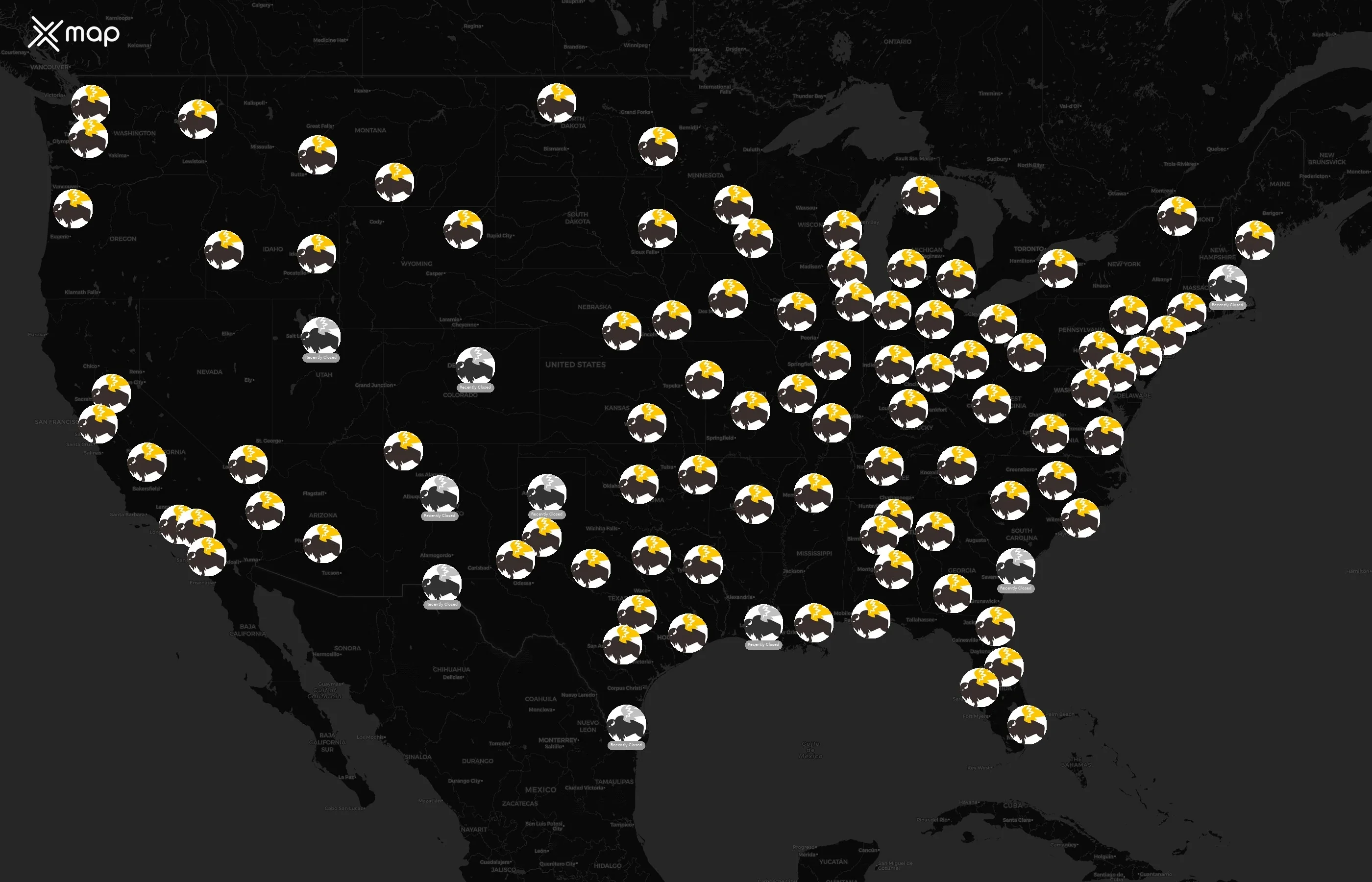
As of 2026, the American buffalo (Bison bison) is not legally listed as an endangered species under the United States Endangered Species Act (ESA). While the population has recovered significantly from its 19th-century low of fewer than 500 individuals, the species remains "ecologically extinct" across much of its historical range. Current conservation efforts focus on maintaining genetic purity and expanding wild, wide-ranging herds.
Understanding the Legal Status of Bison in the United States
The question of whether the American buffalo—more accurately called the American bison—is endangered requires a distinction between biological vulnerability and legal classification. As we stand in 2026, the United States Fish and Wildlife Service (USFWS) continues to classify the bison as a recovered species in terms of raw numbers, but one that requires active management to prevent a secondary decline.
In 2023, the USFWS conducted a comprehensive status review following petitions to list the plains bison as threatened or endangered. The agency concluded that listing was not warranted, citing the existence of over 400,000 bison across North America. However, conservationists argue that this figure is misleading. Of those 400,000 animals, approximately 90% are kept in commercial herds for meat production, where they are often interbred with cattle or managed as livestock rather than wildlife.
The "wild" population—those managed primarily for conservation and allowed to exhibit natural behaviors—numbers closer to 30,000. These animals are distributed among national parks, wildlife refuges, and tribal lands. While these numbers are stable, the species is "near threatened" according to the International Union for Conservation of Nature (IUCN) because of its reliance on human intervention for survival.
The Historical Collapse: From Millions to the Brink
To understand the current conservation status of the American buffalo, one must look at the unprecedented ecological catastrophe of the 19th century. In the early 1800s, an estimated 30 to 60 million bison roamed the North American continent, serving as the keystone species of the Great Plains ecosystem.
The collapse was driven by three primary factors:
- Market Hunting: The expansion of the railroad allowed hunters to ship bison hides and tongues to eastern markets and Europe. Industrial-scale slaughter became a lucrative, albeit short-lived, profession.
- Military Strategy: The U.S. government and military leaders recognized that the bison were the primary food source and cultural foundation for Indigenous Nations. By eliminating the buffalo, the government sought to force nomadic tribes onto reservations and settle the West for agriculture.
- Disease and Habitat Loss: Domestic cattle brought to the plains introduced new pathogens, while the fencing of the range for farming disrupted ancient migration routes.
By 1884, the wild population had plummeted to roughly 325 known individuals. The species survived only through the efforts of a few private ranchers and the protection of the newly formed Yellowstone National Park, where a tiny remnant herd escaped the final years of the Great Slaughter.
The Genetic Crisis and Cattle Introgression
One of the most significant technical challenges in 2026 bison conservation is "introgression"—the presence of domestic cattle DNA within the bison genome. In the late 1800s, early conservationists like Charles Goodnight and Buffalo Jones attempted to crossbreed bison with cattle to create "cattalo," hoping to produce a hardier beef animal. These experiments were largely failures, but they left a lasting legacy of cattle genes in almost all modern bison.
Today, federal agencies and tribal conservationists prioritize the protection of "pure" bison herds. The Yellowstone National Park herd is the most famous example of a population with no detectable cattle DNA. Maintaining these genetics is crucial because cattle genes can alter the bison's metabolism, reproductive cycles, and ability to survive harsh winters without human supplemental feeding.
Technological advancements in 2026 allow for rapid genomic testing, enabling managers to identify and remove introgressed individuals from conservation herds. This ensures that the evolutionary trajectory of the American buffalo remains distinct from domesticated livestock.
Challenges to Full Ecological Recovery
Despite the increase in numbers, the American buffalo faces three primary obstacles to becoming a fully functional wild species again: habitat fragmentation, disease management, and legal status.
Habitat Fragmentation
Bison are large-scale migrators. In a natural state, they move across hundreds of miles to follow the "green wave" of emerging grasses. In the modern United States, the landscape is crisscrossed by highways, fences, and private property. Most conservation herds are restricted to fenced "islands" of habitat, such as the Badlands or Wind Cave National Parks. This prevents natural dispersal and leads to overgrazing if populations are not artificially thinned.
The Brucellosis Conflict
Brucellosis is a bacterial disease originally introduced by European cattle that can cause miscarriages in livestock. A portion of the Yellowstone bison herd carries this disease. Although there are no documented cases of bison transmitting brucellosis to cattle in the wild (most transmissions come from elk), the cattle industry maintains strict regulations. This results in the "haze" or slaughter of bison that attempt to migrate out of Yellowstone National Park into Montana, severely limiting the expansion of the herd.
Livestock vs. Wildlife Classification
A major hurdle in bison restoration is their legal status. In many states, bison are classified as livestock, placing them under the jurisdiction of departments of agriculture rather than wildlife agencies. This classification prevents them from being managed like deer or elk and limits the ability of conservationists to establish free-roaming populations on public lands.
The Role of Tribal Nations in Restoration
Perhaps the most significant development in bison conservation over the last decade has been the leadership of Indigenous Nations. Organizations such as the InterTribal Buffalo Council (ITBC), which represents over 80 tribes, have been instrumental in returning "Buffalo" to tribal lands.
For many tribes, the restoration of the buffalo is not just an ecological goal but a cultural and spiritual "rematriation." In 2026, tribal herds represent some of the fastest-growing and most genetically diverse populations in the country. The Wolakota Buffalo Range on the Rosebud Sioux Reservation, for example, has become a model for large-scale bison restoration, blending traditional ecological knowledge with modern rangeland management.
Comparison of Management Strategies in 2026
The way bison are managed determines their long-term viability as a species. The following table compares the different types of herds currently found in the United States.
| Feature | Commercial Herds | Conservation Herds (Federal) | Tribal Herds |
|---|---|---|---|
| Primary Goal | Meat & Fiber Production | Biodiversity & Education | Cultural Sovereignty & Ecology |
| Genetic Purity | Low (Common cattle DNA) | High (Strictly monitored) | Increasing (Focus on pure strains) |
| Management Style | Intensive/Livestock | Semi-Wild/Managed | Ecological/Traditional |
| Population Size | ~370,000+ | ~20,000 | ~20,000 and growing |
| Roaming Ability | High-density paddocks | Large fenced parks | Large-scale open range |
| Legal Status | Livestock | Wildlife (Federal) | Sovereign Managed |
Bison as Ecosystem Engineers
Conservationists emphasize that "saving" the buffalo is about more than just numbers; it is about restoring a "keystone species." Bison are often called ecosystem engineers because of the way they physically alter the landscape:
- Wallowing: Bison roll in the dirt to shed fur and deter insects, creating depressions called wallows. These wallows collect rainwater, creating micro-habitats for amphibians and specific types of prairie flora that cannot survive in the thick sod elsewhere.
- Grazing Patterns: Unlike cattle, which tend to stay near water sources and overgraze specific areas, bison are constantly on the move. They prefer grasses over forbs (flowering plants), which allows wildflowers to thrive, supporting pollinators like bees and butterflies.
- Nutrient Cycling: The movement of bison herds distributes nutrients across the plains through manure, which fertilizes the soil and supports a complex web of insect life that feeds grassland birds.
Frequently Asked Questions (FAQ)
Is the American buffalo the same thing as a bison?
Yes. Scientifically, the animal is Bison bison. The term "buffalo" was applied by early European explorers who thought they resembled the water buffalo of Asia or the Cape buffalo of Africa. In the United States, "buffalo" is the culturally and historically accepted name, while "bison" is the preferred scientific term.
Can you still hunt bison in the United States?
Yes, but it is highly regulated. Some states, like Montana and Alaska, offer limited lottery-based tags for wild bison hunts. Additionally, many private ranches and some tribal nations offer managed hunts as a way to control population numbers and generate revenue for conservation programs.
Why aren't bison allowed to roam free like elk?
The primary reason is the conflict with the livestock industry, specifically regarding the fear of brucellosis transmission and competition for grazing land. Because bison are extremely strong and can easily jump or break through standard cattle fencing, they are perceived as a threat to private property and agricultural operations.
Are bison dangerous to humans?
Yes. Bison are the most dangerous animals in Yellowstone National Park, injuring more people than bears or wolves. They are deceptively fast, capable of running up to 35 miles per hour, and are highly protective of their calves. A safe distance of at least 25 yards is required by law in most parks.
How many bison are needed for the species to be truly "saved"?
While the species is not at risk of extinction, conservationists argue that we need at least 10 "large-scale" wild herds of 1,000 to 5,000 animals each to ensure long-term evolutionary potential. Currently, only a few herds, such as those in Yellowstone and the Book Cliffs of Utah, meet these criteria.
Next Steps for Bison Conservation
For the American buffalo to move from a state of managed recovery to true wildness, several policy shifts are necessary in the coming years. First, the classification of bison as wildlife needs to be standardized across all 50 states to allow for better inter-agency cooperation. Second, the "Bison Conservation Initiative" led by the Department of the Interior must continue to prioritize the transfer of surplus bison from federal parks to tribal lands, fostering a decentralized network of genetically pure herds.
The goal for the late 2020s is not just the prevention of extinction, but the restoration of the bison's role as a driver of grassland health. Supporting organizations like the American Bison Society or tribal-led conservation initiatives provides the necessary resources to expand habitat and secure the future of the United States' National Mammal.