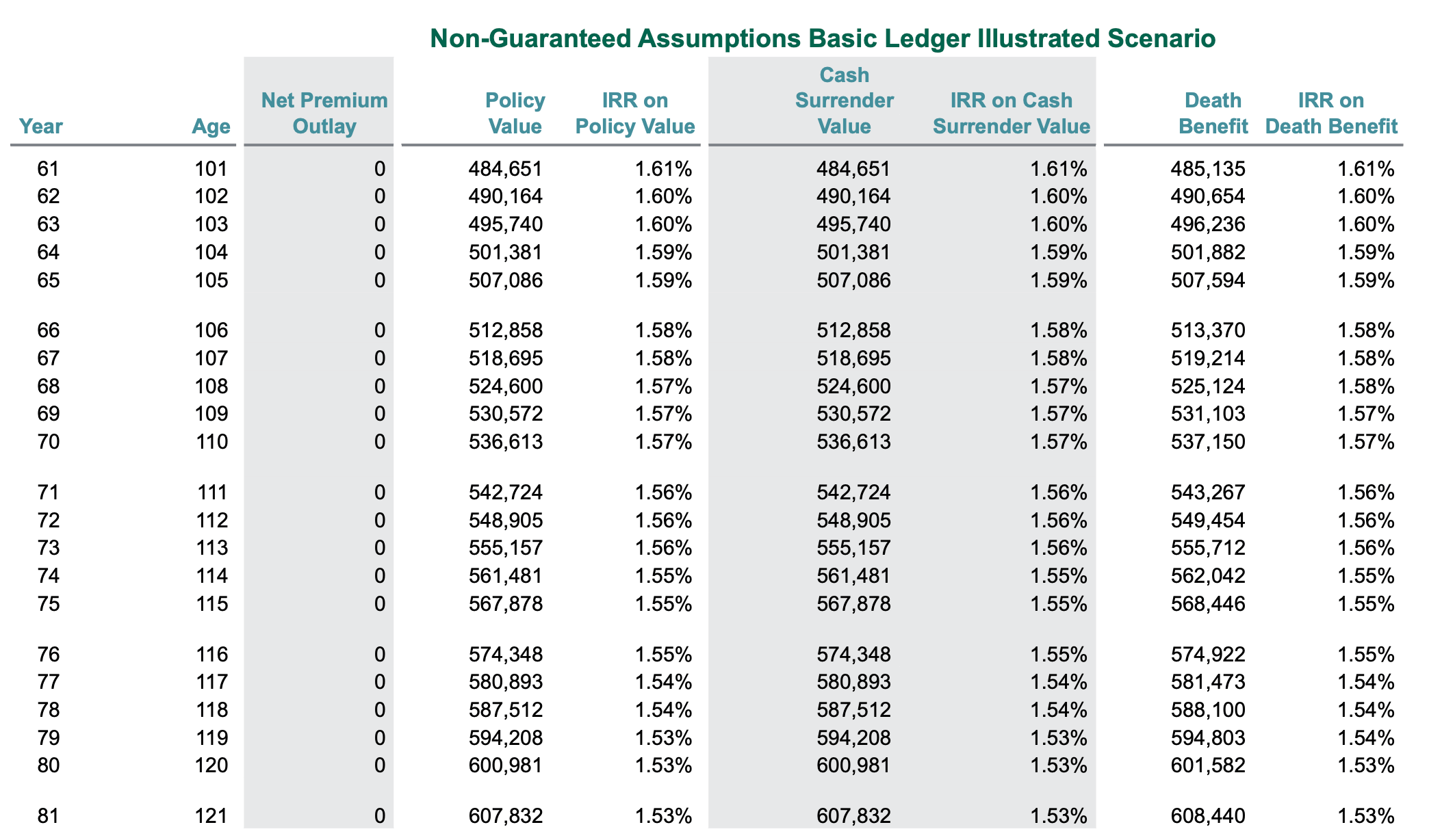
AIG life insurance accumulated value—commonly referred to as cash value—is the equity built inside permanent life insurance policies issued by AIG (now serviced under Corebridge Financial). This value accumulates tax-deferred over time through policy premiums and interest crediting or market index performance, accessible via policy loans, withdrawals, or premium payment offsets.
Understanding Accumulated Value vs. Cash Surrender Value
When reviewing a permanent life insurance policy statement originally issued by American International Group (AIG) or its subsidiary companies—such as American General Life Insurance Company (AGL) or The United States Life Insurance Company in the City of New York—you will notice two distinct financial metrics: Accumulated Value and Cash Surrender Value.
Understanding the difference between these two figures is essential for effective policy planning and risk management.
- Accumulated Value (Account Value): This represents the total dollar amount that has accrued inside your policy. It includes the portion of your premium payments allocated to savings plus any earned interest, index gains, or investment returns, minus monthly policy administration fees and the regular cost of insurance (COI).
- Cash Surrender Value (Net Cash Value): This is the net amount you would actually receive in cash if you chose to terminate (surrender) your policy today. It equals the total accumulated value minus any applicable surrender charges and outstanding policy loan balances or unpaid loan interest.
Accumulated Value = Total Premium Allocations + Earned Interest/Returns - Administrative Costs & COI
Cash Surrender Value = Accumulated Value - Surrender Charges - Outstanding Loan Balances
Surrender charges are contractually defined fees assessed by the insurer during the initial years of a policy—often lasting 10 to 15 years from issuance. Over time, these charges decline to zero. Once the surrender charge period expires and provided there are no policy loans, your accumulated value and your cash surrender value become identical.
Disclaimer: Life insurance products involve complex legal and tax considerations. This guide provides general educational information and should not replace personalized advice from a certified financial planner, tax consultant, or licensed insurance agent.
How Accumulated Value Grows Across AIG Policy Types
The rate and mechanism by which your accumulated value grows depend directly on the specific type of permanent policy you hold. AIG’s legacy life portfolio, now managed under Corebridge Financial, spans several permanent policy structures.
1. Whole Life Insurance
In traditional whole life insurance policies, accumulated value grows at a fixed, guaranteed interest rate set by the contract. The insurer guarantees that as long as required premiums are paid, the cash value will grow steadily according to a fixed schedule, regardless of macroeconomic fluctuations. Some participating whole life policies may also receive non-guaranteed policyholder dividends, which can be applied to increase the total accumulated value.
2. Universal Life (UL) Insurance
Universal life policies provide premium flexibility and unbundled pricing. Monthly premium payments enter the policy's cash account. The insurer deducts administrative expenses and the monthly cost of insurance (which increases as the insured ages), and credits the remaining balance with interest. In standard fixed universal life policies, the interest rate fluctuates based on current market interest rates but will never drop below a contractually specified minimum guaranteed rate (e.g., 2% or 3%).
3. Indexed Universal Life (IUL) Insurance
AIG was historically one of the largest providers of Indexed Universal Life policies, including popular lines such as the Max Accumulator IUL and Value+ IUL. In an IUL policy, interest crediting is linked to the performance of external financial market indices, such as the S&P 500 Index or specialized volatility-controlled index blends.
- Cap Rates: The maximum percentage interest the insurer will credit to your account during a growth cycle (e.g., a cap of 8.5% or 9%).
- Participation Rates: The percentage of index gains credited to the account balance.
- Floor Rates: A downside protection mechanism—typically set at 0%—guaranteeing that even if the underlying market index loses value during a contract segment, your accumulated value will not decline due to negative market performance.
While IUL policies protect against direct market crashes through the 0% floor, monthly deduction fees for insurance costs still apply. If market performance is muted for extended periods, ongoing internal charges can still reduce the total accumulated value.
4. Variable Universal Life (VUL) Insurance
In variable universal life insurance, the accumulated value is allocated among separate investment sub-accounts similar to mutual funds (invested in equities, bonds, and money market instruments). Growth potential is unbilled, but there is no 0% floor; if the underlying sub-accounts decline in value, your accumulated value drops accordingly.
The Corebridge Financial Transition: Servicing Legacy AIG Policies
A primary source of confusion for policyholders searching for "AIG life insurance accumulated value" is the corporate restructuring of AIG's individual life and retirement business.
In 2022, AIG officially rebranded its individual life insurance, annuity, and retirement operations as Corebridge Financial, Inc. Consequently, individual life insurance policies historically issued under AIG banners—specifically through American General Life Insurance Company—are now serviced and administered under the Corebridge Financial brand.
| Aspect | Historical/Legacy Brand | Current Administrative Entity |
|---|---|---|
| Parent Company | American International Group, Inc. (AIG) | Corebridge Financial, Inc. |
| Issuing Insurer | American General Life Insurance Company (AGL) / US Life | American General Life Insurance Company (AGL) / US Life |
| Customer Online Portal | AIG eService / Client Portal | Corebridge Financial Policyholder Portal |
| Policy Contract Terms | Governed by original policy paperwork | Exactly identical (legally unchanged) |
If you own an older AIG policy, your underlying contract terms, cash value calculations, interest guarantees, death benefits, and surrender fee schedules remain legally unchanged. However, routine operations—such as registering for online account management, requesting surrender value quotes, or executing policy loans—are completed via Corebridge Financial.
Methods to Access and Use Your Accumulated Value
One of the main benefits of accumulating cash value in a life insurance policy is the ability to access these funds during your lifetime. Policyholders have four primary avenues for utilizing accumulated value.
AIG / Corebridge Policy Accumulated Value:
- Policy Loans (Tax-Free)
- Partial Surrender (Withdrawal)
- Pay Premiums (Offset Cost)
- Full Policy Surrender
1. Taking a Policy Loan
Policyholders can borrow against their policy's accumulated value without surrendering the policy or liquidating assets.
- Credit Checks & Approvals: No credit check or third-party approval is required because the loan is collateralized by your policy's death benefit and accumulated cash value.
- Interest Accrual: Interest accrues on the outstanding loan balance at either a fixed rate specified in your contract or a variable rate.
- Impact on Death Benefit: If the insured passes away while a loan is outstanding, the remaining loan balance plus accrued interest is subtracted from the final death benefit payout paid to beneficiaries.
- Overloan Risk: If unpaid loan interest builds up to the point where the total debt exceeds the accumulated value, the policy risks lapsing. A policy lapse triggered by an excessive loan balance can generate substantial taxable income.
2. Making Partial Surrenders (Withdrawals)
A partial surrender allows you to withdraw a specific cash amount directly from your accumulated value.
- First-In, First-Out (FIFO) Accounting: For non-Modified Endowment Contracts (MECs), withdrawals are generally taxed on a FIFO basis. This means payments are treated as tax-free recovery of your cost basis (the total sum of premiums paid into the policy) first.
- Taxable Gains: Any withdrawals exceeding your cumulative basis are taxed as ordinary income.
- Contractual Fees: Insurers may charge a administrative partial surrender fee (often $25 to $50), and the policy's face amount (death benefit) will automatically be reduced by the amount withdrawn.
3. Paying Policy Premiums via Accumulated Value
If your policy has built up sufficient accumulated value, you can elect to use that value to cover ongoing monthly insurance costs and administrative fees instead of paying out of pocket. This feature—often called paying premiums with cash value or using an automatic premium loan—allows policyholders to maintain coverage during financial hardship or retire out-of-pocket premium responsibilities during later years.
4. Full Policy Surrender
If coverage is no longer needed, you can fully terminate the policy and request a payout of the Net Cash Surrender Value. The insurer will issue a check or electronic transfer for your accumulated value minus any remaining surrender fees and loan obligations. Surrendering the policy terminates the death benefit permanently.
Access Method Comparison: Loans, Withdrawals, Surrenders, and Offsets
The following table summarizes the operational and tax characteristics of each access method for legacy AIG policyholders:
| Access Method | Impact on Death Benefit | Taxability (Non-MEC Policies) | Impact on Policy Continuity | Key Risk Factor |
|---|---|---|---|---|
| Policy Loan | Reduces death benefit by unpaid balance + interest | Generally tax-free while policy remains active | Policy remains active | Policy lapse if total loan exceeds cash value |
| Partial Surrender (Withdrawal) | Reduces face amount dollar-for-dollar (or proportion) | Tax-free up to premium basis; gains taxed as ordinary income | Policy remains active at reduced face value | May permanently lower future cash accumulation potential |
| Premium Offset | None directly, though lowers future accumulation | Tax-free internally | Policy remains active as long as cash value covers COI | Policy may lapse if cash value is depleted by high COI |
| Full Surrender | Eliminates death benefit completely | Gain above total premium basis taxed as ordinary income | Policy is terminated permanently | Loss of coverage and potential sudden tax liability |
Tax Rules and the Modified Endowment Contract (MEC) Warning
The tax-advantaged status of permanent life insurance is protected under Internal Revenue Code Section 7702, provided the policy complies with statutory guidelines. However, tax handling depends heavily on whether your policy is classified as a standard life insurance policy or a Modified Endowment Contract (MEC).
The 7-Pay Test
Under IRS rules established by the Technical and Miscellaneous Revenue Act of 1988 (TAMRA), if the total premiums paid into a life insurance contract during its first seven years exceed the cumulative amount needed to fund a paid-up policy, the policy becomes a MEC.
Consequences of MEC Classification
If an AIG policy becomes a MEC, it retains tax-free death benefits for beneficiaries, but loses favorable FIFO lifetime withdrawal tax treatment:
LIFO Tax Treatment: Distributions (including policy loans, partial withdrawals, and collateral assignments) are taxed on a Last-In, First-Out (LIFO) basis. Gains earned within the contract are pulled out first and taxed as ordinary income.
10% Tax Penalty: If you access cash value from a MEC before reaching age 59½, taxable distributions are generally subject to a 10% IRS early withdrawal penalty tax, unless a statutory exception applies.
Standard Policy Tax Order (FIFO):
- 1st: Tax-Free Principal / Cost Basis
- 2nd: Taxable Earnings
MEC Policy Tax Order (LIFO):
- 1st: Taxable Earnings
- 2nd: Tax-Free Principal / Cost Basis
Step-by-Step Guide: How to Check Your AIG Accumulated Value
To manage your policy effectively, verify your accumulated value, surrender charges, and cost of insurance regularly.
- Step 1: Locate Policy Number
- Step 2: Access Portal or Call Customer Service
- Online: Corebridge Financial Client Portal
- Phone: Corebridge Life Customer Service
- Step 3: Download Annual Policy Statement
- Step 4: Review Accumulated Value vs. Surrender Charges
- Step 5: Request In-Force Illustration (For Projections)
Step 1: Gather Policy Information
Locate your original policy document or recent billing statement. You will need your policy number, issuing company name (e.g., American General Life Insurance Company), and the owner's Social Security Number or tax ID.
Step 2: Access the Corebridge Financial Portal
Navigate to the official Corebridge Financial policyholder portal. If you have not created an online account since the AIG rebranding, select the option to register a new account using your existing legacy policy number.
Step 3: Review Your Annual Statement
Locate your most recent Annual Statement. Insurers are required to issue this document annually. It lists:
- Beginning and Ending Accumulated Value for the reporting period.
- Gross Premiums Received during the year.
- Deductions Taken for administrative fees and monthly cost of insurance (COI).
- Interest or Index Crediting Earned.
- Current Surrender Charge Amount.
- Net Cash Surrender Value available as of the statement date.
Step 4: Request an In-Force Illustration
If you are planning to take a policy loan or use accumulated value to pay premiums, request an In-Force Illustration from Corebridge Financial customer support. An in-force illustration models how your policy’s accumulated value, cost of insurance, and death benefit will perform over future years under current and guaranteed performance assumptions.
Critical Mistakes to Avoid When Managing Accumulated Value
- Ignoring Rising Cost of Insurance (COI): In universal life policies, the cost of insurance increases each year as you age. If premium payments are set too low or paused, annual COI deductions can outstrip interest growth, rapidly eroding your accumulated value and causing the policy to lapse.
- Allowing Policy Loans to Unravel: Unpaid interest compounds annually. If a policy lapses while a loan balance exceeds the cash basis, the IRS treats the forgiven loan as taxable income, potentially creating a large tax bill without providing cash to pay it.
- Misinterpreting Index Caps: In IUL contracts, index performance does not mirror stock market indices directly. Returns are capped, and dividends of underlying stocks are excluded. Planning around overly optimistic growth expectations can leave policyholders underfunded.
- Surrendering a Policy Without Evaluating Options: Surrendering a policy with substantial cash value can trigger immediate tax liabilities on non-basis gains. Alternatives include executing a tax-free Section 1035 Exchange into a modern life insurance policy or long-term care product.
Frequently Asked Questions
What happens to my AIG accumulated value when I die?
When the insured passes away, the beneficiaries generally receive the policy's face amount (death benefit). In standard life insurance contracts, the insurer keeps the remaining accumulated value, as the cost of insurance is calculated based on the net amount at risk (death benefit minus cash value). However, if your policy was explicitly issued with an "Option B" (Increasing Death Benefit) structure, the final death benefit payout will equal the face amount plus the accumulated value.
Can I withdraw all my accumulated value without canceling the policy?
No. Withdrawing your entire accumulated value effectively reduces your policy's cash balance to zero, which triggers a full policy surrender and terminates your coverage. To keep the policy active, you must maintain sufficient cash value to pay the ongoing monthly internal cost of insurance and administrative expenses.
Why is my cash surrender value lower than my accumulated value?
Your cash surrender value is lower because of contractually mandated surrender charges. Surrender charges allow the insurance company to recoup front-end administrative and underwriting expenses if a policy is terminated early. These charges decrease annually according to the schedule in your contract and eventually drop to zero.
Are policy loans taken from AIG accumulated value taxable?
Policy loans are generally tax-free, provided the policy remains active and is not classified as a Modified Endowment Contract (MEC). However, if the policy lapses or is surrendered while an outstanding loan balance exceeds the total premiums paid into the policy, the excess amount will be taxed as ordinary income.
How do I contact customer support regarding my AIG life insurance cash value?
Because AIG’s individual life operations are now managed by Corebridge Financial, policy servicing queries should be directed to Corebridge Financial customer service. Policyholders can sign in to the Corebridge Financial online portal or call the customer service number listed on their policy statements.
Next Steps for Policyholders
To safeguard your policy's accumulated value and ensure your coverage matches your current financial objectives:
- Request an Updated Statement: Sign in to the Corebridge Financial portal to pull your latest policy values, or call customer service to verify your current accumulated value, surrender charges, and cost of insurance deductions.
- Run an In-Force Projection: If your policy is a universal life or indexed universal life product, ask for an in-force illustration to verify that current interest rates and internal fees will keep your coverage funded through your target age.
- Consult a Tax Advisor Before Accessing Funds: Before executing large withdrawals or loans, review your policy's cost basis and MEC status with a qualified tax advisor to avoid unexpected income taxes or early withdrawal penalties.