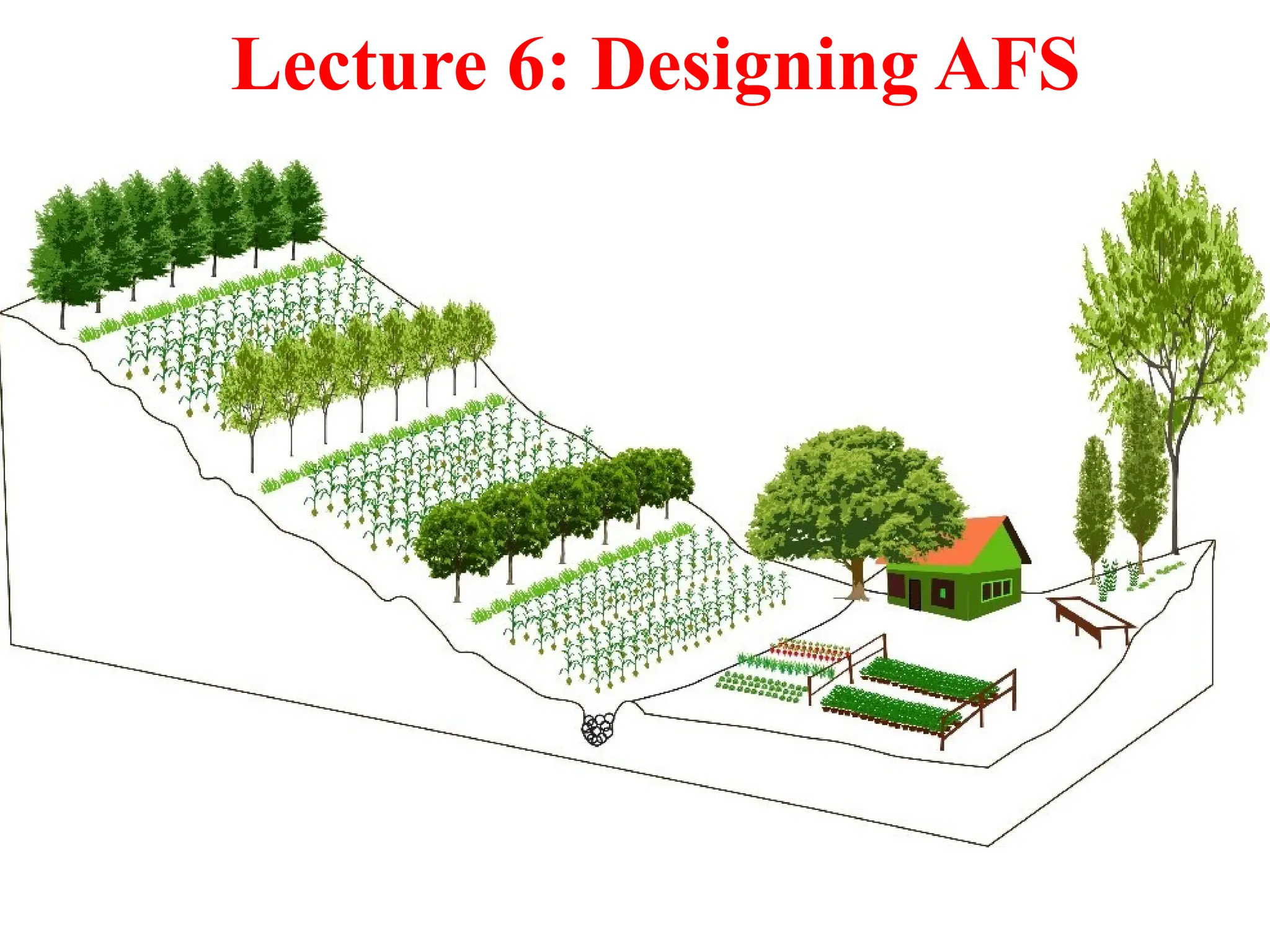
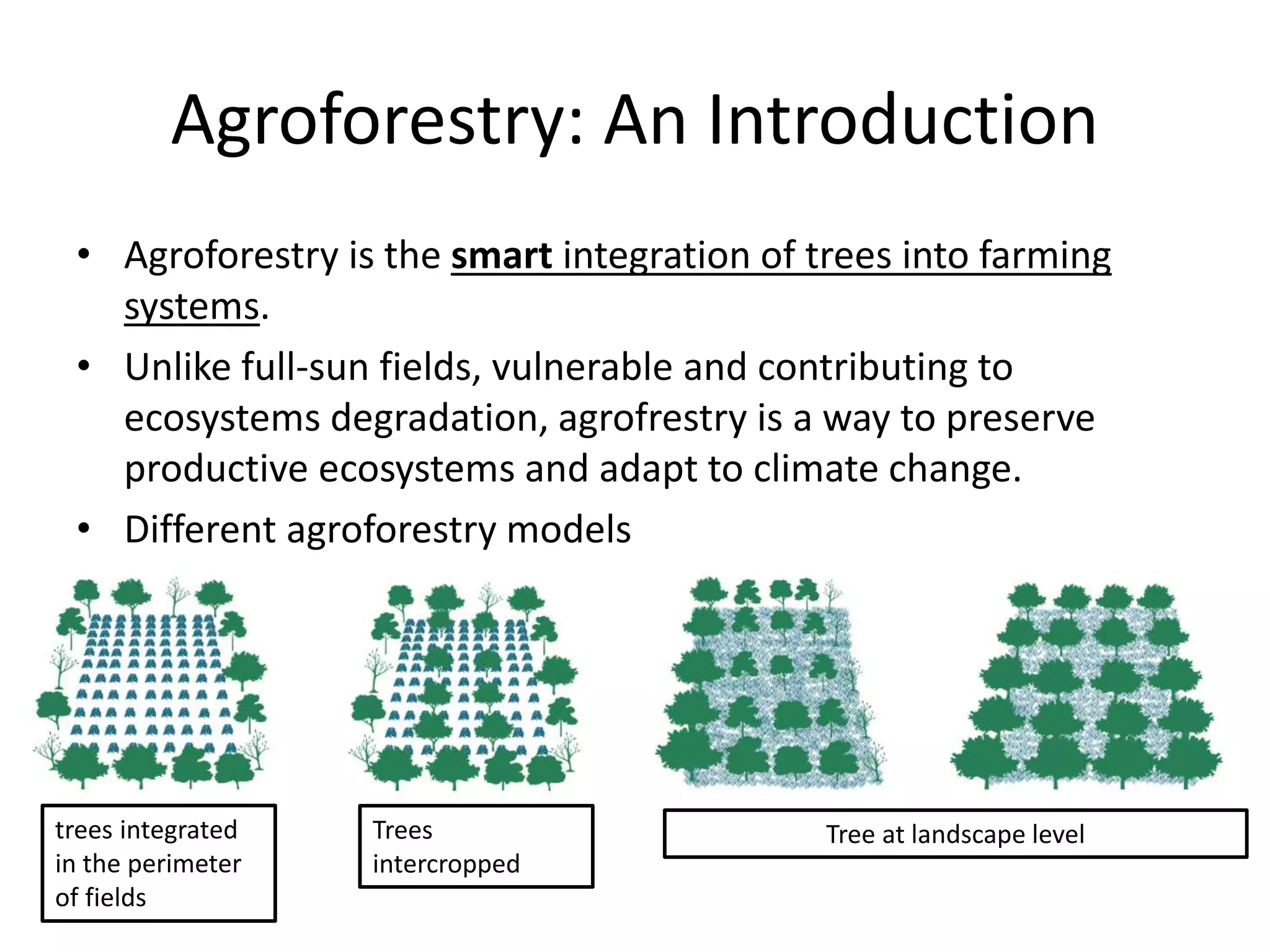
Agroforestry is a land management system that deliberately integrates trees or shrubs into crop and livestock production. Primary examples include alley cropping, where crops are grown between rows of trees; silvopasture, which combines timber or fruit trees with livestock grazing; and forest farming, which utilizes the forest canopy to protect high-value understory crops like ginseng or mushrooms.
In 2026, agroforestry has transitioned from a niche ecological concept to a cornerstone of climate-smart agriculture. As global food systems face increasing pressure from volatile weather patterns and the need for carbon sequestration, these integrated systems provide a resilient alternative to monocultures. By mimicking natural ecosystems, agroforestry optimizes the biological interactions between woody perennials and agricultural components, resulting in improved soil health, increased biodiversity, and diversified revenue streams for landowners.
The Five Core Agroforestry Systems: Detailed Examples
Understanding agroforestry requires a breakdown of its five most widely recognized practices. Each system serves a specific ecological and economic purpose, adapted to different climates and land types.
1. Alley Cropping (Intercropping)
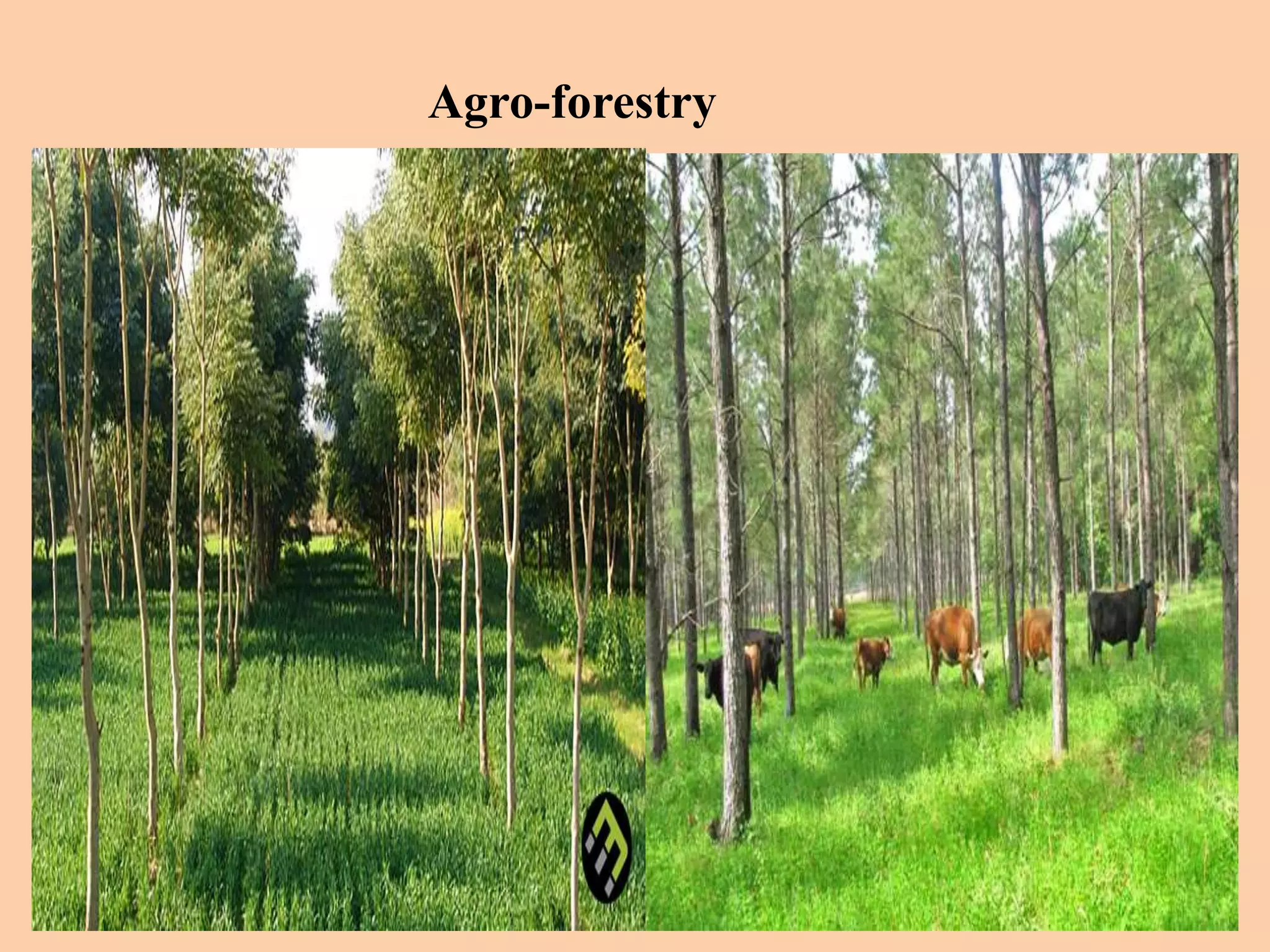
Alley cropping involves planting rows of trees at wide spacings, creating "alleys" where herbaceous crops (such as corn, wheat, or soybeans) are grown.
Technical Example: A common temperate alley cropping example involves Black Walnut (Juglans nigra) trees spaced 40 to 60 feet apart. In the early years of tree growth, a farmer might plant winter wheat or hay in the alleys. As the trees mature and the canopy closes, the system may transition to shade-tolerant forage or remain as a timber-focused operation.
- Facilitation: The trees act as windbreaks, reducing evapotranspiration in the crops.
- Competition: Careful management is required to ensure the tree roots and canopy do not outcompete the crops for water and light. This is often managed through root pruning or selecting species with deep taproots.
2. Silvopasture
Silvopasture is the intentional combination of trees, forage, and livestock. It is significantly different from simply letting cattle graze in a natural forest, which can often lead to soil compaction and tree damage.
Technical Example: In the Southeastern United States or similar subtropical climates, Loblolly Pine (Pinus taeda) is frequently integrated with cattle and orchardgrass. The trees are planted in "double rows" to allow for wide grazing lanes.
- Animal Welfare: Trees provide shade in the summer and wind protection in the winter, reducing animal stress and improving weight gain.
- Forage Quality: Some forage species actually increase in nutritional value when grown in partial shade, as the reduced heat stress prevents the grasses from becoming overly fibrous too quickly.
3. Riparian Forest Buffers
These are strips of trees, shrubs, and grasses planted along the banks of streams, rivers, and lakes. They serve as a critical interface between terrestrial and aquatic ecosystems.
Technical Example: A multi-zone buffer might consist of a 15-foot zone of unmanaged native trees closest to the water (like Willow or Sycamore), followed by a 20-foot zone of managed shrubs (like Elderberry or Serviceberry), and finally a 20-foot zone of stiff-stemmed grasses.
- Pollution Mitigation: These buffers trap sediment and filter out nitrogen and phosphorus from upland crop runoff before it reaches the waterway.
- Bank Stabilization: Deep tree roots physically hold the soil together, preventing erosion during high-flow events.
4. Windbreaks and Shelterbelts
Windbreaks are linear plantings of trees and shrubs designed to enhance crop production, protect livestock, and control soil erosion by reducing wind velocity.
Technical Example: In the Great Plains, a five-row windbreak might include Eastern Red Cedar on the windward side, followed by Ponderosa Pine, and finally a row of deciduous shrubs like Caragana.
- Microclimate Modification: By slowing wind speed, these systems reduce the "wicking" effect of dry air on crops, effectively increasing the water-use efficiency of the field.
- Snow Management: In cold climates, windbreaks are engineered to "catch" snow, distributing it across the field to provide a moisture boost during the spring melt.
5. Forest Farming
Forest farming involves the cultivation of high-value specialty crops under the protection of a managed forest canopy. This differs from "wild-harvesting" because the environment is actively manipulated to favor the crop.
Technical Example: Growing American Ginseng (Panax quinquefolius) or Shiitake mushrooms in a hardwood forest of Sugar Maple and Oak.
- Canopy Management: The overstory is thinned to ensure a specific light percentage (usually 70-80% shade) required for the understory crop.
- High Value, Low Volume: These crops often command premium prices in pharmaceutical or culinary markets, allowing for significant income from a small acreage.
Technical Implementation and Design Considerations
Transitioning to an agroforestry system requires more than just planting trees; it requires a sophisticated understanding of biological interactions. Successful examples are built on the "4-I" criteria: Intentional, Intensive, Integrated, and Interactive.
Site Assessment and Species Selection
The primary failure point in many agroforestry examples is a mismatch between the species and the site. In 2026, land managers utilize high-resolution soil mapping and climate projection models to select species that will thrive over the 30-to-80-year lifespan of a tree.
- Hydrology: Trees with high water demands should not be paired with water-sensitive crops in arid regions.
- Allelopathy: Some trees, like the Black Walnut, produce chemicals (juglone) that inhibit the growth of certain crops (e.g., tomatoes or potatoes). Design must account for these chemical interactions.
- Growth Rates: Combining slow-growing hardwoods with fast-growing nurse trees (like Black Locust) can provide early nitrogen fixation and wind protection while the primary timber crop establishes.
Structural Design and Spacing
Spacing is the most critical variable in alley cropping and silvopasture. If trees are planted too densely, the agricultural component will be shaded out too early, shortening the economic window for crop or forage production.
- Equipment Width: Alleys must be sized to accommodate modern agricultural machinery. If a combine header is 30 feet wide, the alley must be a multiple of that width (e.g., 65 or 95 feet) to allow for efficient turning and passes.
- Light Orientation: In the northern hemisphere, north-south row orientation typically provides the most uniform light distribution to the crops in the alleys.
Economic and Environmental Impact Analysis
Agroforestry is often criticized for its long-term "wait time" for returns on timber. However, modern economic models show that when the system is viewed holistically, it often outperforms conventional monocultures in terms of net present value (NPV) and risk mitigation.
Revenue Diversification
Agroforestry provides multiple "paychecks" at different intervals.
- Short-term: Annual crops (grains, vegetables) or livestock sales.
- Medium-term: Fruit, nuts, berries, or decorative florals (from shrubs).
- Long-term: High-quality sawtimber or veneer logs.
This staggered income profile protects farmers from market volatility in any single commodity. If wheat prices crash in 2026, the farmer still has cattle and a growing asset in the form of timber.
Carbon Sequestration and Policy Incentives
As of 2026, many jurisdictions have implemented robust carbon credit frameworks that specifically reward agroforestry. Because trees in agroforestry systems often grow faster than those in crowded natural forests (due to reduced competition and often better soil management), they are highly efficient carbon sinks.
- Biomass: Trees store carbon in their trunks, branches, and leaves.
- Soil Organic Carbon (SOC): The deep roots of trees, combined with the lack of tilling in silvopasture, lead to significantly higher stable soil carbon levels compared to conventional row-crop farming.
Comparative Analysis of Agroforestry Systems
| System | Primary Product | Ecological Benefit | Initial Investment | Time to ROI (Tree Component) |
|---|---|---|---|---|
| Alley Cropping | Row Crops & Timber | Soil Erosion Control | Moderate | 20–50 Years |
| Silvopasture | Livestock & Timber | Animal Welfare/Shade | High (Fencing/Water) | 15–40 Years |
| Riparian Buffer | Ecosystem Services | Water Quality/Flood Control | Low to Moderate | N/A (Mainly Conservation) |
| Windbreaks | Crop Protection | Moisture Retention | Low | 5–10 Years (as protection) |
| Forest Farming | Specialty Crops | Biodiversity | Moderate | 3–7 Years (e.g., Mushrooms) |
Common Challenges and Troubleshooting
Despite the benefits, agroforestry presents unique management challenges that require specialized knowledge.
1. Management Complexity
Managing two or more biological systems simultaneously is significantly harder than managing one. A farmer must be both a crop specialist and a forester.
- Solution: Use of "smart" forestry technology, such as drone-based canopy monitoring and automated irrigation systems that can deliver water specifically to tree lines without over-saturating the alleys.
2. Specialized Equipment
Standard agricultural equipment is often poorly suited for working around trees. Damage to tree bark from tractors (scarring) can introduce pathogens that devalue the timber.
- Solution: Implementation of GPS-guided precision steering to maintain strict buffer zones between machinery and tree trunks.
3. Regulatory and Insurance Barriers
In some regions, land zoned for "agriculture" might lose its tax status if too many trees are planted, as it may be reclassified as "forestry."
- Solution: Engage with local USDA Service Centers or equivalent regional bodies to ensure the design complies with "Climate-Smart" agriculture programs which, by 2026, have largely resolved these zoning conflicts.
FAQs about Agroforestry
How does agroforestry differ from permaculture?
While both share the goal of sustainable land use, agroforestry is a specific set of scientifically defined practices integrated into existing agricultural frameworks, often at a commercial scale. Permaculture is a broader design philosophy that includes social, ethical, and architectural components. Agroforestry focuses heavily on the biological and economic interactions between woody perennials and crops/livestock.
Can agroforestry be implemented on a small scale?
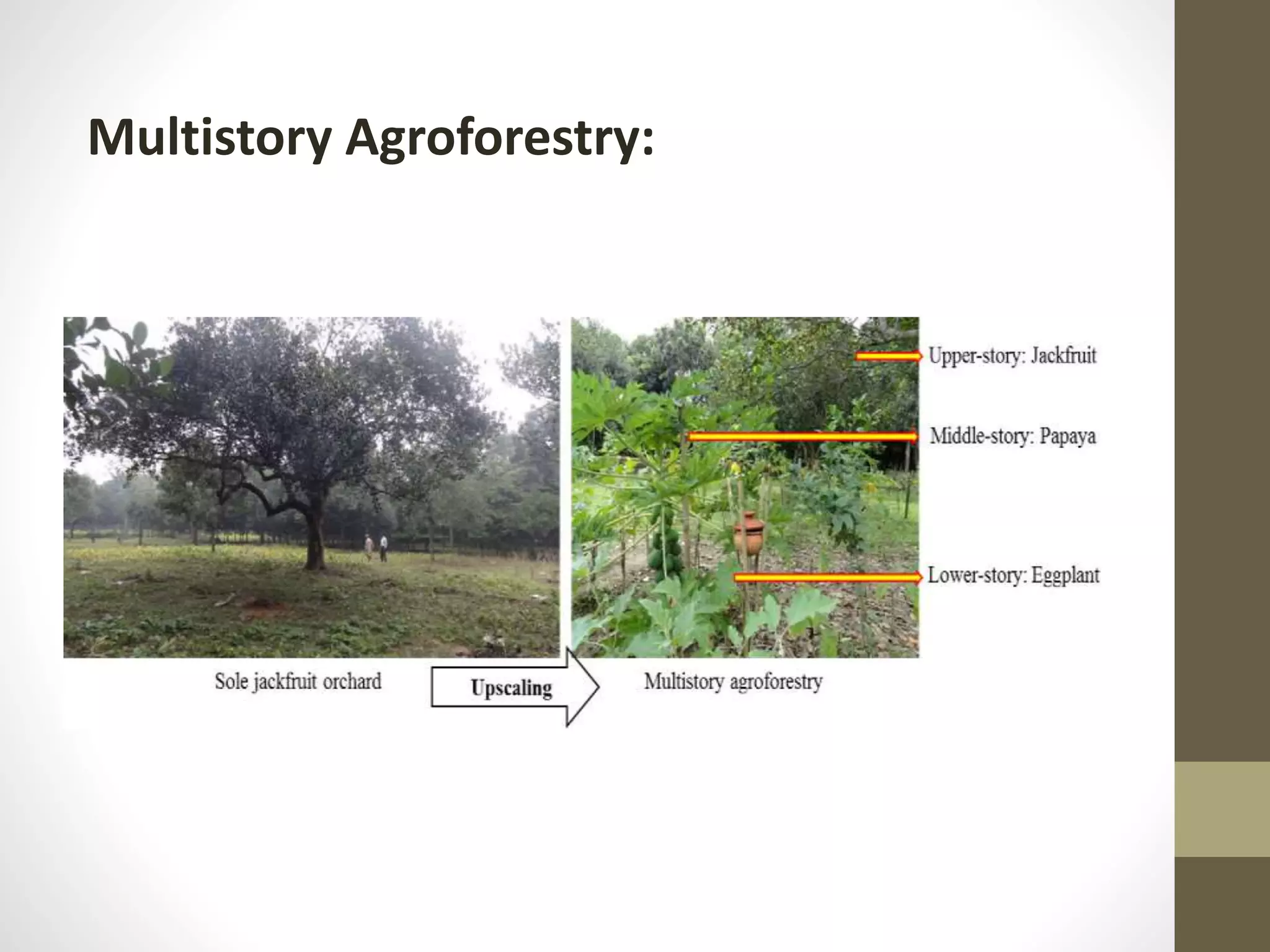
Yes. "Food forests" or multi-strata home gardens are essentially small-scale agroforestry. These examples often use a "layered" approach: an overstory of fruit/nut trees, a mid-story of berry shrubs, and an understory of medicinal herbs or perennial vegetables. This maximizes calorie production per square foot.
What are the best tree species for a beginner?
For temperate climates, Hazelnut, Chestnut, and Pecans are excellent "dual-purpose" trees because they provide a food crop relatively early (5–10 years) while also offering structural benefits. For timber, Black Walnut and White Oak are the gold standards, though they require more patience.
Does agroforestry reduce the yield of the main crop?
In many cases, yes, the yield per acre of the grain or forage crop may decrease because the trees occupy space. However, the total land equivalent ratio (LER) is usually higher. This means that to get the same amount of grain and wood from separate monocultures, you would need significantly more land than if you combined them in an agroforestry system.
How do I get started with silvopasture?
The first step is a site evaluation to determine if you are "thinning" an existing woodlot or "planting" into an existing pasture. Planting into pasture is generally more successful for silvopasture. You must ensure you have a robust rotational grazing plan; if livestock stay in one area too long, they will damage the young trees and compact the soil.
Next Steps for Landowners
For those looking to implement an agroforestry example on their own property, the first action should be a professional site assessment. Contact your local agricultural extension office or a certified agroforestry consultant to analyze soil types, drainage, and local climate data.
In 2026, the most successful transitions begin with a "pilot plot"—a small, 1-to-5-acre section of the farm where a windbreak or a single alley cropping strip is established. This allows the manager to learn the specific maintenance requirements of the tree species before scaling the system across the entire enterprise. Furthermore, investigate state and federal cost-share programs; many conservation initiatives now provide significant financial assistance for the establishment of riparian buffers and silvopasture systems due to their proven benefits in carbon sequestration and water protection.