Tax-free municipal bonds are a highly effective investment for individuals in high tax brackets seeking stable, predictable income and capital preservation. By exempting interest payments from federal—and often state and local—income taxes, they frequently offer higher "after-tax" yields than comparable taxable bonds, provided the investor's marginal tax rate is sufficiently high.
Understanding the Value of Municipal Bonds in 2026
Municipal bonds, or "munis," are debt securities issued by states, cities, counties, and other governmental entities to fund public projects. These projects range from building schools and highways to improving sewer systems or constructing bridges. When you purchase a municipal bond, you are essentially lending money to a government body in exchange for regular interest payments and the return of your principal at a specified maturity date.
The primary allure of these instruments is their tax-exempt status. As of 2026, the interest earned on most municipal bonds remains exempt from federal income taxes. Furthermore, if you purchase bonds issued by an entity within your state of residence, the interest is typically exempt from state and local taxes as well, creating what is known as a triple-tax-exempt investment.
Whether they are a "good" investment depends heavily on your specific financial situation, particularly your tax bracket. Following the expiration of several provisions of the Tax Cuts and Jobs Act (TCJA) at the end of 2025, many investors in 2026 find themselves in higher marginal tax brackets. This shift has significantly increased the relative attractiveness of tax-free income compared to the previous decade.
The Deciding Factor: Taxable Equivalent Yield
The most critical step in determining if municipal bonds are a good investment is calculating the Taxable Equivalent Yield (TEY). This formula allows you to compare the yield of a tax-free bond with that of a taxable bond (like a Corporate bond or a Treasury) to see which puts more money in your pocket after the IRS takes its share.
The basic formula for TEY is: TEY = Tax-Free Yield / (1 – Marginal Tax Rate)
For example, if you are in the 37% federal tax bracket and you are considering a municipal bond with a 4% yield, the calculation would be: 0.04 / (1 – 0.37) = 0.0634, or 6.34%.
This means a taxable corporate bond would need to pay more than 6.34% to be a better deal than the 4% municipal bond. If you also factor in state tax savings, the "hurdle rate" for taxable investments becomes even higher.
Comparative Yield Analysis for 2026
The following table illustrates how the attractiveness of a municipal bond changes based on an investor's federal tax bracket.
| Tax-Free Muni Yield | 24% Tax Bracket TEY | 32% Tax Bracket TEY | 35% Tax Bracket TEY | 37% Tax Bracket TEY |
|---|---|---|---|---|
| 3.00% | 3.95% | 4.41% | 4.62% | 4.76% |
| 3.50% | 4.61% | 5.15% | 5.38% | 5.56% |
| 4.00% | 5.26% | 5.88% | 6.15% | 6.35% |
| 4.50% | 5.92% | 6.62% | 6.92% | 7.14% |
| 5.00% | 6.58% | 7.35% | 7.69% | 7.94% |
Note: This table assumes federal taxes only. State tax exemptions would further increase the TEY for in-state residents.
Types of Municipal Bonds and Their Security
Not all municipal bonds carry the same level of risk. To evaluate if they are a "good" investment for your portfolio, you must distinguish between the two primary structures: General Obligation bonds and Revenue bonds.
General Obligation (GO) Bonds
GO bonds are backed by the "full faith and credit" of the issuing municipality. This means the issuer can use any available resources—including its power to levy taxes—to repay bondholders. Because they are supported by the taxing authority of a government, GO bonds are generally considered the safest type of municipal debt. They are often used to fund non-revenue-generating projects like public parks or administrative buildings.
Revenue Bonds
Revenue bonds are backed by the income generated by a specific project, such as a toll bridge, a municipal water utility, or a stadium. The security of these bonds depends entirely on the success and efficiency of the project. If a toll road sees significantly less traffic than projected, the revenue available to pay bondholders may be at risk. While revenue bonds often offer higher yields than GO bonds to compensate for this increased risk, they require more rigorous credit analysis.
The Primary Risks of Investing in Municipal Bonds
While municipal bonds are historically safer than corporate bonds, they are not risk-free. A balanced evaluation requires understanding the factors that could negatively impact your investment.
1. Interest Rate Risk
Like all fixed-income securities, municipal bond prices have an inverse relationship with interest rates. When market interest rates rise, the value of existing bonds with lower coupons falls. In the 2026 economic environment, if the Federal Reserve maintains a restrictive or neutral stance to combat persistent inflation, long-term municipal bonds could experience price volatility. If you plan to hold the bond to maturity, this "paper loss" may not matter, but if you need to sell early, you could receive less than your initial investment.
2. Credit and Default Risk
While defaults in the municipal market are rare compared to the corporate sector, they do happen. High-profile cases like Puerto Rico or Detroit serve as reminders that local governments can face insolvency. Investors should monitor credit ratings from agencies like Moody’s, Standard & Poor’s (S&P), and Fitch. Bonds rated "Investment Grade" (BBB-/Baa3 or higher) are generally suitable for conservative investors, while "High Yield" or "Junk" municipal bonds carry significantly more risk.
3. Call Risk
Many municipal bonds are "callable," meaning the issuer has the right to pay back the bond before the scheduled maturity date. This typically happens when interest rates fall, allowing the municipality to refinance its debt at a lower cost. For the investor, this creates reinvestment risk: you get your money back early but may have to reinvest it in a lower-yielding environment.
4. Inflation Risk
Municipal bonds pay a fixed rate of interest. If inflation rises significantly, the purchasing power of those fixed payments declines. In 2026, if the cost of living increases by 4% while your bond pays 3.5%, you are effectively losing wealth in real terms.
Strategic Implementation: How to Buy Municipal Bonds
Investors have two primary ways to access the municipal market, each with distinct advantages and drawbacks.
Individual Bonds and Bond Ladders
Buying individual bonds allows for precise control over credit quality and maturity dates. Many sophisticated investors use a bond ladder strategy. This involves purchasing bonds that mature at staggered intervals (e.g., 2, 4, 6, 8, and 10 years). As each bond matures, the principal is reinvested into a new bond at the long end of the ladder. This strategy helps mitigate interest rate risk and provides a steady stream of liquidity.
- Pros: No ongoing management fees; predictable cash flow; return of principal is guaranteed by the issuer if held to maturity.
- Cons: Higher minimum investment (often $5,000 to $25,000 per bond); less diversification for smaller portfolios; limited liquidity in the secondary market for small "odd lots."
Municipal Bond Funds and ETFs
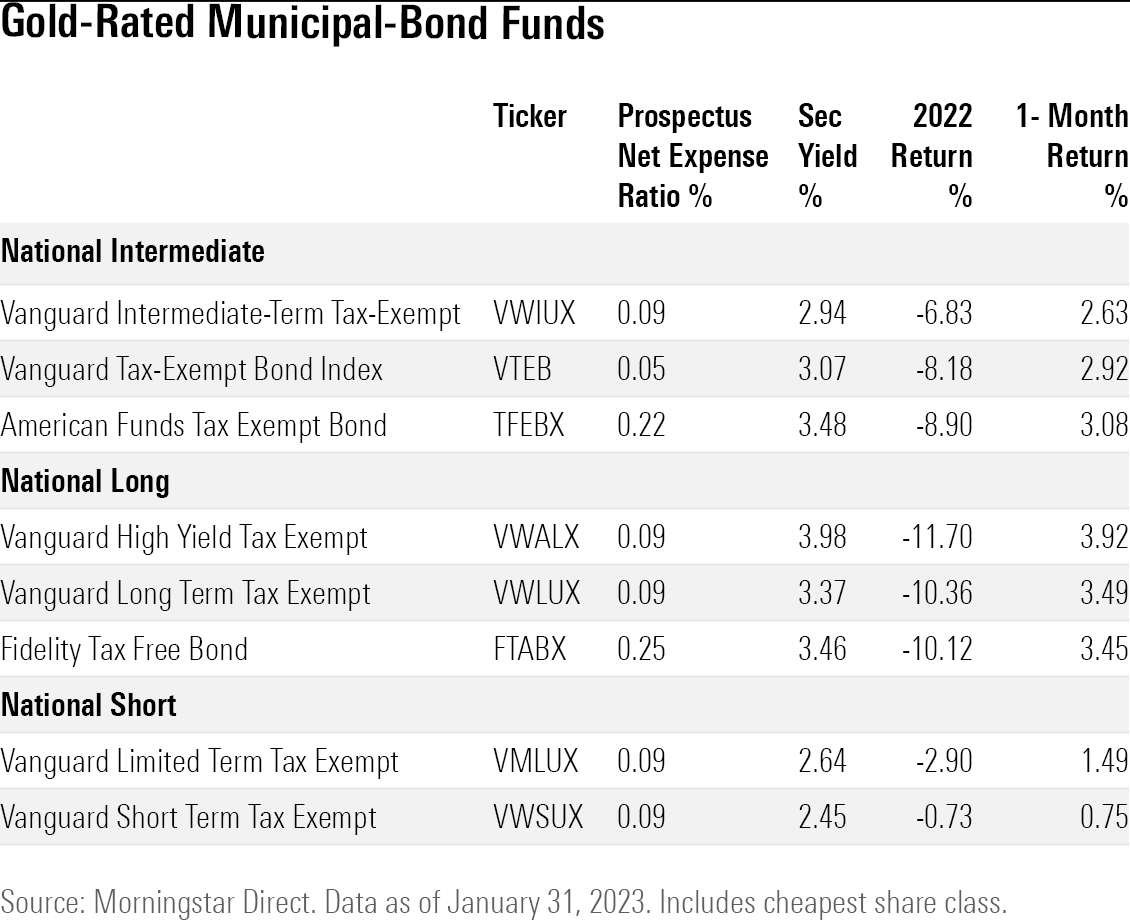
For most individual investors, mutual funds or Exchange-Traded Funds (ETFs) are the most practical entry point. These funds pool money from many investors to buy a diversified portfolio of hundreds or thousands of municipal bonds.
- Pros: Immediate diversification; professional management; high liquidity (can be sold any business day); low minimum investment.
- Cons: Annual management fees (expense ratios); the fund's Net Asset Value (NAV) fluctuates; there is no fixed maturity date where you are guaranteed to get your initial principal back.
Municipal Bonds and the Alternative Minimum Tax (AMT)
A nuance often overlooked is the impact of the Alternative Minimum Tax. Some municipal bonds, specifically "Private Activity Bonds" used to fund projects like airports or industrial development, are tax-exempt for regular income tax purposes but may be taxable for investors subject to the AMT.
In 2026, with the potential lowering of AMT exemption thresholds compared to previous years, it is vital to check if a bond is "AMT-free" before purchasing, especially if you are a high-earner with significant deductions. Most municipal bond funds clearly state the percentage of their income that is subject to the AMT.
Are Municipal Bonds Right for You?
Municipal bonds are generally a good investment if you meet the following criteria:
- You are in a high tax bracket: If your marginal federal tax rate is 24% or higher, the tax benefits of munis usually outweigh the higher nominal yields of taxable bonds.
- You prioritize capital preservation: If your goal is to protect your principal rather than achieve aggressive growth, the historically low default rate of municipalities is attractive.
- You need steady income: They provide a reliable stream of cash flow that is largely shielded from the IRS.
- You have a long-term horizon: They perform best in a portfolio when held through interest rate cycles.
Conversely, they may be a poor investment if:
- You are investing through a tax-advantaged account: Never put municipal bonds in a 401(k) or an IRA. These accounts already provide tax-deferred or tax-free growth. By putting a muni bond in an IRA, you are accepting a lower yield for a tax benefit you already have, effectively "wasting" the yield.
- You are in a low tax bracket: If you are in the 10% or 12% bracket, the Taxable Equivalent Yield will likely be lower than what you could earn in high-quality corporate bonds or U.S. Treasuries.
Frequently Asked Questions
Do I have to pay state taxes on municipal bonds?
Interest is typically exempt from state taxes only if you live in the state that issued the bond. If a resident of Florida buys a California municipal bond, the interest will be federally tax-exempt but may be subject to Florida’s state taxes (if Florida had an income tax). Residents of high-tax states like California, New York, or New Jersey often focus on "in-state" bonds to achieve triple-tax-exempt status.
Are municipal bonds safer than corporate bonds?
Historically, yes. Default rates for investment-grade municipal bonds are significantly lower than those for investment-grade corporate bonds. This is because municipalities have the power to raise taxes or fees to meet debt obligations, whereas corporations rely entirely on business profitability and market conditions.
What happens to my municipal bonds if interest rates fall?
If market interest rates fall, the value of your existing bonds will likely increase, as their higher fixed coupon becomes more attractive to other investors. However, the risk of your bonds being "called" (repaid early) by the issuer also increases, which could force you to reinvest your money at the new, lower rates.
Can I lose money on a municipal bond?
Yes. You can lose money in three primary ways: if the issuer defaults (fails to pay), if you sell the bond before maturity during a period of rising interest rates, or if inflation outpaces the bond's yield, reducing your real purchasing power.
How do I check the credit rating of a municipal bond?
You can access credit ratings through your brokerage platform or by visiting the Electronic Municipal Market Access (EMMA) website, which is the official source for municipal securities data and documents. Look for ratings from Moody’s (e.g., Aaa, Aa, A) or S&P (e.g., AAA, AA, A).
Next Steps for Investors
If you believe municipal bonds align with your 2026 financial goals, start by identifying your marginal tax rate to calculate your Taxable Equivalent Yield. Compare this against current yields for U.S. Treasuries and high-quality corporate bonds.
For those seeking simplicity, research low-cost National Municipal Bond ETFs or State-Specific Mutual Funds if you live in a high-tax state. If you prefer individual bonds, consult with a fixed-income specialist to build a diversified bond ladder that aligns with your specific cash-flow needs and risk tolerance. Always ensure that your municipal bond holdings are kept in taxable brokerage accounts to maximize their tax-efficiency.