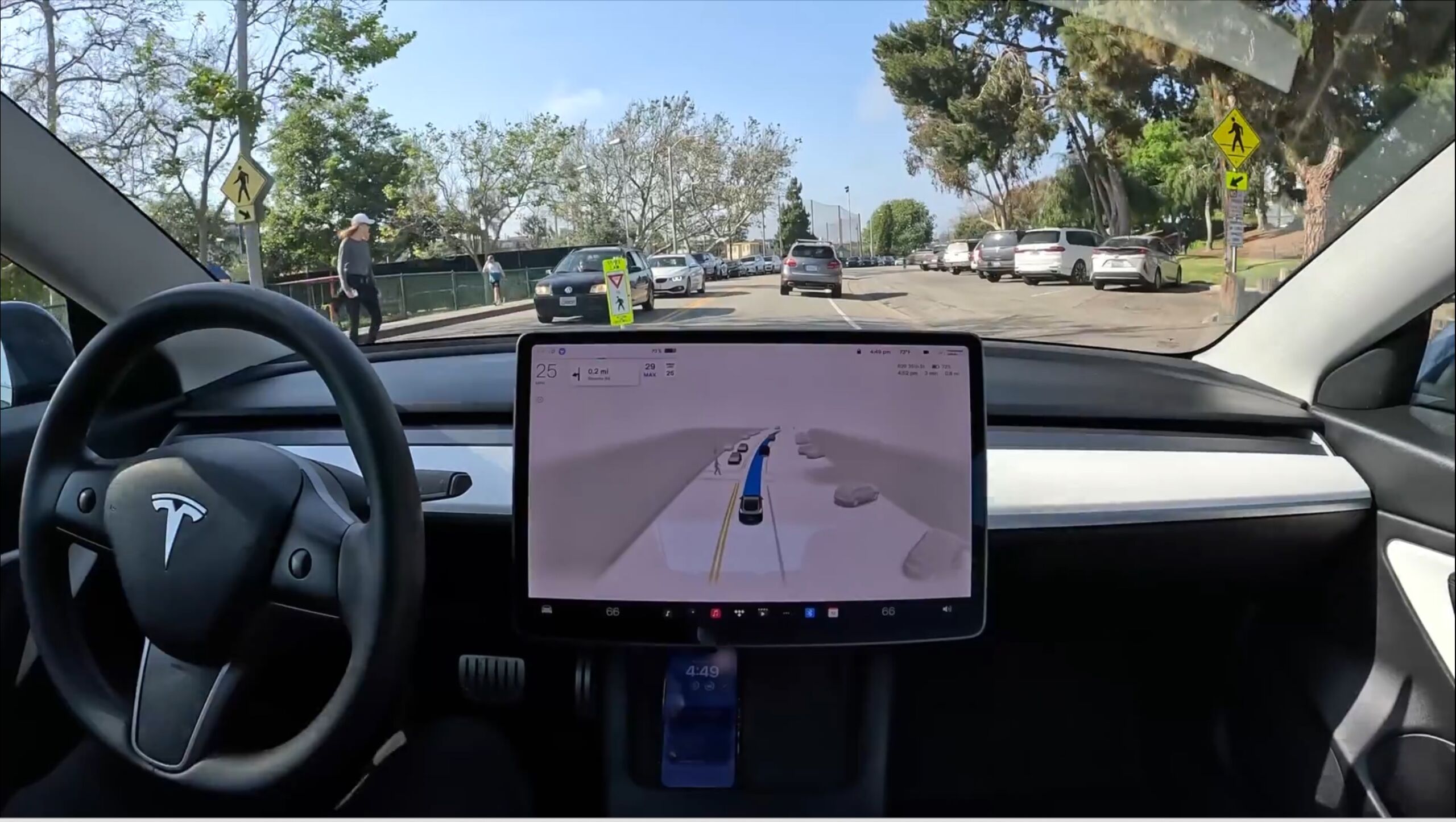
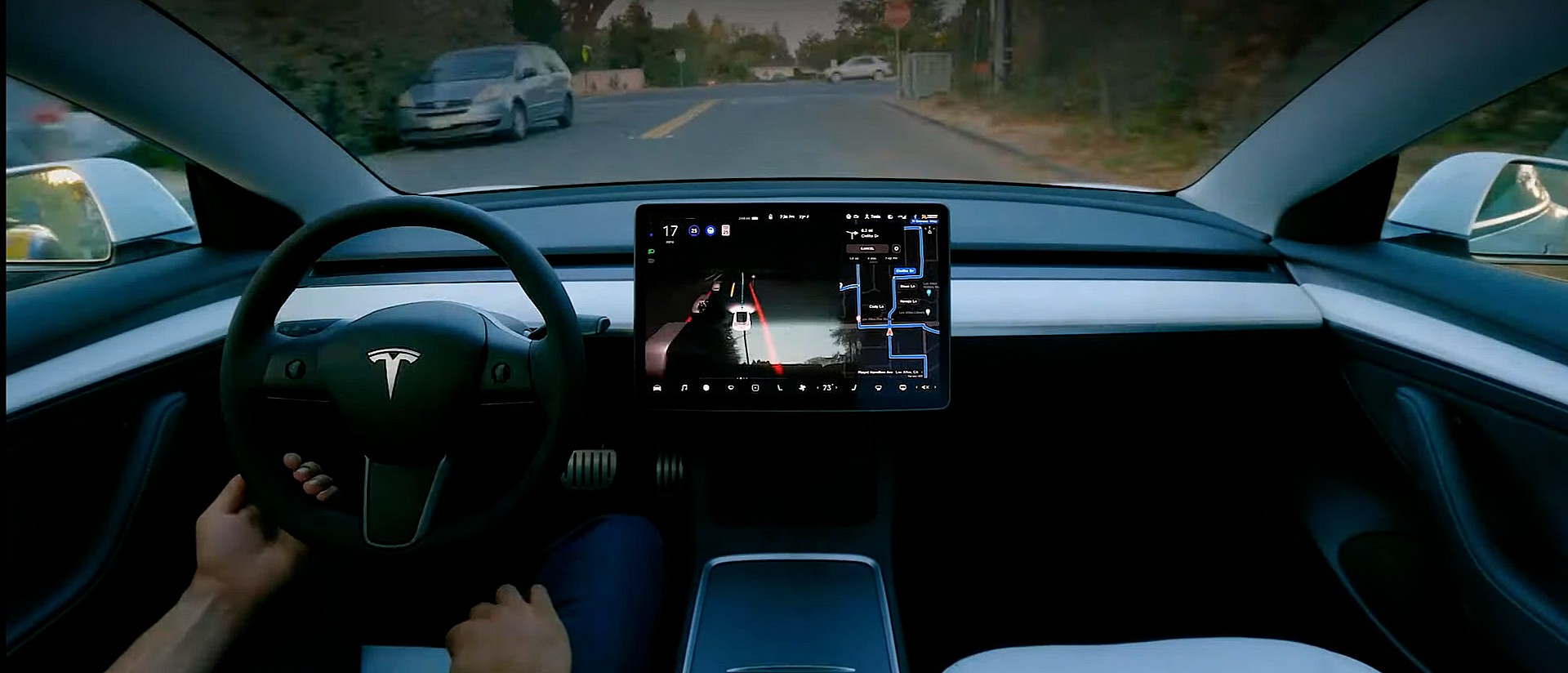
As of 2026, Tesla vehicles are not fully autonomous in the sense of being driverless or "Level 5" capable. While Tesla offers a suite of features under the "Full Self-Driving (Supervised)" brand, these systems remain Level 2 driver-assist technologies that require a fully attentive human driver to monitor the road and intervene at any moment.
Despite the ambitious nomenclature, no Tesla currently on the market is legally or technically permitted to operate without human supervision in all conditions. To understand why there is a gap between the product name and its actual classification, we must examine the technical standards, the hardware limitations, and the regulatory environment governing autonomous vehicles in 2026.
The SAE Levels of Driving Automation: Where Tesla Fits
To determine if a Tesla is "fully autonomous," we must look at the standard definitions established by SAE International (Standard J3016). This global standard categorizes driving automation into six levels, ranging from Level 0 (no automation) to Level 5 (full automation).
Level 2: Partial Driving Automation
This is where all current Tesla models reside. In a Level 2 system, the vehicle can control both steering and acceleration/deceleration simultaneously. However, the person in the driver’s seat is not a passenger; they are the "operator." In 2026, Tesla’s software—including the latest iterations of Full Self-Driving (FSD)—still necessitates that the driver keeps their eyes on the road and hands ready to take over.
Level 3: Conditional Automation
At Level 3, the car can take full control under specific conditions (such as traffic jams on pre-mapped highways). When the car is in control, the driver is not required to monitor the environment but must be ready to intervene when the system requests it. While some competitors have achieved Level 3 in limited jurisdictions, Tesla has skipped this intermediate step in favor of a general-purpose Level 2 system that they hope to eventually "solve" for Level 4 or 5.
Level 4 and Level 5: The Goal of Full Autonomy
Level 4 vehicles can drive themselves without human intervention within a specific geographic area (geofencing). Level 5 is the "holy grail," where the vehicle can drive anywhere a human can, in any weather, with no human input required. Despite Elon Musk’s historical projections, Tesla has not yet achieved a consumer-facing Level 5 system that removes the driver's legal and physical responsibility.
Autopilot vs. Full Self-Driving (Supervised)
The confusion surrounding Tesla’s autonomy often stems from the different tiers of software available. In 2026, the software stack has evolved significantly, but the fundamental requirement for human oversight remains.
Basic Autopilot
Every new Tesla comes standard with Basic Autopilot. This is a suite of driver-assist features intended for use on highways. It includes Traffic-Aware Cruise Control, which matches the vehicle's speed to that of surrounding traffic, and Autosteer, which assists in steering within a clearly marked lane. This is comparable to the adaptive cruise control systems found in most modern vehicles.
Full Self-Driving (Supervised)
FSD (Supervised) is an optional upgrade that expands the car's capabilities to city streets. In 2026, FSD version 12 and its successors utilize "end-to-end" neural networks, meaning the car’s behavior is learned from millions of miles of human driving data rather than being hard-coded by engineers. Features include:
- Automatic Lane Changes: Moving the car to a faster lane or preparing for an exit.
- Navigate on Autopilot: Guiding the car from a highway on-ramp to an off-ramp, including interchanges.
- Autosteer on City Streets: Navigating complex intersections, roundabouts, and urban obstacles.
- Traffic and Stop Sign Control: Recognizing and reacting to stop signs and traffic lights.
The addition of the word "Supervised" to the product name in 2024 was a critical move by Tesla to align consumer expectations with the legal reality: the software assists, but the human drives.
The Hardware: Tesla Vision and AI4
A major point of contention in the quest for full autonomy is Tesla’s hardware philosophy. Unlike many competitors (such as Waymo or Mercedes-Benz) that utilize a suite of sensors including LiDAR, radar, and cameras, Tesla relies almost exclusively on Tesla Vision.
The Shift to Vision-Only
By 2026, Tesla has fully committed to a vision-only approach. The company removed radar and ultrasonic sensors from its production lines years ago, arguing that since humans drive using only vision (eyes) and biological neural networks (brains), a car should be able to do the same with cameras and silicon.
AI4 and Hardware 4 (HW4)
The current generation of vehicles is equipped with AI4 hardware, which features higher-resolution cameras and significantly more processing power than the previous Hardware 3 (HW3). This compute power is necessary to run the complex neural networks that interpret surroundings in real-time. However, critics argue that the lack of LiDAR (which uses lasers to measure distance) makes the system more susceptible to errors in challenging lighting conditions or heavy fog—a primary reason why Level 5 autonomy remains elusive.
| Feature | Basic Autopilot | FSD (Supervised) | True Full Autonomy (Level 5) |
|---|---|---|---|
| Steering/Speed Control | Yes (Highway) | Yes (City & Highway) | Yes (All Roads) |
| Traffic Light Recognition | No | Yes | Yes |
| Driver Supervision | Required | Required | Not Required |
| Geofencing | Limited to Highways | None | None |
| LiDAR/Radar | No (Vision-only) | No (Vision-only) | Varies (Usually Yes) |
| Liability | Driver | Driver | Manufacturer |
The Regulatory and Safety Landscape in 2026
The path to full autonomy is not just a technical challenge; it is a legal and regulatory one. In 2026, the National Highway Traffic Safety Administration (NHTSA) continues to keep Tesla under close scrutiny regarding the safety of its automated systems.
Monitoring and Driver Attentiveness
To satisfy safety concerns, Tesla has implemented a robust driver monitoring system using an internal cabin camera located above the rearview mirror. This camera tracks eye movement and head position to ensure the driver is looking at the road. If the system detects inattentiveness, it issues a series of warnings (often called "nags"). Repeated failure to pay attention can result in a "Strikeout," where the driver is barred from using FSD for a set period.
The Liability Gap
One of the most significant indicators that Teslas are not fully autonomous is the question of liability. In every jurisdiction in 2026, the human driver of a Tesla is legally responsible for any accident that occurs while Autopilot or FSD is engaged. In contrast, manufacturers of true Level 3 or Level 4 systems (such as Mercedes-Benz in specific highway conditions) have begun to accept legal liability when their autonomous systems are active. Until Tesla accepts liability for the car's actions, it cannot be considered "fully" autonomous.
Comparing Tesla to Other Autonomous Systems
It is helpful to compare Tesla’s approach with other leaders in the field to see where it stands in 2026.
- Waymo (Google/Alphabet): Waymo operates true Level 4 autonomous taxis. These vehicles have no driver in the front seat but are "geofenced" to specific cities like Phoenix, San Francisco, and Los Angeles. They use expensive LiDAR and radar suites.
- Mercedes-Benz Drive Pilot: Mercedes offers a Level 3 system on certain highways in Germany and parts of the US. While it is more "autonomous" than Tesla in those specific spots (you can take your eyes off the road), it is much more limited in where it can be used.
- Tesla’s "Un-geofenced" Approach: Tesla’s advantage is that its system works almost anywhere there are roads. It is a "general" AI. However, because it is designed to work everywhere, it is not yet perfect enough anywhere to be used without a human supervisor.
Why Full Autonomy Remains a "Coming Soon" Feature
The transition from Level 2 to Level 5 is a monumental leap in complexity. For a Tesla to be fully autonomous, it must solve "edge cases"—rare events that are difficult for AI to predict.
- Environmental Variability: Heavy snow, torrential rain, or standing water can obscure camera lenses and confuse the neural network’s perception of lane lines.
- Unpredictable Human Behavior: A car must not only follow the rules but also anticipate the erratic actions of human drivers, cyclists, and pedestrians who may not follow the law.
- Construction Zones: Temporary signs, hand signals from road workers, and shifting lanes are notoriously difficult for AI to interpret without human-level context.
Tesla’s strategy in 2026 involves using its massive fleet of millions of vehicles to collect data on these edge cases. Every time a human driver intervenes while FSD is active, that data is sent back to Tesla’s Dojo supercomputer to train the next version of the software.
Practical Considerations for Owners in 2026
If you are considering a Tesla for its self-driving capabilities, it is essential to manage expectations based on current 2026 standards:
- Cost: FSD (Supervised) remains a premium feature, available either as a one-time purchase (often exceeding $12,000–$15,000 depending on the market) or a monthly subscription (approximately $99–$199).
- Insurance: Most insurance companies do not offer discounts for using FSD; in some cases, premiums may be higher due to the high cost of repairing the vehicle's advanced camera and sensor arrays.
- Hardware Compatibility: Older Teslas (pre-2019) may require hardware retrofits to run the latest versions of FSD, and cars with Hardware 3 are increasingly seeing a feature gap compared to Hardware 4/AI4 vehicles.
FAQ: Tesla and Autonomy
Can I sleep in my Tesla while it drives in 2026?
No. You cannot sleep in a Tesla while it is in motion. The vehicle requires active supervision. If the cabin camera detects that your eyes are closed or that you are not looking at the road, it will disengage the system and eventually pull the vehicle over. Sleeping in a moving vehicle remains illegal and highly dangerous.
Does Tesla's Full Self-Driving work in the rain or snow?
Yes, but with limitations. FSD (Supervised) can operate in various weather conditions, but its performance may be degraded. If the cameras are obstructed by mud, ice, or heavy rain, the system will alert the driver and may disable certain features until the sensors are clear.
Is Tesla responsible if the car crashes while FSD is on?
No. According to the terms of service and current 2026 traffic laws, the driver is responsible for the vehicle's operation at all times. Tesla explicitly states that FSD does not make the vehicle autonomous and requires a fully attentive driver.
What is the difference between FSD Beta and FSD Supervised?
By 2026, the "Beta" label has largely been phased out in favor of "Supervised." While they refer to the same underlying technology, the change in terminology highlights that the system is no longer in an early testing phase but is still not a "set-and-forget" technology.
Will my current Tesla ever become fully autonomous via a software update?
While Elon Musk has frequently stated that existing hardware is capable of Level 5 autonomy, many industry experts and regulators remain skeptical. It is possible that Level 4 or 5 autonomy may eventually require hardware sensors (like high-fidelity radar or LiDAR) that current Tesla models lack.
Final Recommendation: A Tool, Not a Replacement
In 2026, a Tesla is a remarkably advanced vehicle that can handle a significant portion of the "driving load," particularly on long highway trips or in predictable traffic. However, it is not a self-driving car in the way science fiction portrays it.
For those interested in experiencing the cutting edge of AI, Full Self-Driving (Supervised) offers a unique glimpse into the future of transport. However, users should treat it as a high-end cruise control system rather than a chauffeur. Always keep your hands on or near the wheel, stay focused on the road, and be prepared to take over instantly. True autonomy—where you can be a passenger in your own car—is still on the horizon, waiting for further technical breakthroughs and regulatory shifts.