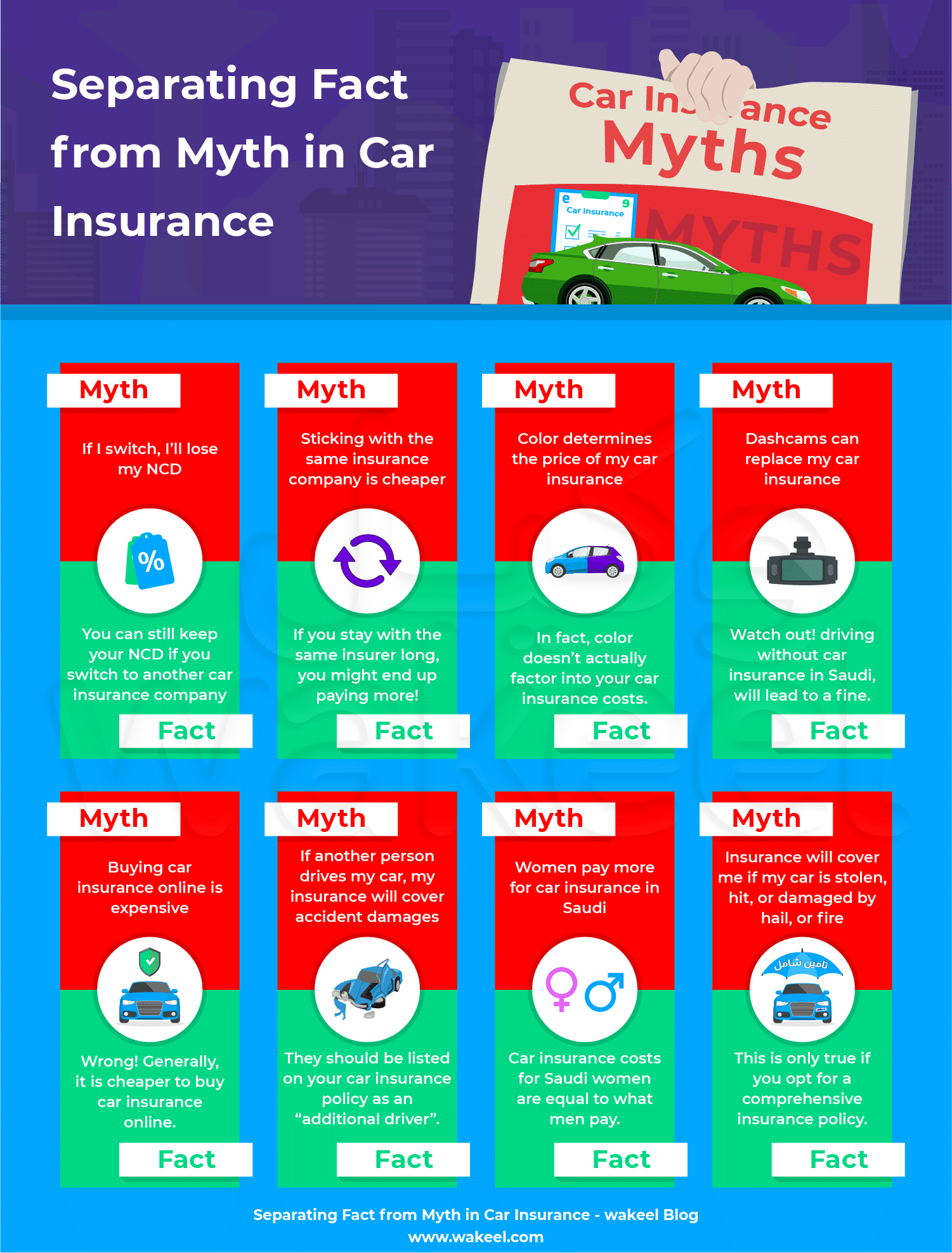
The "basics" of insurance represent a complex intersection where mathematical reality meets public perception. While the foundational mechanics—risk pooling, actuarial probability, and the principle of indemnity—are verifiable facts, many consumer-facing concepts like "full coverage" or "loyalty rewards" are often functional myths or marketing simplifications that obscure how policies actually operate in 2026.
Insurance remains one of the most misunderstood sectors of the financial world. To the average policyholder, it often feels like a "black box" where premiums go in and claims occasionally come out. However, the industry operates on rigid legal and mathematical frameworks. Distinguishing between what is a hard-coded operational fact and what is a persistent cultural myth is essential for any consumer looking to protect their assets without overpaying for perceived value.
The Myth of "Full Coverage"
One of the most persistent myths in the insurance industry is the existence of "full coverage." From a technical and legal standpoint, full coverage does not exist. You will not find this term in a standard ISO (Insurance Services Office) policy form because it implies an absence of limits and exclusions, which would be financially impossible for an insurer to sustain.
The Reality of Policy Components
What consumers typically call full coverage is actually a combination of three distinct components:
- Liability Insurance: This covers damage you cause to others. It is usually mandated by law but capped at specific dollar amounts (e.g., $100,000/$300,000).
- Collision Coverage: This pays for damage to your own vehicle resulting from an accident, regardless of fault, minus your deductible.
- Comprehensive Coverage: This covers non-collision events, such as theft, fire, or "acts of God" like hail or falling trees.
The "myth" here is that having these three components means you are protected against every possible scenario. In reality, every policy contains a section dedicated to Exclusions. These can include intentional acts, wear and tear, mechanical breakdown, and specific high-risk scenarios like racing or commercial use of a personal vehicle. Believing in the "fact" of full coverage often leads to "coverage gaps" where a policyholder assumes they are protected for a loss that is explicitly excluded in the fine print.
The Actuarial Fact: How Premiums Are Actually Calculated
There is a common myth that insurance companies "guess" your risk or use arbitrary factors like the color of your car to set prices. The fact is that insurance pricing is driven by actuarial science, a discipline of mathematics and statistics that predicts the probability of future events based on historical data.
The Role of the VIN
The "red car myth"—the belief that driving a red car increases your insurance premium—is a classic example of a total myth. Insurers do not even ask for the color of your vehicle when you apply for a quote. Instead, they use the Vehicle Identification Number (VIN). The VIN tells the insurer the engine size, safety features, weight, and historical "loss cost" associated with that specific make and model. If a red sports car costs more to insure, it is because it is a sports car with a high-displacement engine, not because of its pigment.
Risk Pooling and the Law of Large Numbers
The mathematical fact supporting all insurance is the Law of Large Numbers. This principle states that as the number of "exposure units" (insured people/assets) increases, the actual loss experience will more closely move toward the expected loss.
By 2026, the use of telematics and AI-driven underwriting has refined this "fact" even further. Insurers can now move away from broad demographic myths (e.g., "all young drivers are reckless") and toward individual behavioral facts (e.g., "this specific driver brakes hard 40% more often than the average").
The Principle of Indemnity: Profit vs. Protection
A foundational fact of insurance that many people struggle with is the Principle of Indemnity. The purpose of insurance is to return the insured to the financial position they were in immediately prior to the loss—no more, no less.
Why You Cannot "Profit" From a Claim
Many policyholders believe they should be able to keep the "extra" money if a repair costs less than the insurance estimate. However, attempting to profit from an insurance claim is often a violation of the contract and can border on insurance fraud.
- Actual Cash Value (ACV): This is a fact of many policies where the insurer pays the replacement cost minus depreciation.
- Replacement Cost Value (RCV): This pays the current market price to replace the item with a new one of similar quality.
The myth here is that insurance is a "savings account" or a "bet" where you win if something bad happens. In reality, it is a risk-transfer mechanism designed for financial stabilization, not wealth generation.
Claims Processing: Myth vs. Reality
There is a widespread myth that insurance companies have a "default" policy of denying claims to save money. While insurance is a for-profit business, the reality is governed by Bad Faith Laws and state regulations managed by bodies like the National Association of Insurance Commissioners (NAIC).
The Cost of Denials
In reality, insurance companies are legally obligated to investigate and pay valid claims promptly. If an insurer denies a valid claim without a legitimate contractual reason, they can be sued for "bad faith," which often results in punitive damages far exceeding the original claim amount.
The "fact" is that most claim denials stem from:
- Lack of Coverage: The specific event was not purchased or was excluded.
- Failure to Disclose: The policyholder lied on the application (material misrepresentation).
- Policy Lapses: The premium was not paid, and the policy was not in force at the time of loss.
The Loyalty Myth: Does Staying With One Carrier Save Money?
In decades past, "loyalty" was seen as a guaranteed way to get the best rates. In 2026, this is increasingly becoming a myth due to a practice known as Price Optimization.
What is Price Optimization?
Price optimization is a data-driven strategy where insurers analyze which customers are "price sensitive" and which are "inert." If data suggests that a long-term customer is unlikely to shop around for a new policy even if their rates go up, the insurer may incrementally raise premiums regardless of the customer's claim history.
While many companies still offer a "Loyalty Discount," it is often offset by base rate increases. The "fact" for modern consumers is that shopping for coverage every 12 to 24 months is usually the only way to ensure they are paying the true market rate for their risk profile.
Comparing Insurance Myths and Facts
The following table summarizes the most common misconceptions versus the operational and legal realities of the insurance industry in 2026.
| Common Belief | Myth or Fact? | The Reality / Technical Explanation |
|---|---|---|
| "Full Coverage" exists | Myth | Policies are a modular collection of specific coverages, limits, and exclusions. There is always a limit. |
| Red cars cost more | Myth | Rating is based on the VIN, engine specs, and safety ratings, not exterior paint color. |
| Credit score affects rates | Fact | In most jurisdictions, "Insurance Scores" (derived from credit data) are strong predictors of claim frequency. |
| Insurance is for "Acts of God" | Fact (Partial) | Comprehensive coverage handles natural events, but "Act of God" is a colloquialism, not a legal definition. |
| Loyalty always lowers rates | Myth | Price optimization algorithms may actually penalize inert customers who don't shop around. |
| No-fault means it's not my fault | Myth | "No-fault" refers to who pays for medical bills (your own insurer), not who is legally liable for the accident. |
| Home insurance covers floods | Myth | Standard homeowners policies almost always exclude flood damage; a separate NFIP or private policy is required. |
The Role of Reinsurance: The "Insurance for Insurers"
One of the most important facts about the insurance industry that remains invisible to the public is the existence of Reinsurance.
If a massive hurricane hits a coastal city, a single insurance company might face billions of dollars in claims simultaneously. To prevent bankruptcy, insurers buy their own insurance from global entities like Munich Re or Swiss Re. This is a crucial "fact" of the industry: your local agent is backed by a global web of capital that ensures claims can be paid even during "Black Swan" events. Without reinsurance, the "basic" promise of insurance—that the money will be there when you need it—would be a myth in the face of large-scale catastrophes.
Telematics and the "New Fact" of Privacy
In 2026, the transition from demographic-based pricing to behavior-based pricing is nearly complete. A "basic" fact of insurance today is that your data is your premium.
- The Myth: "My insurance company doesn't know how I drive."
- The Fact: Between smartphone apps, connected vehicle systems, and third-party data aggregators like LexisNexis, insurers have more granular data on driver behavior than ever before.
This shift has turned the "basic" idea of "shared risk" on its head. Instead of everyone in a zip code paying roughly the same, we are moving toward "hyper-individualized" risk. This is a fact that benefits safe, predictable policyholders but creates a significant financial burden for those deemed high-risk by the algorithms.
Frequently Asked Questions
Is it a myth that my rates go up even if I didn't have an accident?
Fact. This is one of the most frustrating realities for policyholders. Your premium is influenced by "rate filings" that your insurance company submits to the state insurance department. If the cost of labor, medical care, or car parts increases across the board—or if your geographic area experiences an increase in natural disasters—the insurer must raise everyone's rates to maintain the required "solvency margins" to pay future claims.
Is "No-Fault" insurance a myth when it comes to determining who is at fault?
Fact. The term "No-Fault" is highly misleading. It does not mean that the police or insurers won't determine who caused the accident. It simply means that for minor injuries, each driver's own insurance pays for their medical treatment (Personal Injury Protection) to reduce the number of small lawsuits in the court system. Liability for property damage is still determined by fault.
Does homeowners insurance cover my belongings if I am traveling?
Fact. Most standard homeowners and renters insurance policies include "off-premises coverage." This means your personal property (like a laptop or luggage) is covered against perils like theft even when you are away from home, though usually at a reduced limit (often 10% of your total personal property coverage).
Can an insurance company cancel my policy at any time?
Myth. After an initial "discovery period" (usually 60 days), an insurer generally cannot cancel your policy unless you fail to pay the premium, committed fraud on your application, or your driver's license is suspended. They can, however, choose to "non-renew" your policy at the end of the term if your risk profile has changed significantly.
Is the "Deductible" the most I will have to pay?
Myth. The deductible is what you pay out-of-pocket before the insurance coverage kicks in for a specific claim. You are still responsible for any costs that exceed your policy's "limit of liability." For example, if you have $50,000 in property damage liability and you cause $70,000 in damage, you are personally responsible for the $20,000 gap, regardless of your deductible.
Practical Recommendation for 2026
To navigate the myths and facts of the modern insurance landscape, do not rely on marketing terms like "full coverage" or "discounts." Instead, take the following actions:
- Read the Exclusions: Ignore the "What is Covered" section for a moment and go straight to "Exclusions." This is where the reality of your policy lives.
- Verify Limits: Ensure your liability limits are high enough to protect your total net worth. In a litigious environment, "minimum limits" are a financial myth of safety.
- Audit Your Data: Check what telematics data your car or phone is sending to insurers. If you are a safe driver, opting into these programs can turn the "fact" of high rates into significant savings.
- Consult an Independent Agent: Unlike "captive" agents who work for one company, independent agents can compare multiple carriers to find where the "facts" of your specific risk profile result in the lowest cost.