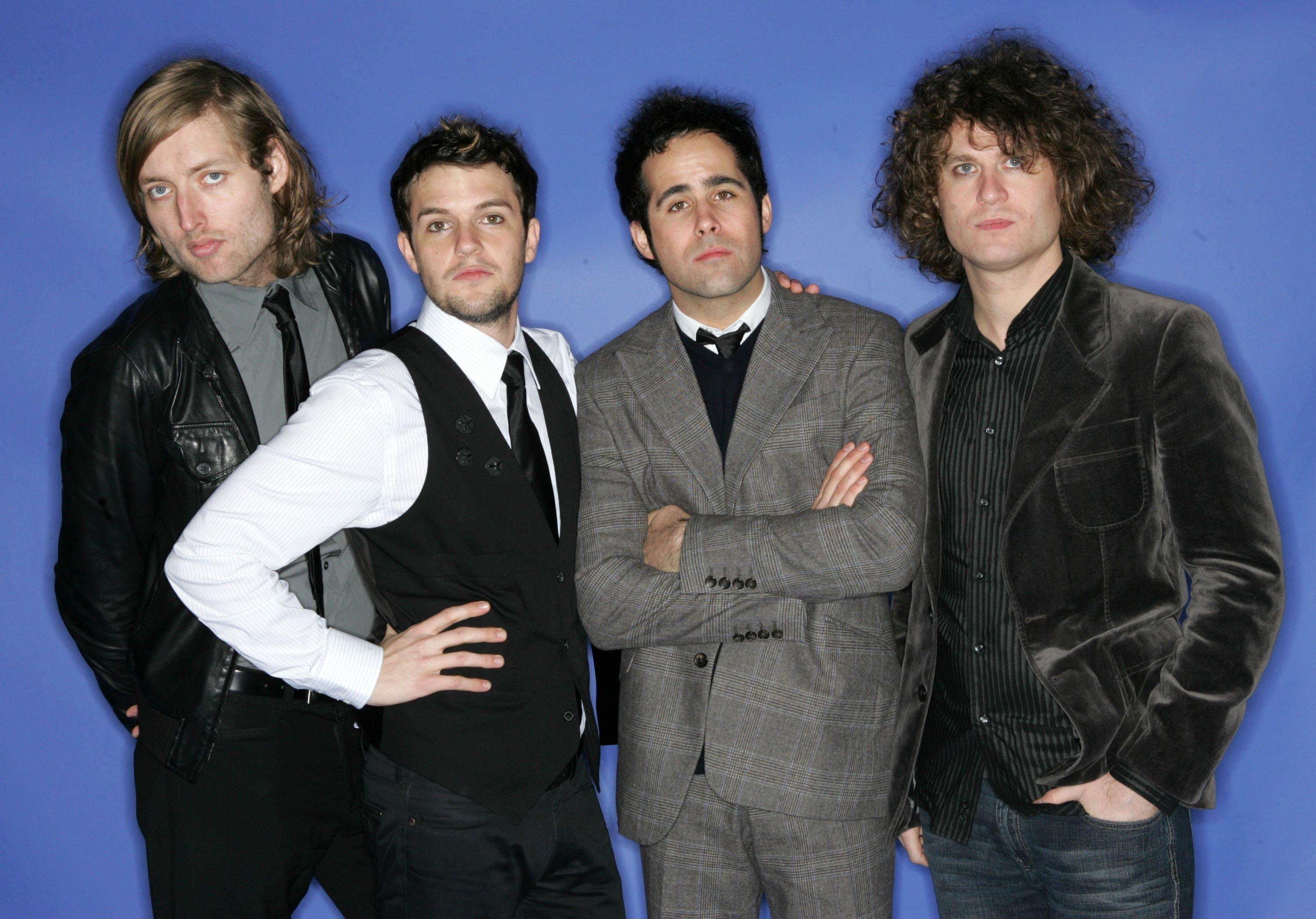
The Killers are not technically a "Mormon band," as only the frontman and primary lyricist, Brandon Flowers, is a practicing member of The Church of Jesus Christ of Latter-day Saints (LDS). While Flowers' faith profoundly influences the band's lyrical themes and moral compass, the other three founding members do not share his religious affiliation, and the band operates entirely within the secular rock industry.
Understanding the Band’s Religious Composition
To answer whether a band belongs to a specific religious category, one must look at the individuals who comprise the group. The Killers formed in Las Vegas in 2001, a city often nicknamed "Sin City," which provides a stark contrast to the traditional image of the LDS faith. However, the internal makeup of the band is religiously diverse.
Brandon Flowers: The LDS Connection
Brandon Flowers is the face of the band and a devout member of the LDS Church. His commitment to his faith is not a private matter; he has been vocal about his beliefs in interviews for over two decades. In 2011, he even participated in the church’s "I’m a Mormon" advertising campaign, where he discussed how he balances his life as a rock star with his roles as a husband, father, and person of faith.
Flowers’ journey with his religion hasn't always been linear. While raised in the faith, he has admitted to periods of "wandering" during the early years of the band’s meteoric rise following the success of their debut album, Hot Fuss (2004). However, he eventually recommitted to his religious roots, a transition that became increasingly evident in the band's later discography.
The Other Members: A Secular Majority
The other founding members of The Killers—guitarist Dave Keuning, bassist Mark Stoermer, and drummer Ronnie Vannucci Jr.—are not members of the LDS Church.
- Ronnie Vannucci Jr.: Has often spoken about his perspective as an "outsider" to the faith, noting that while he respects Flowers' devotion, it is not a path he follows.
- Dave Keuning: Originally from Iowa, Keuning’s background is secular, and his contributions to the band are focused on the sonic landscapes of their music rather than theological messaging.
- Mark Stoermer: Like the others, Stoermer comes from a non-LDS background.
Because the majority of the band does not subscribe to the LDS faith, categorizing The Killers as a "Mormon band" is factually inaccurate. Unlike "family bands" such as The Osmonds or The Jets, where every member shared the same religious upbringing and active membership, The Killers are a pluralistic group of musicians.
The Influence of Faith on The Killers' Music
While the band as a whole is secular, the creative output is heavily steered by Flowers' songwriting. This has led to a fascinating blend of stadium rock and spiritual inquiry. As of 2026, music historians and critics often point to The Killers as a prime example of how personal faith can color mainstream art without alienating a general audience.
Lyrical Themes and "Heartland Rock"
Early hits like "Mr. Brightside" or "Somebody Told Me" focused on jealousy, nightlife, and youthful angst. However, as the band evolved, particularly with the release of Sam’s Town (2006) and Day & Age (2008), religious imagery began to surface more frequently.
The famous line from "All These Things That I’ve Done"—"I’ve got soul, but I’m not a soldier"—is frequently interpreted through a spiritual lens, suggesting a struggle between one's inherent spiritual nature and the "combat" of worldly life. By the time the band released Pressure Machine in 2021, the religious influence was no longer a subtext; it was the text itself.
Pressure Machine: A Deep Dive into Mormon Culture
Pressure Machine stands as perhaps the most significant cultural artifact connecting The Killers to the LDS world. The concept album is set in Nephi, Utah, the small town where Flowers spent part of his childhood. It features spoken-word interludes from actual residents of the town, many of whom discuss their faith, the struggles of rural life, and the strictures of religious community.
Songs like "Quiet Town" and "Terrible Thing" explore the complexities of growing up in a high-demand religious environment. While the album isn't promotional of the faith, it is deeply empathetic toward the people within it, showing the LDS lifestyle through a lens of realism rather than caricature.
| Feature | Brandon Flowers' Perspective | The Band's Collective Stance |
|---|---|---|
| Religious Affiliation | Active member of the LDS Church. | Secular/Non-affiliated. |
| Lyric Focus | Morality, redemption, family, and faith. | Sonic innovation, rock tradition, and storytelling. |
| Lifestyle on Tour | Avoids alcohol and drugs; prioritizes family. | Varies by member; follows standard rock tour norms. |
| Public Advocacy | Featured in "I'm a Mormon" campaigns. | Generally avoids religious or political endorsements. |
| Musical Genre | Alternative Rock with spiritual undertones. | Indie Rock, New Wave, and Heartland Rock. |
The "Mormon Rock Star" Paradox
The Killers occupy a unique space in the music industry. In the 20th century, rock music was often viewed by religious institutions—including the LDS Church—as inherently rebellious or even dangerous. Flowers helped bridge this gap. He proved that one could be the frontman of one of the world’s biggest rock bands while adhering to a conservative religious lifestyle.
Avoiding the "Christian Rock" Label
It is important to distinguish between a band with a religious member and a "Christian Rock" band. The Killers have never signed to a religious label, nor have they performed at exclusively religious festivals. Their music is played on mainstream radio and at major festivals like Glastonbury and Coachella.
The distinction lies in the intent. A religious band typically aims to evangelize or provide worship music for a specific congregation. The Killers aim to create art that reflects the human experience, which, for Flowers, includes his relationship with God. This allows the band to maintain a massive global following among atheists, agnostics, and people of various faiths who do not feel they are being "preached to" when they listen to a Killers record.
Cultural Perception in Las Vegas
The fact that the band originated in Las Vegas adds another layer to their identity. Las Vegas has a significant LDS population, but it is also the global capital of gambling and entertainment. The Killers’ music often feels like a tug-of-war between these two identities: the neon lights of the Strip and the quiet, moral sturdiness of the desert. This duality is central to their appeal and is a recurring motif in their 2024 career-spanning residency and subsequent 2025-2026 tour cycles.
Comparing The Killers to Other LDS Artists
To better understand where The Killers fit, it is helpful to look at other mainstream artists who share an LDS background. The "Mormon influence" in indie and alternative rock has become a recognized phenomenon over the last two decades.
- Imagine Dragons: Like The Killers, they are a massive stadium act from Las Vegas with LDS roots. However, lead singer Dan Reynolds has had a more public and complex relationship with the church, often advocating for LGBTQ+ rights in ways that have created friction with official church stances.
- Neon Trees: Lead singer Tyler Glenn was a practicing Mormon when the band first became famous but later left the church publicly, using his music to process the fallout of that decision.
- Low: The late Mimi Parker and her husband Alan Sparhawk were devout Mormons whose faith deeply informed the minimalist, spiritual sound of their critically acclaimed indie band.
Compared to these artists, Brandon Flowers is often seen as the "traditionalist." He has remained an active member while navigating the secular world, making him a rarity in the high-stakes environment of global rock stardom.
The Evolution of the Band's Image by 2026
As of 2026, The Killers have transitioned into the "elder statesmen" phase of their careers. The questions regarding Flowers' faith have largely been settled. Fans no longer wonder if the band is a "Mormon band" in a literal sense; instead, they appreciate the band's music as a dialogue between the sacred and the profane.
The band’s longevity—spanning 25 years since their formation—is often attributed to the discipline and work ethic that Flowers credits to his upbringing and faith. While the "rock and roll lifestyle" has claimed the careers and lives of many of their contemporaries, The Killers have remained remarkably stable. This stability has allowed them to continue selling out arenas and headlining festivals well into the mid-2020s.
Practical Insights for Fans and Researchers
When discussing the religious identity of The Killers, it is essential to use precise language to avoid misinformation. Here are the key takeaways for anyone researching the band's background:
- Individual vs. Collective: Always distinguish between Brandon Flowers' personal faith and the band's official identity. The band is a professional partnership, not a religious organization.
- Lyrical Interpretation: While you can find religious themes in their music, many songs are also open to secular interpretation. The "soul" Flowers sings about can be viewed as the human spirit or a divine gift, depending on the listener's perspective.
- Official Stance: The band has never released a statement claiming to be a religious group. Their "official" identity remains rooted in the alternative and rock genres.
Frequently Asked Questions
Is Brandon Flowers still a practicing Mormon in 2026?
Yes, Brandon Flowers remains an active member of The Church of Jesus Christ of Latter-day Saints. He has frequently spoken about how his faith provides a foundation for his life, especially as he navigates the challenges of fame and the music industry. He often attends services with his family when not on tour.
Do The Killers have any songs about Mormonism?
While they don't have songs that explicitly explain Mormon theology, many songs on the album Pressure Machine (2021) deal with the culture, social dynamics, and lived experiences of people in an LDS-heavy community in Utah. The song "The Getting By" is a prominent example of exploring faith in everyday life.
Why do people think The Killers are a Mormon band?
The perception persists primarily because Brandon Flowers is one of the most famous Mormons in the world. Because he is the primary songwriter and the most visible member of the group, his personal identity is often conflated with the identity of the entire band.
Does the LDS Church fund or support The Killers?
No. The Killers are a commercially successful band signed to major labels (originally Island Def Jam and later EMI/Universal). They are a self-sustaining business entity and have no financial or organizational ties to the LDS Church.
Are there other members of the band who are religious?
The other founding members (Ronnie Vannucci Jr., Dave Keuning, and Mark Stoermer) have diverse personal beliefs but do not identify as members of the LDS Church. They have generally kept their religious or spiritual views more private than Flowers.
Final Recommendation for Music Enthusiasts
If you are interested in the intersection of faith and rock music, The Killers provide an excellent case study. To truly understand the "Mormon influence" on the band, it is recommended to listen to the Pressure Machine album while reading the lyrics. It offers the most direct insight into how Flowers' upbringing and religious environment have shaped his storytelling.
For those looking for a "Mormon band" in the sense of a group where all members share the faith, you may want to look toward historical groups like The Osmonds. However, for a modern look at how faith survives and thrives in a secular world, The Killers remain the preeminent example in contemporary music.