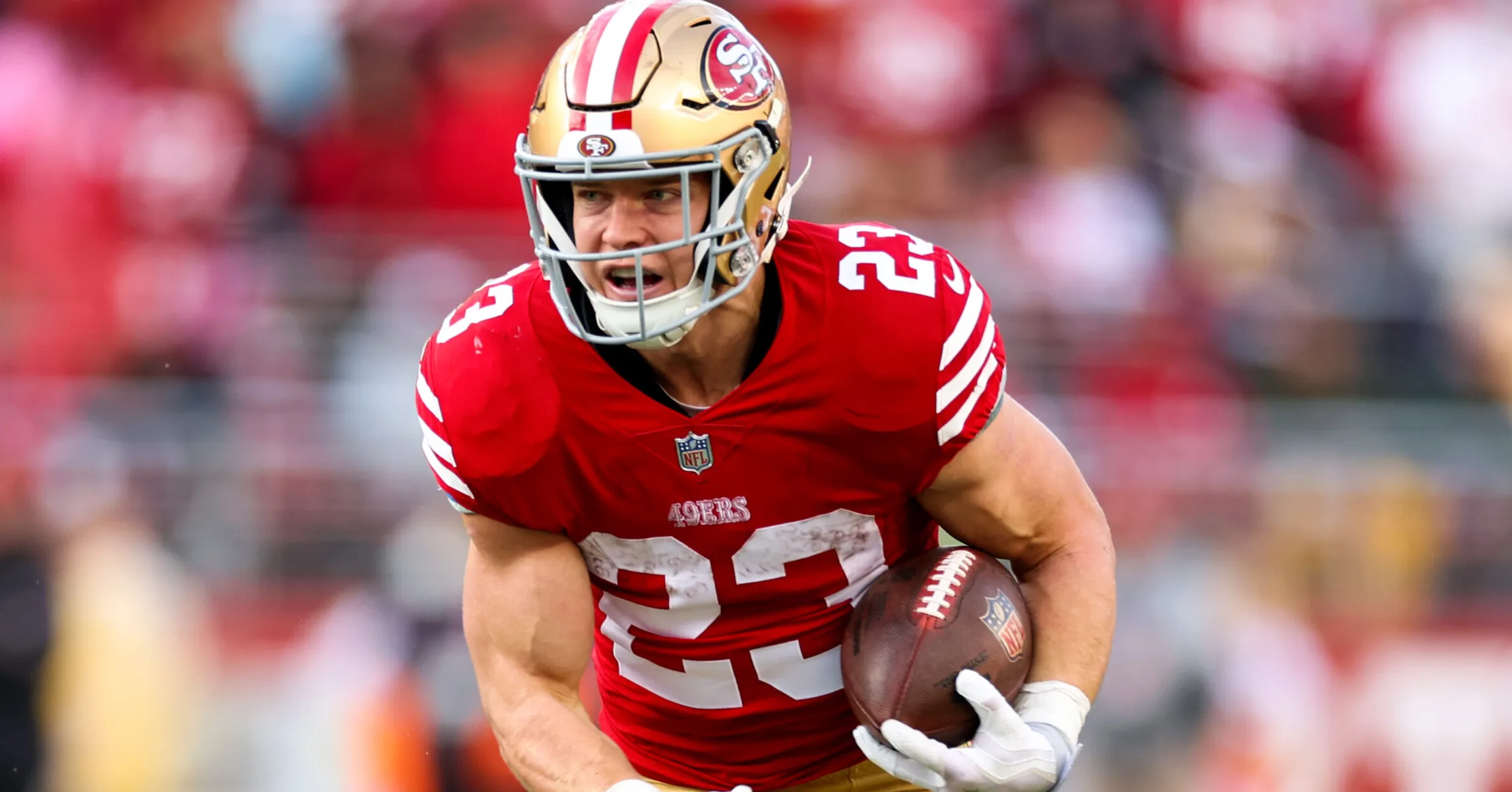
Drafting members of the McCaffrey family remains a high-upside strategy in 2026, provided managers distinguish between Christian’s veteran volume and Luke’s developmental trajectory. While Christian McCaffrey offers elite, albeit aging, PPR production in the San Francisco 49ers' offense, Luke McCaffrey serves as a sophisticated mid-round value with significant route-running growth and red-zone utility.
The Evolution of the McCaffrey Dynasty: A 2026 Perspective
The McCaffrey name has long been synonymous with athletic versatility, a reputation built on the foundation laid by Ed McCaffrey (a three-time Super Bowl champion wide receiver) and Lisa McCaffrey (a former Stanford soccer standout). By 2026, this lineage has matured into a multi-generational case study in professional longevity and positional flexibility. When evaluating whether these athletes are "worth drafting," one must look beyond the name on the jersey and analyze the specific physiological and situational metrics that define their current value.
In the current professional landscape, the family is primarily represented by Christian McCaffrey and Luke McCaffrey. While their older brothers, Max and Dylan, have transitioned into coaching and alternative athletic paths respectively, the focus for scouts and fantasy managers remains fixed on the active NFL duo. The decision to draft a McCaffrey in 2026 is no longer a "no-brainer" based on pure talent; it is an exercise in risk management, specifically concerning age-curves for running backs and the third-year breakout thresholds for wide receivers.
Christian McCaffrey: Navigating the Veteran Cliff
Entering the 2026 season, Christian McCaffrey remains one of the most polarizing figures in draft rooms. At 30 years old, he has reached the traditional "cliff" for NFL running backs—a point where statistical production typically begins a sharp decline. However, McCaffrey is not a traditional running back. His value has always been predicated on his role as a "wide back," a hybrid weapon capable of lining up in the slot or out wide, which significantly mitigates the physical toll of between-the-tackles rushing.
Usage and Efficiency in the 49ers' System
The San Francisco 49ers' offensive scheme, under the continued evolution of Kyle Shanahan’s philosophy, has mastered the art of "load optimization" for McCaffrey. By 2026, his snap count might be lower than his 2019 peak with the Panthers, but his Target Share remains in the top 5% for the position. For managers in Point Per Reception (PPR) formats, this makes him worth drafting in the first two rounds regardless of age. His ability to generate yards after the catch (YAC) remains elite because his game relies more on short-area quickness and vision than pure top-end speed, which is the first trait to erode with age.
The Injury Narrative and Longevity
The primary argument against drafting Christian has historically been his injury history. However, looking at his 2024 and 2025 campaigns, he demonstrated a remarkable ability to stay on the field through modified practice schedules and improved soft-tissue maintenance. In 2026, the question of "worth" depends entirely on your draft's cost-to-benefit ratio. If he falls to the late first round, the historical data suggests his floor as a pass-catcher outweighs the risk of an age-related breakdown.
Luke McCaffrey: The Rising Stock of the Third-Year Receiver
While Christian represents the established elite, Luke McCaffrey enters 2026 as one of the more intriguing "buy-low" candidates with high-ceiling potential. Having been drafted in 2024, Luke is now entering his third professional season—a timeframe widely recognized by NFL analysts as the "breakout year" for wide receivers who have successfully adapted to the speed of the professional game.
Route Running and Intelligence
Luke’s transition from a collegiate quarterback to a wide receiver at Rice was well-documented, but his pro-level development has surpassed many initial projections. His greatest asset in 2026 is his Football IQ. Because he views the field through the lens of a former quarterback, his ability to find "settle points" in zone coverage is superior to many pure speed-threats. This makes him a favorite target for quarterbacks who prioritize timing and rhythm.
Drafting for the "Sleeper" Potential
In 2026 draft cycles, Luke McCaffrey is often available in the middle-to-late rounds. He is worth drafting as a WR3 or Flex option with the potential to finish as a top-24 receiver. His value is tied to his versatility; much like his brother, he can be used in gadget plays, jet sweeps, and as a safety valve in the slot. For dynasty league managers, Luke is a priority hold, as his career trajectory suggests a long-term role as a reliable secondary option in a high-volume passing offense.
The Science of the "McCaffrey Gene": Why Pedigree Matters
When evaluating if these athletes are worth drafting, one cannot ignore the biological and psychological advantages of their upbringing. The "McCaffrey Gene" is a common shorthand for a combination of high-level coaching from birth and elite fast-twitch muscle fiber composition inherited from both parents.
- Mental Processing: Growing up in a household where film study was a daily occurrence gives the McCaffrey brothers a processing speed that compensates for physical limitations.
- Professionalism: Scouts frequently cite "pro-readiness" as a reason to draft McCaffreys. They understand the rigors of recovery, diet, and playbook mastery, which reduces the "bust" rate significantly compared to other high-upside prospects.
- Versatility: The ability to play multiple positions (Running Back, Wide Receiver, Returner) provides a "safety net" for their draft value. If one aspect of their game struggles, they can contribute elsewhere, keeping them on the active roster and in the box score.
Comparative Drafting Value: 2026 Projections
The following table outlines the projected drafting landscape for the McCaffrey family in 2026, based on standard league sizes and scoring formats.
| Attribute | Christian McCaffrey (RB) | Luke McCaffrey (WR) |
|---|---|---|
| Projected ADP | Round 1, Pick 8 - Round 2, Pick 4 | Round 7, Pick 10 - Round 9, Pick 2 |
| Primary Value | High-Volume PPR Floor | Red Zone Target / Slot Efficiency |
| Primary Risk | Age-related soft tissue injury | Target competition on depth chart |
| Ideal Format | Full PPR / Half PPR | Dynasty / Deep Standard Leagues |
| 2026 Role | Lead Back / Receiving Specialist | Starting Slot Receiver / Z-Receiver |
| Upside | Overall RB1 Potential | Breakout WR2 Production |
Strategic Recommendations for 2026 Drafts
To determine if the McCaffrey family athletes are worth drafting for your specific needs, consider the following tactical approaches:
The "Handcuff" Strategy
In 2026, owning both Christian and his direct backup is more critical than ever. If you commit a high draft pick to Christian, you must account for the 15-20% chance of a multi-game absence due to his veteran status. Drafting him is worth it only if you are aggressive in securing the 49ers' backfield depth.
The Dynasty Stash
Luke McCaffrey is a "must-draft" in dynasty startups in 2026. While his redraft value is stable, his long-term value is climbing as he masters the nuances of NFL defensive shells. He represents a low-cost investment with the pedigree of a perennial 80-catch contributor.
Avoiding the "Name Tax"
The biggest mistake managers make is drafting a McCaffrey based on 2019 or 2023 highlights. You must draft the 2026 version of the player. For Christian, this means acknowledging he may no longer see 350 touches. For Luke, it means recognizing he is part of a collective receiving corps rather than a solo alpha.
Frequently Asked Questions
Is Dylan McCaffrey worth a flyer in deep leagues?
As of 2026, Dylan McCaffrey is primarily viewed as a depth chart player or practice squad candidate if he is still active in professional circles. He is generally not worth drafting in standard or even most deep fantasy leagues, as he has not secured a consistent starting role that translates to statistical output.
How does Christian McCaffrey's age affect his 2026 auction value?
In auction formats, Christian's price tag often drops by 10-15% once a player hits 30. This makes him a potential "bargain" if other managers are over-correcting for age. If you can secure him for less than 20% of your total budget, he is an exceptional value for his projected 2026 floor.
Does Luke McCaffrey have the same ceiling as his brother?
No. Their ceilings are different due to their positions. Christian’s ceiling is the #1 overall player in fantasy football, which he has achieved multiple times. Luke’s ceiling is a reliable WR2 (Top 15-24). While Luke is worth drafting, it is for different reasons—primarily for stability and incremental growth rather than league-winning dominance.
Which McCaffrey is the better "Best Ball" pick in 2026?
Luke McCaffrey is often the better "Best Ball" value. In this format, you want high-upside players at a low cost. Luke's ability to have random two-touchdown games as a slot specialist makes him an ideal late-round target that can provide "spike weeks" without the high capital required to draft Christian.
Have injuries permanently lowered Christian's draft stock?
Injuries have shifted his stock from a "consensus #1" to a "top-tier veteran." He is still worth drafting because his per-game average remains higher than almost any other back in the league. The risk is now "baked into" his ADP, meaning you are no longer overpaying for him as people did in 2021.
Final Recommendation: Should You Draft a McCaffrey?
In 2026, the answer is a definitive Yes, but with conditions.
Draft Christian McCaffrey if you are picking in the back half of the first round and want a high-floor player who anchors your weekly PPR scoring. He remains one of the few players at his position who is effectively "game-script proof," as he remains involved whether his team is leading or trailing.
Draft Luke McCaffrey if you are looking for a sophisticated bench piece with the potential to enter your starting lineup by mid-season. His growth as a route runner makes him a safe bet to outperform his average draft position.
Ultimately, the McCaffrey family athletes are worth drafting because they offer something rare in professional sports: a high floor of intelligence and preparation that mitigates the inherent volatility of the NFL. So long as you do not pay a "legacy premium" and instead draft based on 2026 role projections, both brothers remain vital assets for a winning roster.