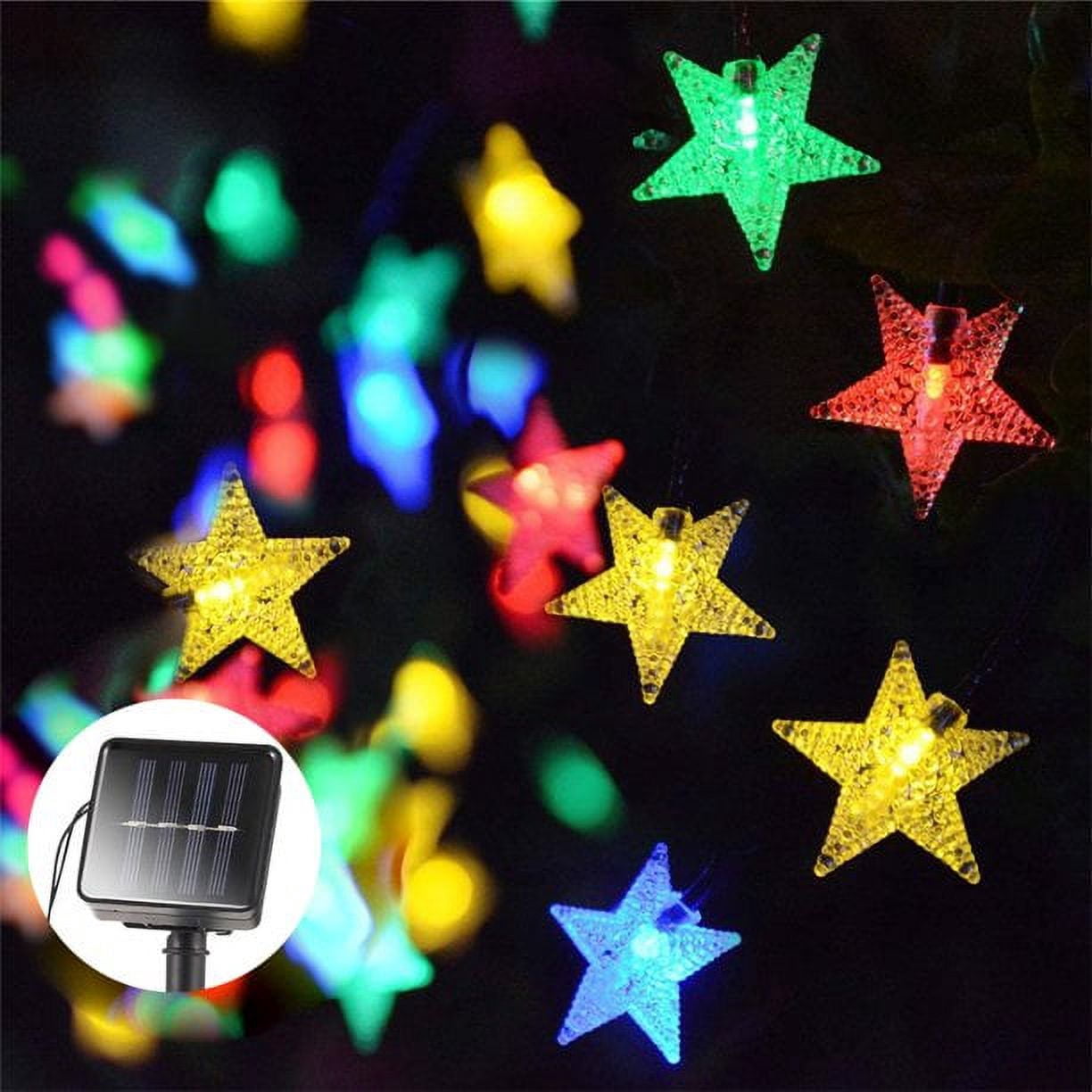
Solar powered LED Christmas lights are generally worth the cost for homeowners seeking to eliminate electricity expenses, reduce installation complexity, and minimize their carbon footprint. While they require a higher initial investment and depend on seasonal sunlight, their automated operation and lack of wiring requirements provide significant long-term convenience and safety benefits.
The landscape of holiday decorating has shifted significantly as we move through 2026. What was once a niche product for eco-enthusiasts has become a mainstream alternative to traditional plug-in displays. However, the question of whether they are "worth it" depends on a specific calculation of geography, expectations for brightness, and long-term durability. To determine the true value proposition, one must look beyond the sticker price and examine the total cost of ownership, technical performance in winter conditions, and the practicalities of modern solar technology.
The Economics of Solar vs. Plug-in Lighting
When evaluating the cost-effectiveness of solar LED Christmas lights, it is essential to distinguish between the purchase price and the total operating cost. Traditionally, plug-in LED lights have a lower barrier to entry. A standard 50-foot string of high-quality indoor/outdoor LEDs can be purchased for a relatively low price, whereas a solar-powered equivalent often costs 20% to 50% more due to the inclusion of a photovoltaic (PV) panel, a battery housing, and specialized circuitry.
However, the "hidden" costs of plug-in lights begin the moment they are switched on. Even though LED technology is far more efficient than the incandescent bulbs of previous decades, a large-scale display can still add a noticeable amount to a December utility bill. For homeowners in regions with high electricity rates, the zero-cost operation of solar lights allows the initial price premium to be recouped within two to three holiday seasons.
Furthermore, the cost of infrastructure is often overlooked. Plug-in displays frequently require heavy-duty, weather-rated extension cords, multi-plug splitters, and outdoor-rated timers. In some cases, homeowners may even need to pay an electrician to install additional Ground Fault Circuit Interrupter (GFCI) outlets to handle complex displays safely. Solar lights eliminate these secondary costs entirely. Each unit is self-contained, meaning the price you pay at the register is typically the final cost of the project.
Technical Advancements in 2026 Solar Technology
By 2026, the technical gap between solar and grid-powered lights has narrowed significantly. The primary criticism of early solar Christmas lights was their dimness and short run-times, particularly during the short, cloudy days of December. Modern units have largely addressed these issues through three key technological pillars: high-efficiency monocrystalline panels, Lithium Iron Phosphate (LiFePO4) batteries, and intelligent power management.
Monocrystalline Efficiency
Most high-end solar holiday lights now utilize N-type monocrystalline silicon cells. These panels boast conversion efficiencies of 22% to 24%, a substantial improvement over the 15% efficiency common in older polycrystalline models. This higher efficiency means that even on an overcast day, the panel can harvest enough ambient photons to provide a respectable charge. For the consumer, this translates to lights that actually stay on until midnight rather than flickering out by 7:00 PM.
Battery Longevity and Safety
The shift toward LiFePO4 batteries is perhaps the most important development for the "worth it" argument. Unlike the Nickel-Metal Hydride (NiMH) or standard Lithium-ion batteries used in the past, LiFePO4 batteries are better suited for the extreme temperature fluctuations of winter. They can handle more charge-discharge cycles—often lasting five to seven years—meaning you won’t have to throw away the entire light string because the battery died after one season. This longevity significantly increases the return on investment.
Intelligent Power Management (IPM)
Modern solar controllers now include "smart" discharge modes. Instead of running at 100% brightness until the battery is depleted, these systems can sense the battery's state of charge and adjust the voltage output. If the system detects a low charge after a particularly dark day, it might reduce brightness by 20% to ensure the lights remain on for the duration of the evening. This ensures a consistent, albeit slightly dimmer, aesthetic throughout the season.
Performance Realities: Brightness and Run-Time
Despite technical gains, potential buyers must manage their expectations regarding light intensity. A plug-in LED string receives a constant, high-voltage stream of power from the grid, allowing it to produce a higher lumen count per bulb. Solar lights are, by design, low-voltage systems.
In 2026, the "brightness gap" is approximately 15-25%. If your goal is a "Clark Griswold" style display that can be seen from an airplane, solar lights may not be the primary tool for the job. They are, however, excellent for ambient decorating, wrapping trees, outlining fences, and illuminating pathways.
Run-time is also geographically dependent. In the northern United States, Canada, or Northern Europe, the "solar window" in December can be as short as six hours of usable light. If the solar panel is shaded by a roofline or an evergreen tree, it may struggle to reach a full charge. Conversely, in the Southern Sunbelt, solar Christmas lights perform almost identically to plug-in lights because the solar harvest is abundant.
Installation and Maintenance Comparison
One of the strongest arguments in favor of solar lights is the "set it and forget it" nature of the installation. Traditional lights require careful planning to ensure every string can reach an outlet. This often results in "dead zones" where no lights can be placed, or unsightly orange extension cords crisscrossing the lawn.
Solar lights offer total geographical freedom. You can wrap a tree at the far edge of your property or decorate a mailbox without trenching wires under a driveway. This saves hours of labor during both the setup and teardown phases.
Maintenance Considerations:
- Panel Placement: The most common mistake is placing the solar panel in a spot that receives morning sun but is shaded for the rest of the day. For maximum "worth," the panel must face south and be clear of obstructions.
- Cleaning: Snow and frost are the enemies of solar efficiency. A light dusting of snow can block 100% of sunlight. To keep solar lights functioning, the homeowner must occasionally wipe down the panels after a storm.
- Off-Season Storage: To preserve the LiFePO4 battery, it is recommended to store solar lights in a cool, dry place and, if possible, ensure the battery isn't stored at 0% charge for the entire year.
Safety and Environmental Impact
From a safety perspective, solar lights are objectively superior to plug-in models. Because they operate on low-voltage DC power (usually 1.2V to 3.7V), there is zero risk of high-voltage electric shock. This is a vital consideration for households with curious pets or young children. Furthermore, the absence of extension cords removes a significant trip hazard and eliminates the fire risk associated with overloaded circuits or frayed wires exposed to moisture.
Environmentally, the benefits are clear. While the manufacturing of batteries and silicon panels has an ecological footprint, the elimination of grid-power consumption reduces the overall carbon emissions of the holiday season. According to data from the U.S. Department of Energy, switching to LED technology already reduces energy use by up to 75%, and moving to solar-powered LEDs takes that reduction to 100% for the duration of the product's life.
Comparative Analysis: Solar vs. Plug-In LED
The following table compares the key metrics for a standard 100-bulb outdoor display as of 2026.
| Feature | Solar Powered LED (Premium) | Plug-In LED (Standard) |
|---|---|---|
| Initial Cost (per 100 bulbs) | $35 - $55 | $15 - $25 |
| Monthly Operating Cost | $0.00 | $1.50 - $5.00 (depends on scale) |
| Installation Time | Very Low (No wires) | Moderate to High (Wiring/Outlets) |
| Max Brightness | ~40-60 Lumens/sq.m | ~80-100 Lumens/sq.m |
| Dependability | Dependent on weather | 100% (unless power outage) |
| Safety Risk | Negligible (Low Voltage) | Low (Requires GFCI protection) |
| Lifespan | 3-5 Years (Battery limited) | 5-10 Years (Component limited) |
| Placement Flexibility | Unlimited | Restricted by outlet proximity |
Common Pitfalls and How to Avoid Them
To ensure your investment in solar Christmas lights is actually worth the cost, you must avoid the "cheap solar trap." Many discount retailers still sell units with amorphous silicon panels and low-capacity NiMH batteries. These units are rarely worth the cost because they often fail after a single season and provide poor light output.
When shopping, look for the following specifications:
- Weather Rating: Ensure the set is at least IP65 rated. This means it is protected against dust and low-pressure water jets (rain and melting snow).
- Lead Length: Check the distance between the solar panel and the first bulb. A longer lead (10-15 feet) allows you to place the lights in a shady area while the panel sits in the direct sun.
- Manual Override: High-quality sets include an on/off switch and sometimes a USB charging port. A USB port is a "life-saver" during a week of heavy rain, allowing you to charge the batteries from a wall outlet so the display stays lit during a holiday party.
The Verdict: Who Should Buy Them?
Solar powered LED Christmas lights are a fantastic investment for those who prioritize convenience and have moderate brightness expectations. They are the ideal solution for:
- Renters: Who may not have access to outdoor outlets.
- Large Properties: Where running extension cords hundreds of feet is impractical and expensive.
- Eco-Conscious Decorators: Who want to maintain holiday traditions without increasing their energy footprint.
- Safety-Focused Households: Who want to avoid the risks associated with high-voltage outdoor wiring.
However, if you live in an area with extremely persistent winter fog or heavy canopy cover, or if you demand a "commercial-grade" brightness that "pops" against heavy street lighting, you should stick to plug-in LEDs. For everyone else, the technology in 2026 has reached a point where the convenience and long-term savings far outweigh the initial price difference.
Frequently Asked Questions
Do solar Christmas lights work in the snow?
Yes, they continue to work in cold temperatures, and the cold can actually improve battery efficiency in some cases. However, the solar panel must be kept clear of snow accumulation. Even a thin layer of snow will block the sunlight and prevent the battery from charging.
How long do solar Christmas lights stay on at night?
On a full charge (usually 6-8 hours of direct sunlight), a quality set of 2026 solar lights will stay on for 8 to 12 hours. On cloudy days, this may drop to 3 or 4 hours depending on the efficiency of the panel and the capacity of the battery.
Can the batteries in solar lights be replaced?
In most mid-to-high-range models, the batteries are replaceable. They typically use standard sizes like 18650 or 14500 LiFePO4 cells. Replacing the battery every few years is much cheaper than buying new lights and is a key factor in making them "worth the cost."
Are solar lights as bright as electric ones?
Generally, no. Plug-in LEDs are usually 20% to 30% brighter because they have a constant high-voltage power source. However, for most residential decorating purposes, the difference is negligible once the eyes adjust to the darkness.
Will they charge on a cloudy day?
Yes, modern monocrystalline solar panels can charge using "diffuse" light. The charging process is slower than in direct sunlight, but the lights will still function, though perhaps for a shorter duration or at a lower brightness level.
Practical Recommendation
If you are transitioning to solar, start with "accent" areas—hedges, fences, and trees far from the house. Buy one set with a monocrystalline panel and a LiFePO4 battery to test the performance in your specific microclimate. If the results meet your brightness needs after a week of December weather, proceed with replacing your high-traffic displays. For the best value, choose sets with replaceable batteries and IP65 water resistance to ensure the hardware lasts for several years.