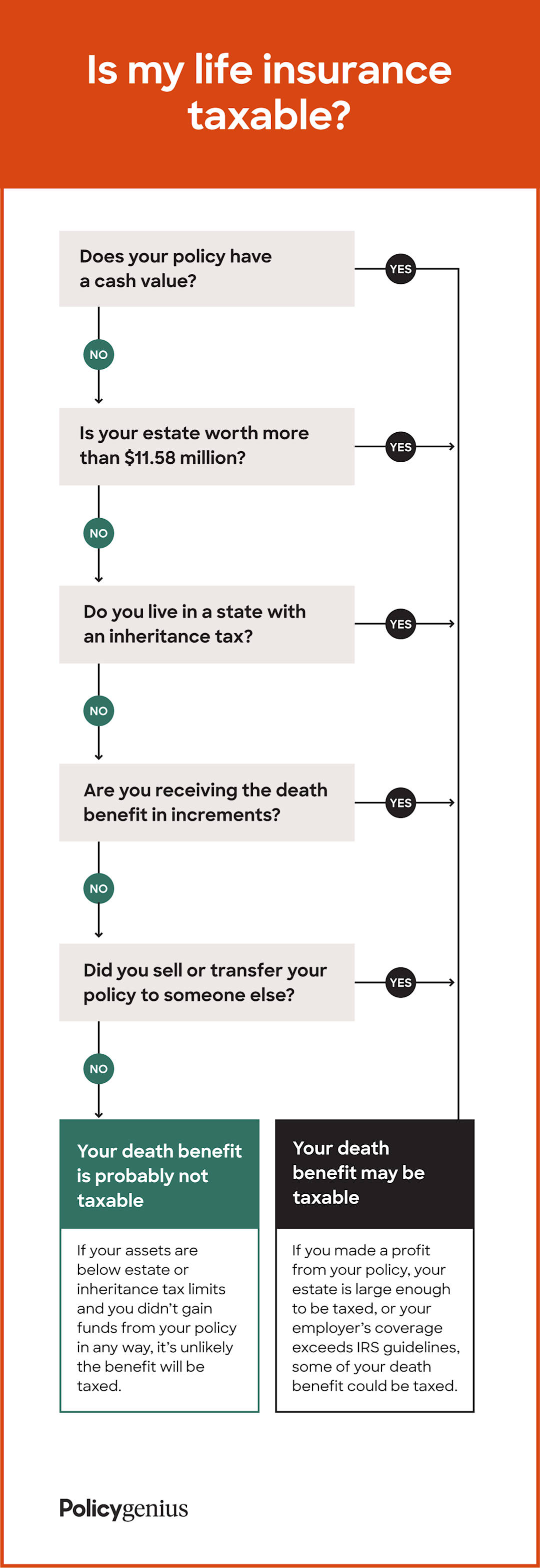
Whether supplemental life insurance premiums are taxable depends primarily on who pays the premium and the total amount of coverage provided. Generally, employee-paid premiums using after-tax dollars are not taxable. However, if an employer pays for coverage exceeding $50,000, the value of that excess coverage—known as imputed income—is considered taxable income to the employee.
Understanding Supplemental Life Insurance in 2026
Supplemental life insurance is an additional layer of protection that employees can purchase through their employer’s group benefits package. While most employers offer a "basic" life insurance policy—often equal to one year's salary—at no cost to the employee, supplemental coverage allows individuals to increase their death benefit to better protect their families.
In 2026, as workforce demographics shift and financial planning becomes increasingly complex, understanding the tax treatment of these benefits remains a cornerstone of effective compensation management. The Internal Revenue Service (IRS) continues to govern these benefits under Section 79, which differentiates between "group-term life insurance" and other forms of coverage. Because supplemental life insurance is usually structured as group-term insurance, it falls under specific tax rules that can trigger unintended tax liabilities if not monitored carefully by both the employer and the employee.
The primary concern for most taxpayers is not the premium itself, but rather the "economic benefit" derived from employer-paid coverage. When an employer provides more than a baseline amount of insurance, the IRS views the cost of that additional coverage as a form of non-cash compensation. This leads to the concept of imputed income, where a specific value is added to your taxable earnings, even though you never see that money in your paycheck.
The $50,000 Rule: The Foundation of Life Insurance Taxation
The IRS provides a significant tax break for group-term life insurance, but it is capped. Under IRS Section 79, the first $50,000 of employer-provided group-term life insurance is completely tax-free to the employee. This means that if your employer pays for a $50,000 policy on your behalf, you do not owe any taxes on the premiums they pay, and no income is imputed to you.
However, once the total coverage exceeds $50,000, the tax landscape changes. If your employer provides $100,000 in coverage, the "cost" of the final $50,000 must be calculated and reported as taxable income. This rule applies to the total amount of group-term life insurance you receive through your employer, including both basic and supplemental policies, provided the employer is paying some or all of the premium.
It is important to note that this $50,000 threshold has remained stagnant for many years. In 2026, inflation has significantly eroded the real value of a $50,000 death benefit, yet the tax threshold remains the same. This means more employees than ever find themselves crossing into taxable territory as their salaries and associated insurance benefits rise over time.
When Are Supplemental Premiums Taxable?
To determine if you owe taxes on your supplemental life insurance, you must look at the funding mechanism of the policy. Taxability is generally split into three distinct scenarios based on who is funding the premiums and whether those funds are pre-tax or after-tax.
Employee-Paid Premiums with After-Tax Dollars
In the most common scenario, an employer provides a basic level of coverage (e.g., $50,000), and the employee chooses to purchase "supplemental" coverage using payroll deductions. If these deductions are taken from your after-tax pay, the premiums are not taxable. You have already paid income tax on the money used to buy the insurance. Furthermore, because the premiums were paid with after-tax dollars, the death benefit paid to your beneficiaries remains 100% tax-free.
Employer-Paid Supplemental Coverage
Some high-tier benefits packages include employer-paid supplemental insurance. In this case, the premiums paid by the employer for any coverage amount above the initial $50,000 are considered a taxable benefit. The IRS does not use the actual premium the employer pays to the insurance company to determine this tax; instead, they use a standardized "Uniform Premium Table" (Table I) to calculate the value of the insurance based on the employee's age.
Premiums Paid Through a Section 125 Cafeteria Plan
If your employer allows you to pay for supplemental life insurance through a Section 125 Cafeteria Plan using pre-tax dollars, the tax treatment becomes more complex. While paying with pre-tax dollars reduces your current taxable income, it can trigger different rules. Specifically, if the coverage exceeds $50,000, the entire amount of coverage purchased with pre-tax dollars may be subject to the $50,000 exclusion rules, and any excess will result in imputed income. Furthermore, using pre-tax dollars to pay for premiums can sometimes complicate the tax-exempt status of the death benefit, though most employer plans are structured to avoid this.
Calculating Imputed Income: The IRS Table I
When supplemental insurance triggers a tax liability, the IRS uses the "Uniform Premium for $1,000 of Group-Term Life Insurance Protection" to calculate the taxable amount. This is often referred to as "Table I." The rates in this table are based on the employee's age as of the last day of the tax year.
The calculation follows these steps:
- Determine the total amount of group-term life insurance (Basic + Supplemental).
- Subtract $50,000 (the tax-free limit).
- Determine the "excess coverage" amount.
- Divide the excess coverage by $1,000.
- Multiply that number by the monthly rate provided in the IRS table for your age bracket.
- Multiply by the number of months you had that coverage during the year.
As of 2026, the IRS Table I rates are generally structured in five-year age brackets. For example, an employee aged 45 to 49 might have a rate of $0.15 per $1,000 of coverage per month, while an employee aged 60 to 64 might see a rate of $0.66 per $1,000. Because these rates increase with age, the "tax cost" of supplemental life insurance grows as you get older, even if your coverage amount stays the same.
Summary of Tax Treatment for Life Insurance Premiums
The following table outlines the tax status of premiums based on various employer-sponsored scenarios common in 2026.
| Scenario | Coverage Amount | Payer | Tax Status of Premiums |
|---|---|---|---|
| Basic Group Term | Up to $50,000 | Employer | Tax-Free |
| Basic Group Term | Over $50,000 | Employer | Imputed Income (Taxable) on excess |
| Supplemental Term | Any Amount | Employee (After-Tax) | Not Taxable (Already Taxed) |
| Supplemental Term | Any Amount | Employee (Pre-Tax) | Subject to $50k Rule / Imputed Income |
| Supplemental Term | Over $50,000 | Employer | Imputed Income (Taxable) |
| Dependent Life | Up to $2,000 | Employer | Tax-Free (De Minimis) |
| Dependent Life | Over $2,000 | Employer | Entire Premium is Taxable |
Key Exceptions and Special Considerations
While the $50,000 rule is the standard, there are several exceptions that can change the taxability of supplemental life insurance premiums.
Highly Compensated Employees and Non-Discrimination
The IRS has strict non-discrimination rules for group-term life insurance. If a plan favors "key employees" (such as owners or high-ranking officers) in terms of eligibility or the amount of coverage provided, those key employees may lose the $50,000 exclusion. In such cases, the entire cost of the policy—not just the amount over $50,000—becomes taxable income to the key employee. For 2026, the definition of a "key employee" is adjusted periodically for inflation and is a critical factor for small business owners to monitor.
Coverage for Spouses and Dependents
Supplemental life insurance often allows employees to buy coverage for their spouses or children. If the employer pays for this coverage, it is generally taxable. However, the IRS allows a "de minimis" (minimal) benefit of up to $2,000 of coverage for a spouse or dependent to be provided tax-free. If the coverage exceeds $2,000 and is paid by the employer, the entire cost of that dependent coverage is taxable as imputed income.
Permanent Life Insurance
The rules discussed here apply specifically to term life insurance. If your supplemental policy is a "permanent" or "whole life" policy (one that builds cash value), the tax rules are entirely different. Generally, the full amount of premiums paid by an employer for permanent life insurance is considered taxable income to the employee from the very first dollar.
Compliance and Reporting Requirements
For employees, the tax on supplemental life insurance is typically handled through payroll. The "imputed income" appears on your Form W-2 at the end of the year in Box 12 with Code "C." This amount is included in your total taxable wages for federal income tax, Social Security, and Medicare taxes.
For employers, maintaining compliance in 2026 requires rigorous tracking of employee ages and coverage changes. Whenever an employee enters a new age bracket (e.g., turning 40 or 45), the payroll system must update the Table I calculation to reflect the new, higher rate. Failure to accurately report imputed income can result in penalties from the IRS during a payroll tax audit.
Frequently Asked Questions
Is the death benefit of supplemental life insurance taxable?
In most cases, no. As long as the premiums were paid with after-tax dollars or the imputed income was properly reported on the employee's W-2, the death benefit paid to beneficiaries is generally free of federal income tax. However, if the policy is owned by a business or part of a complex estate, it may be subject to federal estate taxes if the total estate exceeds certain thresholds.
Can I avoid the tax by paying for the coverage myself?
Yes. If you pay the full cost of the supplemental insurance with after-tax payroll deductions, there is no imputed income. The tax only applies when the employer is subsidizing the cost of coverage that exceeds $50,000. Many employees choose to pay for supplemental coverage themselves specifically to keep their tax filings simple.
Why does my W-2 show "Cost of Group Term Life Insurance" if I didn't pay for it?
This is the imputed income mentioned earlier. Even if you didn't pay a dime for the coverage, the IRS considers the "value" of the insurance over $50,000 to be a part of your compensation. Your employer is required by law to report this value as taxable wages.
Does the tax apply to accidental death and dismemberment (AD&D) insurance?
No. The IRS rules for group-term life insurance under Section 79 do not apply to AD&D insurance. Premiums paid by an employer for AD&D are generally excluded from an employee's gross income and do not count toward the $50,000 limit.
What happens if I am retired?
If an employer continues to provide group-term life insurance to a retired employee, the $50,000 exclusion still applies. However, if the coverage is "permanent" or if the retiree is a former "key employee" in a discriminatory plan, different rules may apply. Retirees should consult IRS Publication 15-B for the most current guidance on fringe benefits.
Practical Recommendations
If you are looking at your benefits package for 2026, take these steps to manage your tax liability:
- Review Your Total Coverage: Add up your basic and supplemental life insurance. If the total is over $50,000, check if your employer pays any portion of the premium.
- Analyze Your Paystub: Look for "Imputed Income" or "GTL" (Group Term Life) entries. This will show you how much is being added to your taxable income each pay period.
- Evaluate Costs vs. Benefits: If you are in a high age bracket, the imputed income tax might be significant. Compare the cost of the "tax" plus any employee premiums against the cost of a private individual term policy outside of work.
- Consult a Tax Professional: If you are a high-earner or a business owner, the non-discrimination rules can be a trap. A brief consultation with a tax advisor can ensure your supplemental life insurance strategy is both protective and tax-efficient.