Standing desks offer significant health benefits by reducing prolonged sedentary time, which is linked to lower risks of obesity, type 2 diabetes, and cardiovascular disease. However, their effectiveness depends on proper usage; the primary advantage comes from the frequent transition between sitting and standing rather than standing exclusively throughout the workday.
For over a decade, the narrative surrounding office health has been dominated by the phrase "sitting is the new smoking." While this comparison is hyperbolic, the underlying concern remains valid in 2026. Research into sedentary behavior has matured, leading to a more nuanced understanding of how we interact with our workstations. To determine if a standing desk is truly "better" for you, one must look past the marketing and examine the physiological, psychological, and ergonomic realities of the sit-stand lifestyle.
The Physiological Impact of Standing vs. Sitting
The human body is biomechanically designed for movement, not for static positions. When you sit for extended periods, your large muscle groups, particularly in the legs and core, become largely inactive. This inactivity leads to a cascade of metabolic changes.
Metabolic Health and Glucose Clearance
One of the most compelling arguments for standing desks involves blood sugar regulation. After a meal, blood glucose levels rise. In a sedentary state, the body’s ability to clear this glucose is diminished. Studies have shown that alternating between standing and sitting every 30 minutes can reduce post-meal blood sugar spikes by up to 11% compared to sitting alone. This occurs because standing engages postural muscles that require a constant, low-level supply of energy, facilitating better insulin sensitivity and glucose uptake.
Cardiovascular Implications
Prolonged sitting is associated with a higher risk of heart disease. When you remain seated, blood flow slows down, which can contribute to the buildup of fatty acids in the blood vessels. By 2026, longitudinal studies have reinforced that individuals who stand more frequently during the day tend to have healthier lipid profiles. However, it is important to note that standing still is not a substitute for aerobic exercise. The "better" outcome arises from the micro-movements—shifting weight from foot to foot or stretching—that naturally occur while standing.
Comparing the Workday Experience: A Metrics Breakdown
To understand the practical differences between traditional sitting and a sit-stand approach, we can examine several key performance and health indicators.
| Metric | Traditional Sitting | Static Standing | Sit-Stand Hybrid |
|---|---|---|---|
| Caloric Burn | ~80 kcal/hour | ~88-95 kcal/hour | ~85-90 kcal/hour |
| Lumbar Pressure | High (if slouched) | Moderate | Lowest (due to variation) |
| Leg Circulation | Restricted | Risk of pooling/varicose veins | Optimal |
| Focus/Alertness | Potential for "afternoon slump" | High initial, then fatigue | Sustained throughout day |
| Long-term Joint Impact | Hip flexor shortening | Potential for knee/ankle strain | Balanced |
Debunking the Weight Loss Myth
A common misconception is that switching to a standing desk will lead to significant weight loss. While standing does burn more calories than sitting, the difference is statistically modest. On average, standing burns about 0.15 more calories per minute than sitting. For an individual who stands for six hours of their workday, this equates to approximately 54 additional calories—roughly the equivalent of half an apple or a few minutes of brisk walking.
The "better" aspect of standing desks regarding weight is not the immediate caloric burn but rather the prevention of metabolic slowdown. By staying upright, you maintain a higher level of Non-Exercise Activity Thermogenesis (NEAT). This helps regulate the body’s "set point" over years, rather than providing a quick fix for weight reduction.
Impact on Musculoskeletal Health and Back Pain
Back pain is the leading cause of work-related disability globally. Traditional office chairs, even ergonomic ones, often encourage a "C-shape" curvature of the spine, which puts immense pressure on the intervertebral discs.
Reducing Intradiscal Pressure
When you stand, the natural "S-shape" of your spine is easier to maintain. This alignment distributes weight more evenly across the spinal discs. Many users report a significant reduction in lower back pain within weeks of adopting a sit-stand routine. However, this benefit is only realized if the desk is at the correct height. If the desk is too low, the user will lean forward, potentially exacerbating neck and shoulder tension (often referred to as "tech neck").
The Importance of the Hip Flexors
Sitting causes the hip flexors to remain in a shortened position. Over time, this leads to "tight hips," which pulls on the pelvis and contributes to lower back pain. Standing allows these muscles to lengthen, improving overall mobility and reducing the risk of musculoskeletal imbalances that often plague office workers.
Psychological Benefits: Mood and Energy Levels
The link between physical posture and mental state is well-documented in occupational psychology. Prolonged sedentary behavior is linked to increased risks of anxiety and depression.
In various workplace trials, employees using standing desks reported less stress and fatigue than those who remained seated. The theory behind this is twofold:
- Vascular Arousal: Standing increases heart rate slightly and improves circulation to the brain, which can enhance cognitive function and alertness.
- Sense of Agency: The ability to change one's physical environment (adjusting the desk height) provides a psychological "reset" that can help break through periods of mental blocks or boredom.
Common Pitfalls and the Risks of Over-Standing
While standing desks are generally better for you, they are not without risks. Excessive standing can be just as detrimental as excessive sitting.
The Risk of Varicose Veins and Edema
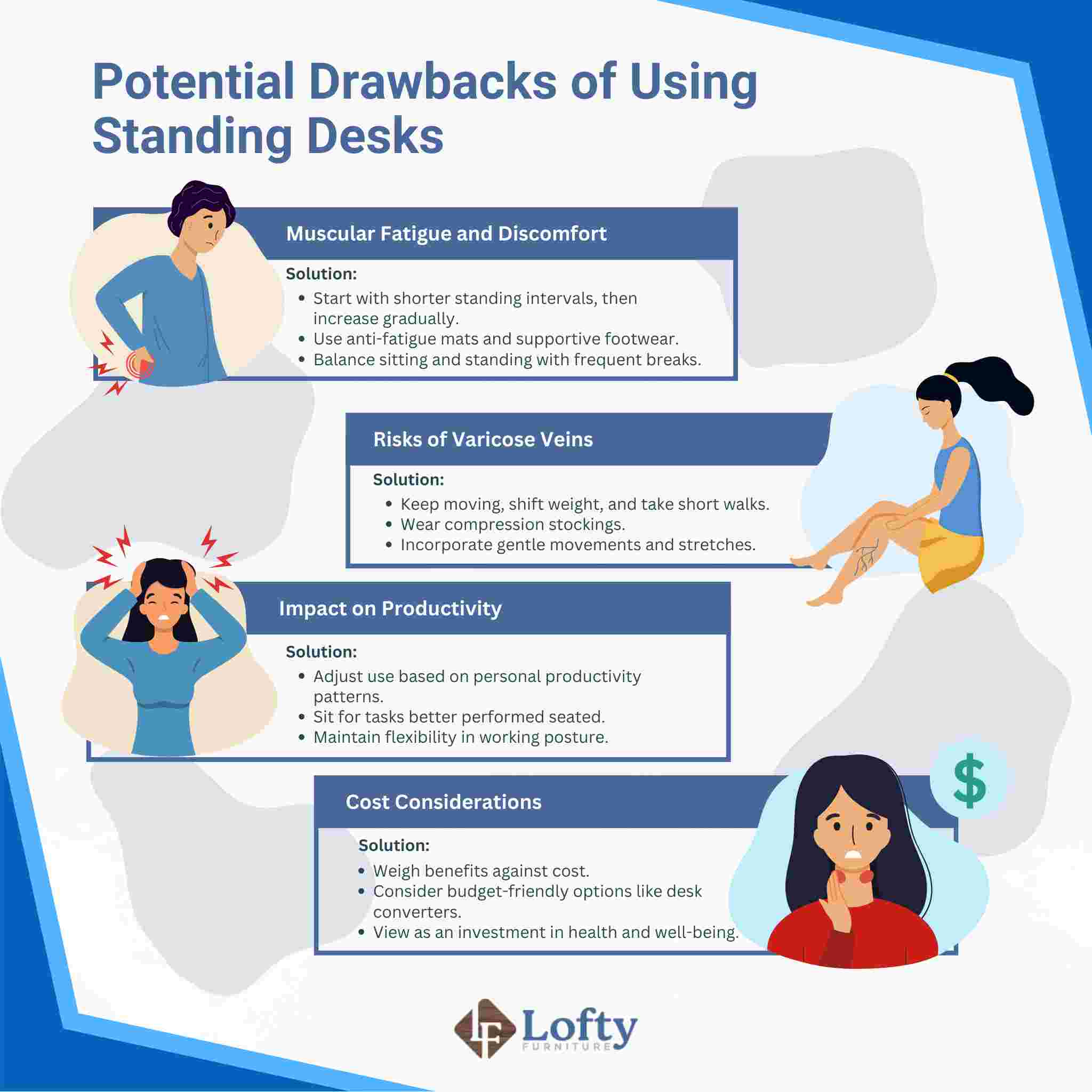
Standing for hours without moving causes blood to pool in the lower extremities. This increases venous pressure, which can lead to the development of varicose veins and swelling in the ankles (edema). To mitigate this, experts in 2026 recommend the use of anti-fatigue mats, which provide a cushioned surface that encourages subtle muscle contractions in the calves.
Joint Strain and Plantar Fasciitis
Standing on hard surfaces for eight hours puts significant stress on the knees, hips, and the plantar fascia (the tissue along the bottom of the foot). Without proper footwear and gradual acclimatization, users may trade back pain for foot and joint pain.
Ergonomic Guidelines for the 2026 Workstation
To ensure a standing desk is actually better for your health, it must be configured correctly. Use the following standards to optimize your setup:
- Elbow Height: Your desk should be at a height where your elbows are at a 90-degree angle when typing. Your forearms should be parallel to the floor.
- Monitor Placement: The top third of your computer screen should be at eye level. This prevents you from tilting your head up or down, which strains the cervical spine.
- The 20-8-2 Rule: A widely accepted ergonomic framework suggests that for every 30 minutes of work, you should sit for 20 minutes, stand for 8 minutes, and move/stretch for 2 minutes.
- Footwear Matters: Avoid wearing high heels or completely flat, unsupportive shoes while standing. Supportive athletic shoes or specialized ergonomic office footwear are recommended.
- Keyboard and Mouse Position: Keep these tools close enough so that your wrists remain neutral. Overreaching can lead to carpal tunnel syndrome or shoulder strain.
Choosing the Right Type of Standing Desk
By 2026, the market has stabilized into three primary categories of desks. Your choice depends on your budget, space, and how often you intend to switch positions.
Electric Sit-Stand Desks
These are the gold standard. They use small motors to lift and lower the entire desk surface at the touch of a button.
- Pros: Easy to adjust, programmable height presets, very stable.
- Cons: Higher cost, requires proximity to a power outlet.
Desktop Converters
These are units that sit on top of an existing traditional desk. They feature a platform for your monitor and a lower tier for your keyboard.
- Pros: More affordable, no need to replace existing furniture.
- Cons: Limited surface area, can be bulky, may not be as stable as a full desk.
Manual Crank or Pneumatic Desks
These desks use either a hand crank or a gas cylinder (similar to an office chair) to adjust the height.
- Pros: No electricity required, usually cheaper than electric models.
- Cons: Manual cranking can be tedious, leading users to stop switching positions; pneumatic models may have lower weight capacities.
Practical Recommendations for Transitioning
If you decide to adopt a standing desk, do not attempt to stand for the entire day immediately. This is the most common reason for abandonment.
- Start Small: Begin with 30 to 60 minutes of standing per day, split into 15-minute increments.
- Listen to Your Body: If your back or feet begin to ache, sit down. The goal is comfort and health, not endurance.
- Use Reminders: Use "smart" features on your watch or desktop apps to remind you to change positions every 30-45 minutes.
- Invest in a Mat: A high-quality anti-fatigue mat is not an optional accessory; it is a necessity for long-term standing health.
Frequently Asked Questions
How long should I stand at a standing desk each day?
There is no universal "perfect" time, but most ergonomic experts suggest a 1:1 or 2:1 ratio of sitting to standing. If you work an 8-hour day, aiming for 2 to 4 hours of total standing time—broken into short intervals—is considered the "sweet spot" for most healthy adults.
Can a standing desk fix my posture?
A standing desk is a tool, not a cure. It makes good posture easier to maintain by opening up the hips and aligning the spine, but you can still "slouch" while standing by leaning on one hip or hunching over your keyboard. Conscious effort is still required to keep shoulders back and core engaged.
Are standing desks worth the investment for home offices?
Given that remote work remains a standard in 2026, investing in your primary workspace is generally considered a high-value health decision. A quality electric standing desk can last over a decade and significantly reduce the long-term healthcare costs associated with sedentary lifestyles and chronic back pain.
Do I need to wear special shoes?
You do not necessarily need orthopedic shoes, but you should avoid footwear with no arch support or excessive heels. If you work from home, avoid standing barefoot on hard floors; even a pair of supportive house shoes or sneakers will provide the necessary cushioning to protect your joints.
Will a standing desk increase my productivity?
While a standing desk doesn't inherently make you "smarter" or faster, many users report higher energy levels and fewer "brain fog" moments in the afternoon. By preventing the lethargy that often accompanies long periods of sitting, you may find it easier to stay on task.
Final Summary and Next Action
Are standing desks better for you? The answer is a definitive yes, provided they are used as a tool for movement rather than a replacement for sitting. The health benefits are found in the variety of movement and the reduction of static load on the body.
Next Action: If you are ready to transition, start by evaluating your current workspace. Measure your elbow height while standing to ensure any desk you purchase can reach that specific level. Begin with a sit-stand converter if you are unsure about the commitment, and always pair your new desk with a high-quality anti-fatigue mat to protect your lower joints.