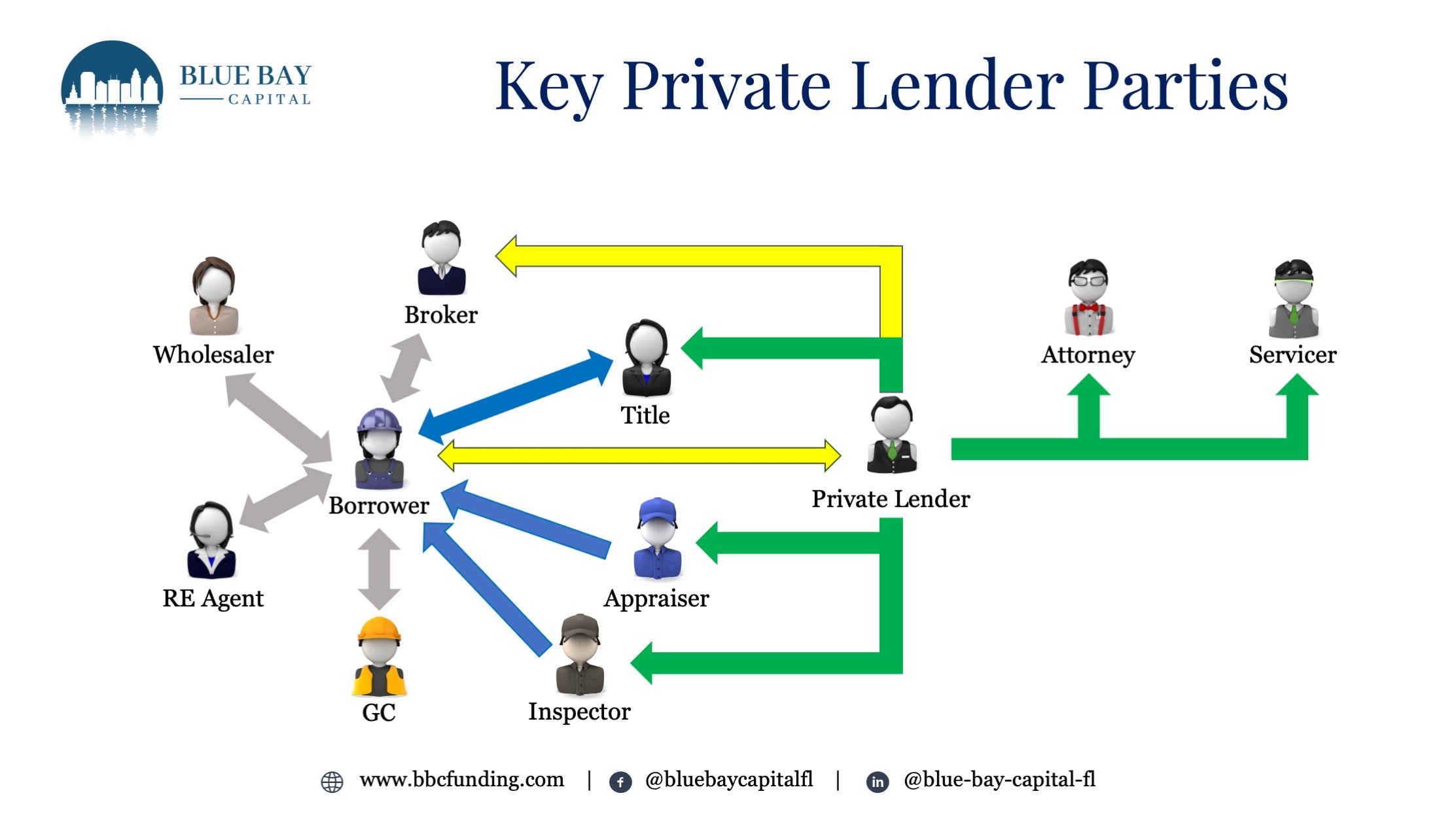
Real estate private money lenders are worth it for investors prioritizing speed, flexibility, and project approval over low interest rates. These lenders provide capital based primarily on the asset’s value rather than the borrower’s personal credit history or income, making them essential for time-sensitive deals, fix-and-flips, or properties that fail to qualify for traditional bank financing.
Understanding the Role of Private Money in Real Estate
Private money lending is a form of asset-based financing where funds are provided by individuals or private companies rather than institutional banks or credit unions. In the ecosystem of property investment, these lenders fill the gap left by traditional mortgage lenders, who are often constrained by strict underwriting guidelines, long approval timelines, and rigorous documentation requirements.
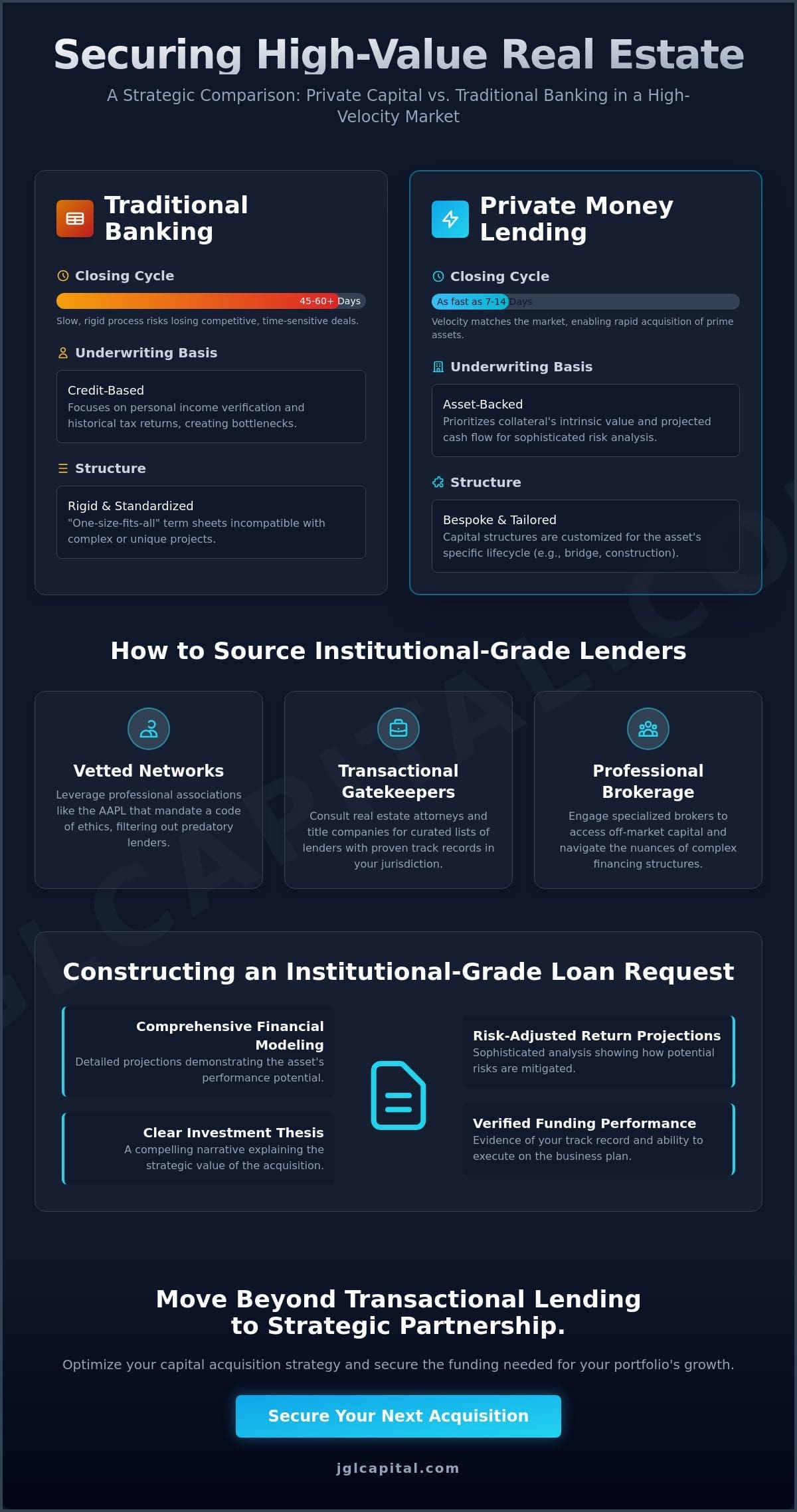
When an investor identifies a distressed property or a competitive auction opportunity, they often cannot wait the 45 to 60 days required for a conventional loan. Private money lenders typically operate with far less bureaucracy, allowing for approvals in days and funding in weeks. However, this convenience comes at a premium. Investors must weigh the potential for high profit margins on a fast-paced project against the higher costs of private debt.
Core Distinctions: Private Money vs. Hard Money vs. Bank Loans
To determine if private money is the right fit, it is necessary to distinguish it from other lending instruments. While the terms are often used interchangeably, there are nuances:
- Traditional Bank Loans: Characterized by low interest rates and long terms (15–30 years). They require high credit scores, verified income (W-2 or tax returns), and strict debt-to-income (DTI) ratios. They are generally unsuitable for properties needing major renovations.
- Private Money: Often provided by individuals, family offices, or boutique firms. It is highly relationship-based and flexible regarding collateral and terms.
- Hard Money: A subset of private money, usually institutionalized. Hard money lenders have more standardized underwriting criteria, set fee structures, and focus heavily on the Loan-to-Value (LTV) ratio of the project.
When Private Money Becomes a Strategic Advantage
The primary reason to utilize a private money lender is not cost, but "deal velocity." There are specific scenarios where private capital is not just an option, but a necessity:
- The "Fix-and-Flip" Strategy: If you are buying a property that is currently uninhabitable or structurally deficient, conventional banks will not issue a mortgage. A private lender sees the "After Repair Value" (ARV) and provides the capital to both purchase and renovate the asset.
- Auction Acquisitions: Many property auctions require proof of funds or a very short closing window. Private lenders can provide a "Proof of Funds" letter, allowing you to bid confidently.
- Credit Issues: If a temporary setback—such as a past medical expense or a business transition—has impacted your credit score, private lenders are more likely to look past the score if the underlying real estate asset has strong equity.
- Portfolio Expansion: Investors who have maxed out their limit for conventional government-backed mortgages (like Fannie Mae/Freddie Mac) often turn to private money to continue scaling their portfolio.
Cost Considerations and Financial Impact
Private money is undeniably more expensive than traditional financing. Understanding the cost structure is crucial to ensuring a project remains profitable.
- Interest Rates: In 2026, private money interest rates typically range from 8% to 14% or higher, depending on the risk profile.
- Origination Fees: Also known as "points," these are upfront fees paid to the lender. One point equals 1% of the loan amount. It is common to pay between 2 and 5 points.
- Prepayment Penalties: Some lenders require a minimum interest payment, meaning even if you pay off the loan early (e.g., selling a flip in three months), you may still owe interest for six months.
- Documentation and Legal Fees: Because private loans are bespoke, legal costs for drafting the promissory note and deed of trust are often passed on to the borrower.
Comparative Analysis Table
| Feature | Conventional Bank Loan | Private Money Loan |
|---|---|---|
| Speed to Fund | 45–60 Days | 7–14 Days |
| Primary Focus | Borrower Credit/Income | Asset Equity (LTV) |
| Interest Rate | Low (Market Standard) | High (Premium) |
| Loan Terms | 15–30 Years | 6–24 Months |
| Renovation Funding | Rare/Restricted | Common/Standard |
| Documentation | Extensive (Tax returns, etc.) | Minimal |
Risk Assessment and Due Diligence
Before entering an agreement with a private money lender, you must conduct thorough due diligence. Unlike institutional banks, which are heavily regulated, the private lending space can be less standardized.
- Lender Verification: Ensure the lender is legitimate. Beware of "upfront fee" scams where a "lender" asks for an application fee before providing any commitment. Legitimate private lenders take their fee at closing.
- Title and Lien Perfection: Work with a reputable title company or attorney to ensure the lien is properly recorded. Improper recording can lead to ownership disputes later.
- Exit Strategy: Since private money loans are typically short-term (bridge loans), you must have a clear exit strategy. This is usually either selling the property or "refinancing" into a long-term conventional loan (the BRRRR method: Buy, Rehab, Rent, Refinance, Repeat). If you cannot sell or refinance on time, you face the risk of default and foreclosure.
Common Mistakes to Avoid
Many new investors approach private money as if it were a standard mortgage, leading to avoidable pitfalls:
- Over-leveraging: Borrowing too much against a property reduces your margin for error. If the renovation costs balloon or the market cools, a high loan balance can swallow your equity.
- Neglecting the "Scope of Work": Private lenders often hold renovation funds in an "escrow holdback." They will only release these funds after inspections verify that work has been completed. If you don't have the cash flow to start the work, you may be stuck.
- Ignoring the Terms: Failing to read the "covenants" of the loan can be costly. Some loans have "cross-collateralization" clauses, meaning if you default on one loan, the lender can seize other properties you own.
Frequently Asked Questions
How does a private money lender calculate how much they will lend? Lenders primarily use the Loan-to-Value (LTV) or Loan-to-Cost (LTC) ratio. They often lend 65% to 75% of the property's ARV. For example, if a house is worth $200,000 after repairs, they might lend $150,000. They focus on the equity buffer to ensure their capital is protected if you fail to repay.
Do I need a business entity to work with a private money lender? Yes, most private lenders require that you borrow through an LLC (Limited Liability Company) or similar business entity. This is partially for legal protection and partially because non-owner-occupied investment properties carry different regulatory requirements than residential home loans.
Is private money lending legal for all types of properties? Private money is mostly used for investment/commercial property. If you are looking to borrow against your primary residence, you will encounter the Dodd-Frank Act and the Truth in Lending Act, which place heavy restrictions on private lenders regarding owner-occupied loans. Most private lenders avoid these entirely to stay compliant with consumer protection laws.
What happens if I cannot pay the loan back at the end of the term? If you reach the maturity date without paying off the loan, you are in default. While some lenders may offer an "extension fee" to grant you more time, others may initiate foreclosure immediately. Always negotiate the maturity date based on a realistic timeline for your exit strategy.
How do I find a reputable private money lender? Networking is key. Join local Real Estate Investor Associations (REIAs), attend local meetups, and ask experienced investors for referrals. A lender who has successfully funded deals for peers is significantly safer than an anonymous online ad.
Final Recommendation
Real estate private money lenders are "worth it" only when the cost of the capital is lower than the profit opportunity provided by the speed and flexibility of the loan. If your project is a standard rental with a long-term horizon, stick to conventional bank financing. If you are pursuing an active strategy like house flipping, where closing speed determines your ability to acquire the asset, private money is a vital tool.
Your next action should be to create a detailed "Deal Analysis Worksheet" for your target property. Calculate your total project costs, including the high interest and points associated with private money, and subtract them from your projected exit price. If the numbers still provide a strong return on investment after all financing costs are accounted for, you have confirmed that the private money is a sound business decision.