Real estate debt investments, such as mortgage notes or private lending funds, can offer stable, income-driven returns, but they are not inherently "safe" in the same way as government bonds or high-yield savings accounts. Safety depends entirely on the underlying asset's loan-to-value ratio, the borrower's creditworthiness, and the legal structure governing the debt instrument.
Understanding the Mechanics of Real Estate Debt
Real estate debt investing involves acting as the lender rather than the property owner. Instead of buying a building to appreciate in value or generate rental income, you provide capital to a borrower—often a developer or an investor—who uses that capital to acquire, renovate, or stabilize a property. In exchange, the borrower pays you interest over a set term.
When you invest in debt, you sit in a senior or mezzanine position in the capital stack. This is the primary reason investors perceive debt as "safer" than equity. If a property defaults, the debt holders generally have a legal claim on the property that must be satisfied before the equity owners receive any proceeds from a sale. However, this legal seniority does not guarantee the return of your principal. If the property value drops significantly below the outstanding loan balance, even a first-position lender can face losses.
Risk Factors and Security Measures
To evaluate the safety of a real estate debt investment, you must analyze the risk-adjusted return through the lens of the specific asset. Unlike public stock markets, these investments are typically illiquid and carry distinct risk profiles that require thorough due diligence.
Loan-to-Value (LTV) Ratios
The LTV ratio is perhaps the most critical metric for assessing safety. It represents the loan amount divided by the appraised value of the property. For example, if a borrower seeks a $700,000 loan on a property appraised at $1,000,000, the LTV is 70%. A lower LTV provides a larger "equity cushion," meaning the property value could decrease by 30% before the principal of the loan is at risk. Generally, an LTV below 65-70% is considered more conservative.
Lien Position
Your position in the "capital stack" determines your priority during a foreclosure or liquidation.
- First Position (Senior Debt): Holds the primary lien on the property. In the event of a default, these lenders are the first to be repaid.
- Second Position (Mezzanine/Junior Debt): Often fills the gap between the senior loan and the developer's equity. These carry higher interest rates but significantly higher risk, as they are only paid after the senior debt is fully satisfied.
Collateral and Personal Guarantees
Always verify what collateral secures the loan. In commercial real estate, this is typically the property itself, secured by a Deed of Trust or Mortgage. A "Personal Guarantee" from the borrower adds an extra layer of protection, as it allows you to pursue the borrower's personal assets if the property collateral is insufficient. However, the practical ability to collect on a personal guarantee depends on the borrower’s net worth and liquidity.
Comparing Debt Investment Vehicles
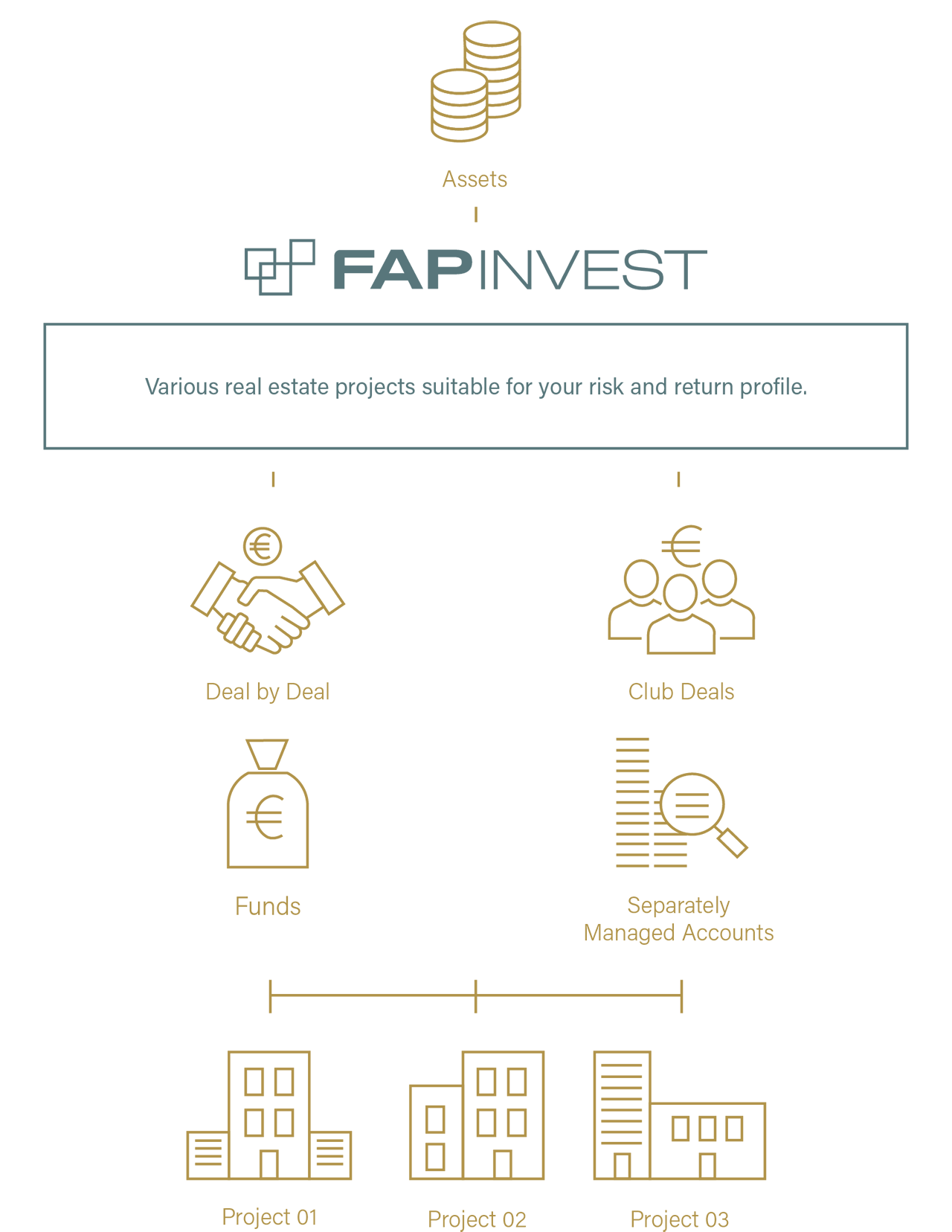
Investors typically access these opportunities through various structures, each with different risk profiles and regulatory requirements.
| Vehicle Type | Liquidity | Risk Profile | Complexity |
|---|---|---|---|
| Direct Mortgage Notes | Very Low | Asset-Specific | High |
| Real Estate Debt Funds | Moderate | Diversified | Low |
| REITs (Mortgage) | High | Market-Linked | Low |
| Crowdfunding Platforms | Low | Portfolio-Specific | Moderate |
- Mortgage REITs (mREITs): These are publicly traded companies that invest in mortgages rather than physical property. They offer high liquidity, but their value is often highly sensitive to interest rate fluctuations and market sentiment, making them more volatile than private debt investments.
- Private Debt Funds: These pools of capital are managed by professionals who underwrite multiple loans. Diversification across several projects can mitigate the risk of a single project failing, though you pay fees to the fund manager in exchange for this professional oversight.
- Direct Notes: You choose the specific loan. This provides the most control but requires the highest level of technical expertise to underwrite the borrower’s ability to pay and the property’s value.
Common Risks and Misconceptions
A common error is equating the fixed nature of interest payments with a guaranteed return. Several factors can compromise the safety of your investment:
- Market Cycles: If property values decline across a specific region, the LTV of your loan can effectively increase, eroding your equity cushion.
- Borrower Default: Even with a high-value property, foreclosure is a time-consuming, expensive, and legally complex process. You may spend significant capital on legal fees before you ever recoup your principal.
- Interest Rate Risk: When central bank rates rise, existing debt with fixed, lower interest rates becomes less attractive. While this affects the value of the debt instrument in a secondary market, the primary risk remains the ability of the borrower to meet their obligations.
- Transparency: Private placements and crowdfunding portals are governed by different disclosure requirements than public stocks. Relying on marketing materials rather than independent appraisals or financial statements is a dangerous practice.
Due Diligence Checklist for Investors
Before committing capital to a real estate debt opportunity in 2026, ensure you have verified the following documentation:
- Independent Appraisal: Do not rely on a borrower’s estimation of value. Look for a formal appraisal report conducted by a licensed professional.
- Title Report: Verify that the property does not have undisclosed liens, tax encumbrances, or legal disputes that could take priority over your interest.
- Borrower Track Record: Review the sponsor’s history. Have they completed similar projects successfully? Do they have sufficient cash reserves to handle unexpected construction overruns or vacancy periods?
- Exit Strategy: How does the borrower plan to repay the debt? Is it through a sale of the property, a refinance, or cash flow from operations? A solid exit strategy is essential to avoid the "loan maturity default" scenario.
Legal and Regulatory Considerations
In the United States, most real estate debt investments are offered as private placements under Regulation D of the Securities Act of 1933. This means they are often restricted to "accredited investors." Before participating, confirm your eligibility status. If you are a non-accredited investor, your options are largely limited to public mortgage REITs or specific retail-friendly crowdfunding platforms that have filed for broader registration.
Always consult with a financial advisor or tax professional before making significant allocations. Real estate debt interest is often taxed as ordinary income rather than at the favorable long-term capital gains rate. Understanding the net-of-tax yield is just as important as understanding the gross interest rate.
Frequently Asked Questions
Are mortgage REITs safer than direct private loans? No. They are different. Mortgage REITs provide daily liquidity, which makes them feel safer, but their share price can fluctuate wildly due to market sentiment. Direct loans are illiquid, but their value is anchored to the physical property, not the daily mood of the stock market.
What happens if the borrower stops paying? You enter the foreclosure or workout process. Depending on the loan agreement and state law, you may initiate a non-judicial or judicial foreclosure to take title to the property. This is a complex legal proceeding that requires professional assistance.
Can I lose my entire investment? Yes. While senior debt is "safer," if the property is worth less than the loan balance due to market collapse or mismanagement, and the borrower has no other assets, you may not recover your full principal.
How do I verify the sponsor’s claims? Always request the Offering Memorandum and the underlying loan documents. If a portal or sponsor refuses to provide a third-party appraisal or detailed financial disclosures, consider it a significant red flag.
Is there a benefit to investing in debt during high-interest-rate environments? Yes. In such environments, borrowers may be willing to pay higher interest rates, which can increase the yield on your debt investments. However, the risk of borrower default also increases, requiring tighter underwriting.
Final Recommendation
The safety of a real estate debt investment is a spectrum, not a binary state. For most retail investors, the most "secure" path is to participate in professionally managed debt funds that provide transparency, diversification, and rigorous underwriting standards. Avoid "reaching for yield" by choosing high-interest loans with weak collateral. Prioritize projects with an LTV under 65%, a verified track record from the borrower, and clear, legally enforceable lien protections.