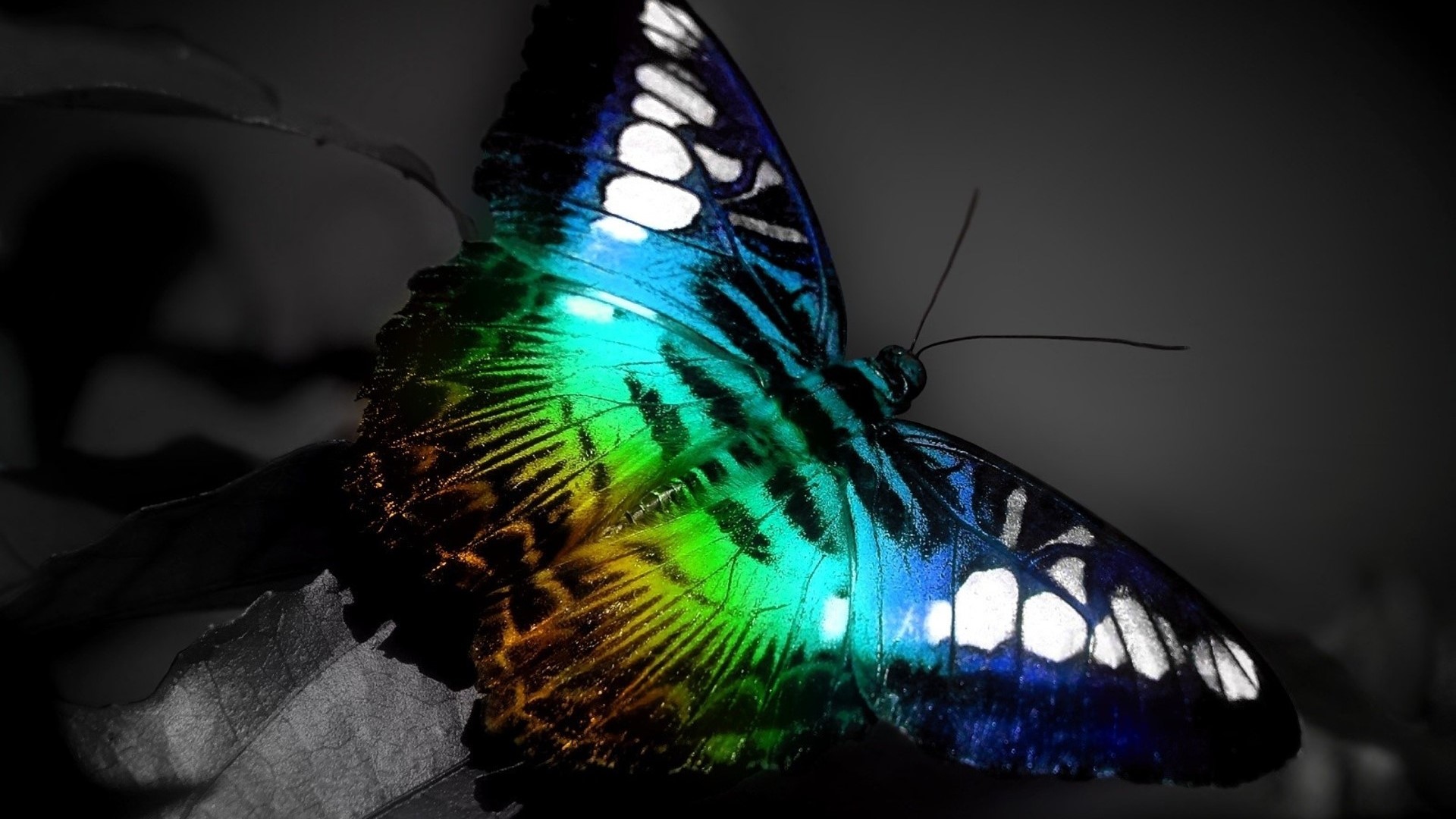
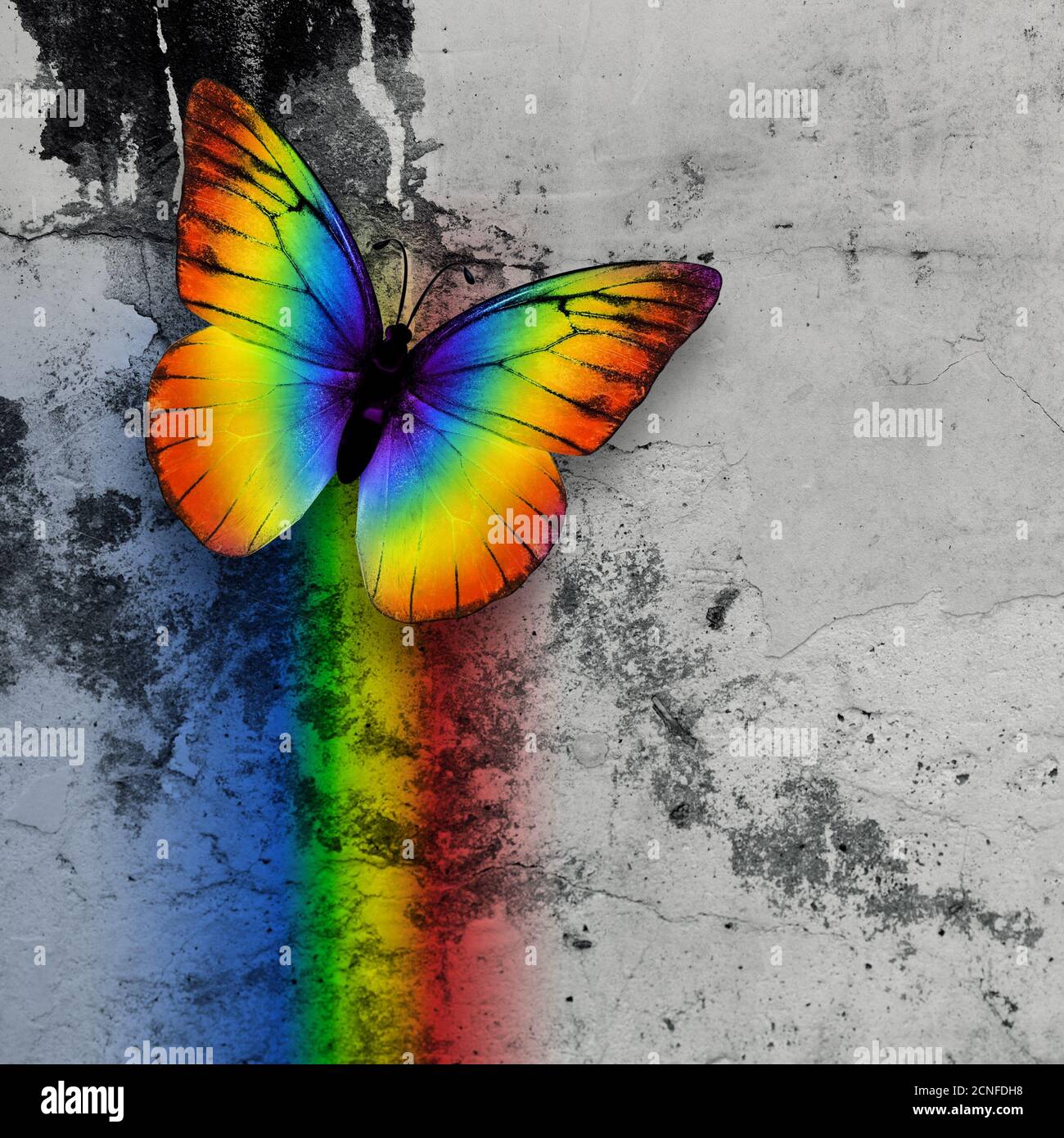
Rainbow butterflies, characterized by a spectrum of iridescent colors spanning the entire visible light range across their wings, do not exist in nature as a biological species. While many butterfly species exhibit vibrant, multi-colored patterns or structural iridescence, no known Lepidoptera possesses the uniform, rainbow-gradient appearance frequently depicted in viral social media imagery and digitally manipulated art.
The Intersection of Biology and Digital Manipulation
The primary reason for the confusion surrounding "rainbow butterflies" is the prevalence of high-quality digital content that mimics biological reality. In the digital landscape of 2026, image editing software and artificial intelligence tools have reached a point where the distinction between a photograph of a real organism and a fabricated composite is increasingly difficult for the casual observer to discern.
Often, images labeled as "rainbow butterflies" are either entirely computer-generated or are color-manipulated versions of real species. The visual appeal of such images often leverages the human psychological tendency to appreciate symmetry and high-contrast, multi-spectral color palettes. When these images circulate on social media platforms, they are frequently stripped of their original context, leading users to believe they have encountered a rare, undocumented biological discovery.
Structural Iridescence in Real Lepidoptera
While the "rainbow butterfly" is a myth, it is important to understand why the concept gains traction. Nature produces colors through two distinct mechanisms: pigmentation and structural coloration. Pigments absorb certain wavelengths of light and reflect others. Structural coloration, however, relies on the physical micro-structure of the organism to scatter and interfere with light.
Many real butterflies exhibit a form of structural iridescence that can appear to shift in color depending on the viewing angle. For example, the Morpho genus is famous for its brilliant blue wings. This color is not caused by blue pigment, but by microscopic, tree-like structures on the wing scales that interfere with light waves to reflect only the blue spectrum.
When researchers or photographers capture these butterflies in specific lighting conditions—or apply post-processing techniques—these iridescence effects can be amplified to look like shifting rainbows. However, these are localized optical phenomena, not the naturally occurring full-spectrum patterns seen in viral "rainbow" imagery.
Common Candidates Mistaken for Rainbow Butterflies
Several species are frequently misidentified or used as the base for edited "rainbow" content because of their naturally high level of iridescence. Recognizing these species can help clarify why the myth of the rainbow butterfly persists.
- Morpho didius: Known for its massive, intensely iridescent blue wings, this butterfly often serves as a canvas for digital color-shifting edits.
- Teinopalpus imperialis (Kaiser-i-Hind): This species displays a unique, shimmering green and yellow iridescence. Because it already has multiple colors appearing at different angles, it is a frequent target for digital saturation enhancement.
- Agrias claudina: Featuring a complex mixture of red, orange, and blue, this species provides a naturally vibrant color scheme that, when edited, can easily be pushed to mimic a rainbow gradient.
Comparative Table: Natural vs. Artificial Iridescence
| Feature | Naturally Iridescent Butterflies | Digital "Rainbow" Butterflies |
|---|---|---|
| Origin | Biological evolution | Algorithmic generation/Manipulation |
| Color Source | Structural interference in scales | Pixel adjustment or AI hallucination |
| Consistency | Changes based on viewing angle | Static across all viewing angles |
| Species Verification | Documented in entomological records | No record in taxonomic databases |
| Functional Purpose | Mating signals, camouflage, warning | Aesthetic impact, social media engagement |
The Science of Entomological Classification
To confirm the existence of any species, scientists rely on the taxonomic system, which catalogues every known living organism. If a "rainbow butterfly" existed, it would have been collected, studied, and classified by entomologists.
As of 2026, there are approximately 18,000 recognized species of butterflies worldwide. Every single one of these species has been documented in peer-reviewed literature, with specific data regarding their life cycle, host plants, and habitat. None of these records include a species that matches the description of a uniform, multi-colored rainbow butterfly. The naming conventions for Lepidoptera follow strict Latin binomial nomenclature, and any new species discovery requires a physical specimen to be deposited in a recognized museum or research institution for verification.
Why the Myth Persists: The Role of Online Algorithms
The persistence of the rainbow butterfly myth is largely driven by the mechanics of modern digital content consumption. Algorithms prioritize high-engagement images. A brightly colored, "impossible" creature performs exceptionally well in terms of shares, likes, and comments.
When users encounter these images, they rarely have the tools to verify the biological authenticity of the claim. Furthermore, the lack of immediate contradictory evidence in a quick search—often because the images are posted on non-scientific platforms—creates an "echo chamber" effect. Over time, the repetition of these images establishes a false sense of truth, where the image becomes "real" by virtue of its ubiquity rather than its biological accuracy.
Identifying Fact from Fiction in Nature Photography
For those interested in the actual diversity of the insect world, distinguishing between genuine wildlife photography and manipulated images is a critical skill. Follow these guidelines to evaluate whether a biological image is legitimate:
- Check for Taxonomic Identification: Legitimate nature photographers typically provide the common and scientific name of the specimen. If an image is captioned simply as "Rainbow Butterfly" with no taxonomic detail, it is likely artificial.
- Examine for Digital Artifacts: Look for signs of heavy post-processing, such as haloing around the wing edges, unnatural blurring of textures, or pixelation in the color gradients that does not match the natural grain of the photograph.
- Search Specialized Databases: Use resources like the Global Biodiversity Information Facility (GBIF) or peer-reviewed journals. If the image in question is not present in these databases, it is almost certainly not a real species.
- Observe Color Consistency: In natural iridescence, the color shift follows the laws of light diffraction. If the colors appear to be applied like paint across the surface of the wing without regard to the underlying physical scales, the image is likely a digital creation.
Frequently Asked Questions
Are there any species that change colors like a chameleon? While no butterfly has "chameleon-like" active camouflage, many species exhibit structural iridescence. This means they appear to change colors based on the angle at which light hits their wings. This is a passive optical effect, not an active biological color change.
Could a rainbow butterfly exist due to genetic mutation? While genetic mutations can affect wing patterns, they generally result in color loss (albinism) or irregular spotting. Producing a symmetrical, full-spectrum rainbow pattern would require a complex, highly coordinated evolution of wing scale structure that is not observed in any known insect species.
Are there any butterflies that have all the colors of the rainbow on their wings? Some species, such as the Agrias or certain Papilio species, possess a wide range of pigment-based colors, including red, yellow, blue, and green. However, these are distinct patches of color, not a blended, uniform gradient, and they do not constitute a "rainbow" in the traditional sense of the word.
Why do artists create these fake images? Most "rainbow butterfly" imagery is created for artistic expression, stock photography, or as an experiment in digital art. The goal is rarely to deceive intentionally, but rather to create something visually striking that resonates with viewers. The deception occurs when these images are re-shared out of their original artistic context.
Can I buy a rainbow butterfly for my collection? You may encounter sellers offering "rare rainbow butterflies." These are almost always preserved, dyed specimens or artificial creations. Be cautious, as the trade of such items often lacks scientific credibility and can sometimes involve unethical practices in butterfly farming or harvesting.
Moving Toward Scientific Literacy
The fascination with the rainbow butterfly is a testament to the wonder people feel toward the natural world. While the rainbow butterfly itself is a product of human imagination and digital capability, the real world of entomology offers millions of variations in color and form that are just as spectacular.
Instead of searching for a myth, consider exploring the genuine diversity found in local butterfly gardens or national park biodiversity surveys. By focusing on verifiable scientific information, you can enjoy the true brilliance of evolution without falling for the distractions of digital fabrication. If you have captured an image of a butterfly you believe is unusual, the most effective next step is to upload it to a citizen science platform like iNaturalist, where the global community of researchers can assist in the accurate identification of your discovery.