Assessing the environmental impacts of solar panels requires evaluating their entire lifecycle, from raw material extraction to end-of-life recycling. While solar energy significantly reduces greenhouse gas emissions during operation, its total footprint depends on manufacturing efficiency, the energy mix of production regions, land use considerations, and the efficacy of local recycling programs.
Understanding the Lifecycle Assessment (LCA) Framework
To accurately determine the environmental footprint of any energy technology, scientists and engineers utilize a Lifecycle Assessment (LCA). This "cradle-to-grave" methodology ensures that we do not simply look at the electricity generation phase—where solar is nearly impact-free—but also account for the hidden costs associated with production, logistics, and disposal.
As of 2026, the LCA for photovoltaic (PV) systems is divided into four distinct phases. The first is the upstream phase, which involves the mining of raw materials like quartz, silver, copper, and aluminum. The second is the manufacturing phase, where these materials are refined and assembled into cells and modules. The third is the operational phase, encompassing the 25 to 30 years the panels spend generating power. Finally, the downstream phase covers the decommissioning and recycling or landfilling of the hardware.
By analyzing each stage, stakeholders can identify "hotspots"—areas where the environmental burden is highest—and implement technological or policy-driven solutions to mitigate them. For example, the high energy consumption of silicon purification is a primary hotspot currently being addressed through more efficient manufacturing processes.
Manufacturing and Raw Material Extraction
The environmental impact of solar panels begins long before they are mounted on a roof. Most modern solar panels are silicon-based (monocrystalline or polycrystalline). Producing these requires high-purity silicon, which is derived from quartz sand. The reduction of quartz into metallurgical-grade silicon occurs in large furnaces at temperatures exceeding 1,900 degrees Celsius, a process that is both energy-intensive and involves the release of carbon dioxide (CO2).
Beyond silicon, several other key materials present environmental challenges:
- Silver and Copper: Used for conductive pathways. Silver mining is particularly intensive and can lead to local soil and water contamination if not managed correctly.
- Aluminum: Used for the panel frames. Aluminum smelting is one of the most energy-demanding industrial processes globally.
- Critical Minerals: Thin-film panels, such as those made from Cadmium Telluride (CdTe) or Copper Indium Gallium Selenide (CIGS), rely on rarer elements. While these panels often have a lower carbon footprint during manufacturing, they introduce toxicity concerns regarding cadmium handling and disposal.
In 2026, the industry has shifted toward "dematerialization"—using less silver and thinner silicon wafers—to reduce these upstream impacts. Furthermore, sourcing materials from regions with strict environmental regulations is becoming a standard requirement for Tier 1 manufacturers to ensure ethical and ecological compliance.
Carbon Payback Time (CPBT) and Greenhouse Gas Emissions
One of the most frequent questions regarding solar energy is whether the emissions produced during manufacturing outweigh the carbon saved during operation. The metric used to answer this is the Carbon Payback Time (CPBT). This represents the amount of time a solar system must operate to "break even" on the emissions generated during its production and installation.
As of 2026, the average CPBT for a residential solar installation is between 1 and 2 years, depending on the local solar irradiance and the carbon intensity of the grid where the panels were manufactured. If a panel is manufactured in a region that relies heavily on coal (such as certain industrial hubs in Asia), its initial "carbon debt" is higher. Conversely, panels produced using hydroelectric or wind power have a significantly shorter CPBT.
Over a 30-year lifespan, a solar panel will produce roughly 90% to 95% less CO2 equivalent per kilowatt-hour (kWh) than a coal-fired power plant. While coal emits approximately 1,000 grams of CO2 per kWh, solar PV typically ranges from 20 to 50 grams per kWh when averaged over its entire lifecycle. This drastic reduction is the primary driver for solar adoption in global climate mitigation strategies.
Land Use and Biodiversity Considerations
The physical space required for solar installations is a significant factor in assessing environmental impact, particularly for utility-scale solar farms. Unlike rooftop solar, which utilizes existing structures, large-scale arrays can cover hundreds of acres of land.
Habitat Fragmentation
Large-scale developments can lead to habitat loss or fragmentation for local wildlife. For instance, in desert ecosystems, the installation of vast solar arrays can interfere with the migratory patterns of tortoises or the nesting sites of birds. To mitigate this, developers in 2026 are increasingly required to conduct comprehensive Biodiversity Impact Assessments and implement "wildlife corridors" that allow animals to move through the site.
Agrivoltaics and Dual-Use Land
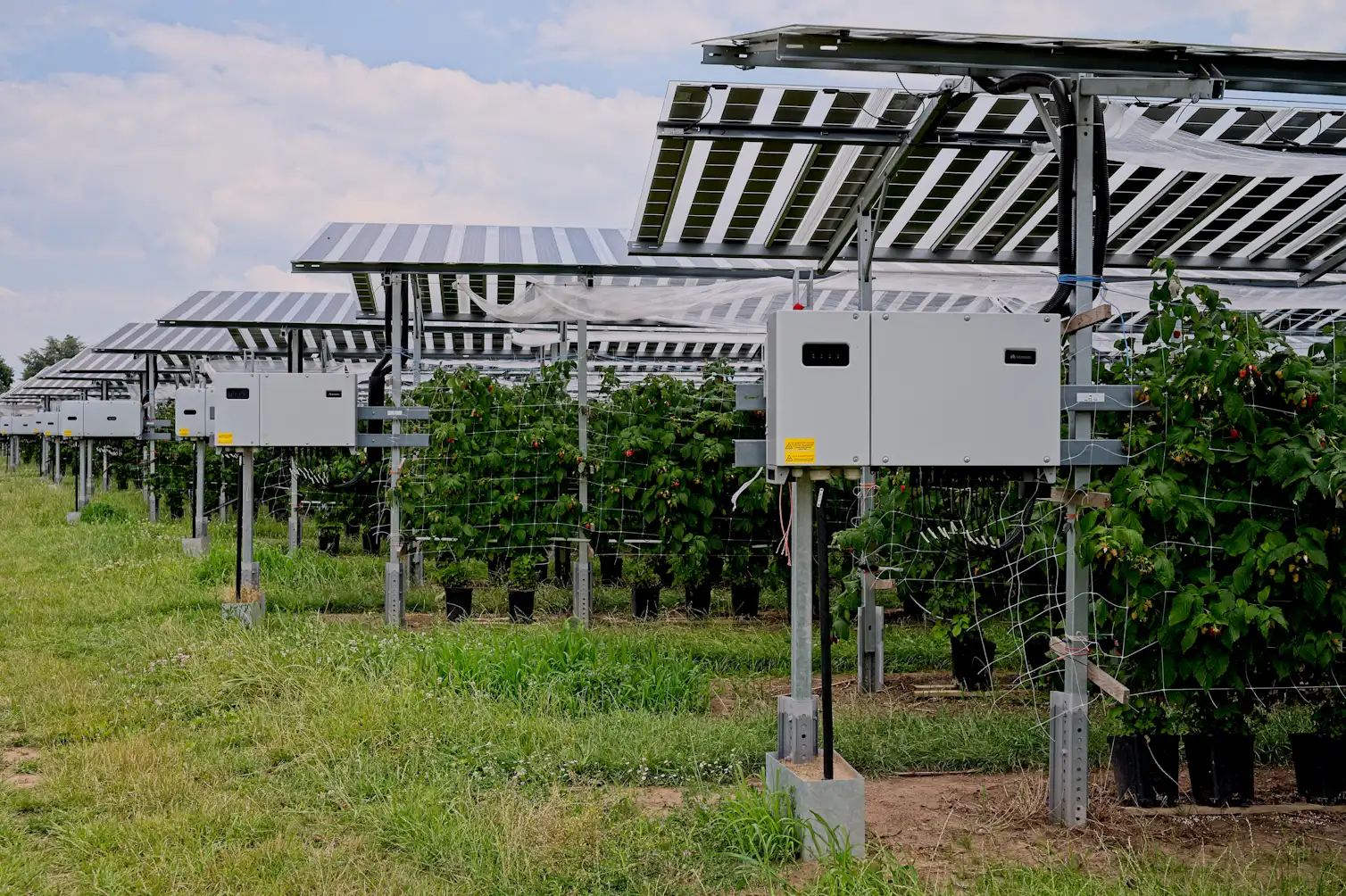
A positive development in land-use management is the rise of agrivoltaics—the practice of co-locating solar panels with agriculture. Research has shown that certain crops, such as leafy greens and berries, thrive under the partial shade of solar panels, which reduces soil evaporation and water consumption. This dual-use approach minimizes the conflict between renewable energy goals and food security, turning a potential land-use negative into a synergistic positive.
Water Consumption and Chemical Byproducts
Solar PV is often praised for its low water footprint compared to fossil fuels or nuclear energy, which require massive amounts of water for cooling. However, water usage is still a factor in two specific areas:
- Manufacturing: The process of cleaning silicon wafers and cooling manufacturing equipment requires high volumes of ultra-pure water. In water-stressed regions, this can place a strain on local aquifers.
- Maintenance: In arid environments, dust accumulation (soiling) can reduce panel efficiency by up to 20%. Cleaning these panels often requires water. However, by 2026, robotic "dry cleaning" technologies and hydrophobic coatings have become more prevalent, significantly reducing the operational water demand.
Regarding chemical waste, the production of silicon involves hazardous chemicals like silicon tetrachloride. If not handled in a closed-loop system, these byproducts can be toxic. Modern environmental regulations, such as those enforced by the Environmental Protection Agency (EPA), mandate the recycling or safe neutralization of these chemicals to prevent environmental leakage.
End-of-Life Management: The Recycling Challenge
Perhaps the most critical environmental assessment point in 2026 is what happens to solar panels when they reach the end of their useful life. A massive wave of "first-generation" panels is now reaching retirement age, making solar waste management a priority.
Solar panels are composed of valuable materials, but they are physically bonded together, making separation difficult.
- Glass and Aluminum: These are the easiest to recycle and constitute about 80% of the panel's weight.
- Silicon and Silver: Recovering high-purity silicon and silver requires specialized chemical or thermal treatments.
- Toxic Elements: Lead (used in solder) and cadmium (in thin-film panels) must be carefully extracted to prevent them from leaching into groundwater if panels are improperly landfilled.
The industry has moved toward a Circular Economy model. Many jurisdictions now have "Extended Producer Responsibility" (EPR) laws, which require manufacturers to fund and manage the take-back and recycling of their products. Facilities now exist that can recover up to 95% of the materials in a solar panel, reintroducing them into the manufacturing supply chain and reducing the need for new mining operations.
Environmental Comparison of Energy Sources
To provide context for the environmental impact of solar, it is helpful to compare it against other common energy sources. The table below summarizes key metrics based on 2026 global averages.
| Energy Source | Median Lifecycle CO2 (g/kWh) | Water Consumption (Liters/MWh) | Land Use (m²/MWh) | Major Environmental Risk |
|---|---|---|---|---|
| Solar PV (Rooftop) | 25 - 45 | Low (cleaning only) | Minimal (existing roofs) | Electronic waste / Chemical runoff |
| Solar PV (Utility) | 30 - 50 | Low to Moderate | 10 - 20 | Habitat loss / Biodiversity impact |
| Wind (Onshore) | 11 - 15 | Negligible | 1 - 2 | Noise / Avian mortality |
| Natural Gas | 450 - 500 | High (cooling) | 1 - 3 | Methane leaks / GHG emissions |
| Coal | 850 - 1,100 | Very High (cooling) | 2 - 5 | Air pollution / Ash disposal |
Note: Data derived from the International Energy Agency (IEA) and lifecycle researchers. "Land use" for fossil fuels includes mining and extraction sites.
Best Practices for Minimizing Your Solar Footprint
If you are a homeowner or business owner looking to install solar panels while minimizing environmental harm, consider the following actionable steps:
- Sourcing and Transparency: Look for manufacturers that publish a Sustainability Report or have EPEAT certification. This ensures the company is tracking and reducing its manufacturing emissions and water use.
- Efficiency Matters: Higher efficiency panels (e.g., N-type monocrystalline) generate more power per square inch. This means you need fewer materials (and less land or roof space) to meet your energy needs.
- Quality and Longevity: A panel that lasts 40 years instead of 20 effectively halves its lifecycle environmental impact. Opt for premium brands with long performance warranties.
- Inquire About Recycling: Ask your installer if they have a partnership with a solar recycling firm like SolarRecycle.org or if the manufacturer has a documented end-of-life take-back program.
- Local Ecosystem Sensitivity: If installing a ground-mounted system, avoid clearing native vegetation. Use permeable ground covers and maintain local flora beneath the panels to support pollinators.
Frequently Asked Questions
Do solar panels contain toxic materials that leak into the ground?
Standard silicon solar panels contain very small amounts of lead in the solder and some internal components. Under normal operating conditions, these materials are sealed between layers of glass and polymer and do not leak. The risk only arises if panels are crushed in a landfill. This is why proper recycling and hazardous waste protocols are essential during decommissioning.
How does the energy used to make a panel compare to what it generates?
This is known as the Energy Return on Investment (EROI). Modern solar panels typically generate 10 to 20 times the energy required to manufacture them over their 25-year lifespan. As manufacturing becomes more efficient and the grids powering the factories become greener, this ratio continues to improve.
Are there "green" and "non-green" solar panels?
While all solar panels produce clean energy, some are "greener" than others based on their manufacturing process. Panels produced in factories powered by renewable energy, those that use recycled glass, and those that are "PFAS-free" (avoiding certain synthetic chemicals in the backsheet) have a lower overall environmental impact.
How does solar impact local temperatures (The Heat Island Effect)?
Large-scale solar farms can cause a localized "heat island" effect because dark panels absorb more solar radiation than natural vegetation. However, this effect is usually confined to the immediate area of the array and can be mitigated by maintaining vegetation under the panels, which provides evaporative cooling.
What is the biggest environmental disadvantage of solar energy?
Currently, the biggest challenge is the downstream waste management. While we have the technology to recycle panels, the infrastructure is still scaling up to meet the volume of retiring panels. Ensuring that 100% of decommissioned panels reach recycling centers rather than landfills is the industry's primary ecological goal for the late 2020s.
Final Recommendation
When assessing the environmental impacts of installing solar panels, the evidence remains overwhelmingly in favor of solar as a key tool for ecological preservation. The minor negative impacts associated with manufacturing and land use are far outweighed by the massive reduction in carbon emissions and air pollutants compared to fossil fuels. To maximize the benefit, consumers should prioritize high-efficiency modules, support transparent manufacturers, and ensure a decommissioning plan is in place. By focusing on the full lifecycle rather than just the generation phase, you can ensure your transition to renewable energy is as truly "green" as possible.