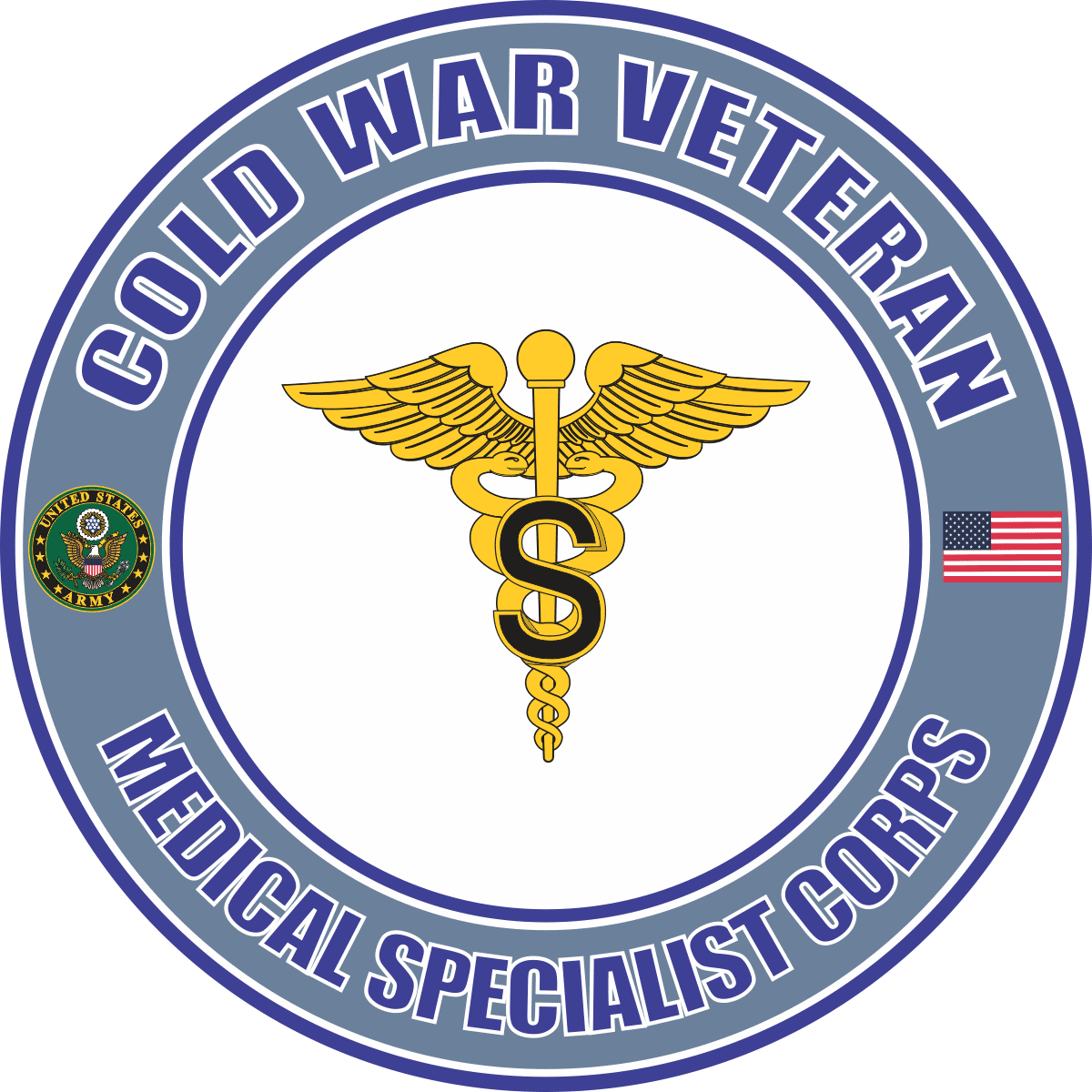
The primary symbol of the U.S. Army Medical Corps is the caduceus, a gold-colored winged staff entwined by two serpents. Adopted officially in 1902, it serves as the branch insignia for medical officers. It represents the authority, swiftness, and healing mission of the Army Medical Department (AMEDD) and its various professional corps.
The Evolution of the Army Medical Corps Branch Insignia
The symbol representing the U.S. Army Medical Corps has undergone significant transformations since the inception of a centralized medical department in 1818. Before the standardized caduceus we recognize today, the medical service utilized various markers to identify its personnel and equipment. In the early 19th century, medical officers were often identified by simple uniform distinctions, such as specific button patterns or the color of their facings.
In 1851, the Medical Department adopted a "MS" (Medical Staff) insignia, which was worn on the epaulettes of officers. This was a period of professionalization within the Army, where the need for distinct branch identification became paramount for battlefield organization. The "MS" abbreviation remained the primary identifier through the American Civil War, a conflict that necessitated a massive expansion of medical services and highlighted the need for clear visual cues for non-combatants on the field.
The transition to the caduceus occurred in 1902. This change was largely driven by a desire for a more classical and internationally recognized symbol of the medical profession. Captain Frederick P. Reynolds, an assistant surgeon, is often credited with proposing the caduceus. While the symbol was already in use by the U.S. Marine Hospital Service (which later became the Public Health Service), its adoption by the Army signaled a modern era of military medicine. As of 2026, this symbol remains one of the most recognizable icons in the military, representing a legacy of over 120 years of service under a single heraldic device.
The Symbology of the Caduceus: Wings, Staff, and Serpents
To understand the Army Medical Corps symbol, one must analyze its three primary components: the staff, the serpents, and the wings. Each element carries deep historical and heraldic significance that contributes to the overall identity of the medical officer.
The Central Staff
The staff in the center of the insignia represents authority and stability. In classical mythology, the staff (the kerykeion) was carried by heralds and messengers. In a military context, this translates to the authority of the medical officer to perform their duties and the stability they provide to the force. It serves as the backbone of the symbol, anchoring the more fluid elements of the serpents and wings.
The Twin Serpents
The two serpents entwined around the staff are perhaps the most debated aspect of the insignia. Historically, the serpent has been a symbol of wisdom, rejuvenation, and healing due to its ability to shed its skin. In the Army Medical Corps insignia, the two serpents are depicted in a symmetrical arrangement, facing each other at the top. This symmetry represents the balance and precision required in medical practice. The use of two serpents, rather than one, is what distinguishes the caduceus from other medical symbols.
The Outstretched Wings
At the top of the staff are two spread wings. These represent celerity and diligence. In military medicine, the speed of treatment—often referred to as the "Golden Hour"—is critical to survival. The wings symbolize the Medical Corps' commitment to reaching the wounded quickly and providing rapid evacuation and care. They also allude to the messenger god Hermes (Mercury), emphasizing the role of the medical officer as a communicator between the tactical and clinical worlds.
Caduceus vs. Rod of Asclepius: A Century of Debate
A common point of confusion—and occasional controversy—within the medical and heraldic communities is the use of the caduceus instead of the Rod of Asclepius. As of 2026, this remains a standard topic of discussion for new medical officers entering the U.S. Army.
The Rod of Asclepius features a single serpent entwined around a rough-hewn branch without wings. Asclepius was the Greek god of healing, and his staff is widely considered the "correct" symbol for the medical profession by organizations such as the World Health Organization and the American Medical Association.
The Caduceus, conversely, is the staff of Hermes (Mercury), the god of commerce, travelers, and thieves. The U.S. Army's adoption of the caduceus in 1902 was likely based on its use by the U.S. Marine Hospital Service and a perceived aesthetic superiority. Despite critiques from purists who argue that the caduceus is a symbol of trade rather than medicine, the Army has maintained its use for over a century. The symbol has become so deeply ingrained in military culture that it now possesses its own distinct meaning within the Department of Defense, independent of its ancient Greek origins.
The Regimental Distinctive Insignia (RDI) and Coat of Arms
While the caduceus is the branch insignia worn on the lapels of uniforms, the Army Medical Department (AMEDD) also utilizes a Regimental Distinctive Insignia (RDI) and a formal Coat of Arms. These symbols provide a broader historical context for the corps.
The RDI, authorized in 1986 as part of the implementation of the U.S. Army Regimental System, is a shield-shaped device that incorporates elements of the original 1818 coat of arms. Notably, the RDI actually uses the Rod of Asclepius (the single-serpent version) in its design, creating a unique situation where Army medical personnel wear the caduceus as branch insignia but the Rod of Asclepius on their regimental crest.
Components of the Coat of Arms
The coat of arms is divided into several symbolic sections:
- The Shield: The left side (dexter) features the U.S. flag with 20 stars, representing the number of states in the Union in 1818. The right side (sinister) features the Rod of Asclepius in white on a maroon background.
- The Motto: Located on a scroll beneath the shield, the motto "Experientia et Progressus" translates to "Experience and Progress." This reflects the department's commitment to clinical excellence and the advancement of medical science.
- The Colors: The primary colors are Maroon and White. Maroon was officially designated as the branch color in 1902, replacing the earlier emerald green.
Visual Comparison of Army Medical Symbols
The following table outlines the differences between the various symbols used by the Army Medical Corps and the broader Army Medical Department.
| Feature | Branch Insignia (Caduceus) | Regimental Distinctive Insignia (RDI) | Department Coat of Arms |
|---|---|---|---|
| Primary Imagery | Two snakes, winged staff | Shield with single snake/staff | Shield with flag and snake/staff |
| Authorized Date | 1902 | 1986 | 1818 (Revised 1851/1902) |
| Meaning | Speed, authority, wisdom | Heritage, unity, healing | History, mission, national service |
| Uniform Placement | Lapels/Collar | Above right breast pocket/name tape | Administrative/Ceremonial use |
| Associated Motto | N/A | Experientia et Progressus | Experientia et Progressus |
Uniform Regulations and Proper Wear
In 2026, the wear of the Army Medical Corps symbol is governed by Army Regulation 670-1 (AR 670-1). Precision in the placement of these insignia is a requirement for all medical officers to maintain professional standards.
Officer Branch Insignia
For Medical Corps officers (physicians), the branch insignia is a plain gold caduceus. Other corps within the Medical Department use variations:
- Army Nurse Corps (ANC): A caduceus with a black "N" superimposed.
- Dental Corps (DC): A caduceus with a black "D" superimposed.
- Medical Service Corps (MSC): A caduceus with a black "MS" superimposed.
- Veterinary Corps (VC): A caduceus with a black "V" superimposed.
- Army Medical Specialist Corps (AMSC): A caduceus with a black "S" superimposed.
On the Army Service Uniform (ASU) or the Army Green Service Uniform (AGSU), the insignia is worn on both lapels. For male officers, it is positioned so the centerline of the insignia is 1 inch above the notch and centered on the collar. For female officers, the placement is adjusted to fit the lapel proportions, typically centered between the edge of the lapel and the seam.
The Regimental Insignia
The RDI is worn by all personnel assigned to the Army Medical Department, regardless of their specific corps. On the AGSU and ASU, it is worn centered 1/8 inch above the top of the right breast pocket or the top of the nameplate. This insignia represents the soldier's membership in the "Regiment" of the Medical Department, fostering a sense of belonging to a historical lineage that spans over two centuries.
Significance of the Maroon and White Branch Colors
The colors of the Army Medical Corps symbol are not arbitrary; they are deeply rooted in the history of the branch. Maroon is the primary color, with White serving as the secondary or piping color.
Maroon (specifically a deep claret or sangria hue) was chosen in 1902. Before this, the Medical Department used emerald green, a color still seen today in the "Green Cross" of some medical safety organizations. The shift to maroon was intended to align the U.S. Army with the colors used by the medical services of many European armies, particularly the British Royal Army Medical Corps.
In heraldry, maroon often represents sacrifice and bravery, while white symbolizes purity and the sterile nature of the medical environment. These colors appear on the branch insignia, guidons (unit flags), and the "piping" on the dress uniforms of enlisted medical personnel.
The Modern Context: The Symbol in 2026
As we look at the Army Medical Corps symbol in 2026, it remains a pillar of military identity. Despite the technological advancements in combat medicine—such as autonomous casualty evacuation, advanced biometrics, and synthetic blood substitutes—the symbol on the uniform has stayed constant.
The caduceus continues to serve as a "universal translator" on the battlefield. When a soldier sees the winged staff and serpents, they know they are in the presence of someone dedicated to the preservation of life. For the medical officer, the symbol is a constant reminder of the "Dual Profession"—the requirement to be both a proficient soldier and a compassionate healer.
In recent years, there has been a movement toward reinforcing the use of the Regimental Insignia (with the Rod of Asclepius) in clinical settings to emphasize the scientific nature of the corps. However, the caduceus remains the undisputed king of branch identity, appearing on everything from unit coins and stationary to the massive crests found at the U.S. Army Medical Center of Excellence (MEDCoE) at Fort Sam Houston, Texas.
Frequently Asked Questions
Why does the Army Medical Corps use two snakes instead of one?
The U.S. Army uses the caduceus (two snakes), which was the staff of Hermes. This was officially adopted in 1902, likely because it was visually distinct and already in use by other government health services at the time. While the single-snake Rod of Asclepius is the traditional symbol of medicine, the Army has retained the caduceus as its unique branch identifier for over a century.
What is the difference between the Medical Corps and AMEDD symbols?
The Medical Corps (MC) is a specific branch for physicians, and its symbol is the plain gold caduceus. The Army Medical Department (AMEDD) is the umbrella organization that includes all medical branches (Nurses, Medics, Dentists, etc.). AMEDD uses the Regimental Distinctive Insignia and a Coat of Arms, which feature a shield and the Rod of Asclepius, as a unifying symbol for all medical personnel.
Are the wings on the symbol related to the Air Force?
No, the wings on the caduceus are ancient heraldic symbols of celerity (speed) and diligence. They predated the existence of flight and the Air Force by centuries. In the context of the Army Medical Corps, they emphasize the rapid response required to save lives on the battlefield.
Does the Army ever use the Rod of Asclepius?
Yes. The Rod of Asclepius (one snake, no wings) is the central feature of the AMEDD Regimental Distinctive Insignia (RDI) and the Department Coat of Arms. Most Army medical personnel wear both symbols: the caduceus on their collar and the Rod of Asclepius as part of their regimental crest on their chest.
Has the symbol changed since 1902?
The core design of the gold caduceus has remained unchanged for over 120 years. However, the way it is manufactured has evolved from heavy brass to modern anodized metals that do not require polishing. The specific Superimposed letters (like "N" or "D") were added as new corps were established within the Medical Department.
Final Recommendations for Personnel and Historians
For those entering the U.S. Army Medical Corps or for historians researching its heraldry, it is essential to distinguish between branch insignia and regimental insignia.
- Verify Regulation Compliance: Always consult the current version of AR 670-1 for the placement of the caduceus. Improper alignment is a frequent point of correction during inspections.
- Understand the Legacy: The caduceus represents more than just a job; it represents a commitment to the "Soldier-Medic" ethos. Personnel should be prepared to explain the history of the 1902 adoption and the meaning of the wings and serpents.
- Respect the Distinction: While the caduceus is the lapel symbol, the Regimental Crest (with the Rod of Asclepius) is the symbol of the "Home" of the Army Medical Department. Both should be worn with an understanding of their unique roles in military heraldry.
The Army Medical Corps symbol is a bridge between the ancient traditions of healing and the modern requirements of military service. As it stands in 2026, it remains an enduring emblem of the courage and skill of those who serve to "Conserve the Fighting Strength."