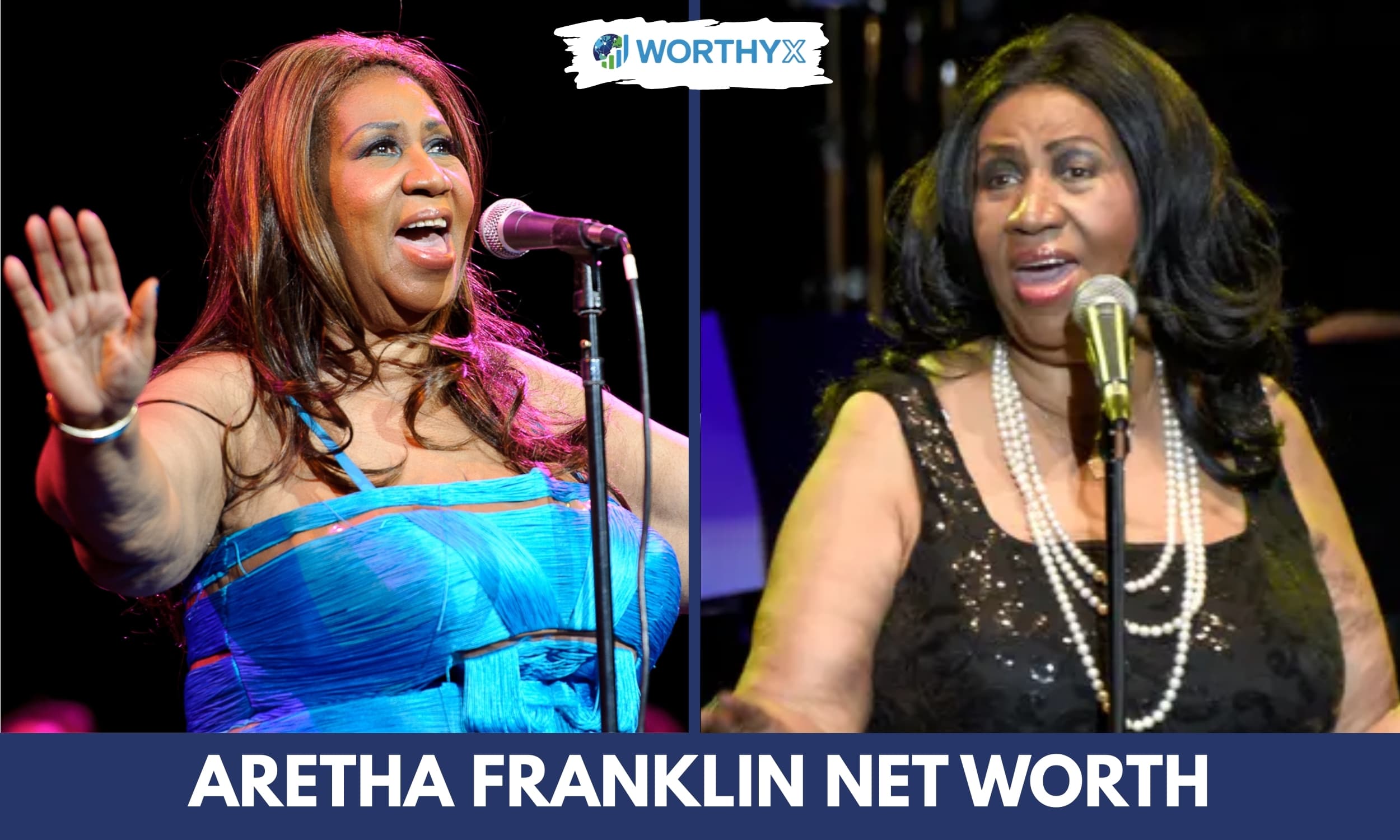
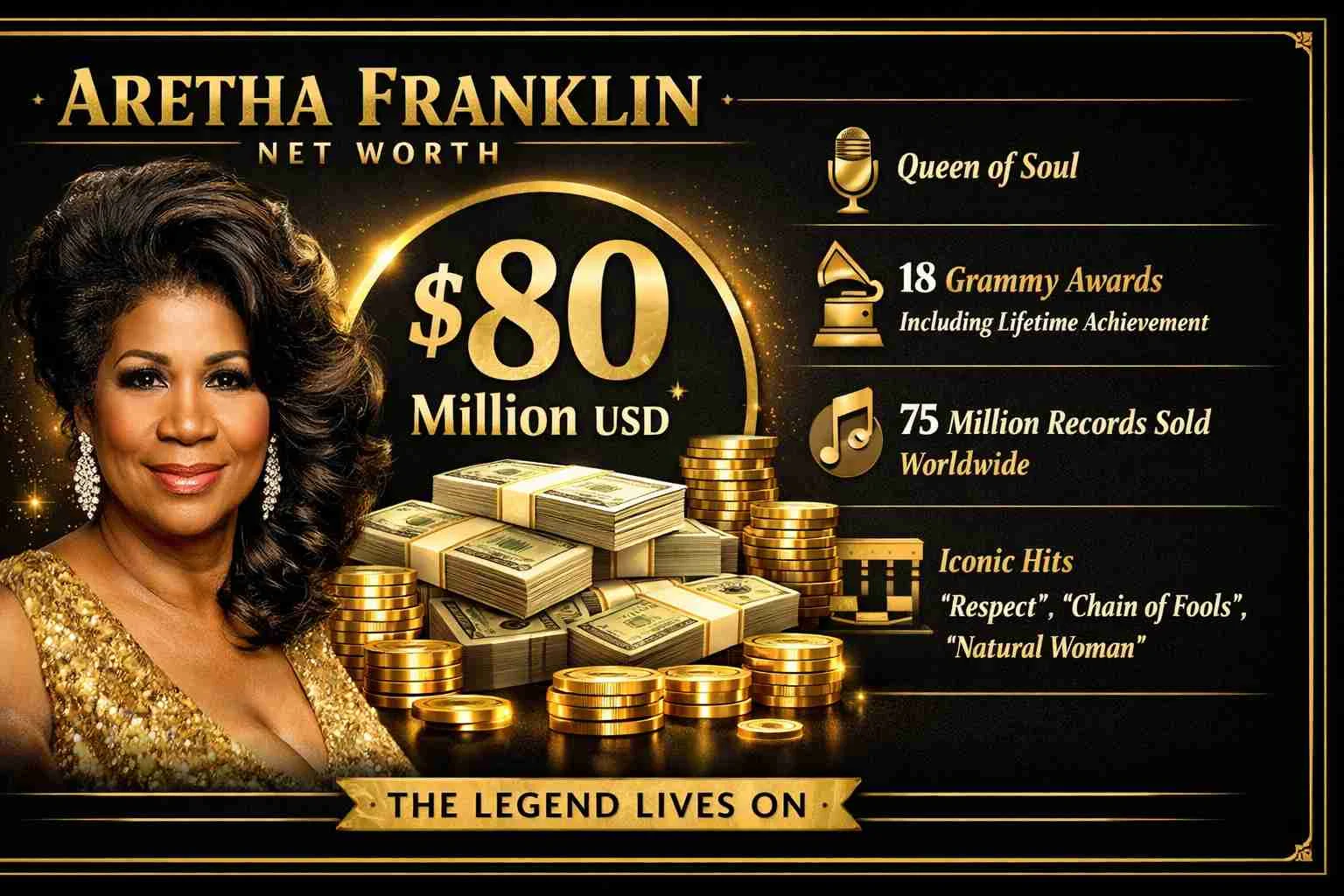
Aretha Franklin, the undisputed "Queen of Soul," passed away on August 16, 2018, at 9:50 a.m. EDT at her home in Detroit, Michigan. At the time of her death, her net worth was estimated to be approximately $80 million, though the subsequent management of her estate and the discovery of multiple handwritten wills led to complex, years-long legal proceedings to determine the final distribution of her assets.
The Passing of a Music Icon
The world lost one of its most influential vocalists when Aretha Franklin succumbed to complications related to pancreatic cancer. Her passing at the age of 76 marked the end of a career that spanned six decades, during which she fundamentally reshaped American popular music.
Franklin had been battling health issues for several years leading up to her death. While she largely kept the specifics of her medical condition private, her final days were spent in the company of family and close friends at her residence in Detroit. The news of her death sparked a global outpouring of grief, with public tributes spanning from the halls of government to the stages of major musical venues. Her funeral, held at the Greater Grace Temple in Detroit, became a significant cultural event, highlighting the profound impact she had on civil rights, gospel music, and the R&B genre.
Determining the Net Worth of Aretha Franklin
Estimating the net worth of a legendary artist like Aretha Franklin is an exercise in analyzing historical earnings, intellectual property rights, and real estate holdings. At the time of her death, financial analysts and estate experts placed her valuation at roughly $80 million.
This figure was comprised of several distinct financial pillars:
- Music Royalties and Catalog: As a prolific songwriter and recording artist, Franklin maintained significant ownership and rights to her vast catalog. This included performance royalties, mechanical royalties, and sync licensing for her music in films and television.
- Real Estate Holdings: Franklin held significant property in the Detroit area, which formed a notable portion of her tangible assets.
- Historical Earnings: Throughout her career, Franklin commanded high fees for live performances and world tours. Despite her commercial success, she was known for being protective of her earnings and generally maintained a private financial life.
It is important to note that "net worth" at the time of death is a snapshot. In the years following her passing, the valuation of her estate fluctuated based on the management of her intellectual property, the release of archival recordings, and the costs associated with the extensive legal battles that occurred after her death.
The Legal Complexity of the Estate
Following her death, the administration of Franklin’s assets became a case study in the importance of estate planning. Initially, it was believed that Franklin died intestate—meaning she left no formal, legally binding will. However, in 2019, nearly a year after her passing, several handwritten documents were discovered in her home, including one tucked under a couch cushion.
The existence of these competing documents triggered a probate battle between her four sons. The central issue was determining which of the documents, if any, constituted a valid will under Michigan law.
The Probate Process
The probate court’s role was to ensure that the distribution of assets aligned with the decedent’s final wishes. Because of the ambiguity of the handwritten notes, the court had to evaluate:
- Testamentary Intent: Did the documents represent her final, deliberate intent for her estate?
- Statutory Requirements: Did the handwritten documents meet the legal requirements for a valid holographic (handwritten) will in the state of Michigan?
In 2023, a jury determined that a 2014 handwritten document found in a notebook at her home was indeed a valid will, superseding an earlier 2010 draft. This legal resolution was critical to the final distribution of her assets, which included significant tax liabilities that had to be addressed before her heirs could receive their inheritance.
Financial Management and Tax Obligations
One of the most significant factors affecting the actual value of an estate of this magnitude is the federal and state tax burden. When Aretha Franklin died, her estate faced a substantial bill from the Internal Revenue Service (IRS). For years, the estate worked to pay down millions of dollars in back taxes that had accumulated.
The management of such an estate requires specialized professionals, including estate attorneys, tax accountants, and music industry executives, all of whom charge fees that reduce the net amount available for heirs. The "net worth" of $80 million is often cited as the gross valuation; the liquid value passed to beneficiaries is invariably lower once debts, taxes, and legal fees are settled.
| Asset Category | Description of Impact |
|---|---|
| Music Catalog | Represents the long-term value; royalties continue to accrue for heirs. |
| Real Estate | Often liquidated or appraised for transfer to trust beneficiaries. |
| Back Taxes | A primary financial liability that must be cleared before asset distribution. |
| Legal Fees | Costs incurred during the multi-year battle over the validity of her wills. |
Intellectual Property and Posthumous Earnings
The value of a music icon’s estate often grows after their death. With the rise of streaming platforms, the catalog of an artist as significant as Aretha Franklin remains a high-performing asset. Post-2018 earnings are generated through:
- Streaming Revenue: Global consumption of her hits like "Respect" and "Think."
- Biographical Rights: Projects such as the film Respect (2021) and the limited series Genius: Aretha (2021) generated licensing revenue for the estate.
- Archival Releases: The curation of unreleased studio outtakes and concert footage provides ongoing revenue streams.
These posthumous earnings ensure that the estate continues to function as a business entity, moving well beyond the initial valuation calculated at the time of her death.
Frequently Asked Questions
Did Aretha Franklin leave a formal will? No, she did not have a formal will drafted by an attorney. Her estate was settled based on handwritten notes discovered after her death, which led to a legal trial to confirm their validity.
How much was the Aretha Franklin estate worth? At the time of her death in 2018, estimates placed her net worth at approximately $80 million. However, the final value distributed to heirs was impacted by substantial back taxes and the costs of legal proceedings.
What happened to her music rights? The rights to her music are managed by the estate. Income generated from her recordings and songwriting continues to be distributed according to the terms of the documents validated by the probate court.
Why was there a legal battle over her estate? The battle arose because there were multiple, conflicting handwritten documents found in her home. Her children disagreed on which document represented her true final wishes, necessitating court intervention to determine which paper was legally binding.
Is the estate currently settled? As of 2026, the primary disputes regarding the validity of her will have been resolved by the courts, allowing the estate to proceed with the final distribution and management of assets according to the validated 2014 document.
Recommendation for Estate Awareness
The case of Aretha Franklin serves as a poignant reminder of the necessity of clear, professionally drafted estate planning. Regardless of the size of an estate, relying on informal, handwritten notes—often called holographic wills—can lead to years of litigation, significant depletion of assets through legal fees, and strained family relationships.
If you are evaluating your own financial and estate planning, the most important action is to consult with an estate planning attorney. A professional can help you draft a clear, legally sound will or trust, designate executors, and minimize the tax burden for your beneficiaries. Ensuring your documents are properly witnessed and stored can prevent the uncertainty and public legal challenges that dominated the post-death management of one of the world's greatest musical legacies.