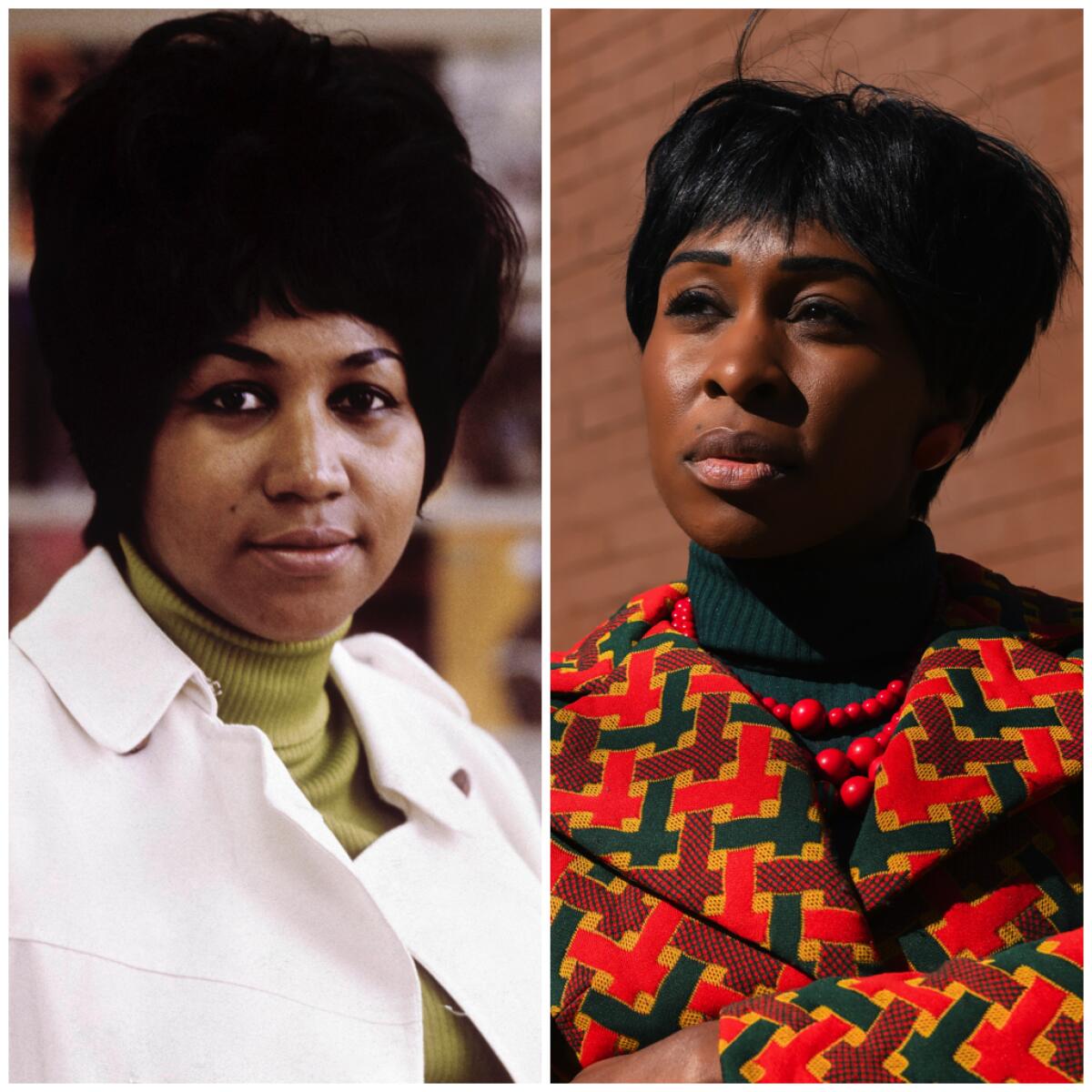
There is often public confusion regarding the Aretha Franklin film starring Cynthia Erivo, as the actress portrayed the legendary singer in the 2021 television series Genius: Aretha. While frequently searched as a movie, this project was a high-profile limited series produced by National Geographic, representing the definitive portrayal of the Queen of Soul by Erivo to date.
Understanding the Scope of the Project
To understand why this project is often conflated with a feature film, one must examine the production scale of Genius: Aretha. Released in March 2021, the third installment of the Genius anthology series spanned eight episodes. It was designed with the cinematic visual language, budget, and narrative depth typically reserved for high-budget biopics.
Cynthia Erivo, a Tony, Grammy, and Emmy award-winning performer, took on the mantle of Aretha Franklin with an emphasis on the singer's internal life, the political climate of the 1960s and 70s, and the creative process behind her greatest hits. Because the series was distributed globally via streaming platforms—specifically Disney+ and Hulu—it reached audiences in the same manner as a major motion picture, leading many viewers to categorize the long-form narrative as a "movie."
Cynthia Erivo’s Approach to the Role
Cynthia Erivo’s portrayal is widely noted by critics and historians for its commitment to technical accuracy, particularly regarding Franklin’s vocal style and piano technique. Unlike many biographical interpretations that rely on lip-syncing, Erivo insisted on performing the songs herself. This decision presented a significant technical challenge: replicating the specific gospel-infused timbre and improvisational jazz sensibilities that define Franklin’s legacy.
The production involved extensive vocal coaching to help Erivo capture the specific "runs" and emotional inflections of Franklin’s voice without mimicking her to the point of caricature. Erivo’s performance was grounded in the biography Respect: The Life of Aretha Franklin by David Ritz, which served as the primary source material for the screenplay. The narrative avoids the trope of a linear "cradle-to-grave" story, instead choosing to focus on how Franklin’s background in the church, her relationship with her father C.L. Franklin, and the broader Civil Rights Movement shaped her identity as a musician.
Why the Distinction Between "Movie" and "Series" Matters
For audiences looking for a comprehensive view of Aretha Franklin’s life, the distinction between a limited series and a standard feature film is functionally important. A two-hour movie must condense decades of history into a rigid, rapid-fire narrative. Genius: Aretha, by contrast, provides roughly eight hours of screen time.
Comparative Format Analysis
| Feature | Feature-Length Biopic (Film) | Genius: Aretha (Limited Series) |
|---|---|---|
| Duration | 1.5 to 2.5 hours | ~8 hours |
| Narrative Pace | Compressed; high focus on peaks | Episodic; explores nuance/daily life |
| Primary Source | Screenplay adaptation | Comprehensive biographical research |
| Musical Handling | Often lip-synced or archival | Live vocal performance by Erivo |
| Distribution | Theatrical / Streaming | Streaming (NatGeo/Hulu/Disney+) |
This structure allows the project to cover aspects of Franklin’s life often ignored in film formats, such as her intricate contractual negotiations, the specific pressures of being a woman in the male-dominated music industry of the 1960s, and her activism.
Historical Context and Production Values
The production team behind the project prioritized historical authenticity. This involved sourcing period-accurate instruments, costumes that mirrored Franklin's evolving fashion, and recreations of specific recording sessions at Muscle Shoals and Atlantic Records. The series highlights not just the final product of the records, but the collaborative environment—and often the tension—between Franklin, her producers, and her family.
For viewers interested in the technical aspects of film and television production, Genius: Aretha serves as a case study in "prestige television." The lighting design, particularly in the sequences depicting Franklin’s church performances, was modeled after the aesthetic of the 1950s and 60s, moving away from modern "slick" cinematography to create a more authentic, textured atmosphere.
Frequently Asked Questions
Did Cynthia Erivo actually sing the songs in the Aretha Franklin project?
Yes. Cynthia Erivo performed the vocal tracks herself throughout the series. This was a central requirement for her participation, as she believed it was the only way to genuinely convey the emotional weight of Franklin’s music. She underwent intensive training to match the specific vocal power and phrasing that Aretha Franklin mastered throughout her career.
Is this the same project as the film "Respect" starring Jennifer Hudson?
No. Genius: Aretha (starring Cynthia Erivo) and Respect (starring Jennifer Hudson) are two separate projects released in the same timeframe. Respect is a feature-length film that focuses on a more traditional narrative arc, while the Erivo project is an episodic television series that covers a broader timeline of the singer’s career and personal history.
Where can I watch the Cynthia Erivo Aretha Franklin series in 2026?
As of 2026, the series remains available on primary streaming platforms that host the National Geographic Genius anthology. It is primarily accessed through Disney+ in most international markets and Hulu in the United States. Availability can fluctuate based on regional licensing agreements, so checking your local streaming catalog is recommended.
How historically accurate is the series?
The production relied on professional biographers and consulted with individuals who had ties to the Franklin family. While it remains a dramatization and includes creative license—common in all biographical film and television—it is generally regarded by critics as a sincere and well-researched attempt to capture the complexities of Franklin's life, avoiding common myths in favor of documented history.
Will there be a movie follow-up to this series?
There have been no official announcements regarding a feature-film sequel or a continuation of the Genius: Aretha project. As a limited series, it was produced with a defined beginning and end. Any future films about Aretha Franklin would likely be separate, unrelated productions with different creative teams.
Recommendations for Viewers
If your goal is to experience Cynthia Erivo’s performance, you should prioritize searching for Genius: Aretha on your preferred streaming service rather than looking for a theatrical film. If you are interested in the broader context of Aretha Franklin’s life, it is worth watching both the Erivo series and other biographical works. Comparing the different creative interpretations of the same life story offers a more nuanced understanding of how Aretha Franklin is viewed through the lens of modern cinema.
For those conducting research or seeking an academic understanding of her legacy, prioritize the source material cited in the series—specifically the works of David Ritz—as it provides the historical framework that the creators used to build the narrative. The series acts as an excellent entry point, but the depth of Franklin’s career, which spanned over five decades, is best explored by supplementing the watch with archival concert footage and original studio recordings.