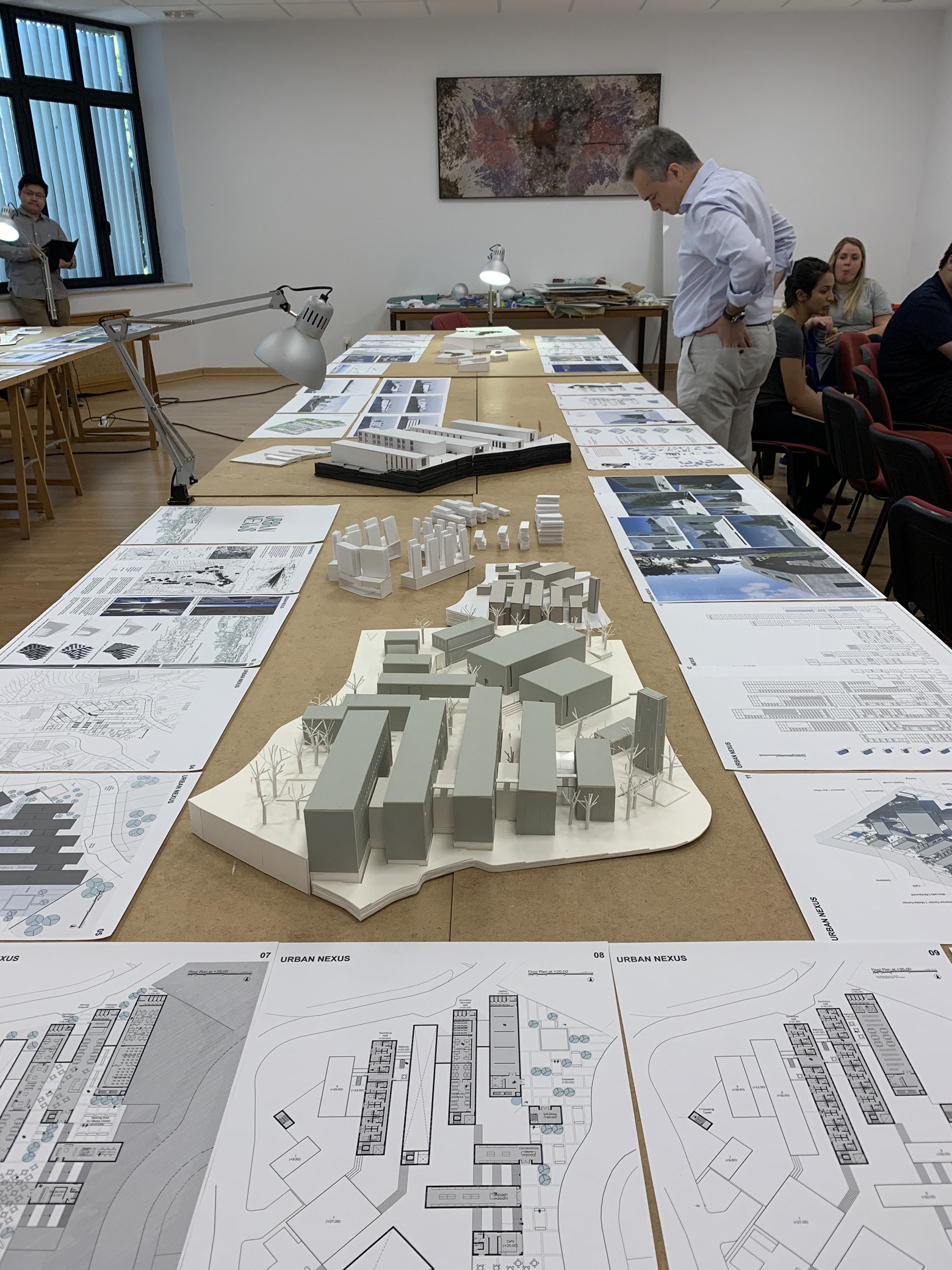
Architecture study abroad programs provide students with the opportunity to earn academic credit while immersing themselves in foreign design philosophies, historical construction methods, and contemporary urban planning. These programs range from faculty-led summer studios to year-long exchanges at international polytechnics, focusing on expanding a student’s spatial literacy and technical design vocabulary through direct site engagement.
Choosing an architecture study abroad program is one of the most consequential decisions a student can make during their professional degree path. Unlike many other disciplines where study abroad is a general elective experience, for architects, it is a laboratory for seeing how theory translates into built form across different cultures, climates, and economic constraints. As we look at the landscape of international education in 2026, these programs have evolved to focus heavily on sustainable urbanism, adaptive reuse, and the integration of advanced digital fabrication with traditional craftsmanship.
The Strategic Value of International Architectural Education
For a student pursuing a Bachelor of Architecture (B.Arch) or Master of Architecture (M.Arch), the primary goal of studying abroad is to break out of the "studio bubble." Domestic education often emphasizes a specific regional approach to building codes, materials, and aesthetic preferences. By stepping into a different cultural context, students are forced to re-evaluate their assumptions about how people inhabit space.
One of the most significant benefits is the development of spatial literacy. This is the ability to walk through a city and understand the layers of history, social hierarchy, and engineering logic that dictate its form. Whether it is analyzing the seismic resilience of traditional Japanese joinery or the thermal mass of Mediterranean stone masonry, seeing these elements in situ provides a depth of understanding that digital models cannot replicate.
Furthermore, participating in a global program enhances a student’s professional portfolio. In 2026, the architectural job market increasingly values candidates with global perspectives. Firms working on international commissions look for designers who understand the logistical and cultural nuances of building in diverse environments. A semester spent in Copenhagen studying social housing or in Singapore analyzing vertical greenery demonstrates a commitment to the most pressing issues in modern practice.
Types of Architecture Study Abroad Programs
Not all programs are structured the same way, and the choice depends largely on the student’s academic level and their home institution's requirements.
Faculty-Led "Island" Programs
In this model, a university sends its own professors and a cohort of students to a foreign city. The "island" refers to the fact that students primarily interact with their own peers and faculty, though they use the city as a living classroom. These are often highly structured and ensure that the credits earned align perfectly with the home institution's NAAB or RIBA accreditation requirements.
Direct Enrollment and Exchange
This involves a student enrolling directly in an international architecture school, such as the Politecnico di Milano in Italy or the Mackintosh School of Architecture in Scotland. This is a "deep dive" into a different pedagogical approach. Students might find that the studio culture in Europe or Asia is more independent or technical than what they are used to in North America. This option requires a high degree of maturity and often a functional grasp of the local language, although many graduate programs in 2026 are taught in English.
Third-Party Provider Programs
Organizations like CIEE, IES Abroad, or DIS (Study Abroad in Scandinavia) specialize in international education. They often have dedicated architecture tracks that include studio space, site visits, and local internships. These programs are excellent for students whose home universities may not have extensive international partnerships but who still want a curated architectural experience.
Short-Term Summer Intensives
For students who cannot commit a full semester due to rigid studio sequences, three-to-six-week summer programs are ideal. These often focus on a specific niche, such as "Classical Architecture in Rome" or "High-Tech Sustainability in Berlin." They are intensive, portfolio-heavy, and offer a burst of inspiration without disrupting the primary degree timeline.
Navigating Accreditation and Credit Transfer
The most critical technical hurdle for architecture students is ensuring that their time abroad does not delay their graduation or their path to licensure. In the United States, the National Architectural Accrediting Board (NAAB) sets the standards for professional degrees.
Before committing to a program, students must verify how the "Design Studio" credit will transfer. Most accredited programs require a certain number of studio hours completed under specific conditions. If a student takes a studio abroad that does not meet the home institution's rigor or thematic requirements, they might find themselves having to retake a studio upon return.
In Europe, the European Credit Transfer and Accumulation System (ECTS) makes moving between institutions relatively seamless. However, for students moving between different regulatory environments (e.g., from a US B.Arch to a UK RIBA-validated program), a detailed syllabus review is mandatory. Students should secure a written agreement from their Department Head or Dean of Students regarding credit equivalencies before departure.
Top Destinations for Architecture Students in 2026
Where a student chooses to study should align with their specific architectural interests. Each region offers a unique "textbook" of built work.
| Region | Primary Architectural Focus | Key Cities | Typical Cost (USD/Semester) |
|---|---|---|---|
| Scandinavia | Sustainable Design & Urbanism | Copenhagen, Stockholm | $18,000 - $25,000 |
| Southern Europe | Classical History & Conservation | Rome, Athens, Florence | $12,000 - $18,000 |
| East Asia | Hyper-Density & High-Tech | Tokyo, Seoul, Hong Kong | $15,000 - $22,000 |
| Central Europe | Modernism & Precision Engineering | Berlin, Zurich, Munich | $14,000 - $20,000 |
| Latin America | Social Architecture & Materiality | Mexico City, São Paulo | $8,000 - $14,000 |
Scandinavia: The Frontier of Sustainability
Denmark and Sweden remain the premier destinations for students interested in the "Green Transition." Programs here focus on timber construction, bicycle-centric urban planning, and the concept of "Human-Scale" design. The DIS Copenhagen program is a perennial favorite for its emphasis on the works of Bjarke Ingels Group (BIG) and Jan Gehl.
Italy: The Cradle of Western Theory
For those interested in history, restoration, and the fundamentals of proportion, Italy is unparalleled. Studying in Rome allows students to walk from the Pantheon to contemporary masterpieces like Zaha Hadid’s MAXXI Museum in a single afternoon. The focus here is often on Adaptive Reuse—how to insert modern functionality into ancient structures without losing historical integrity.
Japan: Tradition Meets Metabolism
Japan offers a unique perspective on the lifecycle of buildings. Students can explore the concept of Ma (negative space) and the technical brilliance of the Metabolist movement. Tokyo serves as a laboratory for high-density living and the integration of robotics in construction, which is a major theme in 2026 architecture.
The Application Process: Portfolio and Requirements
Applying for an architecture-specific program is more rigorous than a general study abroad application. Because studio space is physically limited in most international schools, the selection process is competitive.
- The Portfolio: This is the most important document. It should not just show finished renders but the process. Include hand sketches from site visits, physical models, and diagrams. International jurors in 2026 look for "critical thinking" through drawing rather than just proficiency in Revit or Rhino.
- Statement of Purpose: Students must articulate why a specific location is necessary for their growth. If applying to a program in Barcelona, the statement should discuss an interest in Cerdà’s urban grid or Gaudí’s structural innovations.
- Letters of Recommendation: At least one letter should come from a studio professor who can speak to the student's ability to handle the rigors of an unfamiliar design environment.
- GPA and Prerequisites: Most programs require a minimum 3.0 GPA and the completion of at least two years of core design studios.
Financial Planning and Scholarships
The cost of studying abroad can be daunting, but it is often comparable to a semester at a private US university when tuition exchange agreements are in place.
Tuition and Fees
If the program is an exchange, students typically pay their home university's tuition. If it is a third-party provider, the cost often includes housing and insurance. Students must account for the "Architecture Tax"—the high cost of model-making materials, plotting/printing, and museum entrance fees that are essential to the curriculum.
Living Expenses
In 2026, inflation in major European hubs has made budgeting critical. Students should utilize student housing (Studentenwerk in Germany or CROUS in France) to keep costs down.
Scholarship Opportunities
Several organizations provide funding specifically for architecture students:
- The Benjamin A. Gilman International Scholarship: For Pell Grant recipients.
- The AIA (American Institute of Architects) Scholarships: Many local chapters offer grants for international travel and research.
- The Fulbright Program: More suitable for graduate students or recent alumni looking to conduct independent research abroad.
Preparing for the Departure: Visas and Logistics
In 2026, visa regulations have become more digitized. For US students traveling to Europe's Schengen Area, the ETIAS (European Travel Information and Authorisation System) is a mandatory requirement for short stays, while longer semester stays require a formal Student Visa.
Travel Insurance: Most universities require a policy that includes medical evacuation and repatriation. For architects, ensuring coverage for expensive equipment like high-end laptops and cameras is also recommended.
Technology and Gear: A student’s laptop must be capable of running heavy BIM software (like ArchiCAD or Revit) without relying on a constant high-speed connection, as studio Wi-Fi in older European buildings can be notoriously spotty. Additionally, a high-quality, portable sketchbook and a set of professional drawing pens remain the most reliable tools for a student abroad.
Common Challenges and How to Overcome Them
Studying architecture in a foreign country is not without its difficulties. The "Studio Culture Shock" is real. In some cultures, feedback is much more direct and blunt than what students may experience in North America. Understanding that this is part of a different pedagogical tradition helps in maintaining professional growth.
Language Barriers in Technical Design: While many programs are in English, the technical jargon of construction (e.g., specific names for tools or materials) may still be in the local language. Learning the basic architectural vocabulary of the host country early on will earn respect from local fabricators and shop technicians.
Time Management: The temptation to travel every weekend to a different country is high. However, the architecture studio is a jealous mistress. Students who over-travel often find their studio work suffering, which can lead to poor portfolio pieces. The best strategy is to treat the host city as the primary site of exploration and save wider travel for the weeks before or after the semester.
Frequently Asked Questions
Will studying abroad delay my graduation?
Not if planned correctly. By working with your academic advisor to match your host institution’s credits with your home university's degree map, you can stay on track. The key is ensuring that the "Core Studio" requirement is satisfied by the international curriculum.
Do I need to be fluent in a second language?
For faculty-led and many third-party programs, the instruction is in English. However, if you are enrolling directly in a national university (like the TU Delft or ETSAB Barcelona), you may need a B2 or C1 level of proficiency in the local language. Always check the specific language requirements of the "Instruction Language" in the program brochure.
Can I work an internship while studying architecture abroad?
In 2026, many student visas allow for part-time work or internships. Some programs, specifically in London, New York, and Singapore, are designed as "Studio + Internship" hybrids where you spend three days in class and two days at a local firm. This is an excellent way to gain international professional experience.
How do I handle my portfolio if I’m away from my main computer?
Cloud-based workflows (Adobe Creative Cloud, BIM 360) are standard in 2026. However, you should maintain a physical "Process Book" while abroad. This book, filled with sketches, ticket stubs from site visits, and material rubbings, often becomes the most compelling part of a graduate school or job application.
Are there programs for graduate (M.Arch) students?
Yes. In fact, many M.Arch programs require or "strongly encourage" a global studio. Graduate-level programs are often more research-focused, allowing students to pursue a specific thesis topic, such as "Post-Industrial Landscapes" or "Informal Settlements," in a relevant international location.
Final Recommendation
If you are an architecture student in 2026, the best "next step" is to audit your current degree progress and identify a "window" for travel—typically the junior year of a B.Arch or the second year of an M.Arch. Schedule a meeting with your study abroad office specifically to ask about NAAB-accredited equivalencies. Prioritize programs that offer a dedicated studio space and a strong connection to the local professional community. Architecture is a physical, tactile profession; reading about the Parthenon is no substitute for standing in its shadow and sketching its entasis.