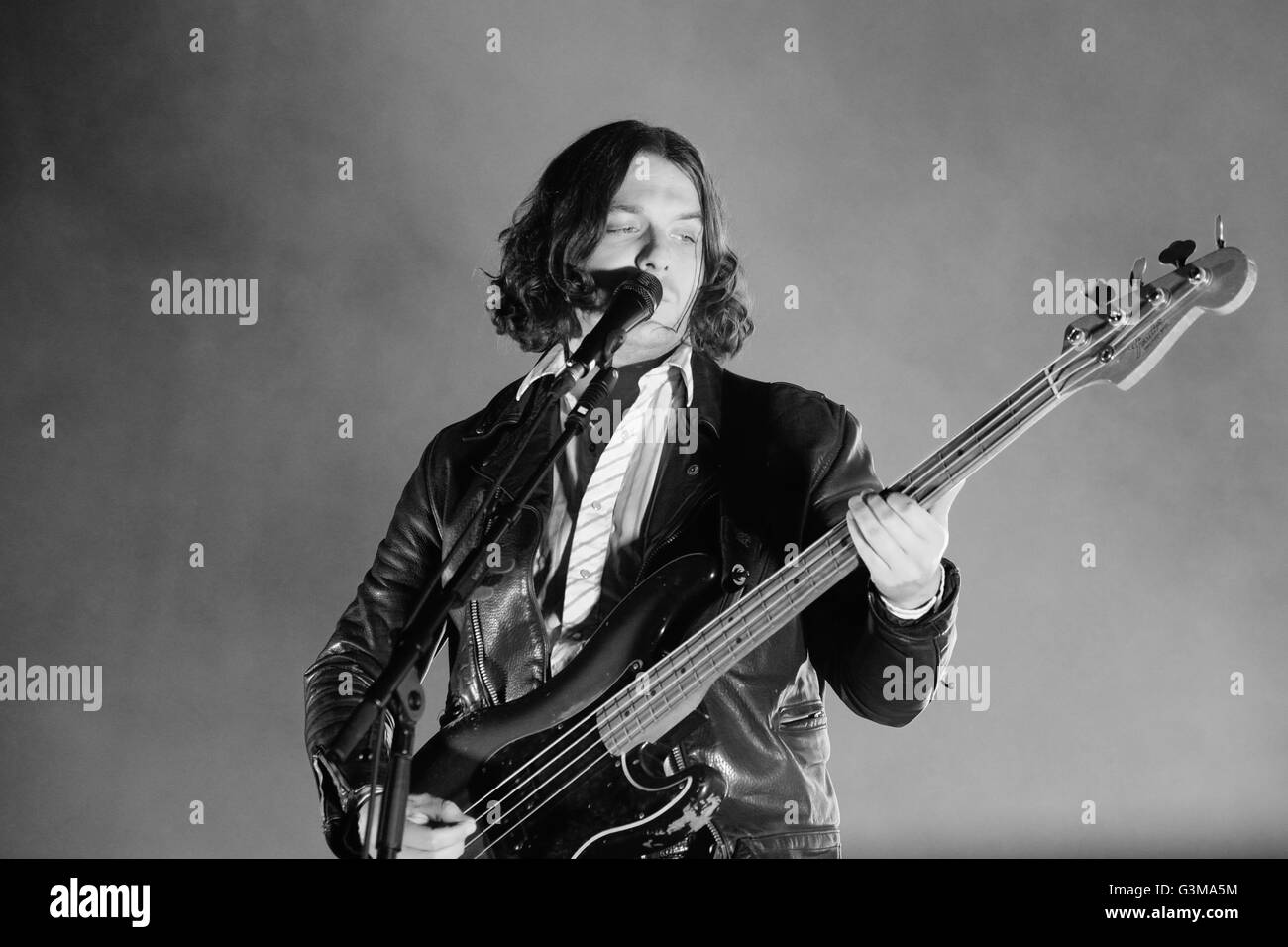
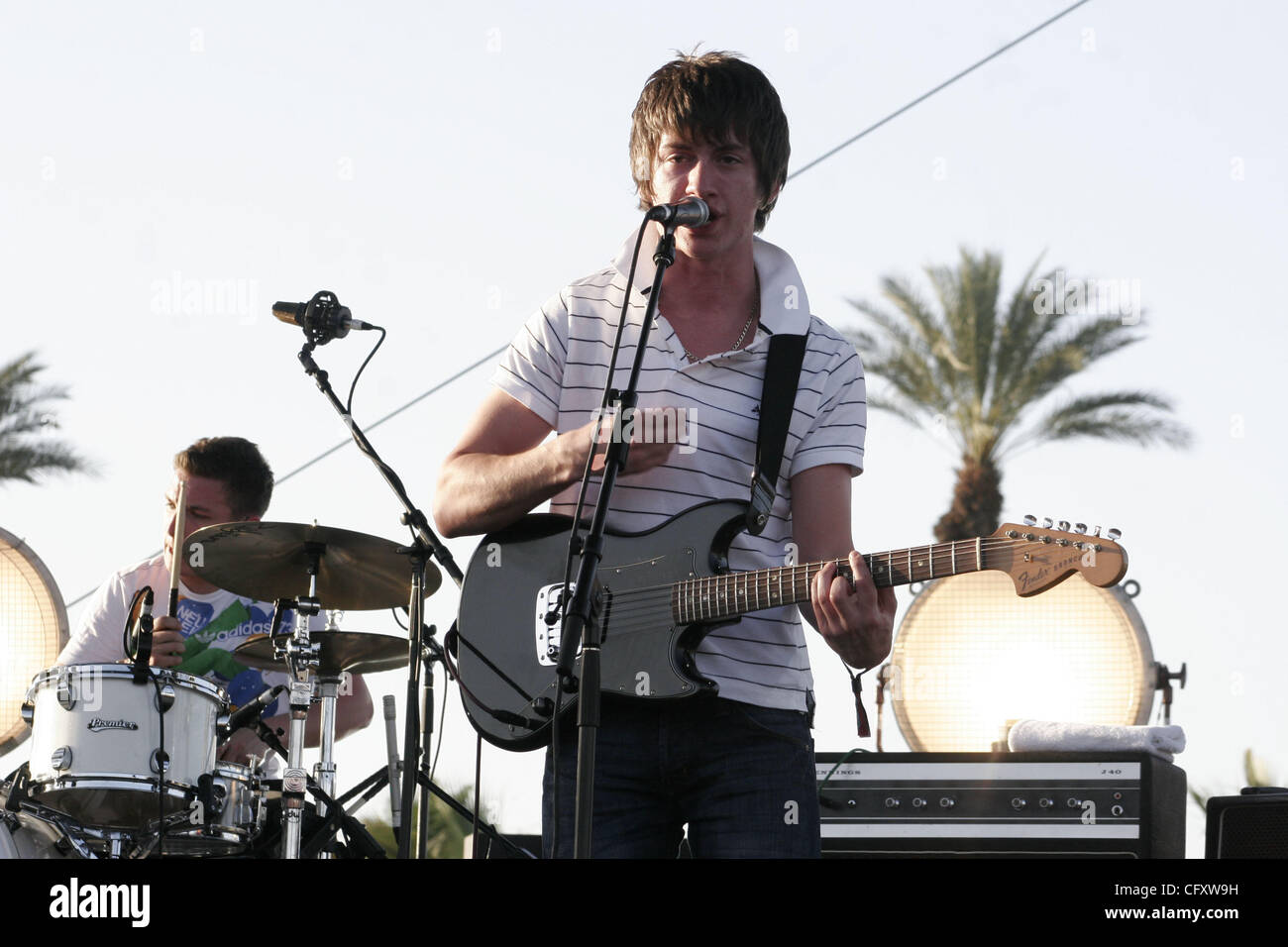
Jamie Cook is the founding lead guitarist of the Arctic Monkeys, renowned for his distinct blend of aggressive indie-rock riffs and sophisticated, atmospheric textures. Since 2002, his evolving gear and minimalist philosophy have been instrumental in the band's sonic progression from Sheffield post-punk to orchestral pop and vintage-inspired rock.
The Genesis of a Sheffield Icon
Jamie Robert Cook, born on July 8, 1985, in High Green, Sheffield, represents the grounded, rhythmic heart of the Arctic Monkeys. While Alex Turner often commands the spotlight as the primary songwriter and frontman, Cook has been the essential architect of the band's guitar-driven identity. The story of Cook’s musical journey began in the early 2000s when he and his neighbor, Alex Turner, both requested guitars for Christmas in 2001. This synchronized entry into music laid the foundation for what would become one of the most successful British bands of the 21st century.
Cook's role in the band has always been more than just providing a secondary melody. In the early days of Whatever People Say I Am, That's What I'm Not (2006), his style was characterized by a frantic, percussive energy. Along with original bassist Andy Nicholson and drummer Matt Helders, Cook helped define the "High Green" sound—a raw, unpolished, and high-velocity take on post-punk revival. As the band progressed through the decades, Cook transitioned from the "garage-rock" enthusiast into a connoisseur of vintage tones and experimental textures.
By 2026, Cook is recognized not just as a member of a global stadium act, but as a "guitarist's guitarist." He is known for his "less is more" approach, often prioritizing the mood of a track over technical shredding. This philosophy has allowed the Arctic Monkeys to pivot successfully through various genres, from the desert rock of Humbug to the hip-hop-inflected grooves of AM and the cinematic arrangements of The Car.
The Evolution of Jamie Cook’s Musical Style
The trajectory of Jamie Cook’s playing style serves as a timeline for the Arctic Monkeys’ discography. Each era of the band is marked by a specific tonal shift that Cook helped engineer.
The Raw Indie Era (2005–2007)
During the release of the band’s debut and its follow-up, Favourite Worst Nightmare, Cook’s playing was defined by sharp, angular riffs and high-gain distortion. Songs like "I Bet You Look Good on the Dancefloor" and "Brianstorm" showcased a frantic interplay between his rhythm parts and Turner’s lead lines. The technical depth here was found in the speed and the tight synchronization with Matt Helders’ complex drumming.
The Desert Rock Shift (2009–2011)
The recording of Humbug at Rancho De La Luna with producer Josh Homme (Queens of the Stone Age) was a turning point for Cook. He moved away from the bright, treble-heavy tones of Sheffield and embraced a darker, heavier, and more psychedelic palette. It was during this period that Cook began experimenting with heavier string gauges, baritone guitars, and more complex pedalboard configurations, incorporating "sludge" and "drone" elements into the band’s sound.
The "AM" and Modern Era (2013–2026)
With the release of AM in 2013, Cook’s playing became more structural. He focused on creating riffs that complemented the heavy, rhythmic grooves influenced by R&B and hip-hop. By the time the band reached the Tranquility Base Hotel & Casino (2018) and The Car (2022) eras, Cook had evolved into a multi-instrumentalist, often contributing lap steel, synthesizers, and intricate, reverb-drenched guitar layers that define the band’s current sophisticated sound.
Jamie Cook’s Gear: An In-Depth Look at Guitars and Effects
For enthusiasts looking to replicate the Arctic Monkeys' sound, Jamie Cook’s gear is a masterclass in selecting equipment for character rather than prestige. Cook has transitioned through several key pieces of equipment that have become synonymous with his stage presence.
Signature Guitars
While Alex Turner is often seen with a Fender Stratocaster or a Vox Starstream, Cook has remained loyal to a few specific models that provide a beefier, more resonant tone.
- Gibson ES-335: This has been Cook’s primary workhorse for much of his career. The semi-hollow body provides the sustain and warmth necessary for both the "crunch" of the mid-career albums and the clean, jazzy tones of their later work.
- Fender Starcaster: Introduced during the Humbug era, the Starcaster became a visual and sonic staple for Cook. Its unique offset semi-hollow design allowed him to push high volumes with controlled feedback, a key element of the band's live sound during the 2010s.
- Fender Telecaster Deluxe: Often used in the early years for its "bite" and reliability, this guitar helped define the treble-heavy attack of the first two albums.
Amplification and Pedals
Cook’s "engine room" is his pedalboard, which has grown from a few simple boxes to a complex array of vintage and boutique effects.
| Component | Models Used | Purpose |
|---|---|---|
| Amplifiers | Hiwatt Custom 50, Selmer Zodiac Twin 30, Vox AC30 | Provides a "clean-to-breakup" foundation that reacts well to pedals. |
| Fuzz/Distortion | Z.Vex Fuzz Factory, Electro-Harmonix Big Muff, ProCo Rat | Essential for the aggressive, saturated tones found in "R U Mine?" and "Arabella." |
| Delay/Reverb | Electro-Harmonix Deluxe Memory Man, Strymon Flint | Used for the atmospheric "shimmer" and slap-back echoes in later albums. |
| Modulation | Univox Uni-Vibe, Boss CE-1 Chorus Ensemble | Adds the "swirling," psychedelic textures prominent since the Humbug era. |
The "Quality Control" of the Arctic Monkeys
Within the internal dynamics of the band, Jamie Cook is frequently described as the "quality control" member. In various interviews, Alex Turner has noted that Cook is often the most critical of new material, ensuring that the band does not repeat itself or settle for mediocre arrangements. This discerning ear has been vital in the band’s ability to reinvent themselves without losing their core audience.
Cook’s influence extends into the band’s visual aesthetic as well. He is known for his preference for privacy and a low-key public profile, which has contributed to the band’s "cool," somewhat mysterious image. Unlike many modern rock stars, Cook avoids social media and focuses almost entirely on the craftsmanship of the music and the technical aspects of the band's live performances.
Relationship with Alex Turner and the Band's Longevity
The partnership between Cook and Turner is the longest-standing professional relationship in the band. Having grown up on the same street, their musical telepathy is a cornerstone of the Arctic Monkeys' live shows. In 2026, after over two decades of recording and touring, this chemistry remains the band's greatest asset.
While Turner provides the lyrical vision and melodic direction, Cook provides the "grit." He often grounds Turner's more experimental or crooner-esque tendencies with a reminder of the band's rock and roll roots. This balance has allowed them to survive the "indie landfill" era of the mid-2000s and emerge as one of the few bands of that generation to maintain relevance in a changing musical landscape.
Frequently Asked Questions
What was Jamie Cook's first guitar?
Jamie Cook's first guitar was a cheap electric model he received as a Christmas present in 2001. Shortly after, he began using a Fender Telecaster, which became his primary instrument during the band's rise through the Sheffield club circuit and the eventual release of their debut album.
Does Jamie Cook sing in the Arctic Monkeys?
While Cook is primarily the lead and rhythm guitarist, he does provide occasional backing vocals during live performances. However, unlike drummer Matt Helders, who has prominent vocal parts in several songs, Cook’s vocal contributions are generally subtle and used to thicken the choruses of the band's more rock-oriented tracks.
How did Jamie Cook get the nickname "Cookie"?
The nickname "Cookie" is a simple play on his surname, Cook. It has been used by band members and fans alike since the early days of the group's formation in Sheffield.
What are Jamie Cook’s most famous guitar riffs?
Some of Jamie Cook's most iconic riffs include the heavy, blues-rock opening of "R U Mine?", the frantic intro to "Brianstorm," and the fuzzed-out, melodic lines in "Crying Lightning." His work is characterized by a mix of rhythmic precision and a "heavy" feel that bridges the gap between indie and hard rock.
Is Jamie Cook involved in any side projects?
Unlike Alex Turner (The Last Shadow Puppets) or Matt Helders (various collaborations and solo work), Jamie Cook has largely remained focused exclusively on the Arctic Monkeys. He is rarely seen performing outside of the band's context, reinforcing his reputation as the dedicated backbone of the group.
Practical Recommendation for Guitarists
For those looking to achieve a Jamie Cook-inspired sound in 2026, the key is to focus on dynamic control and texture rather than sheer volume. Start with a semi-hollow body guitar like a Gibson ES-335 or an Epiphone Dot. Use a high-quality "clean" amp (like a Vox or Hiwatt) and build your tone using a tiered distortion approach: a light overdrive for rhythm and a heavy fuzz (like a Big Muff) for lead breaks. To capture the modern era of the band, incorporate a versatile reverb pedal to add space and depth to your playing.
For more technical specifications and official tour history, you can visit the Arctic Monkeys Official Website or explore detailed gear breakdowns on sites like Equipboard.