While many aspiring ultrasound technicians search for "ARDMS certified schools," the American Registry for Diagnostic Medical Sonography (ARDMS) does not actually certify or accredit educational institutions. Instead, they certify individual practitioners who graduate from programs accredited by specific bodies, primarily the Commission on Accreditation of Allied Health Education Programs (CAAHEP). Attending a CAAHEP-accredited program is the most direct and streamlined way to qualify for ARDMS examinations and secure employment in the sonography field.
Understanding the Relationship Between Schools and ARDMS
To navigate the path to becoming a Registered Diagnostic Medical Sonographer (RDMS), it is essential to distinguish between certification and accreditation. The ARDMS is a credentialing organization. It sets the standards for clinical excellence and administers the exams that grant professional titles. Educational institutions, on the other hand, are governed by accreditation bodies that ensure the curriculum, faculty, and clinical rotations meet national standards.
When a school is referred to as an "ARDMS school," it typically means the program’s curriculum aligns with the ARDMS requirements, allowing students to sit for their exams. In 2026, the gold standard remains the CAAHEP accreditation, which is granted upon the recommendation of the Joint Review Committee on Education in Diagnostic Medical Sonography (JRCDMS). Graduation from a CAAHEP-accredited program allows a student to apply for ARDMS examinations up to 60 days prior to graduation under "Prerequisite 1."
If you attend a school that is not CAAHEP-accredited, the path to ARDMS certification becomes significantly more complex. Graduates of non-accredited programs often have to complete an additional year of full-time clinical ultrasound experience before they are even eligible to apply for the exams. This highlights why selecting a program with the proper accreditation is the single most important decision in a prospective student's career.
Why CAAHEP Accreditation is the Gold Standard
The Commission on Accreditation of Allied Health Education Programs (CAAHEP) is the largest programmatic accreditor in the health sciences field. For sonography, their oversight ensures that schools provide a rigorous balance of classroom theory and "hands-on" clinical scanning.
Employers in 2026 increasingly prioritize candidates from these accredited programs because they provide a verified level of competency. Accreditation ensures that:
- Curriculum Standards: The coursework covers all necessary physics, anatomy, and pathology required for professional practice.
- Clinical Hours: Students are guaranteed a specific number of hours in a clinical setting, scanning real patients under the supervision of qualified mentors.
- Faculty Qualifications: Instructors must hold the credentials they are teaching, ensuring high-quality pedagogical standards.
- Resource Availability: The school must provide adequate scanning labs and equipment to support the student body.
By choosing a school with this status, you are essentially "pre-verifying" your eligibility for the ARDMS. This prevents the "experience gap" where a student finishes school but cannot get a job because they lack the RDMS credential, and cannot get the credential because they lack the job experience.
Navigating the ARDMS Prerequisites
The ARDMS uses a system of "Prerequisites" to determine who can take their exams. Understanding these is vital because they dictate which "certified" school path you should take based on your current educational background.
Prerequisite 1: The Traditional Path
This is the most common route. It applies to students or graduates of a CAAHEP or CMAAC (Canadian) accredited diagnostic medical sonography program. These students can take the Sonography Principles and Instrumentation (SPI) exam and their specialty exams (such as Abdomen or OB/GYN) immediately upon finishing their program.
Prerequisite 2: The Advanced Degree Path
This route is designed for those who already hold a Bachelor’s degree in any field but have also completed a diagnostic medical sonography program. While the sonography program does not necessarily have to be CAAHEP-accredited under this specific prerequisite, it must meet clinical hour requirements. However, most professionals still recommend an accredited certificate program for those following this path to ensure the highest quality of education.
Prerequisite 3A and 3B: Medical Professionals
These are reserved for licensed physicians (MDs and DOs) or those with medical degrees from outside the United States and Canada. This allows doctors to add sonography to their diagnostic toolkit without repeating a full undergraduate sonography program, provided they meet specific clinical experience requirements.
Types of Sonography Programs Available in 2026
When looking for a school that leads to ARDMS certification, you will encounter three primary types of programs. The "best" one depends on your previous education and your long-term career goals.
Associate of Science in Diagnostic Medical Sonography (AS)
Typically offered at community colleges and technical institutes, this is a two-year degree. It is the most popular entry point into the profession. These programs focus heavily on the technical skills required for entry-level sonography. As long as the community college program is CAAHEP-accredited, graduates are fully eligible for ARDMS certification.
Bachelor of Science in Diagnostic Medical Sonography (BS)
A four-year degree offered at universities. While the clinical requirements are similar to an Associate degree, a Bachelor's degree includes more leadership, management, and advanced pathology coursework. Graduates with a BS often have an easier path into department management, clinical applications (working for equipment manufacturers), or research roles later in their careers.
Certificate Programs
These are usually 12 to 18 months long and are designed for individuals who already hold a degree in another healthcare field (like Nursing or Radiologic Technology). These programs bypass general education requirements and focus strictly on sonography. For a certificate program to be a viable path to ARDMS certification, it should ideally be CAAHEP-accredited to avoid the one-year post-grad clinical experience requirement.
Comparison of ARDMS-Eligible Program Types
| Program Type | Duration | Typical Cost (USD) | Primary Prerequisite | Best For |
|---|---|---|---|---|
| Associate Degree | 2 Years | $10,000 – $30,000 | High School Diploma | Entry-level clinical roles |
| Bachelor's Degree | 4 Years | $40,000 – $80,000 | High School Diploma | Management/Research goals |
| Certificate | 12-18 Months | $15,000 – $25,000 | Prior Allied Health Degree | Career changers in healthcare |
| Non-Accredited | Varies | $15,000 – $40,000 | Varies | Use caution: Requires 1 year extra experience |
How to Verify a School's Status
Verification is a critical step in the research process. You should never take a school’s marketing materials at face value. Follow these steps to ensure the school will actually allow you to sit for the ARDMS exams:
- Search the CAAHEP Database: Visit the official CAAHEP Find an Accredited Program page. This is the only definitive list of programs that qualify under Prerequisite 1.
- Check the JRCDMS Registry: The Joint Review Committee on Education in Diagnostic Medical Sonography (JRCDMS) provides detailed information on which specialties (Abdomen, OB/GYN, Cardiac, Vascular) the school is specifically accredited for.
- Use the ARDMS Prerequisite Predictor: The ARDMS website offers an interactive tool where you can input your education and experience to see which exams you qualify for.
- Inquire About Pass Rates: Ask the school's program director for their "ARDMS pass rates" for the last three years. High-quality programs are transparent about their students' success in obtaining credentials.
The Financial Aspect: Costs and Aid
In 2026, the cost of sonography education varies significantly between public and private institutions. Community colleges remain the most cost-effective route, often totaling under $20,000 for the entire degree. Private vocational schools may charge significantly more, sometimes exceeding $50,000, but they often offer faster enrollment with fewer waitlists.
Financial aid is generally available for programs at "Title IV" eligible schools. This includes federal Pell Grants and Stafford Loans. When evaluating costs, also factor in the price of ARDMS exams. As of 2026, the SPI exam and specialty exams each carry their own fees (typically ranging from $200 to $300 per attempt). Many students spend roughly $500 to $750 in total exam fees to earn their initial RDMS credential.
Clinical Training: The Heart of the Program
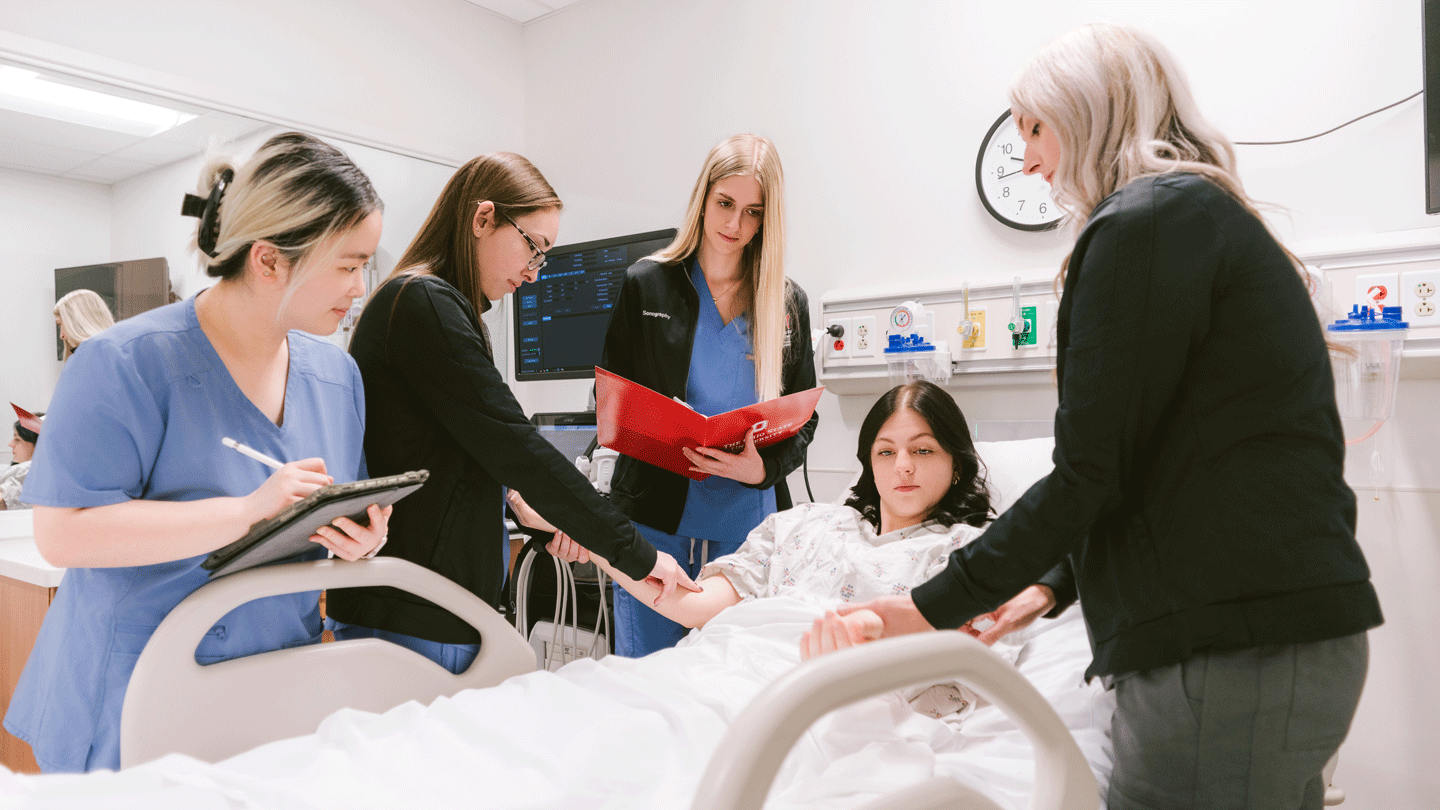
A school that prepares you for the ARDMS must have a robust clinical internship component. The ARDMS requires documented clinical hours to verify that you can perform the duties of a sonographer in a real-world environment.
During clinical rotations, students move from "observation" to "participation" and finally to "competency." You will be required to perform a specific number of unassisted scans in categories such as:
- Small Parts: Thyroid, scrotum, and breast.
- Abdominal: Liver, gallbladder, pancreas, and kidneys.
- Obstetrics/Gynecology: Early pregnancy, anatomy scans, and pelvic pathology.
- Vascular: Carotid arteries and venous studies (if included in the program).
Programs with strong ties to major hospital systems often provide better clinical experiences, exposing students to a wider variety of pathologies and high-end equipment.
Common Pitfalls to Avoid
The most common mistake students make is enrolling in a program based on convenience or speed without checking accreditation. Some "fast-track" programs are not accredited, meaning graduates cannot take the ARDMS exams immediately. These students often find themselves in a "Catch-22" situation: they need the RDMS credential to get a job, but they need a job to get the experience required to take the RDMS exam because their school wasn't accredited.
Another pitfall is assuming that "institutional accreditation" is the same as "programmatic accreditation." A university might be accredited as a whole (which is good for transferring credits), but the specific sonography program must be CAAHEP-accredited for you to benefit from the ARDMS Prerequisite 1 pathway.
Next Steps Toward Your Career
If you are ready to begin your journey, your first action should be to identify all CAAHEP-accredited programs within your geographic range or those that offer hybrid models. Request an information packet from each and pay close attention to their prerequisites. Many programs require you to complete "pre-clinical" courses like Anatomy and Physiology, Physics, and Medical Terminology before you can even apply to the sonography core.
Once accepted, focus your efforts on the Sonography Principles and Instrumentation (SPI) exam. Many students take this during the middle of their program while the physics concepts are fresh. Clearing the SPI early allows you to focus entirely on your specialty exams and clinical competencies during your final year.
Frequently Asked Questions
Does the ARDMS offer a list of "certified" schools? No. The ARDMS does not list "certified schools" because they do not accredit institutions. They recognize programs accredited by CAAHEP or CMAAC. You should use the CAAHEP directory to find programs that align with ARDMS requirements.
Can I take the ARDMS exam if my school is only regionally accredited? Yes, but not immediately. If your school lacks CAAHEP accreditation, you will likely need to complete 12 months of full-time clinical ultrasound experience after graduation before you are eligible to sit for the ARDMS exams under Prerequisite 4.
What is the difference between RDMS and CAAHEP? RDMS (Registered Diagnostic Medical Sonographer) is a personal credential awarded to an individual by the ARDMS. CAAHEP (Commission on Accreditation of Allied Health Education Programs) is the body that evaluates and accredits the school's program. One is for the person; the other is for the school.
Are online sonography programs ARDMS-eligible? Some online or "hybrid" programs are CAAHEP-accredited and therefore ARDMS-eligible. However, these programs still require you to attend clinical rotations in person at a local hospital or clinic. A 100% online program with no clinical component is not sufficient for ARDMS certification.
What happens if I graduate from a non-accredited school? You will need to find an employer willing to hire you as an "unregistered" sonographer and supervise you for one year (approximately 1,680 hours). After that year, your employer can sign a clinical verification form, which allows you to apply for the ARDMS exams under Prerequisite 4. This path is much more difficult as many employers refuse to hire unregistered staff.