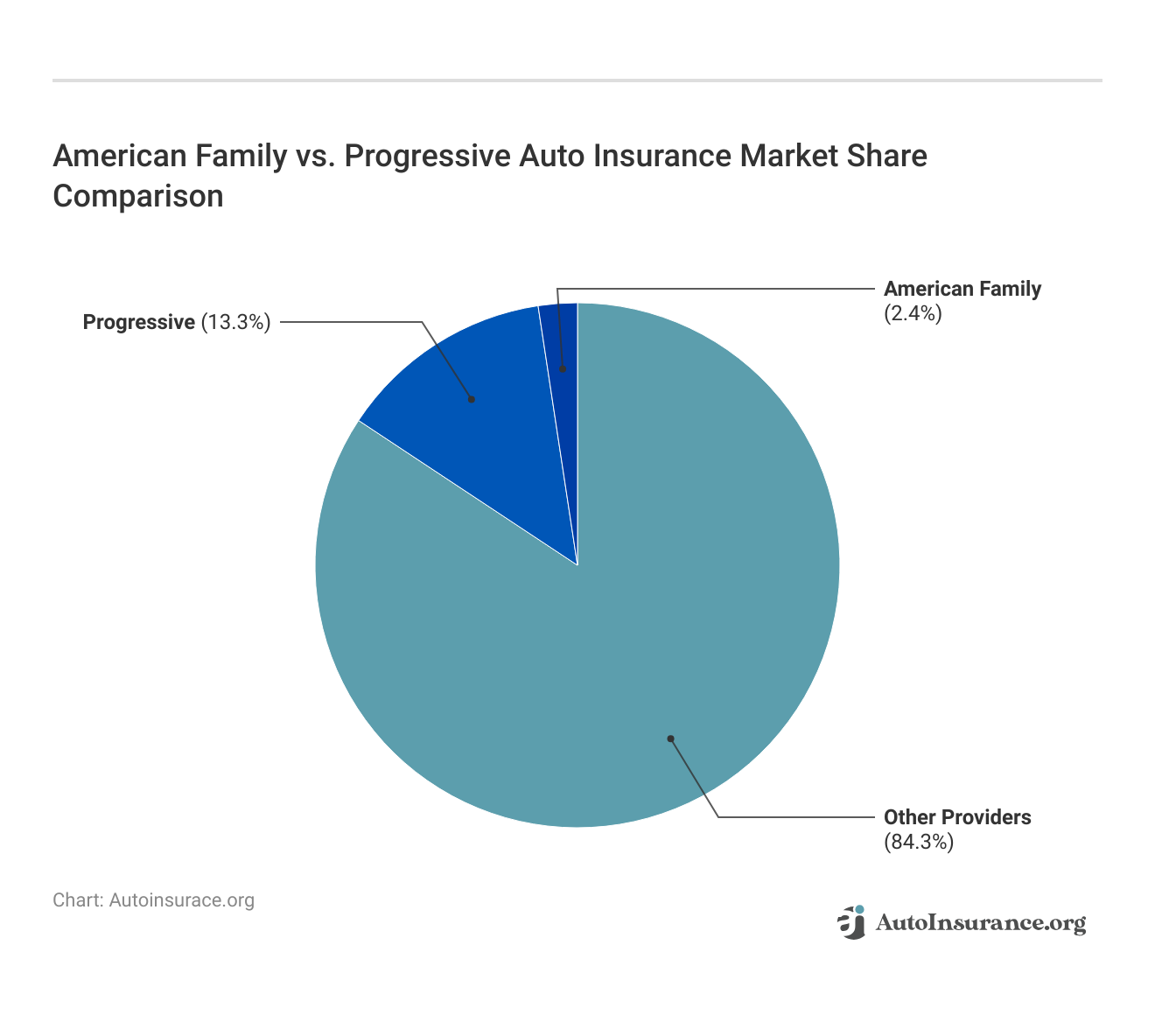
Choosing an auto insurance provider involves weighing American Family Insurance against a broader market of national and regional carriers based on coverage options, customer service reputation, premium structures, and financial stability. Determining the best fit requires assessing your specific vehicle requirements, risk tolerance, and the availability of bundled discounts in your specific state of residence as of 2026.
Understanding the Role of American Family Insurance
American Family Insurance, often referred to as "AmFam," operates as a mutual insurance company headquartered in Madison, Wisconsin. Unlike publicly traded insurance conglomerates, American Family’s structure focuses on its policyholders, which often influences its service model and claims handling philosophy. The company is primarily recognized for its regional concentration—maintaining a strong presence in the Midwest and select states across the country—rather than a ubiquitous national footprint like industry leaders such as State Farm, GEICO, or Progressive.
When comparing American Family to other major carriers, you must first look at the "mutual" status. Mutual companies do not have shareholders in the same way stock-based companies do, meaning their primary fiduciary duty is to the policyholder. In practical terms, this can lead to a more personalized approach to customer service, though it may also influence their underwriting guidelines and the specific geographic areas they choose to serve.
Coverage and Policy Flexibility
The fundamental coverage offered by American Family aligns with industry standards, including liability, collision, comprehensive, medical payments, and uninsured motorist protection. However, the differentiation between AmFam and other insurers often lies in their specific endorsements and policy "add-ons."
- Gap Insurance: American Family provides gap insurance, often branded as "Auto Loan/Lease Coverage," which pays the difference between the actual cash value of a totaled vehicle and the remaining balance on your loan or lease. Many competitors offer this, but it is essential to verify if the eligibility requirements—such as the age of the vehicle or the specific loan terms—are more favorable than those of the competition.
- Diminishing Deductible: Many insurers offer a form of this, where your deductible drops for every year you remain accident-free. You should compare the specific rate at which this deductible decreases compared to providers like Liberty Mutual or Nationwide.
- Emergency Roadside Assistance: While most major carriers offer this, the scope of the service—whether it includes tire changes, fuel delivery, or lockout assistance—varies. American Family’s roadside assistance is generally comparable, but it is often billed as a low-cost add-on rather than a base feature.
Cost Structures and Premium Determination
Insurance premiums are never static, and comparing American Family against competitors requires a look at the factors that drive pricing in 2026. Auto insurance rates are determined by actuarial science, which evaluates your credit score, driving history, zip code, age, and vehicle safety ratings.
Most national carriers have shifted toward massive telematics-based programs (like Progressive’s Snapshot or State Farm’s Drive Safe & Save) that track driving behavior to offer discounts. American Family utilizes the "KnowYourDrive" program. When comparing providers, you should not just look at the base quote but also how their telematics program affects your bottom line. If you are a cautious driver who logs low mileage, a carrier with a more aggressive telematics discount may be more cost-effective than American Family, even if AmFam’s base rate appears competitive.
Regional Availability and Service Delivery
A critical point of ambiguity for consumers is the availability of American Family in their specific state. Unlike insurers that operate in all 50 states, American Family’s expansion strategy has been targeted. If you move frequently, you may find that American Family is not available in every region, which necessitates a switch in providers. This contrasts with massive national carriers that offer consistent service across state lines, allowing for easier policy portability.
Furthermore, American Family relies heavily on a network of dedicated agents. In the modern era, where many consumers prefer "direct-to-consumer" models—where you manage policies exclusively via a mobile app without human intervention—the agency model can be either a benefit or a drawback. If you prefer speaking to a local representative who understands your community and personal life, AmFam’s structure is often superior. If you prefer 100% digital management, you might find other carriers with more robust, tech-first interfaces more convenient.
Comparative Analysis Table: Insurance Attributes
| Feature | American Family | Typical National Carriers (e.g., GEICO, Progressive) |
|---|---|---|
| Business Structure | Mutual (Policyholder-focused) | Often Stock-based (Shareholder-focused) |
| Primary Distribution | Local Agents | Direct (Online/Phone) & Captive Agents |
| Telematics Focus | KnowYourDrive | Snapshot / Drive Safe & Save |
| Geographic Reach | Regional/Select States | Nationwide/All 50 States |
| Customization | High (Agency-led) | High (Algorithm/Digital-led) |
Analyzing Claims Satisfaction and Customer Support
One of the most vital metrics when choosing an insurer is their performance during the claims process. When you compare American Family to other providers, rely on independent ratings from sources like J.D. Power, which periodically assesses regional and national claims satisfaction scores.
Historically, American Family has performed consistently in customer satisfaction surveys, often scoring well in the "Interaction" and "Ease of Service" categories. This is largely attributed to their agent-centric model. However, during periods of extreme weather or high claim volume, any insurer can see delays. It is prudent to search for your state’s specific "complaint ratio" through your state's Department of Insurance. This document, which is public record, provides an objective look at how many complaints the company receives relative to their total number of policies in that state.
Potential Pitfalls in Insurance Comparisons
A common mistake consumers make is "price shopping" without ensuring the "like-for-like" nature of the quotes. When comparing American Family to another insurer, ensure you are requesting identical coverage limits. If American Family quotes you a $500,000 bodily injury limit while your other quote is for the state minimum, the prices will be skewed.
Additionally, be wary of "teaser rates." A company may offer a low initial premium for the first term, only to significantly increase it upon renewal. Always check for a "loyalty discount" or inquire about what factors typically trigger a premium hike at American Family versus the competitor you are reviewing.
Frequently Asked Questions
1. Is American Family cheaper than large national insurers? Pricing is highly individualized. While American Family can be very competitive for stable, multi-policy households (those bundling home and auto), they may not always be the cheapest option for high-risk drivers or individuals who do not own a home. You must obtain quotes for your specific household profile to reach an accurate conclusion.
2. How does American Family’s KnowYourDrive program compare to others? It functions similarly to other telematics programs, measuring speed, acceleration, and braking patterns. The primary difference is how the data influences your discount. Some competitors provide a larger "sign-up" discount, while others provide a larger "performance" discount. If you are a safe driver, you should prioritize the program that rewards you for sustained safe driving habits over the life of the policy.
3. Does the mutual structure of American Family affect my insurance rates? The mutual structure means that the company does not prioritize short-term profit growth for stockholders. This can sometimes lead to more stable, long-term pricing strategies, but it does not guarantee lower rates than a stock-based company, which might have better economies of scale or more aggressive marketing budgets.
4. Can I manage my American Family policy entirely online? Yes. While American Family emphasizes their agency model, they have invested heavily in digital infrastructure. You can file claims, pay bills, and view policy documents through their website or mobile application. However, the availability of a dedicated agent remains a central part of their value proposition compared to direct-only insurers.
5. How do I verify if American Family is the right choice for my specific location? You should visit the official American Family website, enter your zip code, and compare their quote against a quote from a national aggregator or a local independent broker. Also, consult your state’s Department of Insurance website to view recent consumer complaint data to ensure the carrier provides adequate service in your region.
Next Steps for Consumers
To determine if American Family Insurance is the right provider for your needs, follow this logical progression:
- Define Your Coverage Needs: Note your current liability limits and any optional coverages (like rental reimbursement) that you require.
- Request Multiple Quotes: Obtain a quote from American Family and at least two other providers, ensuring every quote uses the exact same coverage limits and deductibles.
- Review State Data: Check your state's Department of Insurance website for recent company complaint records.
- Evaluate Bundling: If you own a home or have other insurance needs, request a bundled quote. Many insurers, including American Family, offer significant discounts for consolidating your policies.
- Decision: Choose the provider that balances price, clear coverage definitions, and a claims process that you feel comfortable navigating in an emergency.