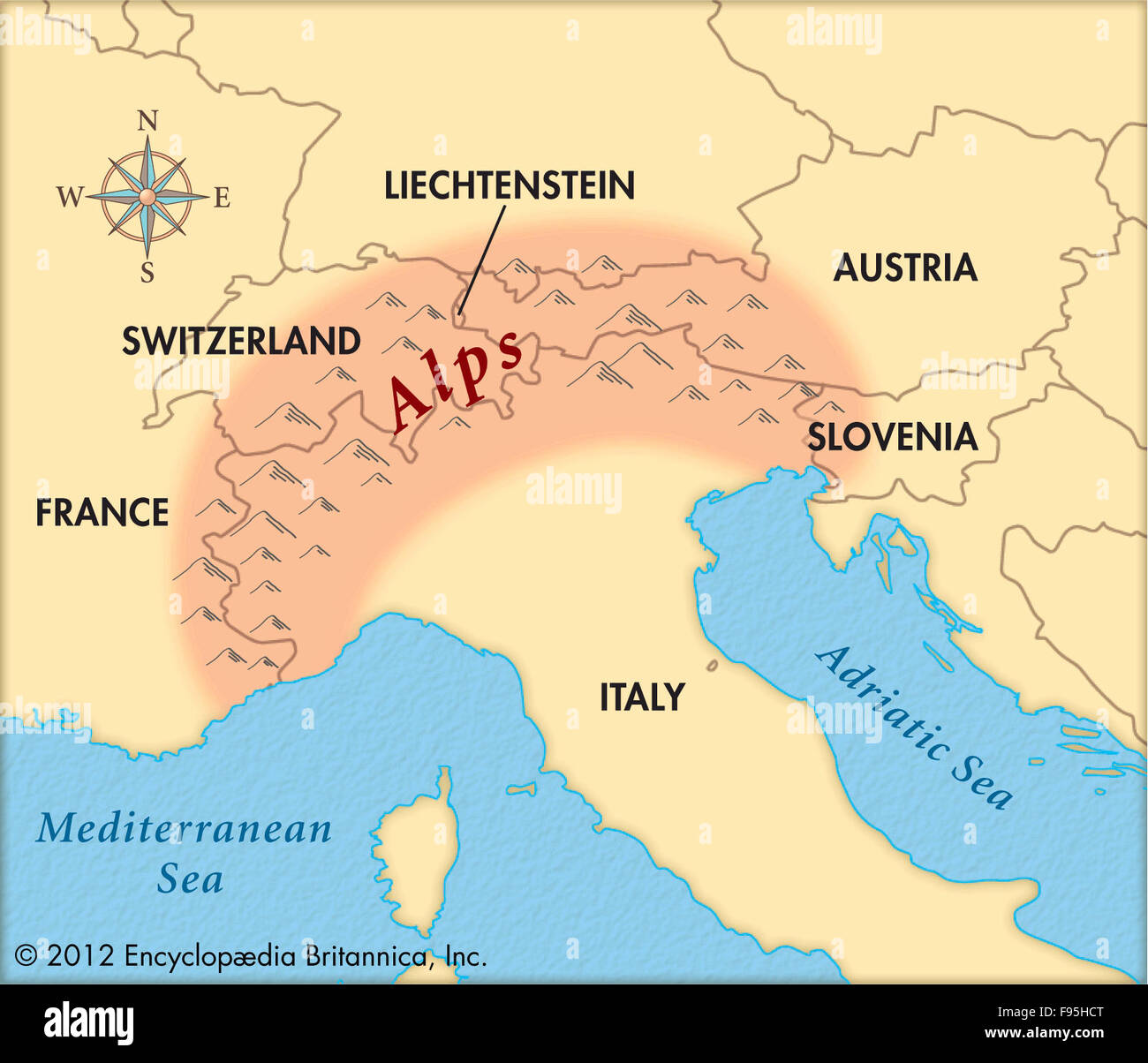
The Alpine arc is defined by eight sovereign nations: Austria, France, Germany, Italy, Liechtenstein, Monaco, Slovenia, and Switzerland. These countries are formally linked by the Alpine Convention, an international treaty dedicated to the sustainable development and protection of the region. While their territorial shares vary significantly, each nation is geographically and culturally shaped by the 1,200-kilometer mountain chain.
The Geopolitical Definition of the Alpine Region
To define an "Alps country," one must look beyond simple geography to the legal frameworks that govern the region. The primary authority for this definition is the Alpine Convention, which entered into force in 1995. As of 2026, this treaty remains the gold standard for defining the borders of the Alpine territory. The convention area covers approximately 190,000 square kilometers and is home to over 14 million people.
The definition of an Alpine state is not merely based on having a mountain within its borders. Instead, it is based on the administrative and ecological commitment to the range. For instance, while Monaco is a coastal Mediterranean state, its entire territory sits on the foothills of the Alps, specifically the Maritime Alps, making it a functional member of the Alpine group. Conversely, while Germany is a massive industrial power, only a small percentage of its landmass—primarily in Bavaria—falls within the Alpine definition.
The Alpine arc stretches from the Gulf of Genoa in the west to the Pannonian Basin in the east. This vast area is characterized by distinct climatic zones, ranging from the humid Atlantic influence in the west to the continental climate of the east and the Mediterranean influence to the south. Understanding how each nation interacts with these zones is essential for grasping the complexity of the Alpine identity.
Austria: The Alpine Heartland
Austria is often considered the ultimate "Alps country" because it holds the largest share of the mountain range’s territory. Approximately 28.7% of the total Alpine area lies within Austrian borders, and nearly 60% of the country’s total landmass is mountainous. In 2026, Austria continues to serve as a central hub for Alpine research and policy, hosting many of the administrative functions associated with regional mountain protection.
The Austrian Alps are divided into several major groups, including the Northern Limestone Alps, the Central Eastern Alps, and the Southern Limestone Alps. The highest peak, the Grossglockner (3,798 meters), serves as a focal point for high-altitude tourism and ecological monitoring. Economically, the Alps are the backbone of Austria's winter tourism industry and its massive hydroelectric power generation, which provides a significant portion of the country's renewable energy.
Beyond tourism, the Austrian Alpine region is a critical corridor for European transit. The Brenner Pass, connecting Austria and Italy, is one of the most heavily trafficked mountain passes in the world. Managing the balance between being a transit hub and preserving the fragile mountain ecosystem is a primary challenge for Austrian policymakers in 2026.
Switzerland: The Iconic High-Mountain Nation
Switzerland is synonymous with the Alps, even though it holds a smaller percentage of the range (approximately 13.2%) compared to Austria or Italy. What Switzerland lacks in total area, it makes up for in elevation and global recognition. The Swiss Alps contain the highest density of peaks over 4,000 meters, including the iconic Matterhorn and the Dufourspitze (the highest point in Switzerland at 4,634 meters).
The Swiss relationship with the Alps is deeply ingrained in the national identity and the economy. The country has mastered the art of Alpine engineering, exemplified by the Gotthard Base Tunnel—the world's longest and deepest railway tunnel. This infrastructure allows for high-speed transit through the heart of the mountains, reducing the environmental impact of heavy trucking on Alpine roads.
In 2026, Switzerland remains a leader in glaciology and climate research. As the "water tower of Europe," the Swiss Alps provide the headwaters for major rivers like the Rhine and the Rhone. The management of these water resources is a critical geopolitical issue, as melting glaciers alter the timing and volume of water flow into downstream European nations.
Italy and France: The Western Giants
Italy and France share the highest point in the Alpine range: Mont Blanc (Monte Bianco). This massive massif, reaching 4,807 meters, defines the border between the two nations and serves as a center for mountaineering and high-altitude research.
The Italian Alpine Arc
Italy holds about 27.2% of the Alpine territory, second only to Austria. The Italian Alps are exceptionally diverse, ranging from the rugged, glaciated peaks of the Aosta Valley in the west to the unique limestone formations of the Dolomites in the east. The Dolomites, a UNESCO World Heritage site, are celebrated for their geological significance and dramatic vertical walls. Italy’s Alpine regions, such as Trentino-Alto Adige/Südtirol, enjoy a high degree of political autonomy, which allows them to tailor environmental and economic policies to the specific needs of mountain communities.
The French Alps
France possesses roughly 21% of the Alpine area. The French Alps are characterized by great vertical relief and vast ski domains like the Trois Vallées and Espace Killy. Politically, the French Alpine regions (Auvergne-Rhône-Alpes and Provence-Alpes-Côte d'Azur) are integrated into the national framework but face unique challenges regarding rural depopulation in high-altitude villages and the sustainability of "snow-dependent" economies in a warming climate.
Germany and Slovenia: The Northern and Eastern Frontiers
While Germany and Slovenia occupy the peripheries of the Alpine arc, their roles are vital to the ecological and cultural integrity of the range.
- Germany: The German Alps are located entirely within the state of Bavaria. Although they account for only 5.8% of the total Alpine area, they are home to Germany’s highest peak, the Zugspitze (2,962 meters). Germany’s contribution to the Alpine region is largely focused on conservation and sustainable tourism, with the Berchtesgaden National Park serving as a model for protected mountain landscapes.
- Slovenia: The Julian Alps and the Karawanks define the northern and northwestern borders of Slovenia. Slovenia holds about 3.5% of the Alpine area. Triglav (2,864 meters) is the highest peak and a national symbol. Slovenia is often cited as a leader in "Green Tourism," focusing on low-impact outdoor activities and the preservation of traditional Alpine farming practices.
The Alpine Microstates: Liechtenstein and Monaco
The inclusion of microstates highlights the diversity of the "Alps country" designation.
- Liechtenstein: This is the only country in the world that lies entirely within the Alpine range. Every square meter of Liechtenstein is considered part of the Alps. This creates a unique governance model where mountain protection is synonymous with national policy.
- Monaco: Though primarily known as a Mediterranean principality, Monaco is geographically situated on the terminal slopes of the Alps. Its membership in the Alpine Convention reflects the reality that coastal and mountain ecosystems in the Mediterranean region are inextricably linked, particularly concerning watershed management and urban planning on steep terrain.
Comparative Overview of Alpine Nations
The following table provides a snapshot of the geographic distribution and key characteristics of the nations across the Alpine range as of 2026.
| Country | Share of Alpine Area (%) | Highest Peak | Notable Alpine Feature |
|---|---|---|---|
| Austria | 28.7% | Grossglockner (3,798m) | Central transit hub and largest territory |
| Italy | 27.2% | Mont Blanc / Monte Bianco | The Dolomites (UNESCO) |
| France | 21.4% | Mont Blanc (4,807m) | Highest peaks and massive ski domains |
| Switzerland | 13.2% | Dufourspitze (4,634m) | Highest concentration of 4,000m peaks |
| Germany | 5.8% | Zugspitze (2,962m) | Bavarian Alps and conservation focus |
| Slovenia | 3.5% | Triglav (2,864m) | Eastern frontier and green tourism |
| Liechtenstein | 0.08% | Grauspitz (2,599m) | Entirely Alpine territory |
| Monaco | <0.01% | Mont Agel (footmount) | Coastal-Alpine interface |
Socio-Economic Challenges in 2026
By 2026, the definition of an Alpine country has evolved to include the shared burden of climate change. The "Alpine Paradox"—the conflict between the need for economic development through tourism and the necessity of preserving a fragile environment—is more acute than ever.
Climate Adaptation and Permafrost
The degradation of permafrost is a technical challenge facing all Alpine nations. As the ground thaws at high altitudes, the risk of rockfalls and landslides increases, threatening infrastructure such as cable cars, hiking paths, and high-altitude huts. Nations like Switzerland and Italy have invested heavily in sensor networks to monitor slope stability in real-time.
The Shift to Year-Round Tourism
With rising temperatures affecting the reliability of natural snowfall at lower elevations, Alpine countries are diversifying their economies. The focus has shifted toward "four-season tourism," emphasizing hiking, mountain biking, and cultural heritage. This transition requires significant investment in infrastructure that does not rely on snow, such as all-weather mountain lifts and expanded trail networks.
Energy and Water Rights
The Alps remain a vital source of renewable energy for Europe. However, the use of Alpine water for hydroelectricity often conflicts with the needs of agriculture in the plains and the preservation of river ecosystems. The Alpine Convention facilitates negotiations between these eight nations to ensure that water usage remains equitable and sustainable, especially during increasingly frequent summer droughts.
Frequently Asked Questions
Which country has the most of the Alps?
Austria possesses the largest portion of the Alps, covering approximately 28.7% of the total Alpine area. It is followed closely by Italy, which holds about 27.2%. Together, these two countries account for more than half of the entire mountain range.
Is Germany considered an Alpine country?
Yes, Germany is an Alpine country, although its share is relatively small at 5.8%. The German Alps are located in the southern state of Bavaria. Despite the small percentage, the region is high-profile, featuring the Zugspitze and Garmisch-Partenkirchen, which are central to European winter sports and mountain tourism.
Why is Monaco included in the list of Alpine nations?
Monaco is included because it is a signatory of the Alpine Convention. Geographically, the principality sits on the foothills of the Maritime Alps. Its participation is crucial for regional cooperation on environmental issues that affect the entire arc, from the highest peaks down to the Mediterranean coast.
What is the highest point in the entire Alpine range?
The highest point is Mont Blanc (Monte Bianco), standing at 4,807 meters (15,771 feet). It is located on the border between France and Italy. It is the highest mountain in Western Europe and serves as a major symbol of the Alpine range's grandeur.
How many people live in the Alpine region?
As of 2026, approximately 14 million people live within the territory defined by the Alpine Convention. The population is distributed across more than 6,000 municipalities, ranging from small mountain hamlets to significant urban centers like Innsbruck, Grenoble, and Bolzano.
Are the Alps still growing?
Geologically, the Alps are still being pushed upward by the collision of the African and Eurasian tectonic plates. However, the rate of uplift is largely offset by erosion and the mechanical weathering caused by glaciers and water. In human timescales, the height of the mountains remains relatively stable, though the loss of glacial ice is significantly changing their visual and physical profile.
Next Steps for Travelers and Researchers
To truly understand the "Alps country" identity, one should explore the regions beyond the famous resorts. Visiting the national parks, such as Hohe Tauern in Austria or Gran Paradiso in Italy, provides insight into the conservation efforts that define modern Alpine management. For those interested in the policy side, reviewing the latest reports from the Permanent Secretariat of the Alpine Convention offers a deep dive into the legal and ecological framework that keeps these eight nations united across the peaks.