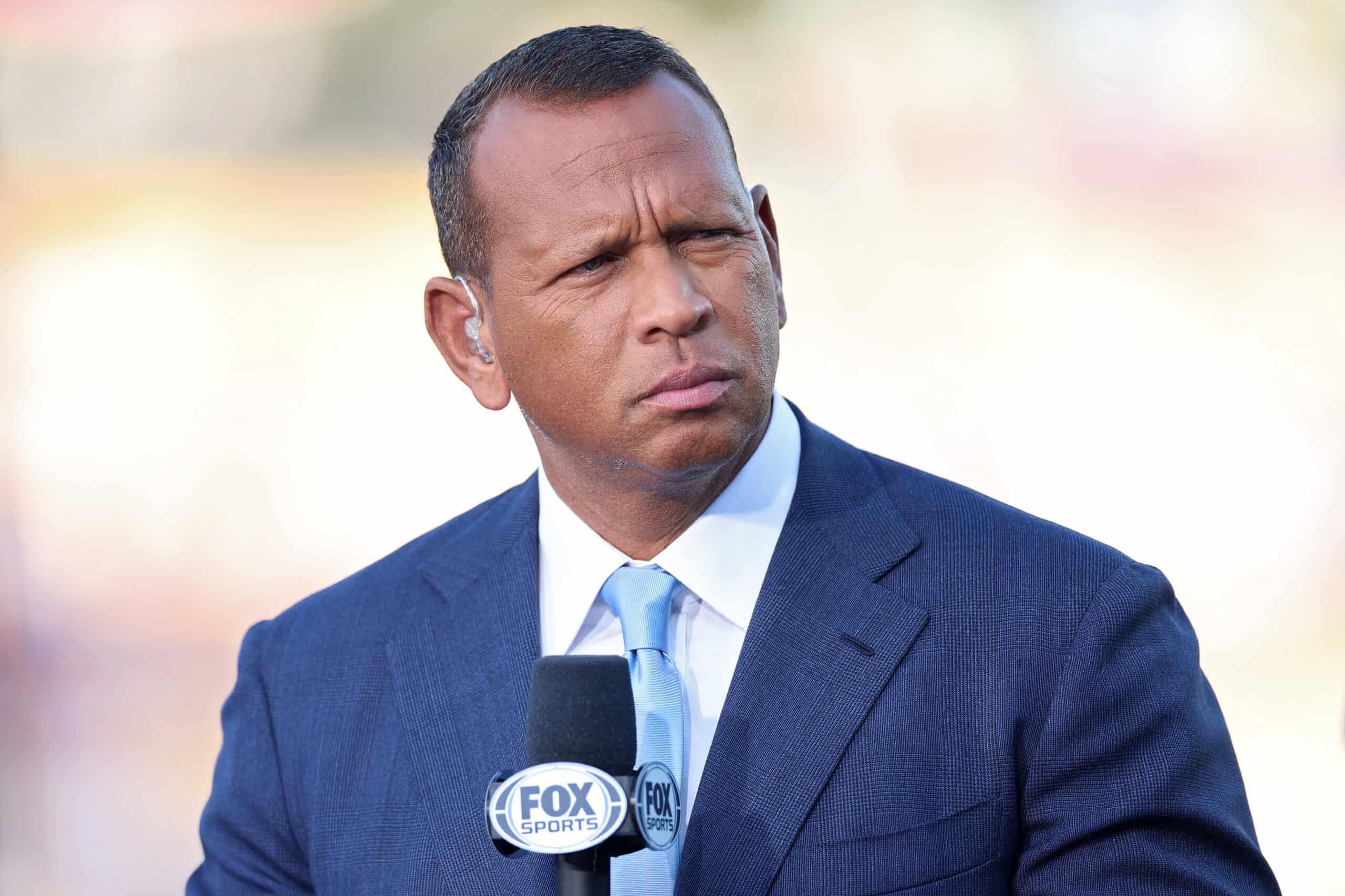
Alex Rodriguez, commonly known as A-Rod, remains one of the most polarizing and statistically dominant figures in the history of Major League Baseball. His career is a complex tapestry of unprecedented athletic achievement, record-breaking financial contracts, significant controversy involving performance-enhancing drugs, and a highly successful secondary act as a business mogul and media personality.
As of 2026, Rodriguez’s legacy continues to be debated by Hall of Fame voters and fans alike, balancing his 696 home runs and three MVP awards against the disciplinary actions that marred his later playing years. Beyond the diamond, his transition into ownership and investment has set a new blueprint for retired athletes, particularly through his involvement with the Minnesota Timberwolves and his diversified portfolio under A-Rod Corp.
The Early Years and Amateur Dominance
Born Alexander Enmanuel Rodriguez on July 27, 1975, in New York City, his family moved to the Dominican Republic when he was four, eventually settling in Miami, Florida. This multicultural upbringing shaped his identity and his early connection to baseball, a sport deeply rooted in Dominican culture.
At Westminster Christian School in Miami, Rodriguez became a high school phenom. He was an All-American shortstop and a standout football player, drawing the attention of professional scouts and major collegiate programs. In his junior year, he hit .477 and stole 42 bases in 35 games. By his senior year, he was widely considered the best amateur prospect in the country.
The Seattle Mariners selected Rodriguez with the first overall pick in the 1993 MLB Draft. Rather than attending the University of Miami, where he had committed to play both baseball and football, he signed with the Mariners for a then-record $1.3 million contract. This decision marked the beginning of a professional journey that would redefine the financial landscape of the sport.
Professional Breakthrough with the Seattle Mariners
Rodriguez made his Major League debut at just 18 years old on July 8, 1994, playing shortstop. He was one of the youngest players in the history of the Mariners franchise. While his initial stints were brief, his 1996 season remains one of the greatest individual performances by a shortstop in baseball history.
In 1996, at age 20, Rodriguez led the American League with a .358 batting average, recorded 36 home runs, and drove in 123 runs. He finished second in the AL MVP voting, losing by a razor-thin margin to Juan Gonzalez. This season established him not just as a future star, but as a generational talent capable of hitting for both high average and elite power from a defensive position usually reserved for light-hitting specialists.
During his tenure in Seattle (1994–2000), Rodriguez earned four All-Star selections and four Silver Slugger Awards. Alongside teammates like Ken Griffey Jr. and Edgar Martinez, he helped turn the Mariners into a perennial contender, although the team never reached the World Series during his stay.
The Historic Texas Rangers Contract
In December 2000, Rodriguez became a free agent and signed a 10-year, $252 million contract with the Texas Rangers. At the time, it was the richest contract in the history of professional sports, doubling the previous record held by Kevin Garnett in the NBA. The deal was so massive that it exceeded the entire valuation of several MLB franchises at the time.
Statistically, Rodriguez’s years in Texas (2001–2003) were the most productive of his career. He led the American League in home runs in all three seasons, including a career-high 57 in 2002. In 2003, he won his first American League MVP Award despite the Rangers finishing in last place.
However, the contract became a burden for the Rangers' front office. The team struggled to build a winning roster around Rodriguez’s massive salary, leading to a desire to trade him. After a proposed trade to the Boston Red Sox fell through due to the MLB Players Association's refusal to allow a voluntary salary reduction, the New York Yankees emerged as the successful suitor following an injury to their star third baseman, Aaron Boone.
The New York Yankees Era and Position Shift
The trade to the New York Yankees in 2004 was a seismic event in sports media. Because the Yankees already had a franchise icon and captain at shortstop in Derek Jeter, Rodriguez agreed to move to third base. This transition was significant, as Rodriguez was a superior defensive shortstop, but the move was seen as a necessary sacrifice for team chemistry and the pursuit of a championship.
In New York, the pressure was immense. Rodriguez continued to produce elite numbers, winning two more AL MVP Awards in 2005 and 2007. Despite the regular-season success, he faced intense criticism for his early postseason performances with the Yankees. This narrative shifted dramatically in 2009.
During the 2009 postseason, Rodriguez was instrumental in the Yankees' run to their 27th World Series title. He hit .365 with six home runs and 18 RBIs throughout the playoffs, delivering several "clutch" hits that silenced critics of his postseason fortitude. This championship remains the only World Series ring of his 22-year career.
Performance-Enhancing Drugs and the Biogenesis Scandal
The most significant stain on Rodriguez’s career is his involvement with performance-enhancing drugs (PEDs). In 2009, following a report by Sports Illustrated, Rodriguez admitted to using banned substances while playing for the Texas Rangers between 2001 and 2003, citing the "enormous pressure" to perform.
The situation escalated in 2013 with the Biogenesis scandal. An investigation revealed that Rodriguez had received PEDs from a rejuvenation clinic in Florida. Unlike his previous admission, this instance involved a lengthy legal and public relations battle with Major League Baseball.
In August 2013, Commissioner Bud Selig suspended Rodriguez for 211 games. After an appeal process, the suspension was reduced to 162 games—the entirety of the 2014 season. This remains the longest non-lifetime suspension in MLB history for a PED violation. Rodriguez returned in 2015, recording a surprisingly productive season with 33 home runs, but the controversy fundamentally altered his public image and his prospects for the Baseball Hall of Fame.
Statistical Milestones and Career Totals
Despite the controversies, Rodriguez’s statistical profile is nearly unmatched. He is one of only a few players to surpass 600 home runs and 3,000 hits. His 2,086 RBIs rank him among the top all-time leaders, and his 14 All-Star selections reflect his long-term dominance in the American League.
| Statistic | Total | All-Time Rank (Approx.) |
|---|---|---|
| Hits | 3,115 | 22nd |
| Home Runs | 696 | 5th |
| Runs Batted In (RBI) | 2,086 | 4th |
| Runs Scored | 2,021 | 8th |
| Career WAR (Baseball-Reference) | 117.5 | 16th |
| MVP Awards | 3 | Tied for 2nd |
Rodriguez retired on August 12, 2016. He finished four home runs shy of the 700-home run club, a milestone reached only by Barry Bonds, Hank Aaron, Babe Ruth, and Albert Pujols.
A-Rod Corp and Business Ventures
Following his retirement from baseball, Rodriguez pivoted toward a full-time career in business and investment. He founded A-Rod Corp, a holding company that manages a diverse portfolio across real estate, technology, wellness, and entertainment.
One of his most significant moves was the acquisition of a stake in the Minnesota Timberwolves (NBA) and the Minnesota Lynx (WNBA). Alongside partner Marc Lore, Rodriguez began the process of purchasing the teams from longtime owner Glen Taylor in 2021. This move transitioned him from a superstar athlete to a major sports owner, further cementing his influence in professional athletics.
His real estate division, Monument Capital Management, has acquired more than $1 billion in assets across several states, focusing primarily on multi-family housing units. Rodriguez has often stated that his business acumen was developed during his playing years by observing successful owners and seeking mentorship from figures like Warren Buffett.
Media Career and Broadcasting
Rodriguez’s post-retirement image rehabilitation was aided significantly by his work in media. He joined Fox Sports as a studio analyst and later became a color commentator for ESPN’s Sunday Night Baseball. His ability to articulate the technical nuances of the game earned him critical acclaim and helped soften his public persona.
He also ventured into mainstream television as a guest on "Shark Tank," where he leveraged his investment experience to evaluate startups, and hosted "Back in the Game," a CNBC series where he mentored former athletes facing financial or personal struggles. This media presence has made him more accessible to a younger generation of fans who may not have seen him play in his prime.
Philanthropy and Community Impact
Throughout his career and into his retirement, Rodriguez has been a significant contributor to the Boys & Girls Clubs of America. Having been a member of the club in Miami during his youth, he has donated millions to the organization and frequently participates in their national campaigns.
He also made a substantial $3.9 million contribution to the University of Miami to renovate its baseball stadium, which was subsequently named Alex Rodriguez Park at Mark Light Field. His philanthropic efforts generally focus on youth education, sports access, and providing resources for underprivileged communities in South Florida and New York.
Frequently Asked Questions
Is Alex Rodriguez in the Baseball Hall of Fame?
As of 2026, Alex Rodriguez has not been elected to the National Baseball Hall of Fame. While his statistics are more than sufficient for first-ballot entry, his history with PEDs and his 2014 suspension have led many voters to withhold their support. He remains on the ballot, but his vote percentages have historically lagged behind the 75% required for induction.
How many World Series rings does Alex Rodriguez have?
Alex Rodriguez won one World Series championship during his career, in 2009 with the New York Yankees. Despite playing for high-profile teams like the Mariners and Rangers, the 2009 victory over the Philadelphia Phillies was the only time he reached and won the Fall Classic.
What is A-Rod's total career earnings from baseball?
During his 22-season career, Rodriguez earned approximately $455 million in salary alone. This figure does not include endorsements or income from his various business ventures. He was the first player in sports history to sign two separate contracts worth over $250 million.
Does Alex Rodriguez own the Minnesota Timberwolves?
Yes, Alex Rodriguez is a part-owner of the Minnesota Timberwolves and the Minnesota Lynx. He entered into a multi-year buyout agreement with Marc Lore to acquire the majority stake from Glen Taylor. While the transition involved several stages of financing, Rodriguez has been a visible and active presence in the team's operations and courtside at games.
What are Alex Rodriguez's most notable records?
A-Rod holds the record for the most grand slams in MLB history with 25. He is also the youngest player ever to hit 500 home runs (at 32 years and 8 days old) and holds the record for the most home runs hit by a player of Hispanic descent.
Practical Next Actions for Fans and Researchers
For those looking to gain a deeper understanding of Alex Rodriguez's impact on the game, visiting the official MLB statistics portal provides a comprehensive breakdown of his year-by-year performance and advanced metrics. Researchers interested in the financial evolution of sports should examine the archives of the MLB Players Association to see how Rodriguez’s contracts influenced subsequent collective bargaining agreements.
Furthermore, following the business developments of A-Rod Corp can provide insight into how modern athletes are leveraging their personal brands to build institutional wealth. Monitoring his status on the Hall of Fame ballots each January remains the primary way to track how the baseball world continues to evaluate his complicated but undeniable greatness.