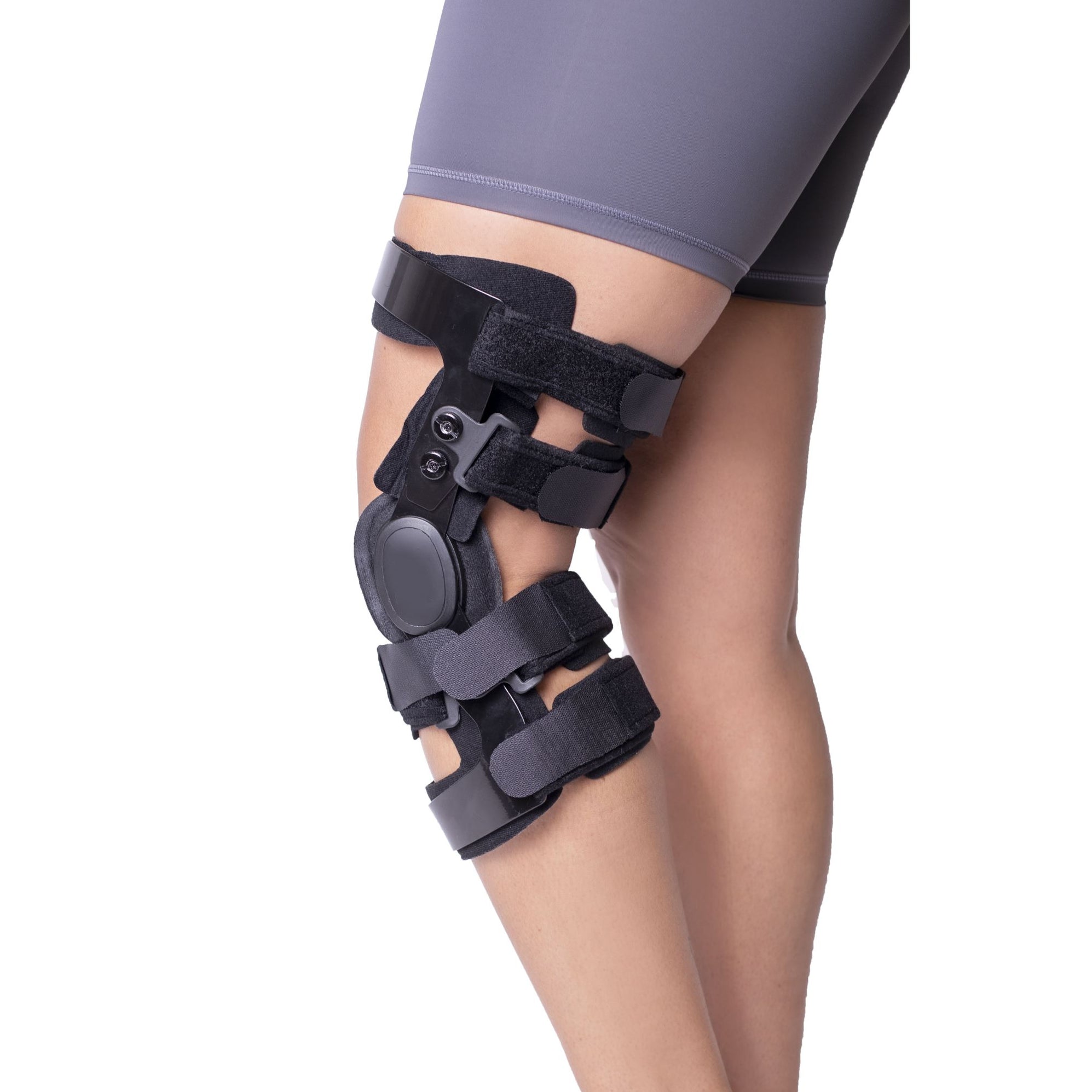
An ACL reconstruction knee brace serves as a critical mechanical stabilizer during the immediate post-operative period and throughout the subsequent rehabilitation phases. Designed to limit range of motion, prevent hyperextension, and provide proprioceptive feedback, these braces are essential for protecting the integrity of the graft while allowing the patient to progress toward weight-bearing and functional movement.
Understanding the Role of Knee Braces After ACL Surgery
Following an Anterior Cruciate Ligament (ACL) reconstruction, the surgical site requires significant protection to ensure the graft—whether an autograft from the patient or an allograft from a donor—properly integrates into the bone tunnels. A knee brace is not merely a supportive device; it is a vital component of the clinical protocol determined by your orthopedic surgeon.
The primary function of the brace is to control the knee joint’s range of motion (ROM). In the first few weeks, surgeons often require patients to wear a locked or limited-range hinge brace to prevent accidental twists or sudden movements that could stress the healing graft. Beyond physical restriction, these braces serve a psychological and sensory role, providing proprioceptive input—the body’s ability to sense its position in space—which is often diminished after surgical trauma and nerve disruption.
It is important to clarify a common misconception: an ACL brace after surgery is not a permanent fixture. It is a transitional tool used to bridge the gap between initial surgery and the achievement of sufficient quadriceps strength and neuromuscular control. Once the patient demonstrates the ability to safely stabilize the knee through muscular activity, the brace is typically phased out under the guidance of a physical therapist.
Types of Braces Used in ACL Recovery
Orthopedic medicine categorizes post-ACL braces primarily by their structural rigidity and the phase of recovery for which they are designed.
1. Post-Operative Hinged Braces (ROM Braces)
These are the standard for the first 2 to 6 weeks following surgery. They feature long side struts made of aluminum or high-density plastic, connected by a dial-adjustable hinge.
- Purpose: To gradually increase the allowable range of motion from full extension (0 degrees) to flexion (bending).
- Key Feature: The locking mechanism allows the surgeon to prevent the knee from going into dangerous positions while permitting the patient to engage in initial post-surgical exercises.
2. Functional Knee Braces
As the patient moves into the middle and later stages of rehabilitation (usually after 3–6 months), functional braces are utilized. These are generally lower-profile and designed to be worn during physical therapy and, eventually, return-to-sport activities.
- Purpose: To provide stability against lateral forces and rotation, protecting the graft during pivoting or cutting movements.
- Key Feature: Lightweight, custom-fitted, or semi-custom shells that offer resistance to abnormal joint translation without being as cumbersome as the post-op hinged model.
3. Compression Sleeves and Wraps
While not structural, these are often used in conjunction with braces to manage post-surgical edema (swelling). By applying mild, consistent pressure, they assist the lymphatic system in reducing fluid buildup around the incision sites.
Criteria for Selection and Fitting
Selecting the appropriate brace is not a consumer decision but a clinical one. Your surgeon or physical therapist will prescribe a device based on several factors, including the type of graft used (e.g., hamstring tendon vs. patellar tendon), the presence of concomitant injuries (such as meniscus tears), and your specific activity goals for 2026 and beyond.
| Brace Type | Primary Use Phase | Structural Profile | Adjustable ROM |
|---|---|---|---|
| Post-Op ROM Hinge | Weeks 0–6 | High (Heavy Duty) | Yes (Dial Hinge) |
| Functional/Sports | Months 3–12 | Medium (Low Profile) | No (Fixed) |
| Compression/Soft | Ongoing | Low (Flexible) | N/A |
When the brace is fitted, several technical requirements must be met to ensure it does not cause more harm than good:
- Hinge Alignment: The center of the mechanical hinge must align with the anatomical axis of the knee joint. If the hinge is too high or too low, the brace will migrate down the leg, causing chafing and suboptimal mechanical support.
- Strap Tension: Straps should be tightened from the knee outward—start with the straps closest to the joint line and work your way up the thigh and down the calf. Over-tightening can restrict circulation, while under-tightening leads to the brace slipping.
- Skin Integrity: Because these braces are worn for many hours a day, checking for pressure sores is essential. Patients should wear a moisture-wicking sleeve underneath the brace to protect the skin from the internal frame.
Navigating Rehabilitation and Troubleshooting
The presence of a brace does not grant the patient permission to increase activity levels beyond what is outlined in their rehabilitation manual. A common mistake is assuming that because the knee feels "secure" due to the brace, it is ready for high-impact activities like running or jumping.
Common Challenges and Solutions:
- Brace Migration: If your brace consistently slides down your leg, it is likely due to improper strap order or a lack of anti-migration silicone strips inside the liners. Ensure your skin is clean and free of lotions before application to improve friction.
- Skin Irritation: Prolonged contact with foam or plastic liners can lead to contact dermatitis. Using a high-quality cotton or polyester tubular sleeve as a base layer can mitigate this significantly.
- Psychological Dependence: Some patients develop a reliance on the brace, fearing that without it, the graft will fail. Work closely with a physical therapist to perform "brace-weaning" exercises, which focus on building the gluteal and quadriceps strength necessary to stabilize the knee naturally.
Regulatory and Financial Considerations
In the United States, durable medical equipment (DME) like an ACL brace is typically classified as a Class I or Class II medical device by the FDA, depending on the hinges and materials used. When seeking insurance coverage for a brace in 2026, ensure that the orthotist providing the device is in-network with your healthcare provider.
Always request a breakdown of costs—the device itself, the fitting fee, and any follow-up adjustments. Many insurance policies require pre-authorization for custom-molded functional braces. If your insurer denies coverage, provide them with the surgical notes detailing the medical necessity of the brace to support your rehabilitation outcome.
Frequently Asked Questions
1. Do I need to wear my ACL brace while sleeping? Generally, no. Most surgeons recommend removing the brace at night unless there is a specific risk of injury during sleep or if the patient is required to wear a locked-extension brace to ensure the graft heals in full extension. Always confirm this with your surgeon.
2. Can I use an over-the-counter brace instead of the one provided? It is not recommended. Over-the-counter braces lack the precision, adjustable hinge settings, and structural integrity required to manage the specific mechanical loads of a healing ACL graft. Stick to the device prescribed by your surgical team.
3. How do I know if my brace is fitted correctly? A properly fitted brace should feel snug but not restrictive. You should be able to slide a finger under the straps comfortably. The hinge should sit directly over the bony prominence on the side of your knee, and it should not rotate around your leg during movement.
4. When will I be able to stop wearing the brace? This is determined by your physical therapist based on clinical milestones, such as achieving full extension, sufficient quadriceps activation, and successful performance on functional hop tests. This usually occurs between 3 and 6 months post-op, depending on the recovery speed.
5. How should I clean my brace? Remove all soft liners and straps. Hand wash them in cold water with mild soap and air dry them completely before reassembling. Wipe the rigid frame with a damp cloth and a mild disinfectant. Never put the hinges in a washing machine or dryer.
Final Recommendation for Patients
Your ACL reconstruction recovery is a marathon, not a sprint. The knee brace is a tool meant to keep you safe while you rebuild your foundation. Prioritize the guidance of your surgical and rehabilitation team over general advice found elsewhere. If your brace feels uncomfortable, do not simply tolerate it; return to your orthotist or physical therapist for a professional adjustment. Ensuring the device fits your specific limb geometry is the single most effective way to prevent secondary complications and ensure a smooth recovery.