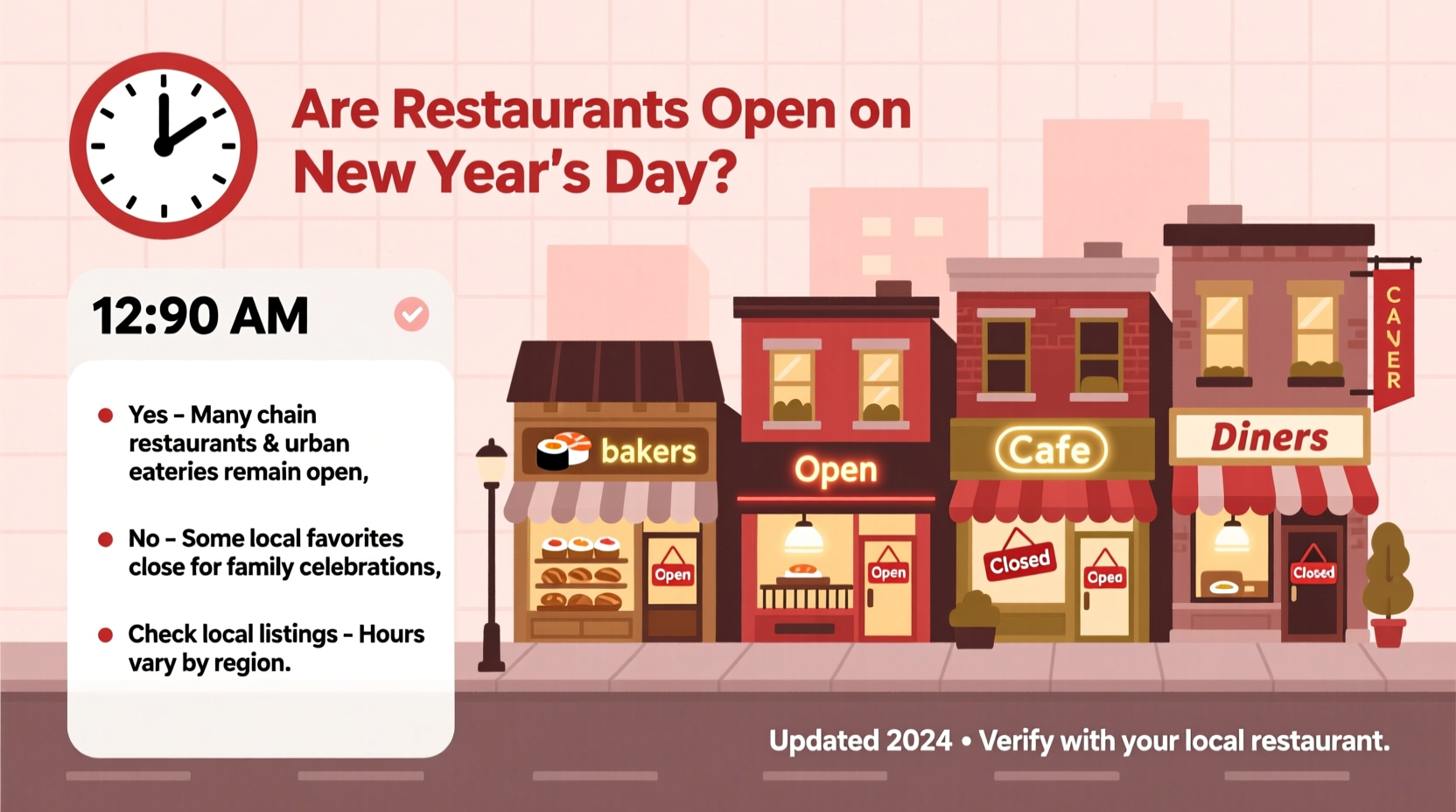
Whether restaurants are closed on New Year’s Day is not a simple yes-or-no question, as operational status depends entirely on the specific establishment’s business model, location, and local market demand. While many independent, family-owned restaurants choose to close on January 1 to allow staff time with family, major national chains and establishments located within hotels or high-traffic tourist districts often remain open to capitalize on increased holiday foot traffic.
Understanding Restaurant Operations on Holidays
The restaurant industry operates on a spectrum of agility. Decisions regarding holiday closures are rarely mandated by a singular governing body; instead, they are driven by individual owners, corporate policies, and the local competitive landscape.
Independent vs. Chain Restaurants
The primary differentiator for holiday availability is the business structure. Independent restaurants often operate with smaller teams and tighter margins. Closing on a major holiday like New Year’s Day is a common practice to avoid the high labor costs associated with "time-and-a-half" pay requirements or simply to provide a rare day off for a fixed-size staff.
Conversely, national chain restaurants frequently leverage economies of scale and standardized operating procedures. These entities often have regional or corporate-level policies that mandate holiday hours to ensure brand consistency and revenue capture. If you are seeking a meal on New Year’s Day, a corporate chain is statistically more likely to be open than a local bistro.
Location-Based Variables
Geography plays a critical role in determining service availability. Restaurants situated in urban centers, near major transit hubs, or inside large hotels are designed to accommodate travelers and visitors who do not have access to home-cooked meals. If a restaurant’s primary revenue stream is tied to hotel guests or international tourism, the likelihood of that venue remaining open on January 1 increases significantly.
Conversely, establishments located in quiet residential zones or office-centric districts often see a massive drop in demand on New Year’s Day. In these areas, the cost of keeping the lights on and the kitchen staffed often outweighs the potential profit, leading owners to opt for a day of closure.
How to Verify Restaurant Status for January 1
Before heading out, it is essential to move beyond generic assumptions. Reliance on outdated information is the most common reason diners encounter "closed" signs unexpectedly.
Utilizing Digital Verification Tools
In 2026, the most accurate sources for real-time information are digital platforms directly managed by the business.
- Google Business Profile: Most modern businesses update their "Special Hours" section on Google. If a restaurant has not updated this, a generic "New Year’s Day hours may vary" warning usually appears.
- Social Media Feeds: Instagram and Facebook are often the first places owners announce holiday closures. A quick check of their most recent posts can save a wasted trip.
- Reservation Platforms: Sites like OpenTable, Resy, or Tock are highly reliable. If an establishment is utilizing these systems for bookings, the calendar will typically be grayed out or unavailable for January 1 if they are closed.
The Direct Method
If digital information is ambiguous, a direct phone call is the industry gold standard. A quick call on December 30 or 31 provides the most definitive confirmation. When calling, specify the date to avoid confusion with New Year’s Eve, as many restaurants stay open for dinner on the 31st but close for breakfast and lunch on the 1st.
Operational Realities: The "Why" Behind Closures
To understand why some doors are locked, one must consider the logistical challenges of operating on a major holiday.
Labor Costs and Availability
Labor is the largest variable expense for any restaurant. In many jurisdictions, operating on a federal holiday requires employers to offer premium pay. When you combine high labor costs with a potential shortage of staff—many of whom prefer to be with family—the economic viability of opening becomes questionable for small-to-mid-sized businesses.
Supply Chain Dependencies
Restaurants depend on a complex web of food distributors. If suppliers do not deliver on New Year’s Day, a restaurant must manage its inventory perfectly to avoid running out of stock. Many owners prefer to close rather than risk a sub-par experience for guests caused by limited ingredient availability.
Table: Factors Influencing Holiday Openness
| Factor | High Likelihood of Staying Open | High Likelihood of Closing |
|---|---|---|
| Business Type | National Chain | Independent / Local Bistro |
| Location | Hotel / Tourist Area | Residential / Office District |
| Service Model | Buffet / Casual / Fast Food | Fine Dining / Boutique |
| Inventory | Minimal / Frozen / Stable | Fresh / Farm-to-Table / Daily Prep |
| Staffing | Large Pool / Rotating Shifts | Small, Fixed Core Team |
Troubleshooting Unexpected Closures
If you arrive at a restaurant expecting service only to find it closed, you are facing a "broken expectation" scenario. To recover your plans, consider the following strategies:
- Pivot to Hotel Dining: If you are in a city, check the dining rooms of major international hotel chains. These are almost always open 365 days a year to cater to traveling guests.
- Casual Chains: National "diner-style" chains are statistically the most resilient to holiday closures. If fine dining is closed, these venues represent the most reliable fallback.
- Marketplace Apps: Use food delivery apps to check which restaurants are accepting orders. While this does not guarantee dine-in availability, it often highlights which kitchens are actively operating on that day.
The Evolution of Holiday Dining in 2026
In recent years, there has been a shift in how restaurants handle holidays. With the rise of third-party delivery and pre-packaged "take-home" holiday feasts, some restaurants that are physically closed to dine-in customers still operate their kitchens to fulfill pre-ordered pickup meals. This allows owners to capture holiday revenue without the burden of front-of-house service.
When researching, look for "Holiday Menu" or "Catering" links on a restaurant’s website. You might find that while the dining room is shuttered, you can still secure a high-quality meal for your home celebration.
Frequently Asked Questions
Are fast food chains generally open on New Year’s Day?
Yes, most major fast food chains remain open on New Year’s Day. Because these businesses rely on high-volume, standardized operations, they are rarely incentivized to close. However, individual franchise locations may have modified hours, such as opening later in the morning.
Do hotel restaurants stay open on holidays?
Almost exclusively, yes. Hotels have a contractual or operational requirement to provide food service to their guests. Even if the main restaurant is closed, a lobby café or limited room service menu is standard procedure for major hotel chains.
Should I make a reservation for January 1?
If you are planning to dine at a mid-to-high-end restaurant, a reservation is highly recommended. Because so many establishments close on this day, the remaining open restaurants often experience a surge in demand. Booking in advance ensures you are not left waiting in a crowded lobby.
Are brunch-focused restaurants more likely to be open?
New Year’s Day is a peak time for brunch, particularly for restaurants that specialize in it. Many brunch-centric venues capitalize on this day as one of their busiest of the year. If a restaurant is famous for its morning service, the likelihood of them being open is very high.
What is the best way to find a restaurant open on short notice?
Use your preferred map application and filter by "Open Now" or check the "Hours" tab. For the highest success rate, filter your search results to include national chains or restaurants located within the immediate vicinity of major hotels, as these have the highest probability of maintaining standard operations.
Recommendation for Diners
If you are determined to eat out on New Year’s Day, your best strategy is the "Rule of Three." Identify three potential restaurants in your target area: one primary choice and two backups. Verify the status of your primary choice via a phone call on December 31. If you cannot get through or receive a voicemail indicating they are closed, move immediately to your backup list. By planning ahead, you avoid the frustration of uncertainty and ensure your holiday plans remain uninterrupted.