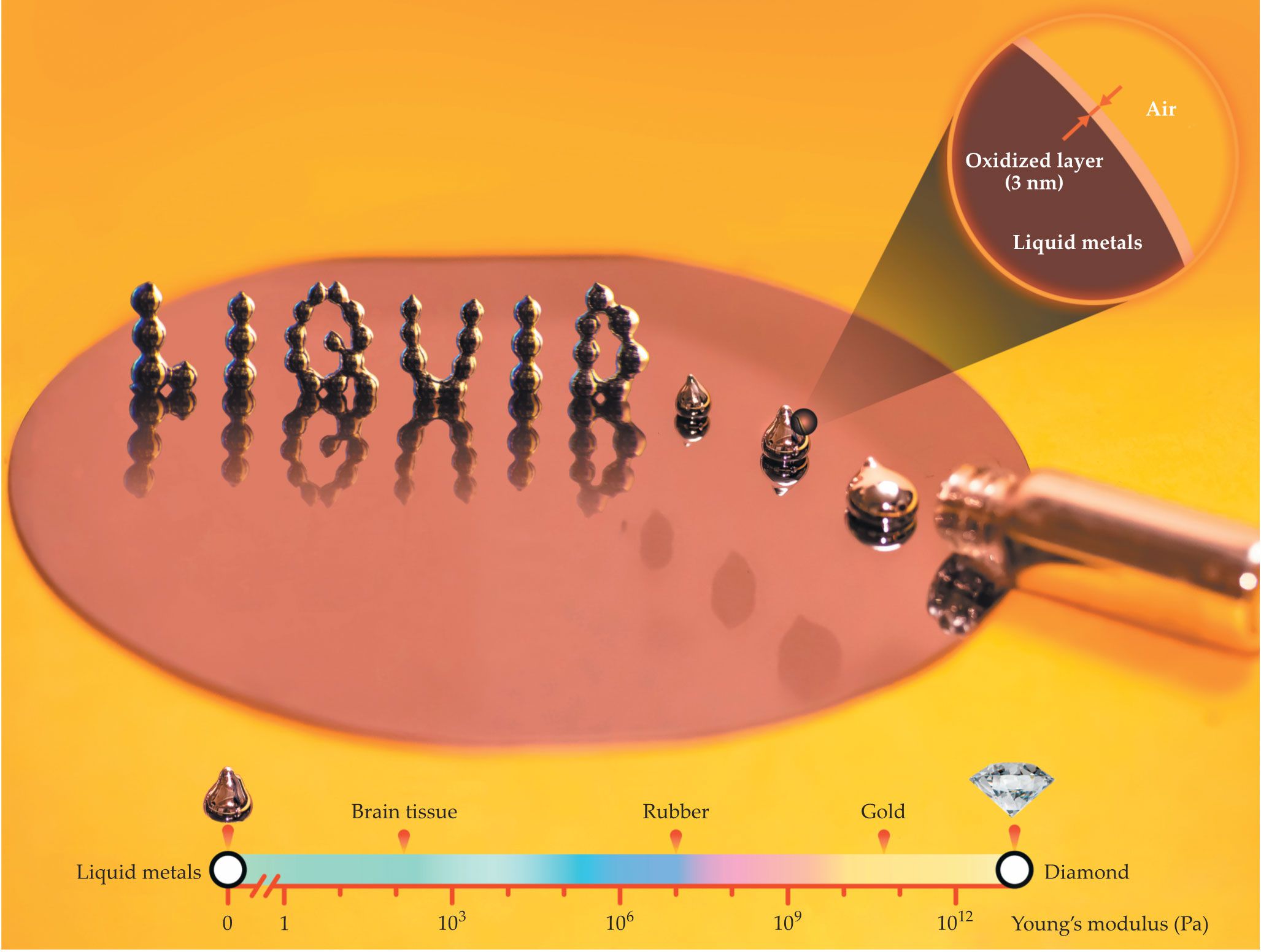
Yes, almost all pure metals are solid at standard room temperature (defined as 20°C to 25°C or 68°F to 77°F). The sole pure metallic element that is liquid under these standard conditions is mercury. However, a few other elements, including gallium, cesium, and rubidium, melt just above room temperature, while specialized metallic alloys remain liquid far below freezing.
The Standard Physical State of Metals
In basic material science, elements are categorized into metals, nonmetals, and metalloids based on their physical and chemical behaviors. Out of the 118 known elements on the periodic table, 95 are classified as metals. Under standard conditions of temperature and pressure (20°C to 25°C at 1 atmosphere of pressure), 94 of these 95 metals exist in a rigid, crystalline solid state.
The primary reason metals are solid at ambient temperatures lies in the nature of metallic bonding. In a solid metal structure, metal atoms release their outer valence electrons into a collective pool, creating what chemists refer to as a "sea of delocalized electrons." The remaining positively charged atomic cores (cations) arrange themselves into highly organized, tightly packed geometric arrangements known as crystal lattices.
Positive Cations Surrounded by Delocalized Electron Sea [+] [+] [+] [+] e- e- e- e- [+] [+] [+] [+] e- e- e- e- [+] [+] [+] [+]
The strong electrostatic attraction between the fixed positive ions and the surrounding sea of mobile negative electrons holds the structure together with significant binding energy. Overcoming these cohesive forces requires considerable thermal energy, which is why most metals exhibit very high melting and boiling points.
Key Characteristics of Solid Metals at Room Temperature
Solid metals share distinct macroscopic properties directly resulting from their internal atomic arrangements:
- High Density and Rigidity: Tightly packed crystal lattices give metals dense, solid structures capable of bearing heavy structural loads.
- Malleability and Ductility: The non-directional nature of metallic bonds allows layers of atoms to slide past one another without breaking the overall bond matrix, enabling metals to be hammered into sheets or drawn into wires.
- Thermal and Electrical Conductivity: Mobile, delocalized electrons carry kinetic energy and electrical charge rapidly throughout the lattice.
- Luster: Free electrons readily absorb and re-emit light photons across a broad spectrum of wavelengths, producing a shiny, reflective appearance.
The Primary Exception: Mercury (Hg)
Mercury (atomic number 80, symbol Hg) is the only pure metallic element that is a liquid at standard room temperature. Its melting point is -38.83°C (-37.89°F), meaning it remains in a dense, flowing liquid state across typical human environmental temperatures.
Mercury Atomic Profile: • Atomic Number: 80 • Electron Configuration: [Xe] 4f¹⁴ 5d¹⁰ 6s² • Melting Point: -38.83 °C (-37.89 °F) • Primary Cause of Liquidity: Relativistic 6s orbital contraction
For decades, the liquid nature of mercury at ambient temperatures posed a puzzle for physical chemists. The explanation relies on advanced quantum mechanics and Einstein's theory of special relativity.
The Relativistic Effect in Heavy Atoms
As an atom's atomic number increases, the positive charge of its nucleus grows stronger. In very heavy elements like mercury ($Z = 80$), the 80 protons exert an immense electrostatic pull on the surrounding electrons. To avoid falling into the nucleus, the innermost electrons (particularly the $1s$ electrons) must travel at velocities approaching a significant fraction of the speed of light.
According to special relativity, an object moving near the speed of light gains relativistic mass. This mass increase causes the innermost electron orbitals to shrink closer to the nucleus. This contraction cascades outward, causing spherical $s$ orbitals—including the outermost $6s$ orbital—to contract and stabilize significantly.
Why Mercury Resists Bonding
Mercury has a completely filled outer shell configuration of $[Xe] 4f^{14} 5d^{10} 6s^2$. Because of the relativistic contraction:
- Tight Electron Binding: The two valence electrons in the $6s$ orbital are pulled extraordinarily close to the mercury nucleus and bound tightly.
- Inert Pair Behavior: Unlike other transition metals, mercury's $6s$ electrons are reluctant to participate in delocalized metallic bonding with neighboring mercury atoms.
- Weak Interatomic Forces: Because the outer electrons cannot freely form a robust "electron sea," individual mercury atoms interact primarily through weak van der Waals forces rather than strong metallic bonds.
As a result, mercury acts almost like a heavy, monatomic noble gas in terms of interatomic attraction. Little thermal energy is required to disrupt its weak lattice, causing it to melt into a liquid far below room temperature.
Near-Room Temperature Liquid Metals
While mercury is the only pure metal that is liquid at 20°C, several other metallic elements have melting points just slightly above standard room temperature. A small rise in ambient room temperature or contact with human body heat easily transforms these solid metals into liquids.
Melting Thresholds relative to Room Temp (20°C / 68°F): Mercury (Hg): -38.83°C [LIQUID AT ROOM TEMP] Francium (Fr): ~27°C [Melts in warm room - highly radioactive] Cesium (Cs): 28.5°C [Melts in warm room] Gallium (Ga): 29.76°C [Melts in hand] Rubidium (Rb): 39.3°C [Melts slightly above room temp]
1. Gallium (Ga)
- Melting Point: 29.76°C (85.57°F)
- Behavior: Solid at cool room temperatures, gallium melts rapidly when held in a human hand (body temperature ~37°C) or placed in a room above 30°C.
- Unique Property: Gallium expands by roughly 3.1% when it solidifies, similar to water freezing into ice. It also wets glass and skin, leaving a metallic coating behind.
2. Cesium (Cs)
- Melting Point: 28.5°C (83.3°F)
- Behavior: Cesium is a soft, silvery-gold alkali metal that turns into a liquid in a slightly warm room.
- Handling Caution: Cesium is extremely reactive. It ignites spontaneously in air (pyrophoric) and reacts explosively with water, meaning its liquid state can only be safely observed inside sealed glass ampoules under vacuum or inert gas.
3. Rubidium (Rb)
- Melting Point: 39.3°C (102.7°F)
- Behavior: Like cesium, rubidium is a highly reactive alkali metal with a large atomic radius and a single outer valence electron. The resulting weak metallic bond gives it a melting point just above human body temperature.
4. Francium (Fr)
- Melting Point: Estimated around 27°C (80.6°F)
- Behavior: Francium is the heaviest alkali metal. Relativistic effects and its large atomic radius predict a melting point near 27°C. However, because francium is intensely radioactive with an extremely short half-life (its most stable isotope, Fr-223, has a half-life of 22 minutes), macro-scale physical samples cannot be collected long enough to observe liquid bulk francium.
Liquid Metal Alloys: Beyond Pure Elements
While nature offers only one liquid pure metal at room temperature, materials scientists synthesize eutectic alloys that remain liquid across broad temperature ranges. A eutectic alloy is a mixture of substances that melts at a lower temperature than any of its individual constituents.
Pure Elements vs. Eutectic Alloy Melting Point: Gallium (Pure): 29.76°C Indium (Pure): 156.6°C Tin (Pure): 231.9°C --------------------------------- Galinstan Alloy: -19°C (Liquid at room temp & well below freezing)
Galinstan
Galinstan is a commercial trademarked alloy composed of gallium (68.5%), indium (21.5%), and tin (10%).
- Melting Point: -19°C (-2°F)
- Safety Profile: Unlike mercury, Galinstan is non-toxic and environmentally safe.
- Applications: It serves as a direct replacement for mercury in medical thermometers, thermal interface pastes for computer processors, and laboratory cooling loops.
EGaIn (Eutectic Gallium-Indium)
Composed of roughly 75.5% gallium and 24.5% indium by weight, EGaIn melts at 15.5°C (59.9°F), making it a liquid across standard room environments. It rapidly forms a micro-thin oxide skin ($\text{Ga}_2\text{O}_3$) when exposed to air, which allows researchers to print, shape, and structure stable 3D liquid metal channels for flexible electronics.
Comparative Breakdown of Metal Melting Points
To understand how metals differ across the thermal spectrum, the table below compares melting points, physical states at standard room temperature (20°C / 68°F), and primary industrial uses for representative pure metals and key alloys.
| Metal / Alloy | Chemical Symbol | Melting Point (°C) | Melting Point (°F) | State at 20°C (68°F) | Key Characteristics & Uses |
|---|---|---|---|---|---|
| Mercury | Hg | -38.83 | -37.89 | Liquid | Liquid element; used in switches, legacy thermometers, and barometers. |
| Galinstan | Alloy (Ga-In-Sn) | -19.0 | -2.2 | Liquid | Non-toxic liquid alloy; high thermal conductivity, non-hazardous thermometers. |
| EGaIn | Alloy (Ga-In) | 15.5 | 59.9 | Liquid | Liquid alloy at standard room temp; widely used in flexible and stretchable circuits. |
| Francium | Fr | ~27.0 | ~80.6 | Solid (Near Liquid) | Extremely rare, radioactive alkali metal; decays within minutes. |
| Cesium | Cs | 28.5 | 83.3 | Solid (Near Liquid) | Highly reactive alkali metal; used in high-precision atomic clocks. |
| Gallium | Ga | 29.76 | 85.57 | Solid (Near Liquid) | Solid at 20°C, melts in hand; vital for semiconductors ($\text{GaAs}$) and LEDs. |
| Rubidium | Rb | 39.3 | 102.7 | Solid | Soft alkali metal; used in quantum sensing, photocells, and specialized glass. |
| Potassium | K | 63.5 | 146.3 | Solid | Reactive alkali metal; low density, soft consistency. |
| Sodium | Na | 97.8 | 208.0 | Solid | Low-melting metal; used as liquid coolant in specialized fast-breeder nuclear reactors. |
| Lead | Pb | 327.5 | 621.4 | Solid | Soft, dense post-transition metal; radiation shielding and battery plates. |
| Aluminum | Al | 660.3 | 1220.5 | Solid | Lightweight, high-strength structural metal; aerospace and packaging. |
| Gold | Au | 1064.0 | 1947.0 | Solid | Noble metal with high electrical conductivity and oxidation resistance. |
| Iron | Fe | 1538.0 | 2800.0 | Solid | Structural cornerstone of modern metallurgy; primary component of steel. |
| Tungsten | W | 3422.0 | 6192.0 | Solid | Highest melting point of all pure metals; rocket nozzles, lamp filaments. |
Why Metal Melting Points Vary So Drastically
The massive difference between mercury's melting point (-38.83°C) and tungsten's melting point (3422°C)—a span of over 3,460 degrees Celsius—highlights how drastically atomic structure affects material phase transitions.
Weak Metallic Bonds (Low Melting Point) Strong Metallic Bonds (High Melting Point) • Large atomic radii • Small atomic radii • Few valence electrons • Numerous unpaired d-shell electrons • Weak electron lattice binding • Dense, tightly bound crystal lattice Example: Alkali Metals, Mercury Example: Transition Metals (Tungsten, Rhenium)
Several key factors determine whether a metal is solid or liquid at room temperature:
1. Valence Electron Contribution
Transition metals located in the middle of the periodic table (such as tungsten, rhenium, and osmium) have unpaired electrons in their outer $d$ orbitals. These $d$ electrons participate alongside $s$ electrons in metallic bonding, forming extraordinarily strong covalent-like interatomic links. Conversely, metals with fully filled electron subshells (like mercury) have very few available electrons to contribute to collective bonding.
2. Atomic Radius and Packing Density
Smaller atoms allow their positive nuclei to sit closer to the shared electron sea, increasing electrostatic attraction and raising the melting point. Larger atoms, such as cesium and rubidium, keep their nuclei farther away from the free electrons, resulting in weak lattice stability and low melting thresholds.
3. Crystal Lattice Structure
Solid metals arrange themselves into crystalline geometries such as Face-Centered Cubic (FCC), Body-Centered Cubic (BCC), or Hexagonal Close-Packed (HCP). Structures with higher packing efficiencies demand more thermal kinetic energy to disrupt into a disordered liquid phase.
Practical Applications of Liquid and Solid Metals
Understanding the phase boundaries of metals enables crucial engineering breakthroughs across electronics, energy generation, and thermal control.
Applications Spectrum: Solid Metals -----------------------------------------> Liquid Metals • Structural beams (Steel/Al) • Flexible circuits (EGaIn) • Electrical wiring (Copper) • Medical thermometers (Galinstan) • Radiation shields (Lead) • Reactor heat transfer (Sodium/NaK)
1. Medical Thermometry and Safety Replacements
Historically, mercury was standard in glass clinical thermometers due to its uniform thermal expansion. Because mercury vapor is toxic and poses severe environmental risks upon disposal, modern regulations have phased it out. Non-toxic liquid alloys like Galinstan are now widely adopted, providing equivalent thermal sensitivity without toxic hazards.
2. Flexible and Stretchable Electronics
Traditional solid copper circuitry fractures under repeated bending or stretching. Materials scientists use room-temperature liquid metal alloys (such as EGaIn) inside elastic silicone channels. When bent, twisted, or stretched, the liquid metal flows seamlessly, maintaining unbroken electrical conductivity. This technology powers wearable health monitors, soft robotics, and flexible displays.
3. Thermal Interface Materials (TIMs)
High-performance computing chips generate immense localized heat. Standard silicone-based thermal paste can degrade over time under high heat flux. Liquid metal pastes (typically gallium-based) exhibit thermal conductivities roughly 20 to 50 times higher than traditional organic pastes, making them ideal heat-transfer agents between high-performance CPUs/GPUs and cooling blocks.
4. Advanced Nuclear Reactor Coolants
Some advanced nuclear reactors use liquid sodium or NaK (a liquid sodium-potassium alloy) as coolants instead of pressurized water. Liquid metals maintain a liquid state at operating temperatures exceeding 500°C without requiring high-pressure containment vessels, while providing exceptional heat transfer efficiency.
Frequently Asked Questions
Is bromine a liquid metal?
No. Bromine ($\text{Br}$) is a liquid at room temperature, but it is a nonmetal (specifically a halogen), not a metal. Bromine and mercury are the only two elements on the entire periodic table that exist as liquids at standard room temperature and pressure.
Is liquid mercury dangerous to handle?
Yes. Pure elemental mercury emits invisible, odorless mercury vapor at room temperature. Inhaling these vapors allows mercury to pass through the lungs into the bloodstream and central nervous system, causing severe neurological damage. Liquid mercury should never be handled without specialized containment, ventilation, and protective equipment.
Why does gallium melt in your hand while aluminum does not?
Gallium has a low melting point of 29.76°C (85.57°F), which is below normal human body core temperature (~37°C / 98.6°F) and outer skin temperature (~33°C to 35°C). Aluminum, by contrast, has a tightly bound crystal structure with a melting point of 660.3°C, far beyond any temperature human skin can generate.
Are there any non-metallic metals?
No. The term "non-metallic metal" is a contradiction in terms. However, under extreme conditions such as high pressures, non-metallic elements like hydrogen or oxygen can enter metallic phases (such as metallic hydrogen inside gas giant planets like Jupiter).
What is the highest melting point metal?
Tungsten ($\text{W}$) holds the record for the highest melting point among pure metals at 3,422°C (6,192°F). Because of this resistance to heat, tungsten is used in high-temperature industrial furnaces, welding electrodes, and rocket engine nozzles.
Summary and Key Takeaway
Metals are predominantly solid at standard room temperature because their shared electron seas create strong electrostatic forces that bind their atoms into rigid crystal lattices. Out of all 95 metallic elements, mercury is the single exception that is liquid at standard room temperature (20°C to 25°C), driven by relativistic effects that weaken its atomic bonding.
When working on projects requiring liquid metal properties—such as high-performance thermal cooling, soft robotics, or safe temperature sensing—choose non-toxic liquid alloys like Galinstan or EGaIn rather than hazardous elemental mercury.