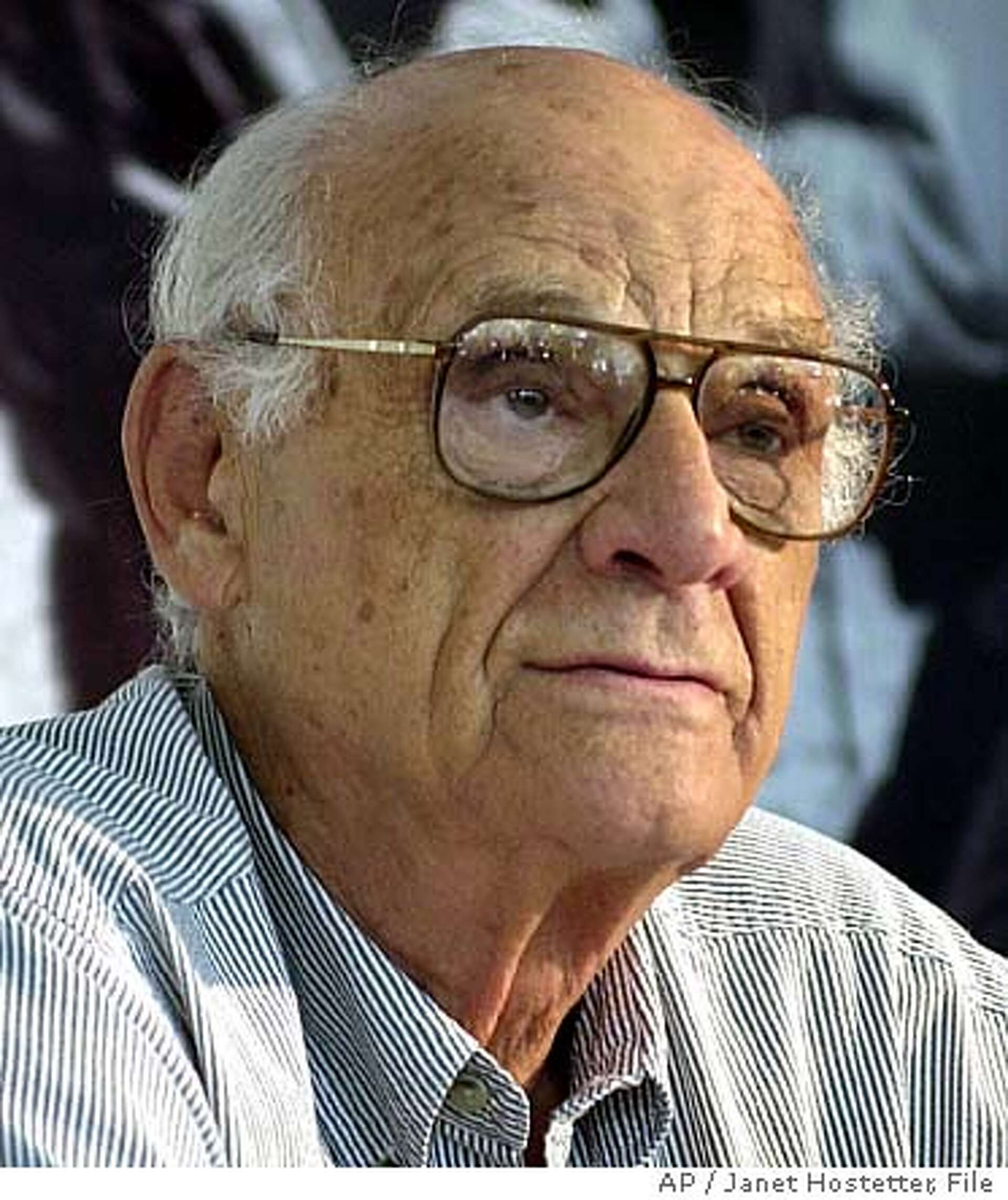
Arthur Miller lived from 1915 to 2005, a lifespan that spanned the most transformative events of the 20th century. As one of America's greatest playwrights, he utilized his 89 years to redefine modern drama, moving away from aristocratic tragedies to explore the internal and social struggles of the "common man" through masterpieces like Death of a Salesman and The Crucible.
Arthur Miller was more than a dramatist; he was a moral compass for a nation grappling with the fallout of the Great Depression, the paranoia of the Cold War, and the shifting definitions of the American Dream. His life and work were inextricably linked to the historical shifts of the United States, from his birth in a prosperous Jewish immigrant family in Harlem to his death as a global icon of intellectual integrity in Roxbury, Connecticut. To understand Miller is to understand the tensions of the American century—the conflict between the individual’s conscience and the pressures of the state.
Formative Years and the Impact of the Great Depression
Arthur Asher Miller was born on October 17, 1915, in Harlem, New York City. His early childhood was marked by relative affluence. His father, Isidore Miller, was a successful garment manufacturer and shop owner who had immigrated from Poland. The family lived in a large apartment overlooking Central Park, a setting that suggested the stability of the burgeoning American middle class. However, this stability was shattered by the Wall Street Crash of 1929.
The Great Depression was the defining event of Miller’s youth. His father’s business collapsed, and the family was forced to move from Manhattan to a modest house in Gravesend, Brooklyn. This sudden descent from wealth to struggle left an indelible mark on Miller’s psyche and became a recurring motif in his writing. He witnessed firsthand how financial failure could erode a man’s dignity and dismantle a family’s sense of self. To contribute to the household, young Miller worked a variety of odd jobs, including delivering bread before school and working in a warehouse. These experiences grounded his later work in the gritty reality of the working class and fueled his skepticism of a capitalist system that measured a person’s worth solely by their economic output.
Academic Foundations and Finding a Voice at Michigan
Miller’s path to becoming a writer was not immediate. After graduating from high school in 1932, he lacked the funds for college. He spent two years working in an automobile parts warehouse to save enough money for tuition. In 1934, he was accepted into the University of Michigan. It was here that Miller truly found his calling.
At Michigan, he majored in journalism and began experimenting with playwriting. He was significantly influenced by the Avery Hopwood Awards, a prestigious literary competition at the university. Miller won his first Hopwood Award for his play No Villain, which earned him the $250 prize that helped sustain his education. During these years, he was mentored by Professor Kenneth Rowe, who taught him the structural intricacies of drama and the importance of social relevance in art. By the time Miller graduated in 1938, he had developed a rigorous work ethic and a commitment to theater as a vehicle for social and moral inquiry.
The Post-War Breakthrough: All My Sons and Death of a Salesman
Following a brief period writing radio scripts and a failed Broadway debut with The Man Who Had All the Luck (1944), Miller achieved critical and commercial success with All My Sons in 1947. Directed by Elia Kazan, the play dealt with the moral consequences of war profiteering and the conflict between private interests and public responsibility. It won the Tony Award for Best Author and established Miller as a serious voice in American letters.
However, it was Death of a Salesman (1949) that cemented his place in the pantheon of great dramatists. The play, which follows the final days of traveling salesman Willy Loman, was a revolutionary piece of theater. Miller broke away from traditional chronological storytelling, using a fluid structure that allowed the past to bleed into the present, mirroring the fractured state of Willy’s mind.
Death of a Salesman addressed the hollow promise of the American Dream—the idea that if you are "well-liked" and work hard, success is guaranteed. Willy Loman’s tragic flaw was his inability to see through this myth, leading to his eventual suicide as an act of "insurance policy" sacrifice. The play won the Pulitzer Prize for Drama and three Tony Awards, resonating deeply with a post-war audience that was beginning to feel the pressures of corporate conformity.
Confronting McCarthyism: The Crucible and the HUAC
As the 1950s progressed, the United States entered the era of the "Red Scare," led by Senator Joseph McCarthy and the House Un-American Activities Committee (HUAC). This period of political paranoia and "witch hunts" for suspected communists deeply troubled Miller. In response, he wrote The Crucible (1953).
Set during the Salem witch trials of 1692, the play was a thinly veiled allegory for McCarthyism. Miller explored how collective hysteria and the abuse of judicial power could destroy innocent lives. The protagonist, John Proctor, becomes a symbol of individual integrity when he chooses to face execution rather than sign a false confession that would implicate others.
The play's relevance became literal in 1956 when Miller himself was summoned to testify before HUAC. Unlike many of his contemporaries, including his former friend Elia Kazan, Miller refused to "name names." He famously stated, "I could not use the name of another person and bring trouble on him." This act of defiance resulted in a conviction for contempt of Congress, which was later overturned in 1958. His experiences during this time reinforced his belief that the playwright has a duty to stand as a witness to social injustice.
The Marilyn Monroe Years and The Misfits
In 1956, Miller’s personal life became the subject of intense public scrutiny when he married Hollywood icon Marilyn Monroe. The union between the "intellectual giant" and the "blonde bombshell" fascinated the media. For Miller, the marriage was a period of both deep affection and profound challenge. He spent much of this time supporting Monroe through her emotional struggles and substance abuse issues.
During their marriage, Miller wrote the screenplay for The Misfits (1961), a film directed by John Huston and starring Monroe and Clark Gable. The film was a melancholic exploration of the end of the Old West and the lives of people who no longer fit into modern society. Ironically, the production was plagued by delays and the breakdown of Miller and Monroe’s marriage. They divorced shortly before the film’s release in 1961. Monroe died the following year, an event that haunted Miller and influenced his semi-autobiographical play After the Fall (1964), which examined the themes of guilt and the difficulty of human connection.
Later Career, Inge Morath, and Global Advocacy
In 1962, Miller married the Austrian-born photographer Inge Morath. This marriage proved to be his most stable and enduring, lasting until her death in 2002. Together, they traveled extensively and collaborated on several books of photography and essays, including In Russia and In the Country.
Throughout the 1960s, 70s, and 80s, Miller continued to write prolifically, though his newer works often received more acclaim in Europe than in the United States. Plays such as The Price (1968) and The Last Yankee (1993) continued his exploration of family dynamics and the psychological weight of the past.
Beyond the theater, Miller became a significant figure in international human rights. He served as the president of PEN International from 1965 to 1969, an organization dedicated to defending freedom of expression for writers worldwide. He used his global stature to advocate for imprisoned writers and to challenge censorship in both the East and the West. His commitment to global intellectual freedom made him a respected figure far beyond the Broadway stage.
Technical Analysis of Miller’s Major Works
Miller’s work is characterized by "social realism," a style that blends realistic dialogue and settings with a deep exploration of the social forces that shape individual destiny. Unlike the European absurdists of his time, Miller remained committed to the idea that the world was intelligible and that human actions had moral consequences.
| Play Title | Premiere Year | Primary Theme | Key Structural Innovation |
|---|---|---|---|
| All My Sons | 1947 | Social responsibility vs. family loyalty | Adherence to Ibsenesque realism and causality. |
| Death of a Salesman | 1949 | The failure of the American Dream | The "mobile concurrency" of past and present. |
| The Crucible | 1953 | Collective hysteria and individual conscience | Use of archaic 17th-century vernacular as allegory. |
| A View from the Bridge | 1955 | Taboo desire and the betrayal of community | Inclusion of a Greek-style chorus (Alfieri). |
| The Price | 1968 | The burden of the past and family debt | A single-room, real-time debate between two brothers. |
| Resurrection Blues | 2002 | Media exploitation and political satire | Satirical critique of the commercialization of suffering. |
The Legacy of Arthur Miller in 2026
As of 2026, Arthur Miller’s influence remains pervasive in global culture. His plays are staged more frequently than those of almost any other American dramatist, with The Crucible and Death of a Salesman serving as cornerstones of high school and university curricula. In a world increasingly fragmented by political polarization and the pressures of late-stage capitalism, Miller’s warnings about the dangers of conformity and the erosion of individual truth remain strikingly relevant.
The Arthur Miller Foundation, established after his death, continues to support theater education in New York City public schools, ensuring that his belief in the transformative power of the arts reaches new generations. Scholars in 2026 continue to find new layers in his work, particularly in how he addressed racial and gender dynamics, which were often subtle but present in his critiques of the American social fabric.
Miller died on February 10, 2005, at his home in Roxbury, Connecticut, the 56th anniversary of the Broadway opening of Death of a Salesman. He left behind a body of work that challenged the world to be more honest, more compassionate, and more aware of the invisible threads that connect the individual to the community.
Frequently Asked Questions
Why is Arthur Miller's "Death of a Salesman" considered a tragedy?
Arthur Miller argued in his essay Tragedy and the Common Man that the tragic feeling is evoked when we are in the presence of a character who is ready to lay down their life to secure their sense of personal dignity. Willy Loman is considered a tragic hero because he fights for his place in a world that has discarded him, even though his vision of that world is flawed.
Did Arthur Miller ever win the Nobel Prize?
Despite being one of the most celebrated writers of his era, Arthur Miller never won the Nobel Prize in Literature. However, he received almost every other major literary and theatrical award, including the Pulitzer Prize, multiple Tonys, the Jefferson Lecture (the U.S. government's highest honor for achievement in the humanities), and the Prince of Asturias Award.
How did Arthur Miller's marriage to Marilyn Monroe affect his career?
The marriage significantly increased Miller's public profile but also caused a hiatus in his theatrical output. During their five-year marriage, he focused largely on screenwriting and supporting Monroe. The emotional toll of the marriage and its subsequent collapse provided the raw material for his later play After the Fall, which was controversial for its perceived parallels to Monroe’s life.
What was Arthur Miller's relationship with Elia Kazan?
Miller and Kazan were close collaborators on All My Sons and Death of a Salesman. Their relationship fractured when Kazan cooperated with HUAC and named colleagues as communists. Miller saw this as a betrayal of moral principles, leading to a decade-long estrangement. They eventually reconciled later in life, but the rift became a famous symbol of the era's political divisions.
Where can I find the official archives of Arthur Miller?
The primary collection of Arthur Miller’s personal papers, including drafts of his plays, journals, and correspondence, is housed at the Harry Ransom Center at the University of Texas at Austin. This archive is an essential resource for scholars and historians studying 20th-century American theater.
Practical Recommendation for Further Study
To gain the most comprehensive understanding of Arthur Miller's life and his transition from a Harlem youth to a global literary figure, readers should engage with his autobiography, Timebends: A Life. Published in 1987, the book avoids a strictly chronological narrative, much like Death of a Salesman, and instead follows the "folds" of memory. It provides invaluable context for his political beliefs, his creative process, and the personal experiences that shaped his most famous characters. Additionally, watching a live production or a filmed performance of The Crucible is essential to appreciate the rhythmic power of his dialogue and the enduring relevance of his social critiques.