Antioch served as the primary crucible for the development of early Christianity, marking the historical transition of the movement from a Jewish sect to a distinct global religion. It was in this Greco-Roman metropolis that followers of Jesus were first called "Christians," and where the School of Antioch later championed literal and historical biblical interpretation.
Antioch-on-the-Orontes (modern-day Antakya, Turkey) was once the third-largest city in the Roman Empire, trailing only Rome and Alexandria. Its geographic location at the intersection of trade routes between the Mediterranean and the East created a unique spiritual ecosystem. In 2026, as we look back on two millennia of religious evolution, the "Antiochene" tradition remains a cornerstone of Eastern Orthodoxy, Oriental Orthodoxy, and Catholic history. This article explores the layers of religion in Antioch, from its pagan roots and Jewish foundation to its role as a global patriarchal see.
The Pluralistic Foundations of Ancient Antioch
Before Antioch became a Christian center, it was a bastion of Hellenistic culture and Roman civic religion. Founded in 300 BCE by Seleucus I Nicator, the city was designed to be a cosmopolitan hub. This diversity was the primary driver of its religious complexity.
Greco-Roman Paganism and the Cult of Apollo
The religious life of early Antioch was dominated by the Cult of Apollo. The nearby suburb of Daphne was world-renowned for its sanctuary dedicated to the god, featuring a massive gold-and-ivory statue. According to local myth, Daphne was the site where the nymph Daphne was transformed into a laurel tree to escape Apollo.
Paganism in Antioch was not merely a matter of private belief but a civic duty. The city hosted the "Olympic Games of Antioch," which were religious festivals as much as athletic ones. However, by the 4th century CE, during the reign of Emperor Julian (known as "the Apostate"), the decline of these pagan rituals became evident. Julian famously attempted to revive the cult at Daphne, only to find a lone priest offering a single goose for sacrifice—a far cry from the hecatombs of the past.
The Jewish Diaspora in Antioch
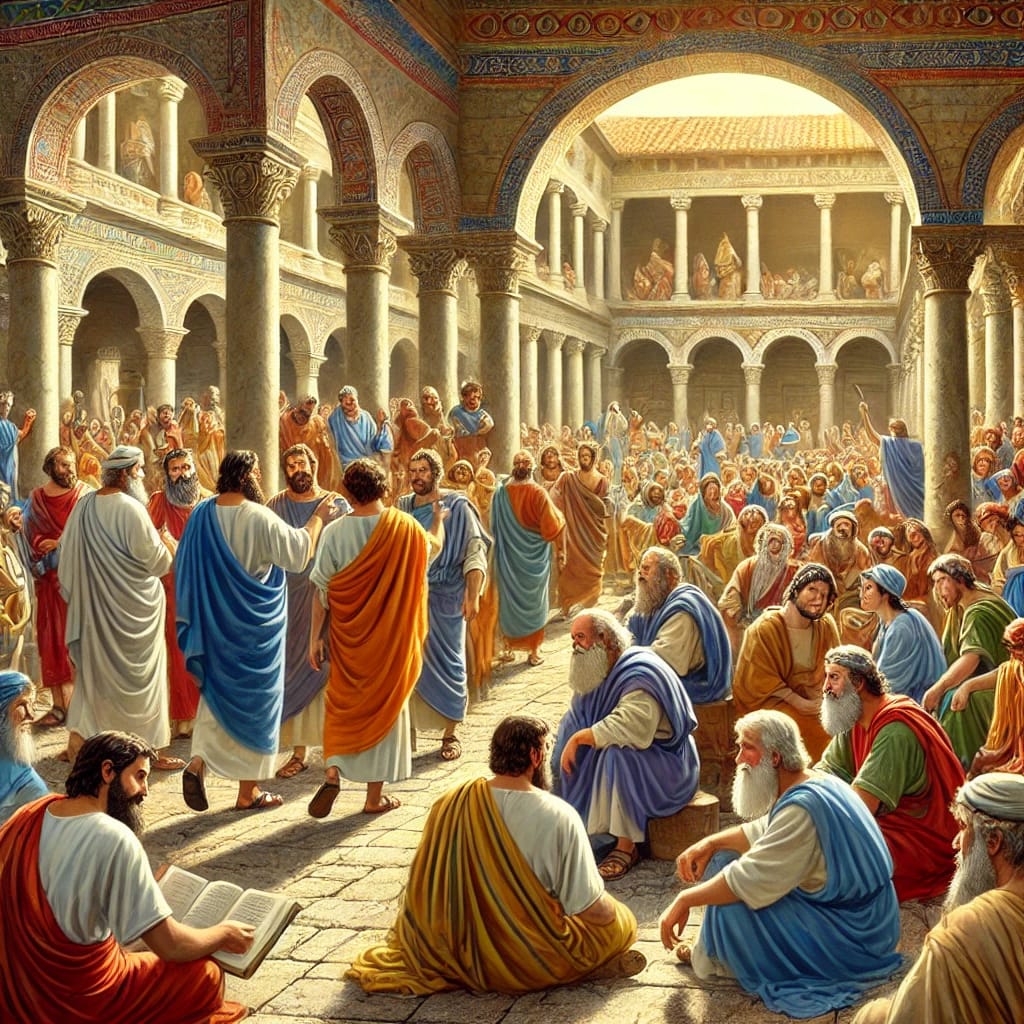
Antioch hosted one of the largest and most influential Jewish communities in the Hellenistic world. Unlike the Jews in Jerusalem, the Antiochene Jewish population was deeply integrated into Greek culture while maintaining strict adherence to the Torah. This community provided the essential infrastructure for the spread of Christianity.
The presence of "God-fearers"—Gentiles who were attracted to Jewish monotheism and ethics but did not fully convert or undergo circumcision—created a middle ground. When the first Christian missionaries arrived, they found an audience already familiar with the Hebrew Scriptures but operating within a Greek linguistic and philosophical framework.
The Birth of "Christianity" in Antioch
The New Testament’s Book of Acts identifies Antioch as the most significant city for the early Church outside of Jerusalem. It was here that the mission to the Gentiles truly began, fundamentally changing the trajectory of the faith.
The First "Christians"
Following the martyrdom of Stephen in Jerusalem, many believers fled north to Antioch. According to Acts 11:26, "The disciples were called Christians first in Antioch." Before this, they were typically referred to as followers of "The Way" or regarded simply as a sub-group of Judaism. The label "Christian" (Greek: Christianos) was likely originally a derisive term used by the Roman population to describe those who followed "Christus," but the community eventually adopted it as a badge of identity.
Peter, Paul, and the Incident at Antioch
Antioch served as the home base for the Apostle Paul’s missionary journeys. However, it was also the site of a major theological conflict known as the "Incident at Antioch." As recorded in Galatians 2, Paul publicly confronted Peter over the issue of table fellowship. Peter had been eating with Gentile converts but withdrew when Jewish believers from Jerusalem arrived. Paul argued that requiring Gentiles to follow Jewish dietary laws was a betrayal of the Gospel. This moment solidified Antioch’s role as the champion of a universal, non-ethnic Christianity.
The School of Antioch: A Theological Powerhouse
As Christianity became the state religion of the Roman Empire, Antioch developed a distinct intellectual tradition known as the School of Antioch. This school stood in direct competition with the School of Alexandria in Egypt.
Literalism vs. Allegory
The School of Antioch was characterized by a "theo-anthropological" approach. While Alexandria favored allegorical interpretations of the Bible (searching for hidden spiritual meanings), the Antiochenes emphasized:
- Grammatico-historical exegesis: Understanding the text in its original linguistic and historical context.
- The Humanity of Christ: Focusing on the full human experience of Jesus, distinct from his divinity.
- Typology: Seeing Old Testament events as "types" or foreshadows of the New Testament, rather than mere symbols.
Key Figures of the Antiochene Tradition
Several influential thinkers emerged from this tradition:
- Diodore of Tarsus: The foundational teacher who insisted on the literal sense of scripture.
- Theodore of Mopsuestia: Known as "The Interpreter," he provided the most comprehensive commentaries of the era.
- John Chrysostom: Perhaps the most famous Antiochene, his name means "Golden-Mouthed" due to his legendary preaching. He later became Archbishop of Constantinople.
| Feature | School of Antioch | School of Alexandria |
|---|---|---|
| Biblical Interpretation | Literal and Historical | Allegorical and Mystical |
| Christology | Emphasis on Christ's Humanity | Emphasis on Christ's Divinity |
| Key Philosophical Influence | Aristotelian (Empirical) | Platonic (Idealist) |
| Primary Goal | Ethical instruction and clarity | Spiritual ascent and union |
The Five Patriarchates and the Melkite Split
By the 5th century, the Church had organized itself into five major jurisdictions called the Pentarchy: Rome, Constantinople, Alexandria, Antioch, and Jerusalem. The Bishop of Antioch was granted the title of "Patriarch."
However, theological disputes regarding the nature of Christ (the Chalcedonian controversies) led to a permanent fracturing of the Antiochene church. Today, no fewer than five distinct bishops claim the title of "Patriarch of Antioch":
- The Greek Orthodox Patriarch of Antioch: Based now in Damascus, Syria, this is the largest Eastern Orthodox body in the region.
- The Syriac Orthodox Patriarch of Antioch: An Oriental Orthodox church that uses the West Syriac Rite.
- The Melkite Greek Catholic Patriarch of Antioch: An Eastern Catholic church in communion with Rome.
- The Maronite Patriarch of Antioch: A Lebanon-based Catholic church that has never been out of communion with the Pope.
- The Syriac Catholic Patriarch of Antioch: Another Eastern Catholic body following the Syriac tradition.
This administrative complexity is a testament to the city's enduring status as a spiritual mother-city, even after the physical city of Antioch lost its geopolitical dominance.
Archaeological and Sacred Sites in Antioch
In 2026, visitors to Antakya (modern Antioch) find a landscape that is both a modern Turkish city and a palimpsest of religious history. The 2023 earthquake caused significant damage to many historical sites, but restoration efforts have highlighted the resilience of the local religious communities.
The Cave Church of St. Peter (Saint Pierre Kilisesi)
Located on the slopes of Mount Starius, this is one of the oldest surviving churches in Christendom. While the facade was built by Crusaders in the 12th or 13th century, the cave itself is believed to have been the meeting place for the very first Christians in the 1st century. It remains a site of pilgrimage and was declared a UNESCO World Heritage site candidate.
The Antakya Museum Hotel
A remarkable example of modern archaeology, this hotel was built over a massive find of 30,000 square feet of Roman mosaics. Among these is the "Pegasus Mosaic" and the world's largest single-piece floor mosaic. These artifacts provide a window into the wealthy, pagan world that the first Christians inhabited.
The Great Mosque (Habibi Neccar Mosque)
This site illustrates the religious transition of the city. Originally a pagan temple, then a Christian church, it became a mosque in the 7th century. It is named after Habib al-Najjar, a local figure who, according to Muslim tradition and the Quran (Surah Ya-Sin), was martyred for believing in the messengers sent by God. It is often cited as the first mosque built in Anatolia.
The Modern Context: Antioch in 2026
As of 2026, the religious landscape of Antioch is a microcosm of Middle Eastern diversity. While the majority of the population is Muslim (including a significant Alawite community), the Christian minority—comprising Greek Orthodox, Catholics, and Protestants—remains an active part of the city’s social fabric.
The "Antiochene" identity today is less about a single location and more about a liturgical and theological heritage. The Syriac language, a dialect of Aramaic (the language of Jesus), is still used in the liturgies of the Syriac and Maronite churches, preserving a direct auditory link to the apostolic age.
Challenges and Preservation
The preservation of Antioch's religious heritage faces several hurdles:
- Geopolitical Instability: The proximity to the Syrian border has historically impacted the safety and movement of religious leaders.
- Seismic Risks: The region is highly active geologically. The 2023 disaster necessitated a massive international effort to stabilize the remaining Byzantine and Ottoman structures.
- Demographic Shifts: Emigration of Christian populations to Europe and the Americas has made the remaining communities in Antakya smaller, though they remain culturally vibrant.
Common Questions About Antioch Religion
Why was Antioch so important to the Apostle Paul?
Antioch served as the "sending church" for Paul. Unlike the church in Jerusalem, which was often cautious about Gentile inclusion, the Antiochene church was wealthy, diverse, and mission-oriented. It provided the financial and spiritual support necessary for Paul to establish churches in Asia Minor and Greece.
What is the "Antiochene Rite"?
The Antiochene Rite refers to the family of liturgies originally used in the Patriarchate of Antioch. This includes the Liturgy of St. James. Over time, this evolved into two main branches: the West Syriac Rite (used by Syriac Orthodox and Maronites) and the East Syriac Rite (used by the Church of the East).
Is the Patriarch of Antioch still located in Antioch?
No. Following various wars, natural disasters, and political shifts, the actual seats of the Patriarchates moved. Most are now based in Damascus (Syria) or Beirut (Lebanon). However, they retain "Antioch" in their titles to maintain their historical and apostolic legitimacy.
How did the School of Antioch influence the Nicene Creed?
The School's emphasis on the distinction between the divine and human natures of Christ played a major role in the ecumenical councils. While some Antiochene thinkers (like Nestorius) were eventually condemned for taking this distinction too far, the core Antiochene insistence on the reality of Christ’s humanity was essential in balancing the more mystical Egyptian views.
Can you visit the religious sites in Antioch today?
Yes, in 2026, the city is open to religious tourism. The Cave Church of St. Peter and the local Orthodox and Catholic churches are active. Visitors are encouraged to check local travel advisories, as the region's proximity to international borders can sometimes affect accessibility.
Practical Next Actions for Researchers
For those interested in a deeper study of Antioch's religious history, the following steps are recommended:
- Study the Primary Texts: Read the Homilies on the Statues by John Chrysostom, which provides a firsthand look at religious life and civil unrest in 4th-century Antioch.
- Explore Archaeological Records: Consult the archives of the Princeton University archaeological expeditions to Antioch (conducted in the 1930s), which remain the definitive source for the city's physical layout.
- Visit the Patriarchal Websites: The official sites of the Greek Orthodox Patriarchate of Antioch and the Syriac Orthodox Church offer insights into how these ancient traditions operate in the 21st century.
- Language Study: For the truly dedicated, learning basic Syriac or Koine Greek allows for a direct engagement with the liturgical and theological output of the Antiochene golden age.
Antioch remains a symbol of the bridge between East and West. Its religious history is not just a study of the past, but a living tradition that continues to shape the identity of millions of believers worldwide in 2026.