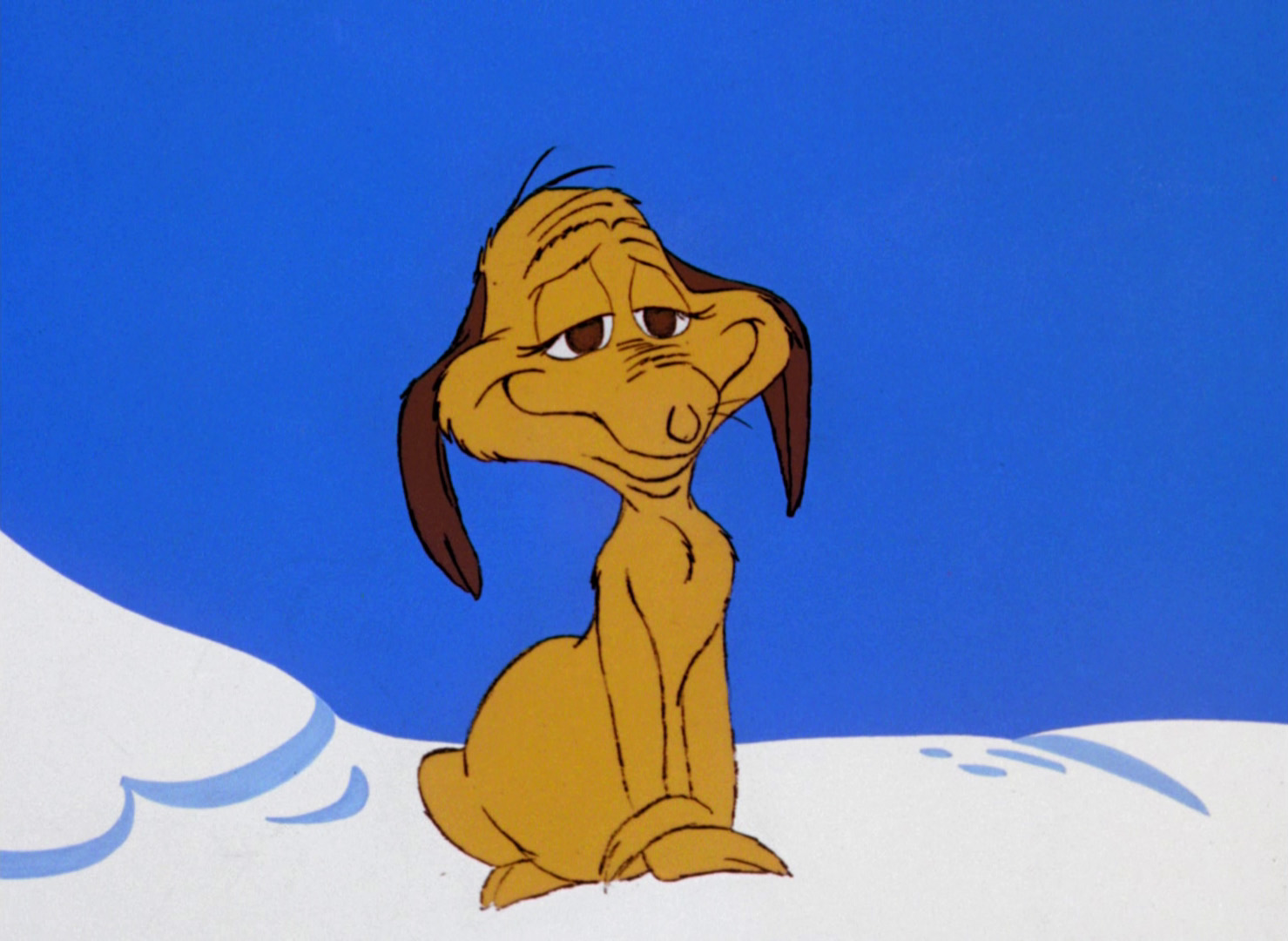
Max the Dog is the loyal, long-suffering canine companion to the Grinch, appearing as a central figure in every animated adaptation of Dr. Seuss’s "How the Grinch Stole Christmas!" From his silent, expressive origins in 1966 to his tech-savvy role in 2018, Max serves as the Grinch's moral anchor and the primary source of empathy for the audience throughout the holiday narrative.
The Literary and Cinematic Origins of Max
Max first appeared in Dr. Seuss’s 1957 children’s book, where he was introduced as the Grinch’s only companion in his cave atop Mount Crumpit. In the original text, Max is portrayed as a humble, somewhat timid dog who is forced into the Grinch's schemes. The dynamic established in the book—a dog who loves a master who does not seemingly love him back—created the foundational emotional hook for all subsequent animated versions.
While the book provided the blueprint, the 1966 animated television special directed by Chuck Jones truly defined Max’s physical personality. Jones, known for his work on Looney Tunes, infused Max with a range of facial expressions and physical comedy that elevated him from a background character to a co-protagonist. In this version, Max is depicted as a scruffy, brownish mutt with floppy ears, characterized by his unwavering loyalty despite the Grinch’s verbal and physical demands.
The role of Max is functionally essential to the plot because he provides a silent commentary on the Grinch’s actions. Because the Grinch is a hermit, Max is the only character who witnesses the Grinch’s "non-Who" side. He serves as a mirror for the audience; when Max looks sad or skeptical about stealing Christmas, the audience feels that same hesitation.
Max in the 1966 TV Special: The Gold Standard of Expression
The 1966 animated special is often considered the definitive version of Max. Under the direction of Chuck Jones, Max became a masterclass in "silent acting" within animation. Despite having no dialogue, Max communicates through his wide eyes, drooping ears, and hesitant body language.
The Antler and the Sled
One of the most iconic sequences in animation history involves the Grinch tying a heavy branch to Max’s head to simulate a reindeer antler. This scene highlights Max’s submissiveness and the Grinch’s early-stage cruelty. However, the animation focuses on Max’s struggle to keep his head up, creating a sense of "enforced whimsy" that makes the Grinch's eventual redemption more impactful.
Animation Physics and Comedy
Chuck Jones applied classic squash-and-stretch principles to Max, especially during the descent into Whoville. Max’s role as the "reindeer" pulling the massive sled provides much of the special’s physical comedy. The way he scrambles to keep up with the sled or ends up being the one riding it while the Grinch pulls demonstrates a shifting power dynamic that foreshadows the Grinch’s change of heart.
Max in the 2018 Illumination Film: A Modernized Partnership
In the 2018 feature-length film The Grinch, produced by Illumination Entertainment, Max underwent a significant character shift. While he remains the loyal companion, the power dynamic is much more balanced and healthy compared to previous iterations.
A Competent Companion
In the 2018 version, Max is portrayed as highly intelligent and capable. He handles household chores, operates complex machinery, and even makes the Grinch’s morning coffee. This version of Max is less of a victim and more of a devoted best friend. The Grinch, voiced by Benedict Cumberbatch, shows much more overt affection for Max, often acknowledging his help and treating him like a partner rather than a servant.
Technical Design Changes
The transition to 3D CGI allowed for a much more detailed rendering of Max. His fur texture, the moisture in his eyes, and the fluidity of his movements are modernized. Unlike the 1966 version, which used flat colors and bold outlines, the 2018 Max is designed to look soft and approachable, emphasizing the "cute" factor that aligns with Illumination’s house style. This design choice reinforces the idea that the Grinch cannot be entirely "mean" if he is capable of caring for such a lovable creature.
Comparative Analysis of Animated Max Iterations
The different versions of Max reflect the era in which they were created. The 1966 version reflects the slapstick, expressive tradition of mid-century hand-drawn animation, while the 2018 version reflects the modern focus on emotional intelligence and character-driven subplots.
| Feature | 1966 Animated Special | 2018 Illumination Film | 1977/1982 TV Specials |
|---|---|---|---|
| Animation Style | Traditional 2D Cel | 3D Digital CGI | Traditional 2D (DePatie-Freleng) |
| Relationship | Master and Servant | Best Friends / Partners | Protagonist / Victim |
| Key Role | Physical Comedy / Moral Mirror | Technical Support / Emotional Core | Musical Performer |
| Communication | Purely Visual | Visual and Gadget-Based | Includes a Singing Solo (1977) |
| Antler Design | Single branch tied with string | Large, heavy-duty mock antler | Minimalist / Temporary |
Max’s Role as the Grinch’s Conscience
Across all versions, Max acts as a silent conscience. In the 1966 special, his wide-eyed stares at the camera involve the viewer in his disapproval of the Grinch's plan. He represents the innocent observer who knows that what is happening is wrong but lacks the power—or the heart—to abandon his friend.
In the 2018 film, this role is expanded. Max actively encourages the Grinch’s more positive traits. When the Grinch interacts with Cindy Lou Who, Max is there to nudge him toward kindness. This makes Max's character arc inextricably linked to the Grinch's heart growing three sizes. Max isn't just there to witness the change; in modern interpretations, he is often the catalyst for it.
The Musical Legacy of Max
It is often forgotten that Max has a voice in certain expanded Seuss media. In the 1977 special Halloween Is Grinch Night, Max is given a much more melancholic and internal depth. He performs the song "(I'm) Alone in the Night," which explores his feelings of being trapped in the Grinch's service. This established that Max is not just a mindless pet, but a soulful being who chooses to stay with the Grinch out of a hope for his redemption.
Technical Animation Challenges of Max the Dog
Animating Max presents unique challenges because he must bridge the gap between being a "real dog" and a "cartoon character."
- Non-Verbal Communication: Because Max rarely speaks, animators must rely on "ear acting" and "tail acting." In animation, the ears are often treated as secondary appendages that signal mood—drooping for sadness, perking up for alertness, and pinning back for fear.
- Size Discrepancy: Max is significantly smaller than the Grinch, which creates a difficult "compositional weight" in scenes where they share the frame. Animators often use Max as a foreground element to create depth or as a way to lead the viewer’s eye toward the Grinch’s larger-than-life movements.
- The Reindeer Transformation: Creating a rig (in 3D) or a series of cels (in 2D) that shows a dog struggling under the weight of a makeshift antler requires a deep understanding of weight distribution. The antler must look heavy enough to be an obstacle but light enough for Max to eventually overcome it.
Common Misconceptions About Max
Despite his fame, several misconceptions persist about Max’s character and his role in the Dr. Seuss universe.
- Max’s Breed: Dr. Seuss never specified Max’s breed. He is a generic "mutt," though fans often compare him to a Beagle, a Terrier, or a Whippet. His lack of a specific breed makes him more relatable as a "universal dog."
- His Motivation: Some viewers interpret Max’s participation in the Christmas heist as malice. However, Seussian scholars and animators have consistently clarified that Max participates out of fear and a misplaced sense of loyalty, not a desire to see the Whos suffer.
- The "Silent" Dog: While he is silent in the most famous films, Max has "talked" or sang in various spin-offs and stage plays. However, the most successful versions of the character are those where he remains non-verbal, relying on the animators' skill to convey emotion.
Frequently Asked Questions
Does Max the Dog have any lines in the animated Grinch movies?
In the two most famous animated films (1966 and 2018), Max does not have any spoken dialogue. He communicates entirely through facial expressions, whines, and body language. However, in the 1977 animated special Halloween Is Grinch Night, he has a musical sequence where his internal thoughts are expressed through song.
What kind of dog is Max intended to be?
Max is a fictional mutt. While his design in the 1966 version looks somewhat like a scruffy terrier and the 2018 version has features reminiscent of a cocker spaniel or a dachshund, he is intended to be a non-descript, lovable mongrel. This allows him to represent the "every-dog" archetype.
Why does Max stay with the Grinch?
The consensus across all adaptations is that Max stays because of unconditional love. Max sees the "good" in the Grinch long before the Grinch sees it in himself. He acts as a loyal companion who waits for his friend's redemption, which is a classic trope in canine-human storytelling.
How did the 2018 movie change Max's personality?
The 2018 movie transformed Max from a fearful servant into a highly competent, willing partner. He is shown to be much more proactive, helping the Grinch with his inventions and daily routine, and their relationship is portrayed as a genuine, two-way friendship rather than a master-and-hound dynamic.
Who animated the original Max in 1966?
The original Max was animated under the supervision of Chuck Jones at MGM Animation/Visual Arts. Key animators like Ken Harris and Ben Washam were instrumental in giving Max his iconic, fluid, and highly expressive movements that defined the character for decades.
Recommendations for Further Viewing
To fully appreciate the evolution of Max, viewers should watch the 1966 TV special followed by the 2018 Illumination film. This provides a clear contrast between the "vulnerable servant" and the "empowered partner" interpretations. Additionally, seeking out the lesser-known Halloween Is Grinch Night offers a rare look at Max’s internal emotional state through music, providing a deeper layer to a character that is usually relegated to silent support.