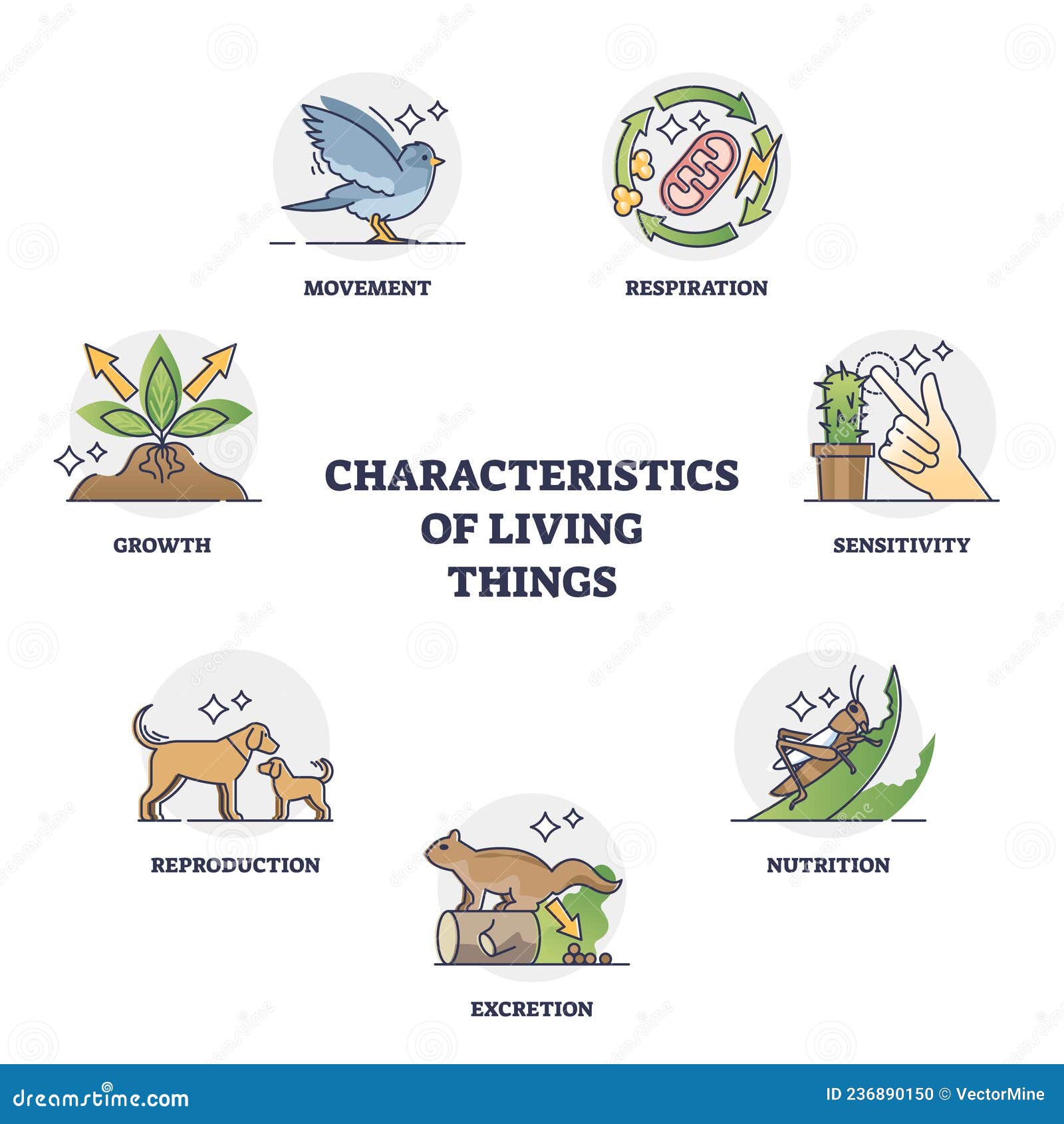
While it is easy to assume that life requires a complex structure of limbs, organs, and tissues, the reality is that the majority of organisms on Earth consist of only a single cell. From the bacteria in the soil to the specialized protozoa in our oceans, these unicellular organisms perform all the essential functions of life—growth, metabolism, and reproduction—within the boundaries of one microscopic membrane.
The biological kingdom is divided between organisms that function as a single unit and those that have evolved into complex, multicellular systems. For billions of years, life on Earth was exclusively unicellular, and even today, in 2026, single-celled life forms remain the most numerous and genetically diverse entities on the planet. Understanding why all living things are not multicellular requires a deep look into the efficiency of cellular design, the constraints of physics, and the evolutionary trade-offs that have allowed "simple" life to dominate the globe.
The Definition of Life: The Cell Theory
To understand why life does not require multicellularity, we must first look at the foundational principles of biology: Cell Theory. Formulated in the 19th century and refined through modern genomics, Cell Theory states that the cell is the basic structural and functional unit of all living organisms.
A single cell is a fully autonomous biological machine. Within its boundaries, it possesses:
- Genetic Material: DNA or RNA that carries the instructions for life.
- Metabolic Machinery: Ribosomes for protein synthesis and pathways for energy conversion (like glycolysis).
- A Boundary: A plasma membrane that regulates the entry and exit of nutrients and waste.
Because a single cell can perform every task necessary for survival, multicellularity is an "option" rather than a requirement. Multicellularity is essentially a strategy of specialization and cooperation, whereas unicellularity is a strategy of efficiency and rapid adaptation.
The World of Prokaryotes: Bacteria and Archaea
The most significant proof that life does not need to be multicellular is the existence and success of prokaryotes. These are organisms whose cells lack a nucleus and membrane-bound organelles. They represent two of the three domains of life: Bacteria and Archaea.
Bacteria: The Masters of Adaptation
Bacteria are the most ubiquitous organisms on Earth. They are found in the stratosphere, miles deep in the ocean crust, and inside every human body. In 2026, genomic surveys continue to reveal millions of previously unknown bacterial species.
Bacteria demonstrate that a single cell can be incredibly versatile. For example, Cyanobacteria are capable of photosynthesis, producing a significant portion of the world's oxygen. Other bacteria, like Escherichia coli, can adapt their metabolism to consume different sugars based on what is available in their environment. They do not need specialized "digestive systems" because the single cell handles digestion, respiration, and excretion simultaneously.
Archaea: The Extremophiles
Archaea were once classified with bacteria, but we now know they are a distinct lineage, often more genetically similar to humans than to bacteria. Many archaea are extremophiles, living in environments that would be lethal to multicellular life, such as volcanic hydrothermal vents or highly acidic lakes. Their ability to survive in these conditions as single-celled entities proves that simplicity is often a prerequisite for resilience.
Unicellular Eukaryotes: Complexity Within One Cell
It is a common misconception that all "complex" cells (Eukaryotes) are multicellular. The domain Eukaryota includes not only humans, oak trees, and mushrooms but also a vast array of single-celled organisms known as protists.
Protists and Protozoa
Protists like Amoeba, Paramecium, and Euglena are unicellular, but they contain a nucleus and organelles like mitochondria and vacuoles. These organisms are often far more complex than any single cell found in the human body. Because they must survive as independent entities, they have developed specialized structures:
- Contractile Vacuoles: Act as "pumps" to remove excess water.
- Cilia and Flagella: Complex tail-like or hair-like structures for locomotion.
- Pellicles: A stiff outer layer that provides shape without the need for a skeleton.
Unicellular Fungi (Yeasts)
Fungi are often associated with large mushrooms or sprawling mold, but yeasts (such as Saccharomyces cerevisiae) are unicellular. Yeast plays a critical role in global ecosystems and human industry. It reproduces through a process called budding, where a new cell grows directly out of the mother cell. This demonstrates that even "higher" kingdoms of life maintain unicellular branches because the single-celled lifestyle is highly effective for specific niches.
Why Multicellularity Isn't Always Better: The Trade-Offs
Evolution does not always move toward "complexity." Instead, it moves toward what works best for a specific environment. There are several reasons why staying unicellular is an advantageous strategy.
1. Reproductive Speed
One of the greatest advantages of being unicellular is the ability to reproduce rapidly through binary fission. A single bacterium can divide every 20 minutes under ideal conditions. In 24 hours, one cell can theoretically produce millions of offspring. Multicellular organisms, burdened by the need to grow complex tissues and reach reproductive maturity, cannot compete with this rate of population growth.
2. Resource Efficiency
Multicellular organisms require a massive amount of energy to maintain their structure. A human body must fuel billions of cells that are not involved in reproduction—cells that just make up skin, bone, or connective tissue. A unicellular organism is "all business"; every part of the cell is dedicated to the immediate survival and reproduction of that individual. In nutrient-poor environments, being small and single-celled is the only way to survive.
3. Surface Area to Volume Ratio
Physics imposes a limit on how large a single cell can grow. As a cell increases in size, its volume ($r^3$) grows much faster than its surface area ($r^2$). Because the cell relies on its surface (the membrane) to pull in nutrients and expel waste, a cell that is too large would essentially starve or poison itself.
Multicellularity is the "workaround" for this physical limit. By becoming multicellular, an organism can grow larger while keeping individual cells small enough to remain efficient. However, if an organism can find enough food and stay safe while remaining microscopic, there is no physical pressure to become multicellular.
The Evolutionary "Middle Ground": Colonial Organisms
The line between unicellular and multicellular life is not always sharp. Some organisms exist in a state known as colonial life. These are groups of single-celled organisms that live together but can survive independently if separated.
| Organism Type | Independence of Cells | Specialized Tissues? | Example |
|---|---|---|---|
| Strictly Unicellular | Fully independent; one cell = one organism. | No | Staphylococcus aureus |
| Colonial | Individual cells can survive alone but usually live in clusters. | Minimal (e.g., reproductive vs. somatic) | Volvox (Green Algae) |
| Facultative Multicellular | Usually unicellular but aggregate under stress. | Temporary | Dictyostelium (Slime Mold) |
| Obligate Multicellular | Cells cannot survive alone; highly specialized. | Yes (Nerves, Muscles, etc.) | Homo sapiens |
The Volvox is a fascinating example of this transition. It is a sphere made of thousands of cells. While these cells coordinate their movement to swim toward light, they do not form the complex, interdependent tissues seen in animals. This middle ground shows that multicellularity is a spectrum, not a binary switch.
The Impact of Slime Molds
Slime molds, specifically Dictyostelium discoideum, provide a unique look at why living things aren't always multicellular. For most of its life, this organism exists as individual, independent amoebae hunting bacteria in the soil. However, when food becomes scarce, thousands of these individual cells emit a chemical signal (cAMP) and swarm together to form a single "slug." This slug moves as one body and eventually forms a stalk to release spores.
This facultative multicellularity proves that being multicellular is a specific tool used for specific problems (like moving to a new food source), but being unicellular is the preferred state for daily survival.
Comparing Unicellular and Multicellular Strategies
To understand why the world is still full of single-celled life in 2026, we must compare the two life strategies across several biological metrics.
Genetic Diversity and Mutation Rates
Unicellular organisms, particularly bacteria, have much higher mutation rates and the ability to engage in horizontal gene transfer. This allows them to swap DNA with other cells nearby, even if they aren't the same species. This makes them incredibly "fast" at evolving. When we see bacteria develop antibiotic resistance in just a few years, we are seeing the power of unicellular evolution. Multicellular organisms evolve much more slowly because genetic changes must occur in the germline (eggs or sperm) to be passed on.
Environmental Resilience
If a disaster strikes, multicellular organisms are often the first to go extinct. They need stable temperatures, specific food sources, and complex ecosystems to survive. Single-celled organisms are the "preppers" of the biological world. They can form endospores—hardened, dormant states—that allow them to survive for centuries without water or food, or even the vacuum of space.
Complexity of Behavior
While multicellularity allows for brains and nervous systems, single-celled organisms are not "dumb." They exhibit chemotaxis (moving toward food or away from poison), and some species of bacteria use quorum sensing to communicate and coordinate their behavior as a group. They solve complex navigation problems and manage resources without a single neuron.
Common Misconceptions About Unicellular Life
1. Unicellular life is "primitive." While unicellular life appeared first, modern bacteria and protists are the product of 3.8 billion years of evolution. They are just as "evolved" as humans; they have simply evolved toward microscopic efficiency rather than macroscopic complexity.
2. All bacteria are harmful. Most unicellular life is either harmless or essential to human survival. The "human microbiome" consists of trillions of single-celled organisms in our gut that help us digest food and train our immune systems. Without these unicellular entities, multicellular humans could not survive.
3. Large organisms are always multicellular. While mostly true, there are exceptions like Caulerpa taxifolia, a type of seaweed. It can grow to be several inches long and looks like a complex plant, but it is actually a single, massive cell with many nuclei (coenocytic). This defies the traditional "microscopic" rule for unicellular life.
Frequently Asked Questions
What is the most common life form on Earth?
The most common life forms are bacteria. It is estimated that there are approximately $5 \times 10^{30}$ bacteria on Earth. In terms of sheer numbers and total biomass, unicellular life far outweighs all animals and plants combined.
Can a single cell see or feel?
While they don't have eyes or skin, many unicellular organisms have sensory capabilities. Some have "eyespots" (stigma) that detect the direction and intensity of light, allowing them to move toward it for photosynthesis. Others have receptors on their membranes that "smell" chemicals in the water to find food.
Are viruses considered unicellular life?
No. Viruses are generally not considered "living" because they cannot reproduce on their own and do not have a cellular structure. They are genetic material encased in protein. Since they lack the fundamental machinery of a cell, they do not qualify as unicellular organisms.
Why didn't all life become multicellular?
Life follows the path of least resistance. If a single cell can successfully gather enough energy to reproduce, there is no evolutionary "reason" for it to become more complex. Multicellularity is expensive in terms of energy and time; if the benefits (like protection from predators or better access to food) don't outweigh those costs, an organism will remain unicellular.
Is yeast a bacteria?
No, yeast is a unicellular fungus. This means it is a eukaryote, containing a nucleus and specialized organelles, making it more closely related to plants and animals than to bacteria.
Future Implications and Observations
As we continue through 2026, the study of unicellular life is more critical than ever. Synthetic biology is currently using the "chassis" of single-celled organisms to produce medicines, biofuels, and even biodegradable plastics. By understanding that a single cell is a complete, self-sustaining factory, scientists are able to re-engineer life at its most fundamental level.
The fact that all living things are not multicellular is not a failure of evolution, but its greatest success. It proves that the "basic" unit of life—the cell—is so perfectly designed that it doesn't need help from anyone else to survive, thrive, and dominate the planet.
Next Action: To see unicellular life in action, you can observe a drop of pond water under a basic 400x microscope. You will likely see Paramecium or Amoeba navigating their environment, providing a firsthand look at the complexity of life contained within a single cell.