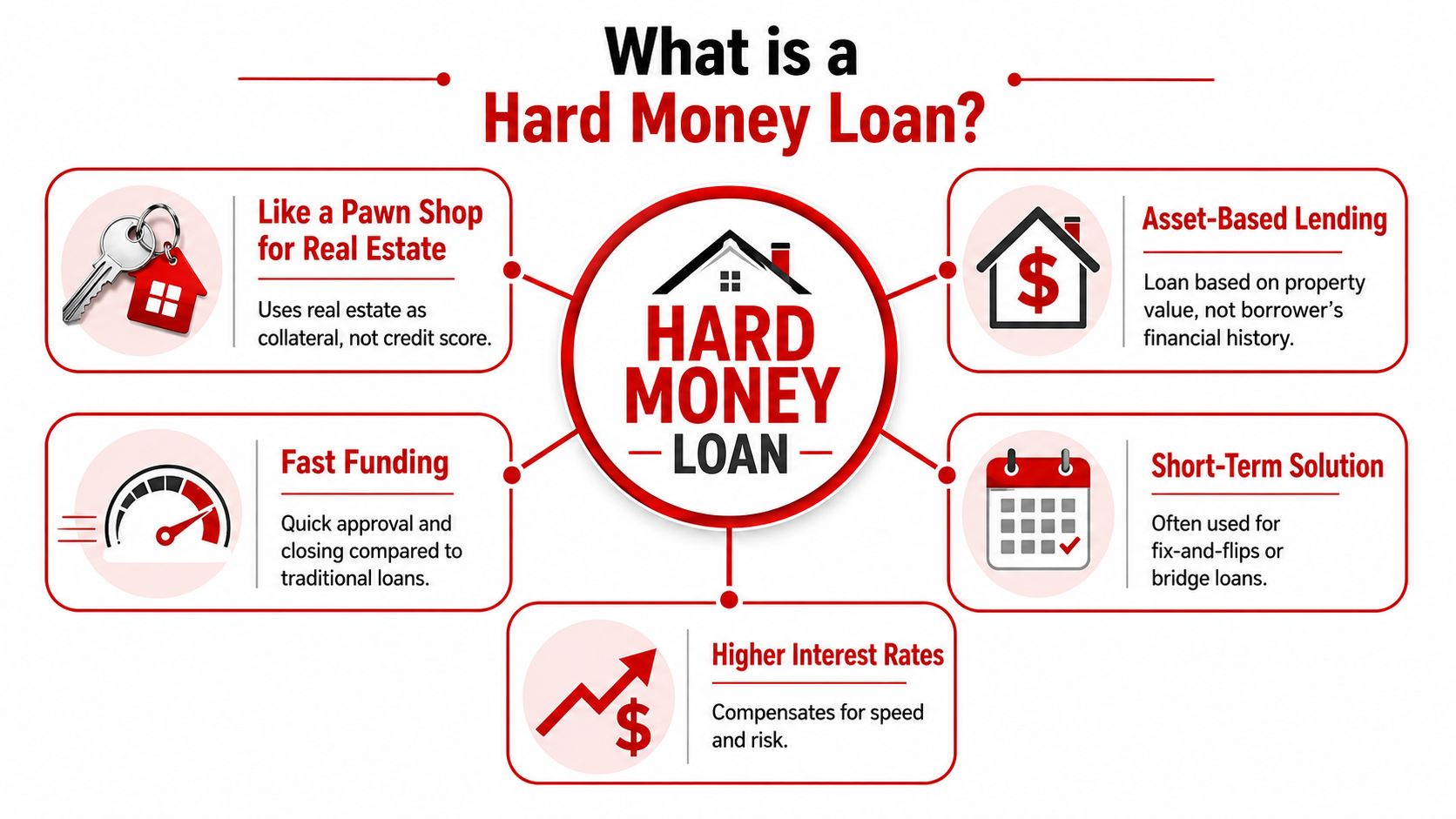
A 90% LTV hard money loan is a short-term, asset-based financing tool where a private lender provides 90% of a property’s purchase price, requiring the borrower to contribute a 10% down payment. These loans prioritize the property's value and potential over the borrower’s credit score, making them essential for rapid real estate acquisitions and fix-and-flip projects.
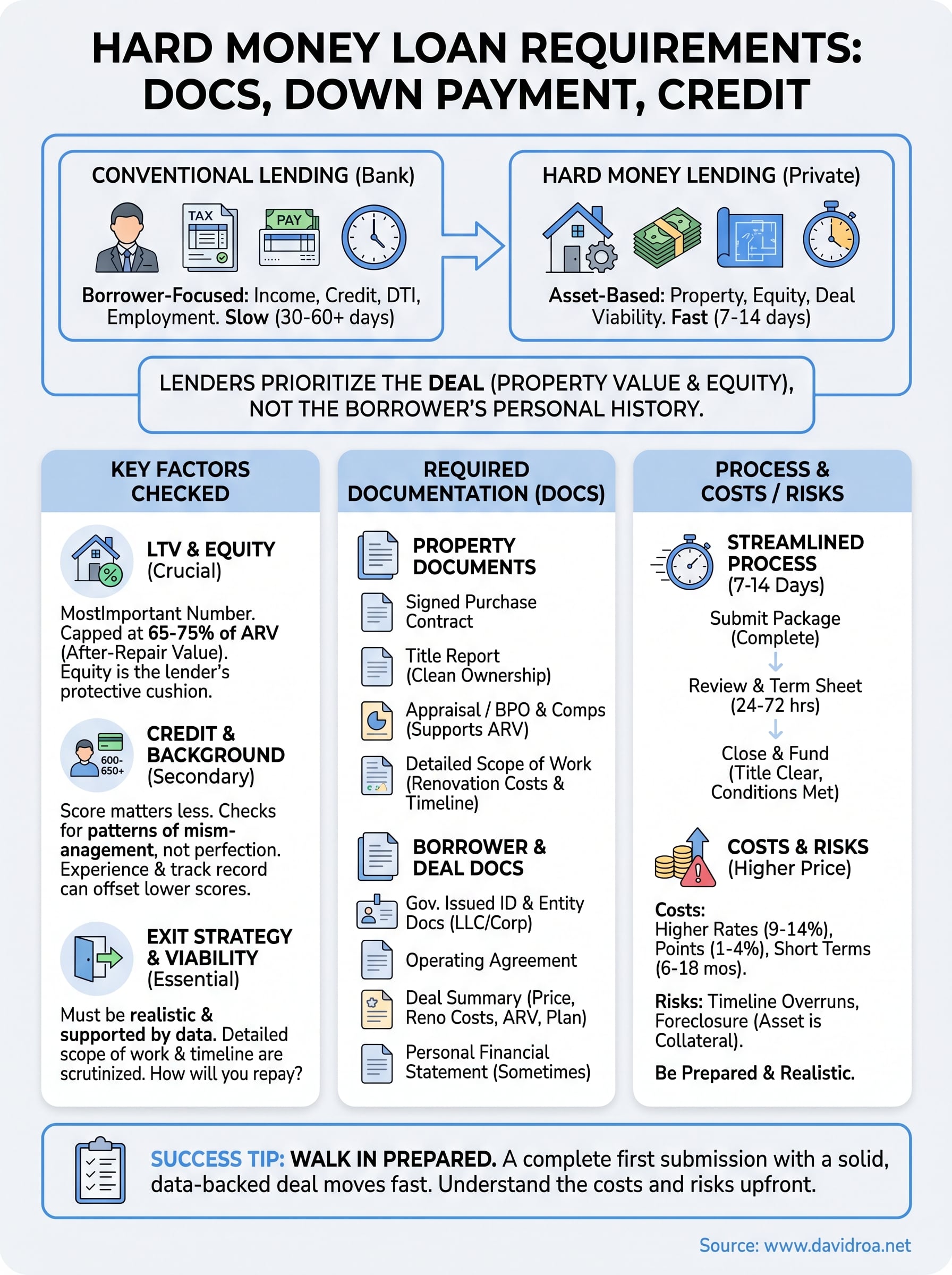
Hard money lending serves as the backbone of the speculative real estate market. Unlike traditional bank mortgages that focus heavily on debt-to-income ratios and historical financial stability, hard money lenders focus on the collateral. In 2026, the 90% Loan-to-Value (LTV) threshold represents a high-leverage tier. It is designed for investors who want to maximize their cash on hand to manage multiple projects simultaneously or to minimize their "skin in the game" on a specific high-value asset.
Navigating this specific financial product requires a deep understanding of how leverage affects profitability, the distinction between various lending ratios, and the stringent requirements lenders impose to offset the risk of a lower down payment.
Understanding the Mechanics of 90% LTV Hard Money
The term LTV (Loan-to-Value) refers to the ratio of the loan amount to the appraised value or purchase price of the property. In a 90% LTV scenario, if an investor identifies a property priced at $500,000, the lender provides $450,000, and the investor brings $50,000 to the closing table (plus closing costs).
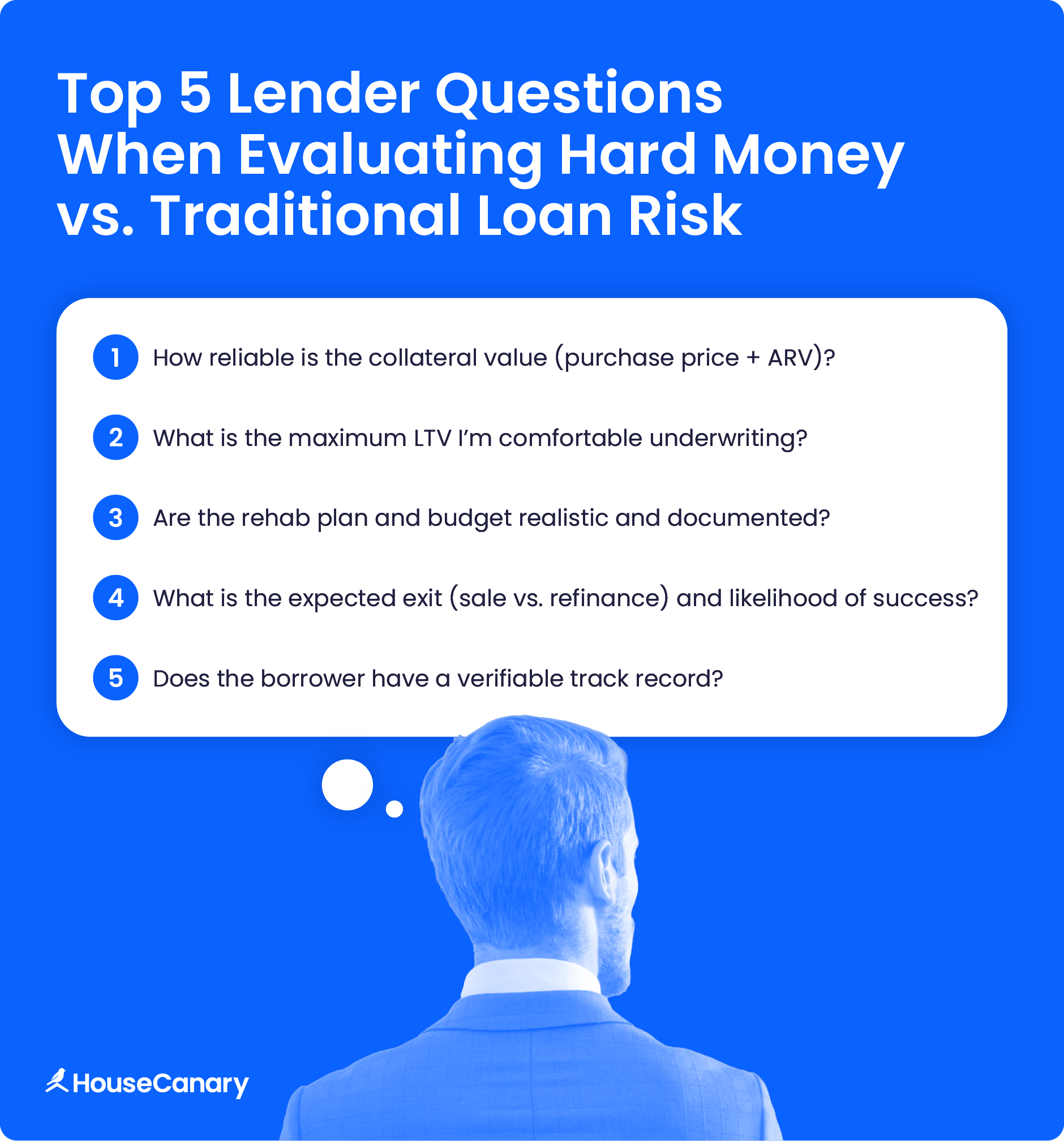
While 70% to 80% LTV is standard in the private lending industry, 90% is considered "aggressive leverage." Lenders offering these terms are essentially taking on more risk, as a 10% equity cushion is relatively thin. If the market dips or the renovation goes over budget, the lender’s capital is more exposed than it would be at a lower LTV.
To mitigate this risk, 90% LTV loans are almost exclusively reserved for non-owner-occupied investment properties. These are typically single-family homes, townhouses, or small multi-family units intended for renovation and resale (fix-and-flip) or transition into a long-term rental (BRRRR strategy: Buy, Rehab, Rent, Refinance, Repeat).
LTV vs. LTC: The Crucial Distinction
In the world of hard money, you will frequently encounter the term LTC (Loan-to-Cost). While LTV focuses on the purchase price or current value, LTC focuses on the total project cost, which includes both the purchase price and the renovation budget.
- 90% LTV of Purchase: The lender covers 90% of the price you pay for the property.
- 100% Rehab Funding: Many high-leverage hard money lenders will offer 90% LTV on the purchase plus 100% of the construction/rehab costs.
- LTC Caps: Even if a lender offers 90% LTV, they may cap the total loan at 80% or 85% of the total project cost (LTC) to ensure the investor remains financially committed to the project.
Understanding these ratios is vital because a "90% LTV loan" might still require more than 10% cash out of pocket if the rehab costs are high and the lender's LTC cap is lower than the total project needs.
The Role of ARV (After Repair Value)
Hard money lenders in 2026 do not just look at what a property is worth today; they look at what it will be worth after the planned improvements are completed. This is the After Repair Value (ARV).
Even if a lender agrees to a 90% LTV on the purchase price, they will almost always impose an ARV Cap. A common industry standard is that the total loan amount (purchase + rehab) cannot exceed 70% to 75% of the ARV.
Example Scenario:
- Purchase Price: $300,000
- Rehab Budget: $100,000
- ARV: $550,000
- Loan Request (90% LTV + 100% Rehab): $270,000 (90% of $300k) + $100,000 = $370,000.
- ARV Check: $370,000 divided by $550,000 = 67%.
In this case, the loan would likely be approved because the total exposure is well below the 75% ARV ceiling, despite the high 90% leverage on the initial purchase.
Eligibility Requirements for High-Leverage Loans
Because 90% LTV is a high-risk product for the lender, the eligibility requirements are more stringent than a standard 75% LTV hard money loan. In 2026, lenders use sophisticated data modeling to assess borrower reliability.
1. Investor Experience (Track Record)
This is the most critical factor for 90% LTV approval. Lenders typically want to see that the borrower has successfully completed and sold (or refinanced) at least 3 to 5 projects in the last 24 to 36 months. A first-time investor is rarely offered 90% LTV; they are more likely to be offered 75% or 80% as they "learn the ropes."
2. Credit Score
While hard money is "asset-based," the borrower’s credit score serves as a proxy for financial responsibility. For 90% LTV, most lenders require a minimum FICO score between 660 and 680. While they may overlook a low score caused by high debt utilization, they are wary of recent foreclosures, bankruptcies, or unpaid tax liens.
3. Liquidity and Reserves
Lenders need to see "proof of funds." Even though the loan covers 90% of the purchase, the investor needs enough cash for:
- The 10% down payment.
- Closing costs (typically 2% to 5% of the loan amount).
- Interest reserves (often 3 to 6 months of payments held in escrow).
- A contingency fund for rehab overruns.
4. Property Location and Type
Lenders prefer "bread and butter" real estate—single-family homes in liquid markets with strong comparable sales. Rural properties, unique architectural builds, or highly specialized commercial assets rarely qualify for 90% LTV due to the difficulty of a quick exit if the borrower defaults.
Costs, Interest Rates, and Fees in 2026
High leverage comes at a price. Because the lender is assuming more risk by providing 90% of the capital, the cost of the capital is higher than traditional or lower-LTV private loans.
Interest Rates
In the current 2026 economic environment, interest rates for 90% LTV hard money loans generally range from 10.5% to 13.5%. These are almost always interest-only loans, meaning the monthly payment does not reduce the principal balance. The entire principal is due at the end of the term (the "balloon payment").
Origination Points
Lenders charge "points" at closing to process the loan. One point equals 1% of the total loan amount. For 90% LTV, expect to pay 1.5 to 3 points. On a $400,000 loan, 2 points would result in an $8,000 fee paid at closing.
Additional Fees
- Appraisal/Valuation Fee: $500–$1,500 (often requires a "subject-to" appraisal for ARV).
- Processing and Underwriting: $900–$1,500.
- Draw Inspection Fees: $150–$250 per visit (paid when the lender sends an inspector to verify rehab progress before releasing funds).
Comparing Hard Money Leverage Tiers
The following table illustrates how 90% LTV compares to other common hard money structures for a hypothetical $400,000 property with a $100,000 rehab budget.
| Feature | 75% LTV Option | 80% LTV Option | 90% LTV Option |
|---|---|---|---|
| Down Payment Required | $100,000 (25%) | $80,000 (20%) | $40,000 (10%) |
| Typical Interest Rate | 9.0% - 10.5% | 10.0% - 11.5% | 11.0% - 13.5% |
| Points (Origination) | 1.0 - 1.5 Points | 1.5 - 2.0 Points | 2.0 - 3.0 Points |
| Experience Required | 0 - 1 Prior Flips | 1 - 2 Prior Flips | 3+ Prior Flips |
| Investor Risk | Lower (More Equity) | Moderate | Higher (Less Equity) |
| Target ROI Potential | Moderate | High | Very High (Leveraged) |
The Application and Funding Process
The speed of hard money is one of its primary advantages. While a traditional bank may take 45 to 60 days to close, a hard money lender can often fund a 90% LTV loan in 7 to 14 days.
- Initial Application: The investor submits the property address, purchase price, and a detailed "Scope of Work" (SOW) outlining the renovation plans.
- Internal Review: The lender performs a "desk review" of the property using automated valuation models (AVMs) to see if the deal makes sense.
- Appraisal and Feasibility: A formal appraisal is ordered. The appraiser evaluates the current value and the projected ARV based on the borrower’s SOW.
- Underwriting: The lender reviews the borrower’s credit, experience (HUD-1 settlement statements from previous deals), and liquidity (bank statements).
- Closing: Once approved, the title company or attorney prepares the closing package. The borrower brings their 10% down payment and closing costs, and the lender wires the purchase funds.
- The Draw Schedule: If rehab funds are included, they are held in escrow. As the investor completes stages of the work (e.g., plumbing, roofing), the lender releases "draws" after an inspection confirms the work is done.
Pros and Cons of Using 90% LTV Hard Money
Advantages
- Capital Preservation: By only putting 10% down, an investor can preserve cash to scale their business or handle unexpected repairs.
- Higher Cash-on-Cash Return: Because the investor uses less of their own money, the percentage return on their invested capital is significantly higher if the flip is successful.
- Speed and Certainty: High-leverage lenders are often more "investor-friendly" and move quickly to help you win competitive bids.
Disadvantages
- Higher Interest Expense: The cost of debt can eat into profits if the project takes longer than expected.
- Strict Oversight: Lenders providing 90% LTV will watch the project closely, requiring frequent inspections and updates.
- Risk of "Over-Leverage": If the real estate market stagnates or declines by 10%, the investor has zero equity. If they cannot sell the property or finish the rehab, they face a high risk of foreclosure and total loss of their initial 10%.
Common Mistakes to Avoid
In 2026, the most common reason for 90% LTV loan failure isn't the interest rate—it's underestimation.
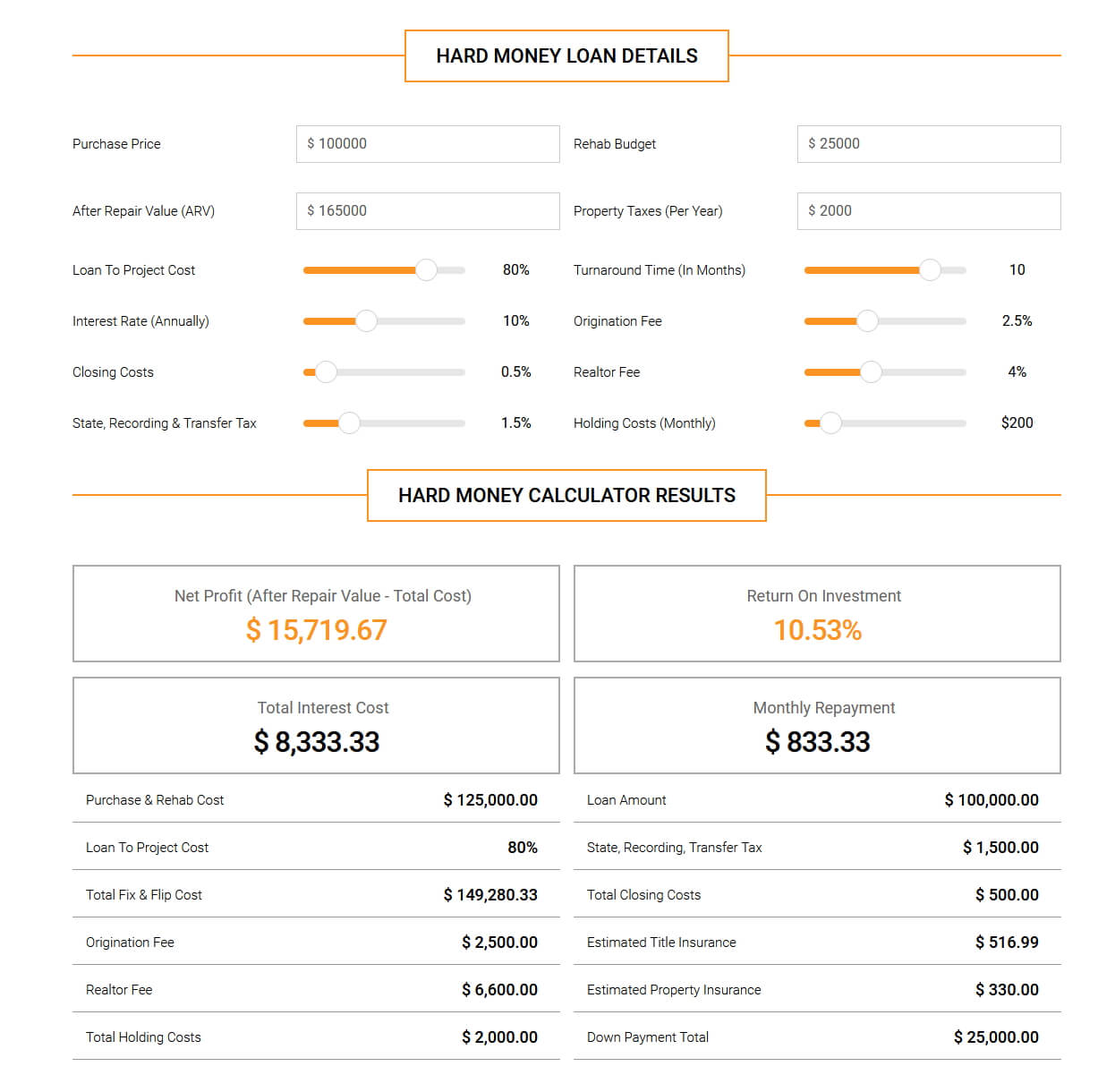
Investors often underestimate the time required for permits and inspections. A 90% LTV loan is a "ticking clock." Every month the property isn't sold, the 12% interest rate is draining the project's profit margin. Furthermore, many investors fail to account for the "cost of money" in their initial calculations. If a project takes 10 months instead of 5, the interest expense doubles, which can turn a profitable flip into a break-even or losing venture.
Another mistake is choosing a lender based solely on the 90% LTV promise. It is essential to verify that the lender has the discretionary capital to fund. Some "brokers" claim to offer 90% LTV but struggle to find a back-end investor to take the risk, leading to delays that can kill a deal.
Frequently Asked Questions
Can a first-time investor qualify for a 90% LTV hard money loan?
It is extremely rare for a first-time investor to receive 90% LTV. Lenders view new investors as high-risk due to the likelihood of renovation mistakes or budget mismanagement. Most beginners should expect to start at 75% to 80% LTV. However, some lenders may offer 90% if the borrower partners with an experienced contractor or a mentor who has a documented track record.
Does 90% LTV include closing costs?
No. In almost all cases, the "90% LTV" applies only to the purchase price. The borrower is responsible for the 10% down payment plus all closing costs, points, and pre-paid items. On a $300,000 purchase, you might need $30,000 (down payment) plus another $10,000–$15,000 for fees and reserves.
What happens if the appraisal comes in lower than the purchase price?
If the appraisal is lower than the purchase price, the lender will base the 90% loan on the appraised value, not the contract price. For example, if you are buying a home for $200,000 but the appraiser says it’s only worth $190,000, the lender will provide 90% of $190,000 ($171,000). You would have to cover the difference to meet the $200,000 purchase price.
Are 90% LTV loans available for rental properties?
Standard 90% LTV hard money is usually a short-term bridge loan (12–18 months). While you can use it to buy a rental property, it is not a long-term financing solution. Investors typically use this high leverage to acquire and renovate a property, then "exit" the hard money loan by refinancing into a 30-year DSCR (Debt Service Coverage Ratio) loan, which usually tops out at 75% or 80% LTV.
Do I need to provide tax returns for this loan?
Generally, no. Hard money is "stated income" or "no-doc" regarding personal income. The lender cares about your liquid assets (to ensure you can make the payments and the down payment) and the property's value. They rarely require W-2s or tax returns, which is why these loans are popular for self-employed investors.
Strategic Recommendation
If you are an experienced investor with at least three successful exits, a 90% LTV hard money loan is an excellent tool for scaling. However, use it only on "clean" deals where the ARV is supported by rock-solid comparable sales. The thin 10% equity margin leaves little room for error.
Before committing, always request a Loan Estimate or Term Sheet that clearly breaks down the "all-in" cost, including points and draw fees. Verify the lender's reputation through the American Association of Private Lenders (AAPL) to ensure they have the history and capital to support your project through to completion.