Solving the 3x3 Rubik’s Cube using a 3-formula approach is achieved by isolating three versatile algorithms—the Sexy Move, the Sune, and the Niklas—to handle almost every stage of the solve. By focusing on these high-utility sequences, beginners can bypass the memorization of dozens of complex patterns, relying instead on repetition and logical positioning to align the cube’s 26 sub-pieces.
The Rubik’s Cube has remained the world’s most popular puzzle since its international debut, and as of 2026, the community has pivoted strongly toward "minimalist solving." While speedcubing methods like CFOP (Cross, F2L, OLL, PLL) require memorizing 78 or more algorithms, the 3-formula approach democratizes the puzzle. It reduces the cognitive load, allowing anyone to solve the 3x3 in under two minutes with just a few hours of practice.
Understanding the Fundamentals of the 3x3 Cube
Before applying the three formulas, it is essential to understand the mechanical constraints of the 3x3 Rubik’s Cube. The cube consists of three types of pieces: centers, edges, and corners.
- Centers: These six pieces are fixed to the internal core. They do not move relative to one another. If the center piece of a face is white, that entire face must eventually be white.
- Edges: These 12 pieces have two colors and sit between the corners.
- Corners: These 8 pieces have three colors and occupy the vertices of the cube.
The Language of the Cube: 2026 Standard Notation
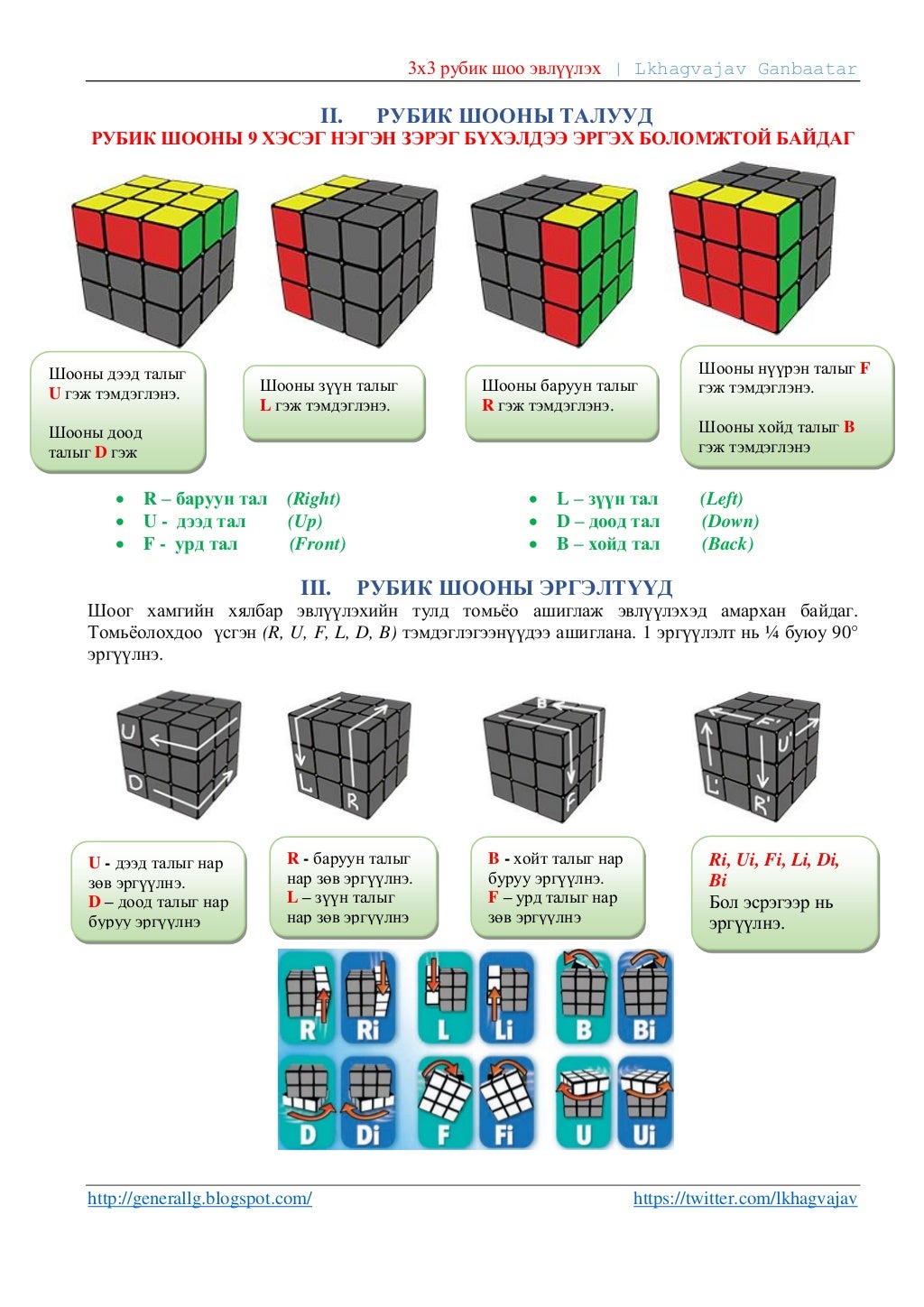
To use the 3-formula approach, you must speak the language of the cube. Each face is represented by a letter, and movements are clockwise unless followed by an apostrophe (indicating a counter-clockwise "prime" move).
- R (Right): Rotate the right face clockwise.
- L (Left): Rotate the left face clockwise.
- U (Up): Rotate the top face clockwise.
- D (Down): Rotate the bottom face clockwise.
- F (Front): Rotate the face facing you clockwise.
- B (Back): Rotate the rear face clockwise.
An "i" or an apostrophe (e.g., R') means a 90-degree turn in the opposite direction. A "2" (e.g., U2) means a 180-degree turn. In 2026, most magnetic cubes are so fluid that these notations are executed with a single "flick" of the finger, a technique known as finger-tricking.
The 3 Formula Approach: The Core Algorithms
This method focuses on three specific "formulas" or algorithms. Their versatility lies in the fact that they can be used for multiple purposes depending on how many times they are repeated or from which angle the cube is held.
Formula 1: The "Sexy Move" (R U R' U')
The Sexy Move is arguably the most important sequence in all of cubing. It is a four-move cycle that displaces pieces in a way that is easily reversible.
Purpose in this method:
- Inserting white corners into the first layer.
- Inserting edges into the middle layer (when combined with a setup move).
- Orienting the final yellow corners at the very end of the solve.
Because it only involves the Right and Up faces, it is incredibly fast to execute. In the 3-formula approach, this move replaces the need for separate corner-insertion algorithms.
Formula 2: The "Sune" (R U R' U R U2 R')
The Sune (pronounced "soon-uh") is a classic algorithm used to permute and orient pieces on the top layer. Its primary characteristic is that it leaves the bottom two layers completely undisturbed while cycling three edges or rotating corners on the top face.
Purpose in this method:
- Aligning the yellow edges with their corresponding side centers.
- Acting as a bridge to orient the top face (OLL).
By 2026, many educators prefer the Sune over the older "M' U M" sequences because it is more ergonomic for modern high-tension magnetic cubes.
Formula 3: The "Niklas" (U R U' L' U R' U' L)
The Niklas is a commutator. It is designed to swap the positions of three corner pieces without changing their orientation. This is the "magic" move that solves the puzzle’s geometry when the cube looks almost finished but the corners are in the wrong spots.
Purpose in this method:
- Moving corners to their correct geometric locations (even if the colors aren't facing the right way yet).
- Ensuring that no pieces from the first two layers are moved out of place.
Phase 1: Building the Intuitive Base
The 3-formula approach does not use formulas for the very first step: The White Cross. Most solvers find this stage intuitive. The goal is to place the four white edge pieces around the white center, ensuring the side colors of the edges match the adjacent side centers (e.g., the white-red edge must touch the white center and the red center).
Once the cross is complete, we use Formula 1 (The Sexy Move) to finish the first layer.
- Turn the cube so the white cross is on the bottom.
- Find a corner piece in the top layer that has white on it.
- Position it directly above where it needs to go.
- Repeat R U R' U' until that corner is tucked into the bottom with the white side facing down.
Phase 2: Solving the Middle Layer (The Second Layer)
With the bottom layer finished, you now have a "T" shape on each side. The goal is to move edges from the top layer into the middle slots. While standard methods use two different 8-move algorithms, the 3-formula approach uses a variation of Formula 1.
To move an edge from the top to the right-middle slot:
- Align the edge with its center color.
- Move it away from the destination (U).
- Perform the Sexy Move (R U R' U').
- Rotate the whole cube 90 degrees toward the slot and perform the "Left" version of the Sexy Move (L' U' L U).
By using the same muscle memory for both sides, you reduce the risk of "finger-slip" errors which are common in mechanical puzzles.
Phase 3: The Yellow Cross and Edge Alignment
Now, we focus on the top (yellow) face. First, we need a yellow cross. If you have a "dot," an "L-shape," or a "line," you can use a simple setup: F (R U R' U') F'. Note that the middle part of this is just Formula 1.
Once the cross is formed, the edges may not match the side colors. This is where Formula 2 (The Sune) comes in.
- Rotate the top layer (U) until at least one edge matches its side center.
- Perform R U R' U R U2 R'.
- This cycles the other three edges. You may need to do this once or twice to get all edges aligned with their respective side colors.
Phase 4: Positioning and Orienting Corners
The final phase involves getting the eight corners into the right spots and facing the right way.
Step 1: Positioning (The Niklas)
Look at the four top corners. Are any in the right place? (A corner is in the "right place" if its three colors match the three centers it is touching, even if it’s twisted).
- If one is correct, hold the cube so that corner is in the front-right-top position.
- Perform Formula 3 (Niklas): U R U' L' U R' U' L.
- This will keep the correct corner in place while swapping the other three. Repeat until all four corners are in their correct homes.
Step 2: Orientation (The Final Sexy Move)
This is the most "dangerous" part of the solve where most beginners accidentally scramble their cube.
- Flip the cube over so the yellow face is on the bottom.
- Bring an unsolved corner to the bottom-right position by rotating the bottom layer only (D).
- Repeat Formula 1 (R U R' U') until that corner is solved (yellow facing down).
- Crucial: Do not move the whole cube. Rotate only the bottom layer to bring the next unsolved corner to the bottom-right.
- Repeat Formula 1 until the entire bottom is yellow. The rest of the cube will miraculously fix itself on the final move.
Comparative Analysis of Solving Methods
As of 2026, various methods exist for the 3x3 cube. The table below compares the 3-formula approach with other common methodologies used in the World Cube Association (WCA) and hobbyist circles.
| Method | Number of Formulas | Average Move Count | Learning Curve | Target Audience |
|---|---|---|---|---|
| 3-Formula Approach | 3 | 100-120 | Very Low | Casual Beginners |
| Layer-by-Layer (LBL) | 7-9 | 60-80 | Moderate | Dedicated Beginners |
| Roux Method | ~10 (plus intuition) | 45-50 | High | Efficiency Seekers |
| CFOP (Fridrich) | 78+ | 55-60 | Very High | Competitive Speedcubers |
| ZZ Method | ~20-50 | 50-55 | High | One-handed Solvers |
The 3-formula approach is the clear winner for those who want to solve the cube as a "party trick" or a mental exercise without committing to weeks of study. While the move count is higher, the mental energy required is significantly lower.
Troubleshooting Common Obstacles
Even with only three formulas, certain "parity" looks or physical errors can occur. In 2026, most cubes are "stickerless," meaning you don't have to worry about stickers peeling off, but mechanical issues can still mimic unsolvable states.
- The Impossible Edge: If you find a single edge piece flipped or a single pair of corners that won't swap, your cube has likely been physically tampered with or dropped. You must physically pop the piece out and re-insert it correctly, as these states are mathematically impossible to solve with algorithms.
- Forgetting the "U" in the Sexy Move: The fourth move of the Sexy Move (the final U') is often forgotten because the piece looks like it’s in place after the third move. If you skip this, the rest of the cube will not stay synchronized, and you will scramble the bottom layers.
- The Bottom-Layer Trap: During the final phase (Step 4, Step 2), it is tempting to rotate the whole cube to reach the next corner. Doing so will destroy the progress of the first two layers. You must move the bottom layer to the corner, not the cube to the corner.
Advanced Practical Guidance for 2026 Cubers
In the current landscape of 2026, the hardware has surpassed the software of the human mind. Most mid-range cubes now feature Omnidirectional Core Magnetism, which prevents over-shooting. When using the 3-formula approach, use a "light touch."
If you wish to transition from the 3-formula approach to a faster method later, you don't have to "unlearn" anything. The Sexy Move and the Sune are both fundamental components of the advanced CFOP method. You are essentially learning the building blocks of world-class speedcubing while keeping the process simple enough for a single afternoon of learning.
When to Move Beyond Three Formulas
You should consider adding a fourth or fifth formula when your solve times dip below 90 seconds. At this point, the "inefficiency" of repeating the Sune or the Sexy Move multiple times becomes the primary bottleneck. Adding the "T-Perm" or the "Y-Perm" can shave 20 seconds off your time immediately by handling corner and edge permutations in one go.
Frequently Asked Questions
Can every 3x3 Rubik's Cube be solved with only 3 formulas?
Yes. Mathematically, any solvable 3x3 cube configuration can be returned to its solved state using only these three formulas. This is because these formulas are "generators" that can eventually reach any permutation, provided they are applied to the correct pieces. It may take more moves than a specialized algorithm, but the result is the same.
How long does it take to learn the 3-formula approach?
Most people can memorize the three formulas in about 20 to 30 minutes. Mastering the recognition (knowing which formula to use and when) typically takes 2 to 4 hours of practice. By the end of a single day, most users can solve the cube without looking at a guide.
Is the 3-formula approach faster than the standard beginner method?
Usually, no. The standard beginner method (Layer-by-Layer) typically uses 7 formulas, which allows for more direct paths to the solution. The 3-formula approach is designed for ease of memorization, not for speed. It is a "minimalist" method, prioritizing brain space over "move count."
What happens if I mess up a formula halfway through?
Because the 3-formula approach relies on keeping the bottom layers intact, a mistake usually results in the cube becoming scrambled. If this happens, the best course of action is to return to Phase 1 (The White Cross) and start over. Each "reset" reinforces your muscle memory for the formulas.
Do I need a special "speedcube" for this method?
While not strictly necessary, a modern magnetic cube (standard in 2026) makes the 3-formula approach much more enjoyable. Magnets help align the faces, preventing "lock-ups" when you are performing the Sexy Move or the Sune at higher speeds. Even a budget magnetic cube is significantly better than the non-magnetic "original" brand cubes.
Final Recommendation
To successfully master the 3-formula approach, focus entirely on Formula 1 (R U R' U') first. Practice it until your hand can perform it without you thinking about the individual moves. Once that is "stored" in your muscles, the other two formulas will feel much easier to integrate. Begin your first solve with a guide next to you, but by your fifth solve, challenge yourself to recognize the patterns and apply the formulas from memory. This method is the most efficient path to overcoming the "frustration barrier" of the Rubik's Cube.