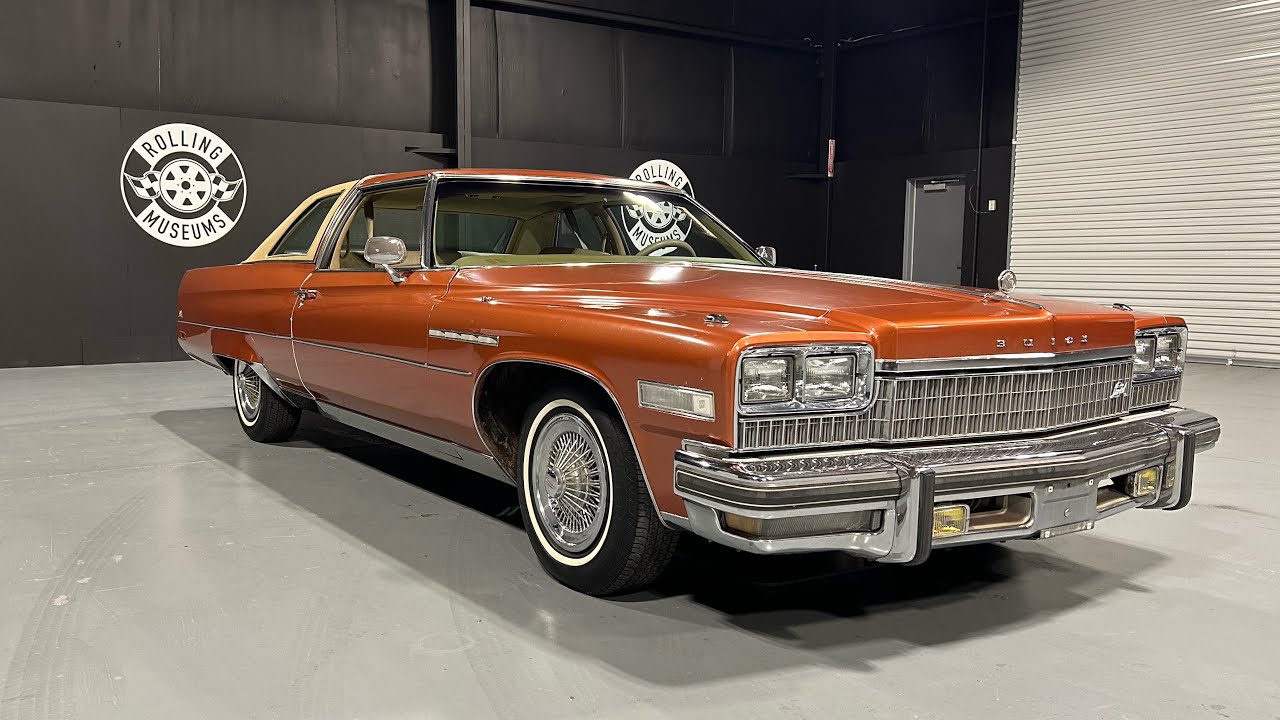
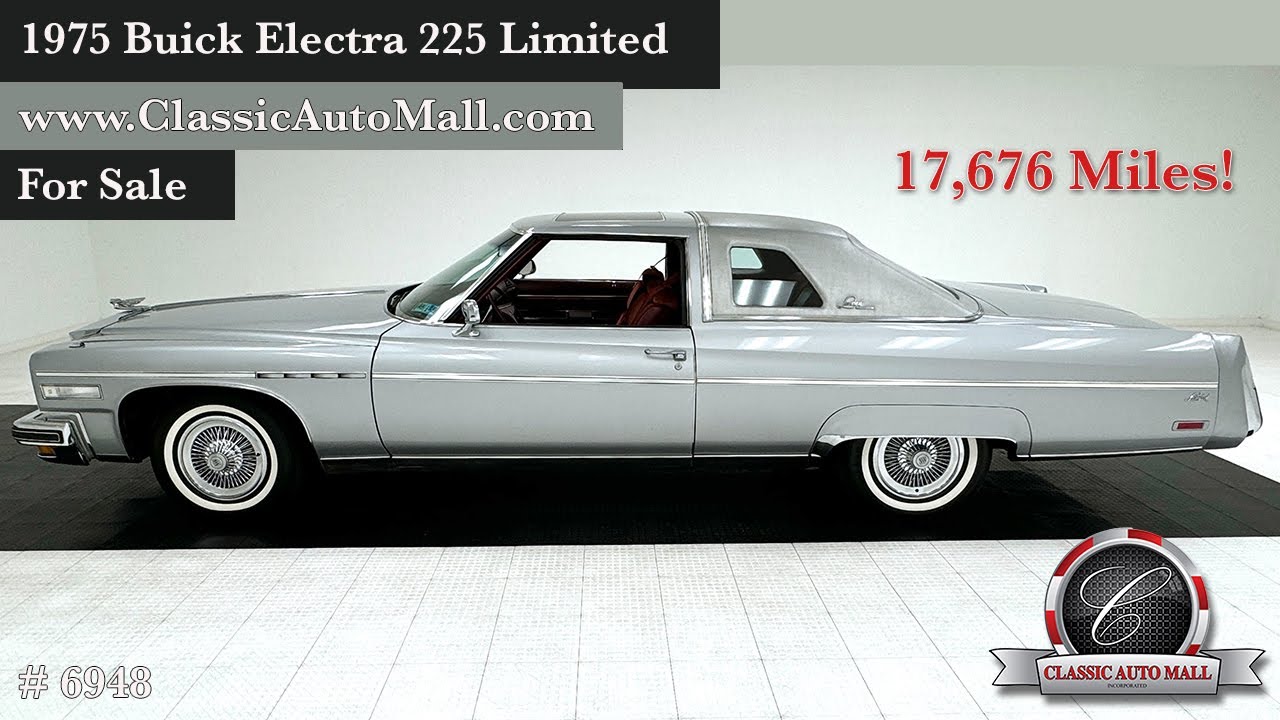
The 1975 Buick Electra 225 stands as a definitive representation of the American personal luxury land-yacht era, marking a transitional moment where traditional displacement met the dawn of emission-controlled performance. As the flagship sedan of the Buick division, the 1975 model year introduced critical styling revisions, including the iconic formal rectangular headlights and a redesigned front grille, cementing its status as a paragon of 1970s automotive opulence.
Historical Context and Market Position
In 1975, the automotive landscape was shifting rapidly. The energy crisis of the previous two years had forced manufacturers to reconsider the dominance of massive, high-compression V8 engines. Despite these pressures, the Buick Electra 225 remained unapologetically large. Built on the General Motors C-body platform, it shared its architectural DNA with the Cadillac DeVille and the Oldsmobile Ninety-Eight.
The "225" designation was a nostalgic nod to the car’s total length in inches, a branding exercise that dated back to the mid-1950s. By 1975, the car was slightly shorter than its predecessors due to federal bumper regulations and styling changes, yet it retained the imposing presence that defined the Buick brand identity. It was marketed to the affluent professional, offering a "bank vault" build quality and a suspension tuned for isolation rather than agility.
Engineering and Powertrain Specifications
The 1975 Buick Electra 225 was powered exclusively by the venerable Buick 455-cubic-inch (7.5-liter) V8 engine. This powerplant was the final iteration of the "big block" Buick V8, designed to provide the effortless torque necessary to move a vehicle weighing nearly 4,500 pounds.
Performance Constraints
By 1975, the implementation of the catalytic converter was mandatory across the industry. This necessitated a shift to unleaded fuel and a reduction in compression ratios to satisfy increasingly stringent tailpipe emission standards. Consequently, the 455 V8 produced approximately 205 horsepower. While this figure might seem modest by modern standards, the engine’s real strength lay in its massive output of low-end torque, which provided the smooth, effortless acceleration expected of a luxury cruiser.
The engine was paired with the Turbo Hydra-Matic 400 three-speed automatic transmission. This combination was widely regarded for its reliability and smooth shifting, acting as the primary buffer between the high-displacement engine and the rear wheels.
Technical Data Table
| Feature | Specification |
|---|---|
| Engine Type | 455 cu in (7.5L) V8 |
| Horsepower | 205 hp @ 3,400 rpm |
| Torque | 345 lb-ft @ 2,000 rpm |
| Transmission | THM400 3-speed Automatic |
| Wheelbase | 124 inches |
| Curb Weight | Approx. 4,450 – 4,600 lbs |
| Fuel Delivery | 4-barrel Rochester Quadrajet |
Design and Exterior Features
The 1975 redesign was arguably the most significant aesthetic change for the Electra 225 in the decade. The shift from round headlights to the "stacked" or wide-set rectangular units gave the car a more vertical, formal face. This was an attempt to mimic the styling cues of European luxury brands while maintaining the traditional "Bumper-to-Bumper" length of an American sedan.
The body featured the "sweepspear" design influence, a long-standing Buick aesthetic, translated into the straight, slab-sided lines of the mid-70s. Chrome was used liberally, appearing on the massive front and rear bumpers, window moldings, and the iconic "Electra 225" badging on the trunk lid and quarter panels.
Interior Comfort and Amenities
Inside the cabin, the 1975 Electra 225 was designed to function as an extension of one’s living room. Buick emphasized sound deadening, using extensive acoustic insulation in the floor pans, firewall, and roof to silence the outside world.
- Seating: Standard seating configurations included split-bench or bench seats upholstered in heavy-duty vinyl or luxurious velour, which was highly fashionable at the time.
- Instrumentation: The dashboard was a landscape of simulated wood grain and chrome, featuring a horizontal "sweep" speedometer and an array of warning lights.
- Convenience Options: Buyers could specify a host of luxury options, including cruise control, an 8-track tape player, automatic climate control, power windows, power locks, and the "Max Trac" traction control system, which was a cutting-edge electronic feature for 1975.
Driving Dynamics and Ownership Considerations
Operating a 1975 Buick Electra 225 is an experience in pure comfort. The suspension is remarkably soft, utilizing a coil-spring setup at all four corners. This results in a ride that absorbs road imperfections with ease but exhibits significant body roll during cornering.
Handling and Braking
The recirculating-ball power steering is exceptionally light, often described as "finger-tip" steering, which provides very little feedback from the road. Braking is handled by power-assisted front discs and rear drums. Given the sheer mass of the vehicle, drivers must exercise caution and allow for long stopping distances compared to modern vehicles.
Maintenance and Restoration
For those looking to own or restore a 1975 model in 2026, the primary challenge is not a lack of parts, but rather the preservation of specific interior trim pieces and emission-related components.
- Engine Health: The Buick 455 is robust but prone to camshaft wear if the wrong oil (lacking ZDDP) is used. It is vital to use high-zinc oil additives during every change.
- Corrosion: As with any vehicle of this era, the most critical inspection point is the frame and floor pans. The heavy body panels often hide rust that has compromised the structural integrity of the chassis.
- Electrical: The wiring harnesses are now over 50 years old. Brittle insulation and corroded ground points are the most common source of "mysterious" electrical failures.
Frequently Asked Questions
Is the 1975 Buick Electra 225 a good investment for collectors?
The Electra 225 is generally considered a "blue-chip" classic for enthusiasts of the B- and C-body platform. While it may not appreciate as rapidly as high-performance muscle cars, its historical significance as a luxury icon ensures a steady demand among collectors who value period-correct American design.
How does the 1975 model differ from the 1974 Electra?
The primary difference is the front-end styling. The 1975 model introduced the rectangular headlight design to comply with new federal visibility standards and modern design trends, while the 1974 model featured a more traditional dual-round headlight arrangement.
Can I run a 1975 Electra 225 on modern E10 or E15 fuel?
While the engine can technically run on modern unleaded fuel, the rubber fuel lines and carburetor gaskets of 1975 were not designed for ethanol-blended fuels. If you own a 1975 model, it is recommended to upgrade the fuel system components to ethanol-compatible materials to prevent degradation and leaks.
What is the "Max Trac" system mentioned in period brochures?
Max Trac was an early electronic traction control system offered by Buick. It monitored the speed difference between the front (non-driven) and rear (driven) wheels. If it detected wheel spin, it would retard the ignition timing to reduce torque. It is a rare option that collectors often look for today.
Where can I find specialized technical support for this vehicle?
Because the Electra 225 shares its platform with many other GM vehicles, the "Buick Club of America" remains the best resource for technical documentation, factory service manuals, and community expertise regarding the 1975 model year.
Next Steps for Owners
If you are planning to acquire or maintain a 1975 Buick Electra 225 in 2026, your first action should be to source an original "Buick Chassis Service Manual" specific to the 1975 model year. This document contains the precise torque specifications, vacuum diagrams, and electrical schematics necessary to maintain the vehicle to factory standards. Focus your initial efforts on the cooling system and brake lines; given the age of the vehicle, these systems are the most likely to have degraded, and their failure can lead to significant damage or safety hazards during operation.