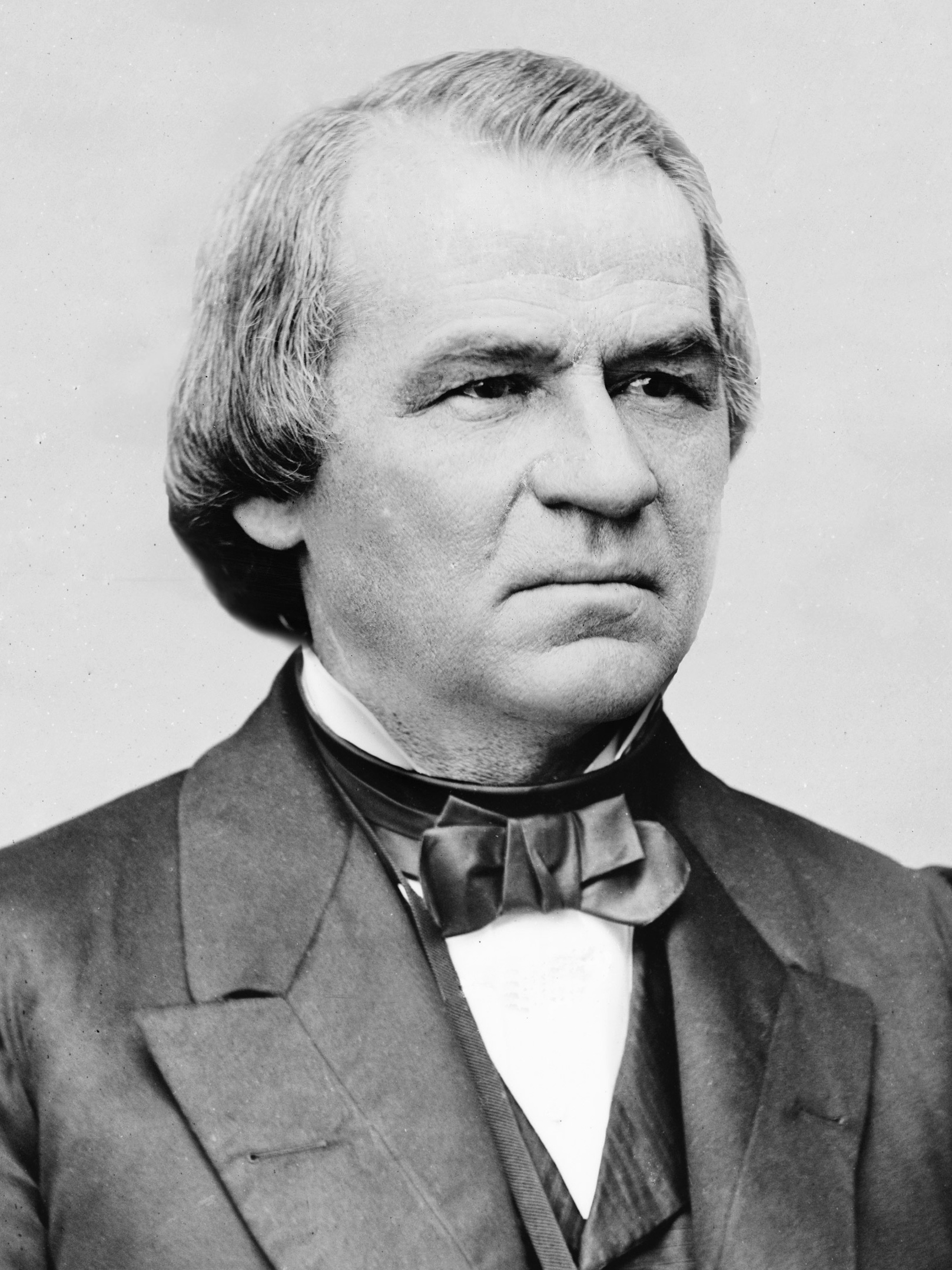
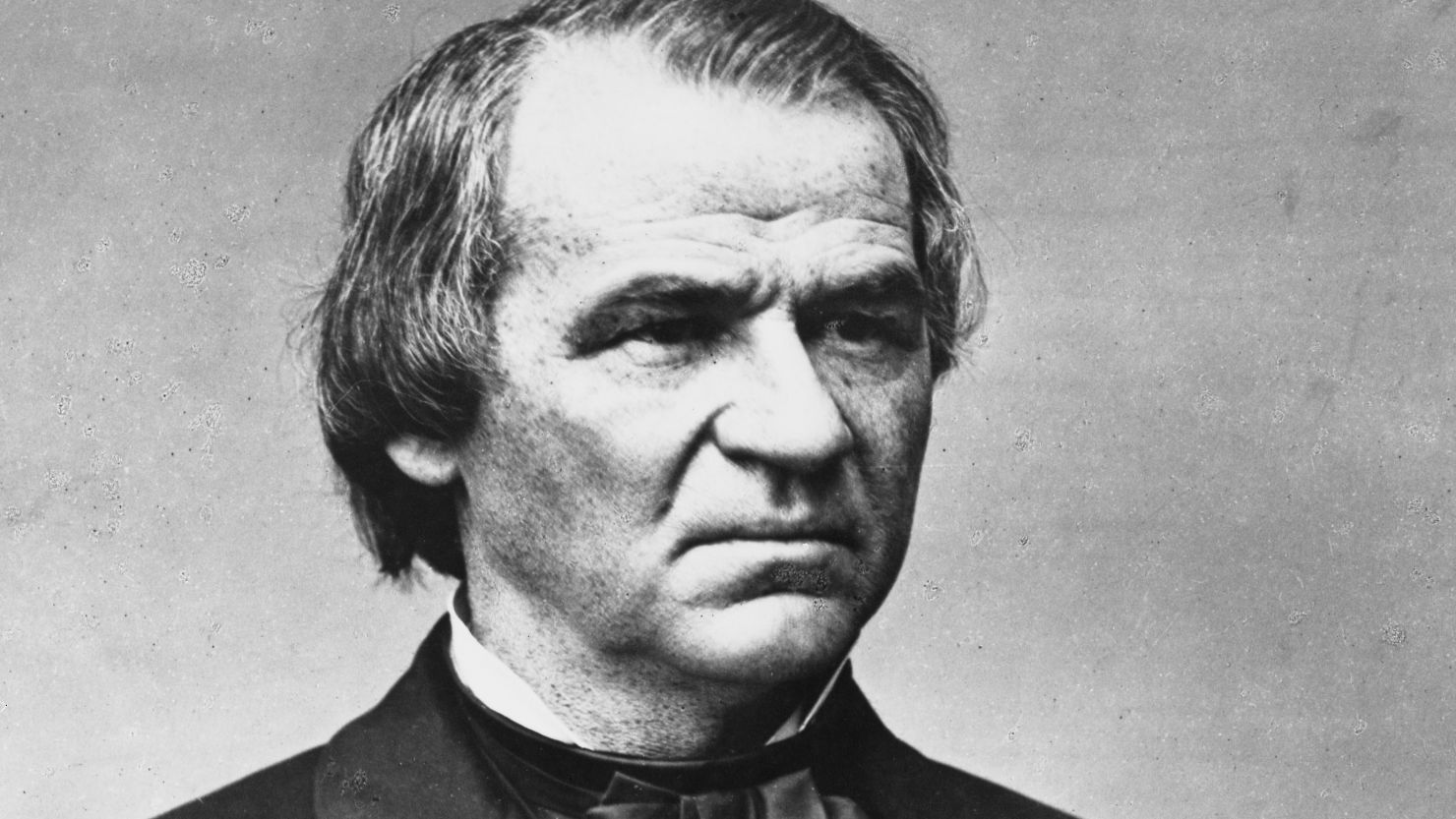
Andrew Johnson’s presidential term (1865–1869) remains one of the most fiercely debated periods in American political history. Ascending to the presidency following Abraham Lincoln's assassination, Johnson presided over the critical opening years of Reconstruction. His fierce battles with Congress over executive authority, racial equality, and readmission of Southern states led to the first presidential impeachment in U.S. history and shaped modern constitutional law.
While early twentieth-century historians often portrayed Johnson as a courageous defender of constitutional restraint, contemporary historical consensus views his administration as a profound failure of leadership that derailed post-Civil War civil rights efforts. Understanding Johnson's term requires examining his policy decisions, the constitutional crisis he provoked, and the dramatic shifts in how scholars have evaluated his legacy across more than a century.
Historical Context: The Accession of Andrew Johnson
Andrew Johnson’s rise to the executive office was the product of wartime political maneuvering. A Unionist Democrat from Tennessee, Johnson was the only sitting Southern senator who refused to resign his seat when his state seceded in 1861. Recognizing his strategic value in demonstrating cross-party and cross-regional unity, Abraham Lincoln selected Johnson as his vice presidential running mate on the National Union Party ticket in 1864.
When Lincoln was assassinated in April 1865—just weeks after the Civil War ended—Johnson assumed the presidency during an unprecedented national crisis. The United States faced monumental questions:
- On what terms should former Confederate states be readmitted to the Union?
- What political, legal, and economic status would four million newly freed African Americans hold?
- Which branch of government—the executive or the legislative—held the constitutional authority to define Reconstruction?
Johnson’s background heavily influenced his response to these challenges. Raised in poverty in North Carolina and Tennessee, he possessed a lifelong distrust of Southern plantation aristocrats, but he held equally strong anti-Black racial prejudices and a strict constructionist view of the U.S. Constitution. He believed strongly in states' rights and argued that because secession was legally void, Southern states had never truly left the Union and required minimal federal intervention to return to their normal functions.
Presidential Reconstruction (1865–1866)
During the congressional recess from April to December 1865, Johnson launched his plan for "Presidential Reconstruction." He issued proclamations offering general amnesty to most former Confederates who took an oath of loyalty, while requiring wealthy plantation owners and high-ranking Confederate military leaders to apply for individual presidential pardons. Johnson granted thousands of these pardons rapidly, restoring land and political authority to the pre-war Southern ruling class.
1865 Reconstruction Dynamics
- Presidential Reconstruction
- Executive proclamations during congressional recess
- Rapid pardons for Confederate elites
- Restoration of Southern state governments
- Southern Legislative Response
- Enactment of repressive "Black Codes"
- Election of former Confederate leaders to Congress
- Congressional Backlash
- Refusal to seat Southern representatives (Dec 1865)
- Enactment of Civil Rights Act & 14th Amendment
- Transition to Radical/Congressional Reconstruction
Southern state conventions assembled under Johnson’s directives passed restrictive laws known as the Black Codes. These statutes severely limited the freedom of movement, labor rights, and legal autonomy of Black Americans, effectively attempting to re-establish a system of racial subjugation similar to slavery. When the 39th Congress convened in December 1865, Northern lawmakers were alarmed to find that former Confederate Vice President Alexander Stephens and numerous Confederate generals had been elected to represent Southern states in Washington.
Led by Radical Republicans such as Representative Thaddeus Stevens and Senator Charles Sumner, along with moderate Republicans, Congress refused to seat the newly elected Southern delegations. This action initiated an intense constitutional struggle between the executive and legislative branches.
The Legislative Clash and Constitutional Crisis
The confrontation between Johnson and Congress escalated throughout 1866 as lawmakers moved to protect the rights of freedpeople. Congress passed two pivotal pieces of legislation aimed at counteracting the Black Codes:
- The Freedmen's Bureau Bill: Extended the lifespan and enforcement powers of the bureau established to assist former slaves with housing, education, employment, and legal protection.
- The Civil Rights Act of 1866: Declared all persons born in the United States to be citizens, establishing national birthright citizenship and guaranteeing equal protection under the law regardless of race.
To the shock of moderate Republicans, Johnson vetoed both measures, arguing that federal enforcement of civil rights violated state sovereignty and that Congress lacked the authority to legislate for Southern states while their representatives were excluded.
Congress responded by overriding Johnson's vetoes—marking the first time in American history that Congress overrode a presidential veto on major legislation. The text of the Civil Rights Act of 1866 served as the direct basis for the Fourteenth Amendment, which Congress submitted to the states for ratification in June 1866. Johnson actively urged Southern states to reject the amendment, further alienating moderate Northern politicians.
Key Legislative Battles (1866–1867)
| Legislation | Executive Action | Legislative Outcome |
|---|---|---|
| Freedmen's Bureau Bill | Vetoed by Johnson (Feb & Jul 1866) | Veto Overridden by Congress |
| Civil Rights Act 1866 | Vetoed by Johnson (March 1866) | First Major Veto Override |
| Fourteenth Amendment | Publicly Opposed by Johnson (1866) | Ratified by States (1868) |
| Reconstruction Acts | Vetoed Repeatedly (1867) | Overridden; Placed South under Military Governance |
The "Swing Around the Circle" and Election of 1866
In late summer 1866, Johnson undertook an unprecedented national speaking tour known as the "Swing Around the Circle" to campaign for conservative congressional candidates. The tour proved to be a political disaster. Johnson engaged in hostile exchanges with hecklers, compared himself to Jesus Christ, and accused Radical Republicans of plotting political assassinations.
The midterm elections of 1866 resulted in a landslide victory for Republicans, securing a two-thirds supermajority in both the House and Senate. This electoral outcome effectively stripped Johnson of his veto leverage and gave Congress full control over the direction of Reconstruction.
Impeachment: The Trial of 1868
With a commanding majority, Congress enacted the Military Reconstruction Acts of 1867, dividing ten Southern states into five military districts under federal command and requiring states to ratify the Fourteenth Amendment and draft new constitutions guaranteeing voting rights for Black men before re-entering the Union.
To prevent Johnson from interfering with military enforcement, Congress passed the Tenure of Office Act in 1867. This statute restricted the president from removing civil officers who had been appointed with the advice and consent of the Senate, unless the Senate approved the dismissal.
The Impeachment Timeline (1867–1868)
- March 1867: Congress passes Tenure of Office Act over veto
- August 1867: Johnson suspends Secretary of War Edwin M. Stanton
- Feb 21, 1868: Johnson formally dismisses Stanton without Senate consent
- Feb 24, 1868: U.S. House votes 126–47 to impeach Andrew Johnson
- Mar–May 1868: Impeachment trial conducted in the U.S. Senate
- May 16/26, 1868: Senate votes 35–19 (one vote short of 2/3 majority); Acquitted
Believing the law to be unconstitutional, Johnson directly challenged it in February 1868 by firing Secretary of War Edwin M. Stanton, an ally of the Radical Republicans who managed military affairs in the South.
On February 24, 1868, the House of Representatives voted 126 to 47 to impeach Andrew Johnson, charging him with eleven articles of high crimes and misdemeanors. The primary articles centered on his violation of the Tenure of Office Act and his attempts to bring Congress into disrepute through public speeches.
The trial took place in the Senate from March to May 1868, presided over by Chief Justice Salmon P. Chase. According to official proceedings documented by the U.S. Senate Historical Office, defense counsel argued that Johnson had not violated the Tenure of Office Act because Stanton had been appointed by Lincoln during his first term, not Johnson's.
On May 16 and May 26, 1868, the Senate voted on three of the articles of impeachment. In each vote, the tally was 35 to 19—falling exactly one vote short of the two-thirds majority required for conviction. Seven Republican senators crossed party lines to vote with Democrats for acquittal, fearing that removing a president over political disagreements would set a dangerous precedent for the separation of powers.
Historiography: How Evaluations of Johnson Transformed
The historical interpretation of Andrew Johnson’s presidency offers a striking example of how historical consensus evolves alongside broader social movements and historiographical methods.
Evolution of Historiographical Interpretations
- Dunning School (Late 1800s – 1950s)
- Portrayed Johnson as a courageous defender of Constitution
- Framed Reconstruction as corrupt and disastrous
- Promoted by William A. Dunning and Claude Bowers
- Revisionist Era (1930s – 1980s)
- Sparked by W.E.B. Du Bois (1935) & Civil Rights Movement
- Re-evaluated Reconstruction as a noble attempt at democracy
- Re-examined Johnson as racially biased and obstructive
- Modern Consensus (1980s – Present)
- Led by historians like Eric Foner and Hans Trefousse
- Consistently ranks Johnson among the worst U.S. presidents
- Highlights lasting damage to civil rights and federal power
The Dunning School Era (Late 19th Century to 1950s)
For decades following his death, mainstream American historians viewed Andrew Johnson in a favorable light. Led by Columbia University historian William A. Dunning and his students, the Dunning School argued that Reconstruction was a tragic failure caused by vengeful Radical Republicans who granted political rights to unprepared African Americans.
In this framework, Johnson was portrayed as a heroic constitutionalist who stood firm against congressional overreach to protect the rule of law. Popularized by works such as Claude Bowers's The Tragic Era (1929) and political biographies of the mid-twentieth century, this interpretation dominated textbooks, popular culture, and academic scholarship for over fifty years.
The Revisionist Era and the Impact of Civil Rights
The rise of the Civil Rights Movement in the mid-twentieth century catalyzed a major re-examination of Reconstruction historiography. Pioneered decades earlier by African American scholar W.E.B. Du Bois in his landmark work Black Reconstruction in America (1935), revisionist historians rejected the white supremacist assumptions underlying the Dunning School.
Historians such as Kenneth Stampp, Hans L. Trefousse, and later Eric Foner re-evaluated Reconstruction not as a tragic error, but as a noble, albeit incomplete, effort to construct an interracial democracy. In this updated framework, Johnson’s reputation fell dramatically:
- His refusal to extend basic civil rights to freedpeople was re-examined as a primary cause of Reconstruction's structural weaknesses.
- His opposition to constitutional protections emboldened white supremacists in the South, leading to the rise of paramilitary violence (such as the Ku Klux Klan) and the establishment of Jim Crow laws.
- His impeachment was reinterpreted not as mere partisan spite, but as a necessary constitutional response to an executive actively undermining federal statutes.
Modern Academic Consensus
In contemporary presidential rankings compiled by the American Political Science Association and C-SPAN presidential historian surveys, Andrew Johnson consistently ranks among the bottom three presidents in U.S. history, often alongside James Buchanan and Franklin Pierce. Modern scholarship assesses his administration as a tragic failure of leadership, highlighting how his actions alienated potential allies, weakened executive authority, and delayed civil rights protections by generations.
Policy Comparisons: Johnson vs. Lincoln and Congressional Leaders
To contextualize the debate surrounding Johnson's term, it is useful to examine how his policy positions differed from those of his predecessor and his primary congressional opponents.
| Feature / Policy Area | Abraham Lincoln (1861–1865) | Andrew Johnson (1865–1869) | Radical Republicans (Congress) |
|---|---|---|---|
| Primary Goal for Reconstruction | Preserve the Union; end slavery; gradual integration | Rapid restoration of Southern state governments | Fundamental restructuring of Southern society and legal equality |
| View on Secession | Secession was illegal; states remained in Union | Secession was null; states never left, rights preserved | States committed "state suicide" and reverted to territorial status |
| Rights for Freedpeople | Supported 13th Amendment; favored limited voting rights for Black veterans/educated men | Opposed federal civil rights and Black suffrage; favored state jurisdiction | Demanded full citizenship, universal male suffrage, and equal protection |
| Treatment of Confederate Elites | Conditional amnesty; flexible executive terms | Rapid mass pardons for land-owning aristocrats and officers | Exclusion of former leaders from office; land redistribution proposals |
| Constitutional Approach | Broad war powers; pragmatic presidential authority | Strict constructionist; defended states' rights | Congressional supremacy under the Guarantee Clause and war powers |
Constitutional Legacy and Long-Term Impact
Andrew Johnson's term established important constitutional and political precedents that influenced American governance for generations:
1. Shift in Executive-Legislative Balance
Johnson’s aggressive use of the presidential veto and his subsequent impeachment severely weakened the presidency in the late nineteenth century. For several decades following his term—a period often called the era of "Congressional Government"—power concentrated in the U.S. Capitol, while presidents exercised relatively limited authority until the administration of Theodore Roosevelt.
2. Legal Protections via Reconstruction Amendments
While Johnson opposed the Reconstruction Amendments, congressional resistance to his policies directly accelerated the drafting and passage of the Fourteenth Amendment (1868) and Fifteenth Amendment (1870). To prevent Johnson and future presidents from altering civil rights protections via executive order or legislative repeal, Congress embedded birthright citizenship, equal protection, and voting rights directly into the U.S. Constitution.
3. Precedent for Impeachment
The trial of 1868 established a high threshold for convicting a sitting president. By acquitting Johnson, the Senate established an enduring precedent that impeachment should not be used as a political tool to remove a president over policy disagreements, reserving conviction for severe constitutional violations.
Frequently Asked Questions
Why was Andrew Johnson impeached during his term?
Andrew Johnson was impeached by the House of Representatives in February 1868 primarily for violating the Tenure of Office Act. The law prohibited the president from removing Senate-confirmed executive officials without Senate approval. Johnson fired Secretary of War Edwin M. Stanton to challenge the law's constitutionality. The House passed eleven articles of impeachment, charging him with illegal removal of an official and undermining Congress through inflammatory public speeches.
How did Andrew Johnson's Reconstruction policies differ from Abraham Lincoln's?
While Abraham Lincoln sought a flexible, pragmatic approach to Reconstruction that emphasized restoring the Union while ending slavery, Andrew Johnson favored rapid restoration of Southern state governments with minimal federal conditions. Unlike Lincoln, who hinted support for limited Black suffrage before his death, Johnson opposed federal civil rights laws, vetoed the Freedmen's Bureau and Civil Rights Acts, and supported Southern control over state racial laws.
What was the Dunning School, and why did its view of Johnson change?
The Dunning School was an early twentieth-century historiographical movement led by historian William A. Dunning. It portrayed Reconstruction as a corrupt era dominated by vengeful Republicans and African Americans, framing Johnson as a courageous defender of constitutional principles. This view changed during the Civil Rights Movement of the mid-twentieth century, as modern historians re-examined primary sources and recognized that Reconstruction was an effort to establish equal rights, recasting Johnson's obstruction as a major failure of executive leadership.
Did Andrew Johnson's vetoes stop Congressional Reconstruction?
No. Although Johnson extensively used his veto power against Reconstruction measures, Congress possessed a two-thirds Republican supermajority following the 1866 elections. Congress regularly overrode his vetoes—including those of the Civil Rights Act of 1866 and the Military Reconstruction Acts of 1867—enacting its vision of Reconstruction over executive opposition.
Where does Andrew Johnson rank among U.S. presidents today?
In modern academic surveys of historians and political scientists, Andrew Johnson consistently ranks among the lowest-performing presidents in American history (typically in the bottom three alongside James Buchanan and Franklin Pierce). Historians point to his fierce opposition to equal civil rights, his poor management of post-Civil War unification, and his confrontational relationship with Congress as key factors in his low ranking.
Conclusion and Research Recommendations
The historical debate surrounding Andrew Johnson's presidential term illustrates how interpretations of political history reflect broader societal values regarding democracy, executive power, and civil rights. Far from being a passive transitional figure, Johnson actively shaped the legal and political landscape of post-Civil War America through his opposition to Congressional Reconstruction.
For students, educators, and historical researchers looking to evaluate Johnson's administration using primary sources, the following research steps are recommended:
- Examine Primary State Papers: Read Johnson's presidential veto messages for the Civil Rights Act of 1866 and the Reconstruction Acts, available through the The American Presidency Project, to understand his constitutional arguments regarding federalism and state authority.
- Review the Impeachment Trial Records: Analyze the official transcripts of the 1868 Senate trial, preserved by the Library of Congress, to assess the arguments presented by House prosecutors and defense counsel regarding executive privilege.
- Compare Historiographical Perspectives: Contrast early twentieth-century texts (such as Claude Bowers's The Tragic Era) with modern scholarship (such as Eric Foner's Reconstruction: America's Unfinished Revolution, 1863–1877) to analyze how societal shifts influence historical interpretation.