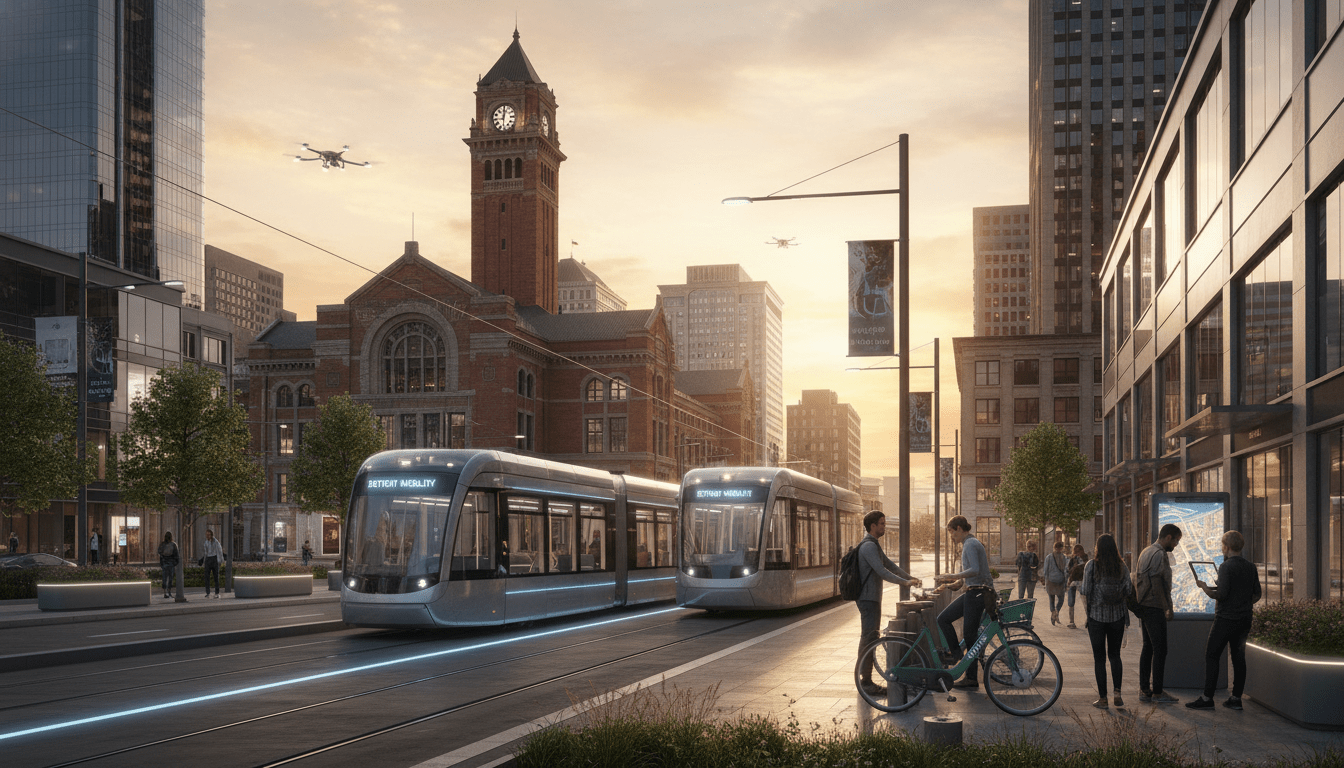
The mobility landscape of Detroit underwent a transformative shift around late November 2025, marked by critical infrastructure deployments, municipal policy integration, and advanced vehicle-to-everything (V2X) communication trials that redefine how goods and commuters navigate the Motor City.
The Strategic Evolution of Detroit's Transportation Ecosystem
For over a century, Detroit has served as the beating heart of American automotive manufacturing. However, the paradigm of mobility has shifted away from traditional private ownership toward a deeply integrated, multi-modal network. The milestone achieved in late November 2025 represents the culmination of years of public-private partnerships involving the City of Detroit, the Michigan Department of Transportation (MDOT), major automotive original equipment manufacturers (OEMs), and regional transit authorities.
Urban centers face persistent challenges: traffic congestion, pedestrian safety concerns, and the imperative to reduce municipal carbon footprints. Detroit’s approach addresses these challenges through smart infrastructure deployment. By embedding sensors, high-speed fiber-optic connectivity, and edge-computing nodes along primary urban corridors, the city created a digital nervous system capable of managing traffic flow in real-time.
This evolution is not merely about adding smart traffic lights. It represents a fundamental restructuring of urban space to accommodate autonomous delivery robots, connected public transit fleets, and shared micro-mobility options. The late November 2025 milestone crystallized these disparate pilot programs into a unified operational framework, establishing Detroit as a primary living laboratory for 21st-century mobility solutions.
Core Components of the Mobility Milestone
To understand the scope of the development, one must examine the specific technological and infrastructural pillars that went live or reached critical maturity during this period. These systems operate synchronously to ensure safety, efficiency, and accessibility across diverse urban zones.
Vehicle-to-Infrastructure (V2I) Deployment
The backbone of Detroit's updated mobility network relies on robust V2I architecture. Hundreds of intersections across downtown and select arterial corridors were outfitted with dedicated short-range communications (DSRC) and cellular vehicle-to-everything (C-V2X) roadside units.
- Signal Phase and Timing (SPaT): Traffic signals now broadcast real-time operational data directly to approaching connected vehicles and transit buses, optimizing green-wave progression and reducing idling emissions.
- Pedestrian Hazard Detection: Thermal and optical sensors at high-conflict crosswalks instantly alert autonomous and connected human-driven vehicles to vulnerable road users entering the roadway.
- Dynamic Lane Management: Digital signage and overhead indicators adjust lane assignments dynamically based on real-time congestion metrics and emergency vehicle routing requirements.
Public Transit Modernization
Public transportation integration was a critical benchmark of the initiative. The Detroit Department of Transportation (DDOT) and suburban transit partners synchronized their fleet telematics with the centralized traffic management platform. Commuters benefit from predictive arrival algorithms that account for dynamic traffic signal priority, significantly reducing bus bunching and schedule unreliability. Furthermore, first-mile and last-mile connectivity was enhanced through designated curbside zones reserved for shared electric scooters and autonomous shuttle loops.
Comparative Analysis of Mobility Technologies in Detroit
The integration of multiple transit layers requires careful balancing of infrastructure investment against operational return. The following table outlines the core mobility pillars deployed during this milestone, highlighting their primary functions and technological dependencies.
| Mobility Pillar | Primary Function | Core Technology | Operational Impact |
|---|---|---|---|
| V2I Roadside Units | Real-time traffic optimization and safety alerts | C-V2X, DSRC, Fiber Optics | Reduced intersection collisions and optimized traffic flow |
| Smart Transit Priority | Maintaining bus schedule integrity | GPS Telematics, Cellular Handshakes | Decreased commute times for public transit riders |
| Micro-Mobility Zones | Managing curbside clutter and safety | Geofencing, IoT Sensors | Organized parking and protected pedestrian pathways |
| Autonomous Freight Pilots | Off-peak goods delivery and logistics | LiDAR, HD Mapping, AI Navigation | Minimized daytime congestion caused by large delivery trucks |
Regulatory Frameworks and Data Privacy Measures
Deploying advanced mobility infrastructure in a major metropolitan area requires navigating a complex web of municipal, state, and federal regulations. The Michigan Legislature and the City of Detroit established clear legal parameters governing data collection, liability, and cybersecurity standards for all participating entities.
Data Governance and Privacy
As connected vehicles and roadside sensors continuously harvest terabytes of data regarding traffic patterns, pedestrian movements, and vehicle speeds, public concern regarding surveillance has grown. The framework implemented alongside the mobility milestone enforces strict data minimization principles:
- Anonymization at the Edge: Video feeds and sensor data are processed locally on edge-computing devices to strip identifiable facial features and license plate numbers before storage or transmission.
- Open-Data Protocols: Non-sensitive traffic flow metrics are made publicly available to urban planners, academic researchers, and application developers to foster continuous innovation.
- Cybersecurity Auditing: All connected infrastructure nodes undergo rigorous penetration testing to prevent unauthorized remote access or malicious disruption of municipal traffic signals.
Economic and Workforce Impacts
A transformation of this scale carries profound implications for the local economy and labor market. Detroit’s automotive legacy provides a distinct advantage, as local talent transitions naturally from traditional mechanical engineering to software-defined vehicle (SDV) development, systems integration, and urban data science.
- Job Creation: Specialized roles in municipal traffic engineering, cybersecurity for critical infrastructure, and fleet maintenance have expanded significantly.
- Attracting Tech Investment: Tech startups and Tier-1 automotive suppliers continue to establish engineering hubs within the city limits to take advantage of Detroit’s living-lab testing environment.
- Equitable Access: Municipal initiatives ensure that low-income neighborhoods benefit from improved transit reliability and modernized infrastructure, mitigating the digital and mobility divides often associated with smart-city transformations.
Frequently Asked Questions
What specific area does the Detroit mobility milestone cover?
The primary deployment zone encompasses downtown Detroit, core commercial corridors along Woodward and Michigan avenues, and designated innovation districts, with phased expansion schedules planned for surrounding residential neighborhoods.
Are private vehicle owners required to install special equipment to benefit from this milestone?
No. While vehicles equipped with C-V2X or connected navigation systems receive direct in-dash safety alerts and signal timing data, all drivers benefit indirectly from the overarching improvements in traffic flow, automated signal optimization, and enhanced pedestrian safety infrastructure.
How does the city protect pedestrian privacy from roadside sensors?
The system utilizes advanced edge-computing hardware that processes video feeds locally to identify hazards and traffic counts while permanently discarding personally identifiable information, ensuring compliance with strict municipal privacy guidelines.
What role do local automotive manufacturers play in this initiative?
Major OEMs collaborate closely with municipal authorities by sharing aggregated anonymized fleet data, testing autonomous and connected vehicle features in real-world urban conditions, and co-investing in roadside sensor infrastructure.
How can residents report malfunctioning smart-traffic equipment?
Citizens can utilize the established municipal reporting portal or the Detroit-specific civic mobile application to flag damaged roadside units, malfunctioning pedestrian signals, or blocked micro-mobility zones for rapid maintenance dispatch.
Practical Next Steps for Commuters and Developers
For residents, daily commuters, and technology developers operating within the Detroit region, maximizing the benefits of this infrastructure update requires active engagement with available digital tools and municipal resources. Commuters should ensure their navigation applications are updated to receive real-time V2I routing feeds and transit updates. Software developers and entrepreneurs interested in building civic applications should consult the City of Detroit’s open-data portal to access standardized traffic and mobility feeds. By understanding these technological shifts, stakeholders can better navigate and contribute to Detroit's evolving urban landscape.