An insurance plan is a legal contract between an individual and an insurer where the company provides financial protection against specific losses in exchange for a premium. For example, in a standard 2026 health insurance plan, the policyholder might pay a $400 monthly premium and a $2,500 deductible, after which the insurer covers the majority of medical costs until an annual out-of-pocket maximum is reached.
The Fundamental Mechanics of Insurance Plans
To understand how an insurance plan functions, one must look past the monthly cost and examine the interplay between risk sharing and financial limits. Insurance is designed to transition the risk of a high-cost, low-probability event (like a major car accident or a hospital stay) from the individual to a larger pool of participants.
In 2026, the regulatory landscape for insurance—particularly health and disability coverage—emphasizes transparency. Under modern "Transparency in Coverage" rules, insurers are required to provide clear, machine-readable data and consumer-friendly "Summary of Benefits and Coverage" (SBC) documents. These documents use standardized language so that an "example of insurance plan" can be compared directly across different companies.
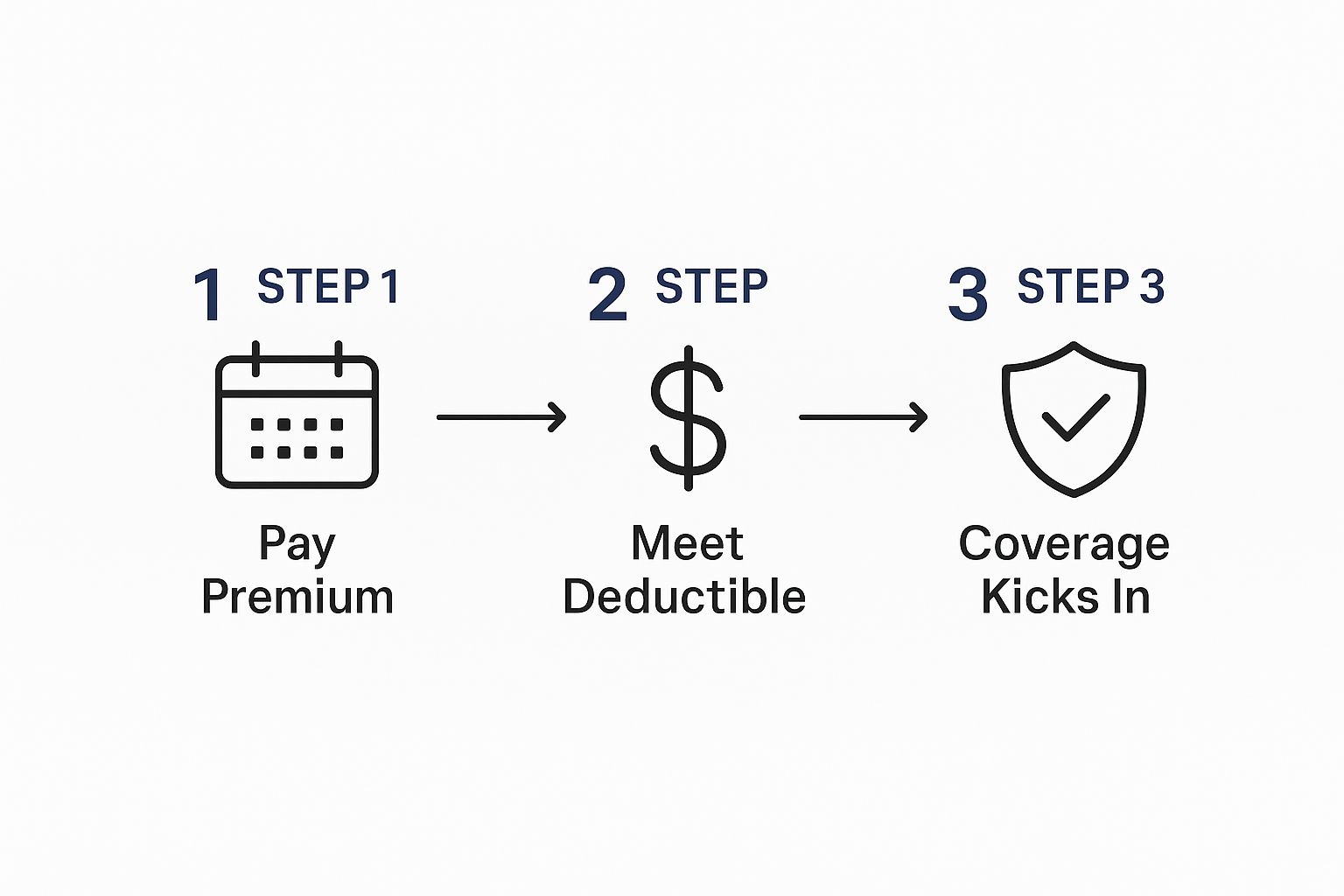
The core of any plan is the Schedule of Benefits. This is a detailed list of what the insurer will pay for, what it excludes, and how much the policyholder must contribute for each service. Whether it is an auto, life, or health policy, the financial structure usually follows a predictable sequence: you pay for access (premium), you pay for initial use (deductible), and you share the remaining costs (coinsurance/copay) until you hit a safety net (out-of-pocket maximum).
Key Vocabulary: The Pillars of an Insurance Plan
Before walking through a concrete example, it is essential to define the five pillars of insurance terminology. These terms dictate exactly how much money leaves your bank account when a claim occurs.
1. The Premium
The premium is the recurring cost of keeping the policy active. It is usually paid monthly, quarterly, or annually. In 2026, premiums are calculated based on actuarial data—statistics that predict the likelihood of a claim. For health insurance, factors like age and geography influence this cost, while for auto insurance, driving history and vehicle type are the primary drivers. The premium is paid regardless of whether you use the insurance services or not.
2. The Deductible
The deductible is the amount the policyholder must pay out-of-pocket for covered services before the insurance company begins to pay. For instance, if a plan has a $2,000 deductible, and you have a $5,000 medical bill, you are responsible for the first $2,000. Higher deductibles typically result in lower monthly premiums, creating a trade-off between fixed monthly costs and potential "at-the-moment" costs.
3. The Copayment (Copay)
A copayment is a fixed dollar amount (e.g., $30) you pay for a specific service, such as a doctor's visit or a prescription refill. Copays usually do not count toward your deductible, but they do count toward your out-of-pocket maximum. In many modern plans, copays are utilized for routine services to provide the policyholder with predictable costs for frequent needs.
4. Coinsurance
Coinsurance is your share of the costs of a covered health care service, calculated as a percentage (for example, 20%) of the allowed amount for the service. You generally start paying coinsurance only after you’ve paid your entire deductible. If the insurance company’s allowed amount for an office visit is $100 and you’ve met your deductible, your 20% coinsurance payment would be $20.
5. Out-of-Pocket Maximum
The out-of-pocket maximum is the most you have to pay for covered services in a plan year. After you spend this amount on deductibles, copayments, and coinsurance for in-network care and services, your health insurance plan pays 100% of the costs of covered benefits. This is the ultimate financial "ceiling" that protects you from bankruptcy in the event of a catastrophic illness or accident.
A Concrete Example: The 2026 "Silver PPO" Plan
To illustrate these concepts in action, let us examine a hypothetical but realistic "Silver PPO" health insurance plan. This example reflects the mid-range coverage often sought by families and individuals in the current year.
Plan Specifications:
- Monthly Premium: $450
- Annual Deductible: $3,000
- Coinsurance: 20% (Insurer pays 80%)
- Primary Care Copay: $35
- Specialist Copay: $70
- Out-of-Pocket Maximum: $8,500
Scenario A: The Routine Annual Wellness Exam
In 2026, following established preventive care guidelines, most "Silver" plans cover an annual physical at 100% with no cost to the patient, provided the provider is in-network.
- Cost of Visit: $250
- Patient Pays: $0
- Insurance Pays: $250
- Remaining Deductible: $3,000 (Preventive care typically does not reduce the deductible).
Scenario B: A Minor Injury (Broken Arm)
Suppose you trip and break your arm in February. You visit an urgent care center and require X-rays and a cast.
- Total Negotiated Cost: $1,200
- Patient Status: Deductible not yet met.
- Patient Pays: $1,200 (This full amount applies to the $3,000 deductible).
- Remaining Deductible: $1,800.
Scenario C: Major Surgery (Hospitalization)
In June, you require a gallbladder removal. The total bill for the hospital stay, surgeon, and anesthesia is $25,000.
- Meeting the Deductible: You still have $1,800 left on your deductible from Scenario B. You pay that first.
- Remaining Balance: $25,000 - $1,800 = $23,200.
- Applying Coinsurance: You pay 20% of the remaining balance. $23,200 x 0.20 = $4,640.
- Total Paid for this Incident: $1,800 (Deductible) + $4,640 (Coinsurance) = $6,440.
- Check Against Out-of-Pocket Max: Your total spending for the year is now $1,200 (Broken arm) + $6,440 (Surgery) = $7,640. Since this is below the $8,500 limit, you pay the full $6,440.
Scenario D: End-of-Year Physical Therapy
Following the surgery, you need ten sessions of physical therapy at $150 each ($1,500 total).
- Current Spending: $7,640.
- Room left in Out-of-Pocket Max: $8,500 - $7,640 = $860.
- Applying Coinsurance: 20% of $1,500 is $300.
- Patient Pays: $300.
- New Total Spending: $7,640 + $300 = $7,940.
- Next Steps: Any further covered medical expenses for the rest of the year will only cost 20% coinsurance until the total reaches $8,500. After that, everything is $0.
Comparing Plan Tiers: A Visual Breakdown
Insurance plans are often categorized by "metal levels" (Bronze, Silver, Gold, Platinum) to indicate how the cost-sharing is split between the insurer and the member. Note that these levels do not describe the quality of medical care, only the financial arrangement.
| Plan Feature | Bronze Plan | Silver Plan | Gold Plan |
|---|---|---|---|
| Monthly Premium | Lowest | Moderate | High |
| Deductible | Very High (e.g., $7,000+) | Moderate (e.g., $3,000) | Low (e.g., $1,000) |
| Coinsurance | High (e.g., 40%) | Moderate (e.g., 20%) | Low (e.g., 10%) |
| Best For | Healthy individuals who rarely see a doctor. | Average users wanting a balance of costs. | Those with chronic conditions or frequent visits. |
| Financial Risk | High if a major event occurs. | Balanced. | Low "at-the-point" costs. |
Network Types: HMO, PPO, and EPO
An insurance plan's "Example" is incomplete without explaining the provider network. The network is the group of doctors, hospitals, and labs that have a contract with the insurance company.
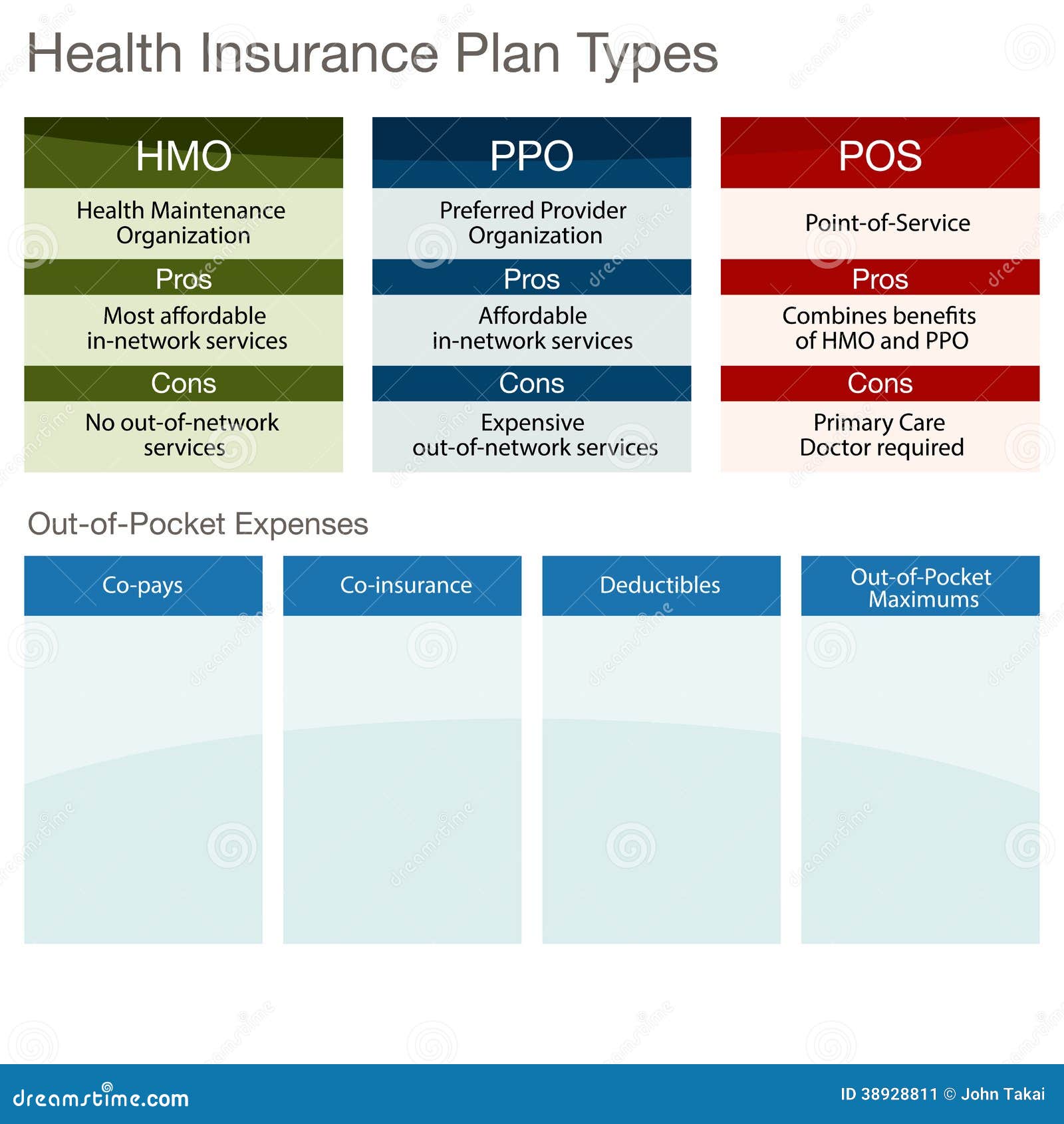
Health Maintenance Organization (HMO)
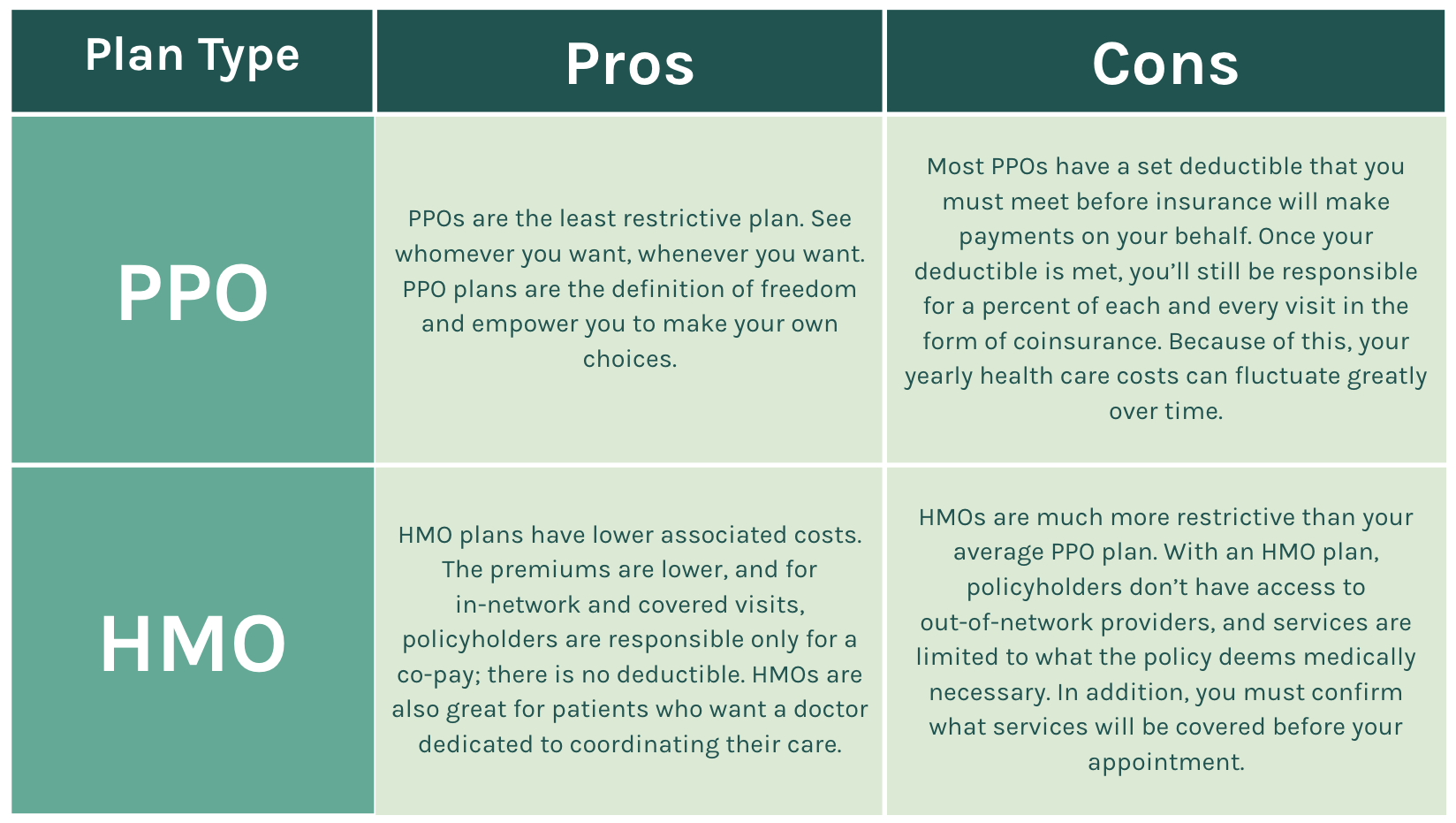
An HMO plan usually limits coverage to care from doctors who work for or contract with the HMO. It generally won't cover out-of-network care except in an emergency. An HMO usually requires you to live or work in its service area to be eligible for coverage. You typically need a referral from a Primary Care Physician (PCP) to see a specialist.
Preferred Provider Organization (PPO)
As seen in our Silver PPO example, this plan allows you to pay less if you use providers in the plan's network, but provides the flexibility to use doctors, hospitals, and providers outside of the network for an additional cost. You usually do not need a referral to see a specialist.
Exclusive Provider Organization (EPO)
An EPO is a hybrid. You can only use the doctors and hospitals within the network, similar to an HMO, but you usually do not need a referral to see a specialist, similar to a PPO. If you go outside the network, the plan provides zero coverage except for emergencies.
Common Pitfalls and Operational Limitations
Even with a clear example, insurance plans have complexities that can lead to unexpected bills.
- In-Network vs. Out-of-Network: Even if you go to an in-network hospital, the specific anesthesiologist or radiologist who treats you might be out-of-network. While the "No Surprises Act" (updated through 2026) protects consumers from many balance-billing scenarios in emergencies, it is still a critical area to verify for elective procedures.
- Pre-authorization: Many plans require the doctor to get "permission" from the insurer before performing certain surgeries or prescribing expensive medications. If this step is skipped, the insurer may refuse to pay the claim entirely.
- The Formulary: This is the list of drugs the insurance plan covers. Formularies are divided into "tiers." Tier 1 usually includes low-cost generics, while Tier 4 might include "specialty" drugs with very high coinsurance. An example insurance plan might cover a generic for a $10 copay but require 50% coinsurance for a brand-name equivalent.
- Effective Dates: Coverage is not retroactive. If you buy a plan on January 15th, it usually doesn't become effective until February 1st. Any medical costs incurred in late January would not be covered.
How to Verify Your Own Plan
If you are looking at a specific plan summary in 2026, follow these steps to ensure you understand the "Example" provided by the broker or employer:
- Locate the SBC: Every health plan must provide a Summary of Benefits and Coverage. Look at the last two pages; they usually contain "Coverage Examples" like "Having a Baby" or "Managing Type 2 Diabetes."
- Check the "Allowed Amount": If a doctor bills $500 but the insurance "allowed amount" is $300, and you haven't met your deductible, you only owe $300 (assuming the doctor is in-network). The remaining $200 is "written off" by the provider.
- Confirm the Plan Year: Most out-of-pocket maximums and deductibles reset on January 1st. If you hit your max in December, you start over at zero in January.
Frequently Asked Questions
What happens if I go to an out-of-network emergency room?
Under federal law, emergency services must be covered at an in-network rate, regardless of whether the hospital is in your plan's network. You cannot be charged more than the in-network cost-sharing amount for these emergency services. This protection is a cornerstone of consumer insurance rights in 2026.
Does the premium count toward the out-of-pocket maximum?
No. The premium is the cost of "buying" the insurance. Only the money spent on actual medical services—deductibles, copays, and coinsurance—counts toward your out-of-pocket maximum. Monthly premiums do not reduce your deductible or your max.
What is a "High Deductible Health Plan" (HDHP)?
An HDHP is a specific type of insurance plan with a higher deductible than a traditional plan. In 2026, these plans are often paired with a Health Savings Account (HSA), which allows you to pay for your deductible and other medical expenses using pre-tax dollars.
Can an insurance company deny me for a pre-existing condition in 2026?
No. Under the current legal framework, health insurance companies cannot refuse to cover you or charge you more because of a "pre-existing condition"—a health problem you had before the date that new health coverage starts.
What is the difference between "embedded" and "aggregate" deductibles?
In a family plan, an embedded deductible means that once an individual family member hits their personal deductible, the insurance starts paying for them. An aggregate deductible means the entire family's expenses must hit the total family deductible before the insurance pays for anyone.
Practical Next Action
To apply this knowledge, obtain a copy of your current Summary of Benefits and Coverage (SBC). Navigate to the "Examples" section at the end of the document. Compare the "Total You Pay" estimate for a major event (like child delivery) against your current emergency savings. If the potential out-of-pocket cost exceeds your savings, consider moving to a plan with a higher premium but a lower out-of-pocket maximum during the next open enrollment period.