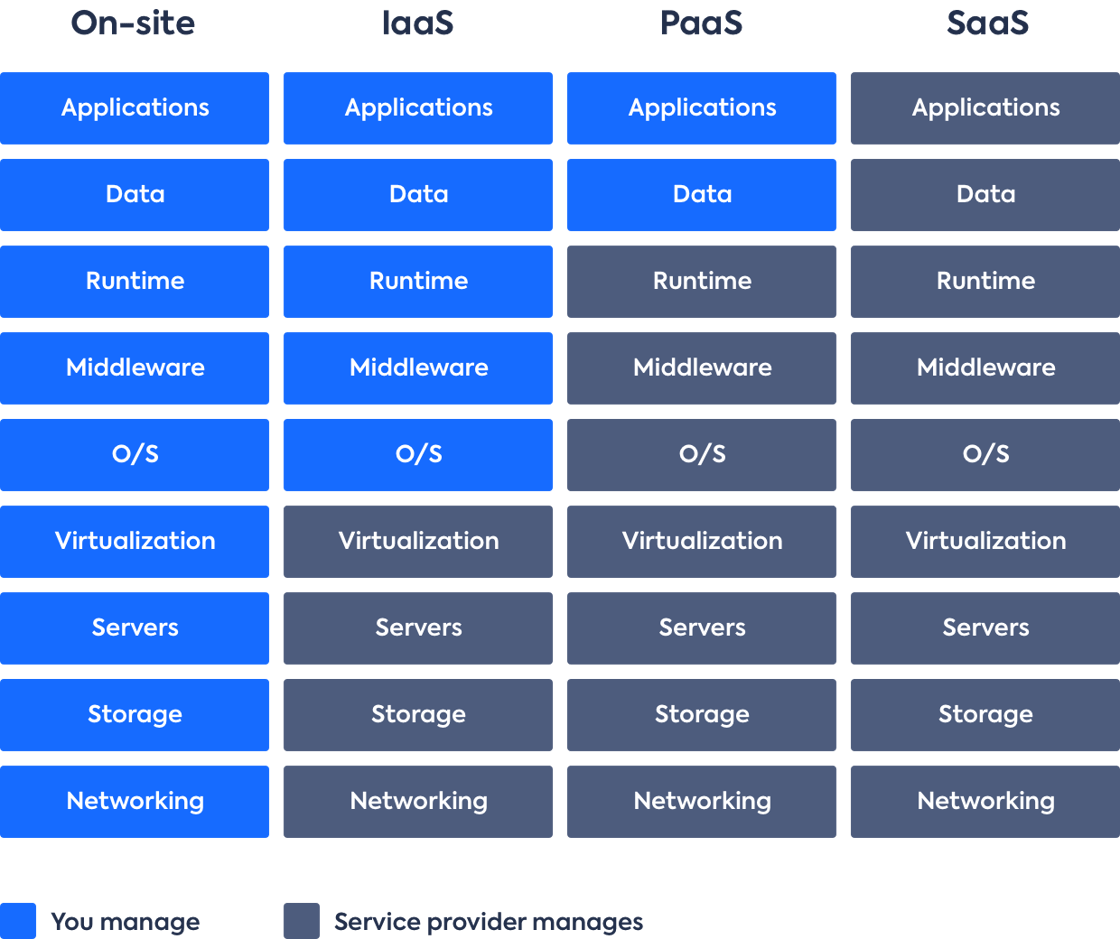
Balancing Infrastructure as a Platform, Platform as a Service, and Software as a Service allows organizations to optimize capital expenditure, maintain architectural flexibility, and accelerate time-to-market without locking themselves into rigid infrastructure constraints.
Organizations undergoing digital transformation frequently face a critical architectural dilemma: how to distribute workloads across cloud computing models without inflating operational costs or creating severe technical debt. Relying on a single cloud service delivery model rarely satisfies the diverse demands of modern enterprise applications. Instead, businesses must construct a strategic hybrid of Infrastructure as a Service (IaaS), Platform as a Service (PaaS), and Software as a Service (SaaS). Finding the appropriate mix of these three layers requires a nuanced understanding of internal technical capabilities, security mandates, scalability requirements, and financial constraints.
The Core Cloud Triad: Defining the Foundations
To construct an efficient cloud portfolio, decision-makers must clearly differentiate between IaaS, PaaS, and SaaS. Each layer addresses distinct operational layers, shifting the management burden along a continuum between the cloud provider and the enterprise consumer.
Infrastructure as a Service (IaaS)
IaaS provides foundational computing resources over the internet, including virtual machines, storage blocks, networking components, and operating system kernels.
- Control Level: Maximum customer control over the operating system, middleware, and runtime environments.
- Management Burden: The enterprise must handle patching, security configuration, database management, and application monitoring.
- Ideal Use Cases: Legacy workload migration, custom application development requiring specialized server environments, and burstable computing requirements.
Platform as a Service (PaaS)
PaaS delivers a managed framework and development environment designed to support the complete lifecycle of building, testing, deploying, and managing web or mobile applications.
- Control Level: Moderate control, restricted primarily to application code and specific configuration settings.
- Management Burden: The cloud provider manages underlying servers, storage, networking, and runtime engines, freeing developers from system administration.
- Ideal Use Cases: Rapid software development, microservices architecture, and continuous integration/continuous deployment (CI/CD) pipelines.
Software as a Service (SaaS)
SaaS delivers fully functioning, ready-to-use software applications hosted remotely by a vendor and typically accessed via a web browser or API client.
- Control Level: Minimal technical control; customization is generally limited to user configurations, workflow rules, and branding.
- Management Burden: The vendor manages all hardware, software updates, security patches, data backups, and uptime availability.
- Ideal Use Cases: Standardized business operations, including customer relationship management (CRM), enterprise resource planning (ERP), email, and collaboration tools.
Strategic Drivers for Cloud Model Selection
Determining the right proportions of IaaS, PaaS, and SaaS within an organization depends heavily on four operational pillars: speed, cost predictability, internal technical expertise, and security compliance.
Time-to-Market vs. Competitive Differentiation
When deploying standard business capabilities—such as corporate email or accounting—building custom infrastructure or writing bespoke code introduces unnecessary delay. In these instances, SaaS solutions offer immediate deployment, letting internal teams focus on core competencies. Conversely, applications that provide unique market differentiation require custom code deployed on PaaS or tightly tuned virtual environments on IaaS.
Total Cost of Ownership (TCO) and Capital Allocation
Financial forecasting differs dramatically across the three models. SaaS operates on a predictable subscription (OpEx) model, which reduces initial capital expenditure (CapEx) but can scale into high cumulative costs as user counts grow. IaaS offers fine-grained utility billing, but hidden costs often emerge from misconfigured storage volumes and unoptimized resource utilization. PaaS optimizes engineering hours, reducing human capital overhead even if the raw infrastructure fees appear higher than raw IaaS instances.
Technical Skill Sets and Organizational Maturity
An organization with a mature DevOps engineering team can easily harness the power of IaaS and advanced PaaS orchestration platforms like Kubernetes. Conversely, organizations with limited technical staff risk security breaches and system downtime if they attempt to manage raw virtual machines. Matching the cloud model to internal staffing capabilities prevents operational bottlenecks.
Framework for Balancing IaaS, PaaS, and SaaS
Successful cloud architects evaluate applications individually rather than attempting a blanket migration policy. By auditing current software portfolios, engineering leads can map workloads to the most cost-effective and secure cloud layer.
| Cloud Model | Primary Control Focus | Typical Cost Structure | Recommended Workload Type | Key Operational Risk |
|---|---|---|---|---|
| IaaS | Virtualization, OS, Storage, Networking | Pay-as-you-go utility pricing (CapEx/OpEx hybrid) | Legacy migrations, custom architectures, batch processing | Infrastructure sprawl, security misconfigurations |
| PaaS | Application code, runtime deployment, data | Usage-based tiers, developer seat licensing | Web apps, APIs, microservices, data analytics | Vendor lock-in, limited OS-level troubleshooting |
| SaaS | User management, workflow configurations | Per-user or per-organization subscription (OpEx) | CRM, ERP, HR management, email, productivity | Data sovereignty limits, forced feature updates |
Common Pitfalls in Multi-Model Cloud Strategies
Attempting to implement a balanced cloud strategy introduces specific operational and architectural traps that organizations must actively avoid.
1. Unchecked SaaS Sprawl (Shadow IT)
Departmental business units frequently purchase individual SaaS solutions without the oversight of central IT or security teams. This creates data silos, redundant software spending, and compliance vulnerabilities. Establishing a centralized Cloud Center of Excellence (CCoE) helps vet and inventory all SaaS tools.
2. Premature Optimization on Raw IaaS
Migrating legacy applications directly to IaaS via "lift-and-shift" strategies without rearchitecting often fails to deliver expected cloud cost savings. Running traditional monolithic applications on virtual machines replicates on-premises inefficiencies in a remote environment. Organizations should evaluate whether those workloads can be refactored into PaaS or replaced entirely with a SaaS alternative.
3. Vendor Lock-In Complexities
Deep integration with proprietary PaaS data stores or serverless functions can make migrating to another cloud provider exceedingly difficult. Enterprises must weigh the velocity gains of proprietary managed services against the long-term strategic flexibility of open-source containers and multi-cloud architectures.
Verifying and Optimizing Your Cloud Portfolio
Once an appropriate mix of IaaS, PaaS, and SaaS has been deployed, maintaining efficiency requires continuous oversight and governance.
- Conduct Regular FinOps Audits: Implement cloud financial management practices to identify idle IaaS instances, oversized storage volumes, and unused SaaS subscription seats.
- Enforce Unified Identity and Access Management (IAM): Centralize authentication protocols (such as single sign-on and multi-factor authentication) across SaaS applications and cloud platforms to secure data boundaries.
- Monitor Performance Metrics: Utilize application performance monitoring (APM) tools to evaluate whether database queries, API gateways, and user interfaces meet operational service-level agreements (SLAs).
Frequently Asked Questions
Can an enterprise run exclusively on SaaS and PaaS while avoiding IaaS entirely?
Yes. Many modern software-as-a-service companies and digital startups operate without managing any IaaS infrastructure. By building applications on PaaS frameworks and utilizing SaaS for internal operations, they eliminate server management overhead completely. However, organizations with strict regulatory compliance requirements or high-performance computing needs often still require IaaS.
How does security responsibility shift across IaaS, PaaS, and SaaS?
Security follows a shared responsibility model. In IaaS, the provider secures the physical data center, while the customer secures the operating system, network configurations, and data. In PaaS, the provider manages the operating system and runtime, leaving the customer responsible for application code and data. In SaaS, the vendor handles nearly all security layers, while the customer maintains responsibility for user access management and data classification.
What is the primary indicator that an IaaS workload should be moved to PaaS?
High operational overhead is the clearest indicator. If systems administration teams spend excessive time patching operating systems, scaling clusters manually, or managing database backups rather than writing business logic, migrating the workload to a managed PaaS environment typically improves efficiency.
How do subscription costs impact long-term financial planning for SaaS?
While SaaS subscriptions eliminate upfront capital expenditures and simplify budgeting through predictable operational expenses, cumulative costs can surpass custom development over many years. Organizations must regularly review utilization rates to ensure they are not paying for inactive user licenses.
Next Steps for Cloud Architecture Teams
To operationalize these insights, conduct an immediate portfolio inventory across your organization. Categorize every existing application and service by its underlying delivery model, evaluate its total cost of ownership against business value, and identify opportunities to transition rigid IaaS workloads to managed PaaS environments or redundant SaaS tools to consolidated enterprise contracts.