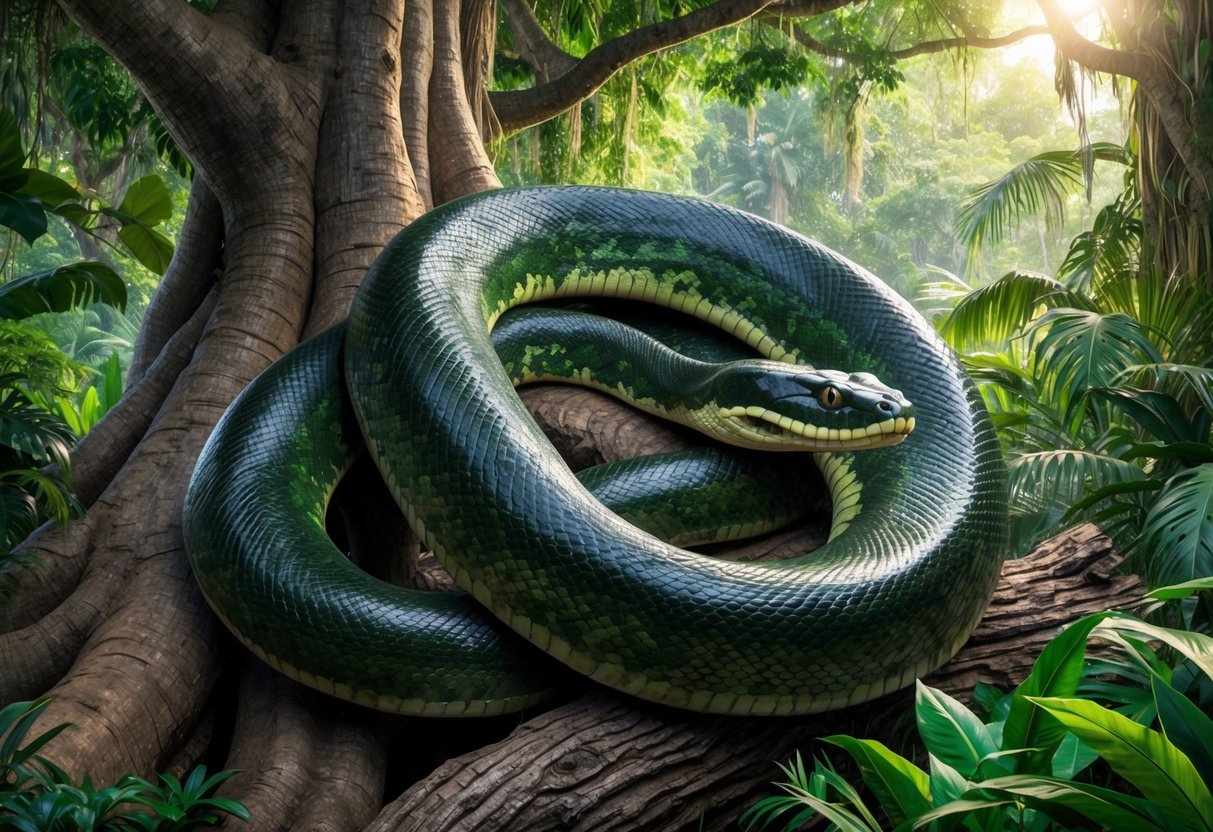
When an anaconda is spotted in the Amazon, it frequently triggers global fascination, sensationalized headlines, and profound scientific curiosity about the world's heaviest snakes. Witnessing or documenting these apex predators in their natural South American habitat requires an understanding of their true ecological behavior, the practical realities of jungle exploration, and the strict safety protocols needed to coexist with Earth's most formidable aquatic constrictors.
Introduction to the Amazonian Anaconda
Encountering a massive green anaconda (Eunectes murinus) within the dense river networks and flooded forests of the Amazon basin remains one of the most remarkable wildlife experiences possible. Contrary to Hollywood exaggerations depicting these reptiles as ravenous monsters capable of consuming entire motorized boats, wild anacondas are reclusive, ambush-hunting reptiles that spend the vast majority of their lives submerged or partially hidden in slow-moving water, swamps, and marshes.
Understanding what happens when an anaconda is spotted requires separating cinematic myth from biological reality. These non-venomous constrictors rely on sheer muscle mass and stealth rather than speed or venom to capture prey, which includes capybaras, caimans, deer, and various fish species. For travelers, researchers, and indigenous communities sharing the basin, a sighting is simultaneously an ordinary event in a thriving ecosystem and an extraordinary reminder of the untamed nature of the world's largest tropical rainforest.
Biological Profile and Taxonomy of the Amazonian Anaconda
To appreciate why spotting an anaconda in the Amazon commands such attention, one must examine the biological classification and physical traits that make these animals unique. Taxonomy recognizes several species within the genus Eunectes, with the green anaconda being the largest, heaviest, and most widely studied member of the boa family (Boidae).
Unlike venomous vipers or agile tree snakes, anacondas are heavily specialized for aquatic life. Their eyes and nostrils are positioned on top of their heads, allowing them to breathe and survey their surroundings while their massive bodies remain completely hidden beneath the water's surface.
Key Physical Characteristics
- Size and Weight: While historical accounts often exaggerate dimensions, mature female green anacondas regularly reach lengths of 15 to 20 feet (4.5 to 6 meters) and can weigh upwards of 150 to 300 pounds (70 to 135 kilograms). Females are significantly larger than males—a sexual dimorphism common among large boids.
- Coloration and Camouflage: Olive-green, brown, black, and yellowish oval blotches run along their dorsal scales, providing near-perfect camouflage among the murky waters, floating vegetation, and muddy banks of Amazonian tributaries.
- Muscular Structure: Their bodies are immensely powerful, evolved primarily for constriction rather than active pursuit. Once an anaconda secures prey with its backward-curving teeth, it coils its muscular body around the victim, restricting blood flow and respiration until circulatory collapse occurs.
| Species / Variant | Typical Habitat | Maximum Recorded Length | Primary Diet |
|---|---|---|---|
| Green Anaconda (Eunectes murinus) | Swamps, marshes, slow rivers | 15–20+ feet (approx. 4.5–6+ m) | Mammals, birds, reptiles, fish |
| Yellow Anaconda (Eunectes notaeus) | Flooded grasslands (Pantanal) | 9–12 feet (approx. 2.7–3.6 m) | Water birds, small mammals, fish |
| Dark-Spotted Anaconda (Eunectes deschauenseei) | Coastal marshes of northern South America | 8–10 feet (approx. 2.4–3.0 m) | Birds, amphibians, small mammals |
Where and When Anacondas Are Most Likely Found
Spotting an anaconda is rarely a matter of random luck; it requires understanding the hydrological cycles of the Amazon basin. The rainforest experiences dramatic seasonal fluctuations between wet and dry periods, which fundamentally dictate snake movement and visibility.
During the rainy season, the Amazon River and its thousands of tributaries overflow their banks, flooding vast expanses of forest known as várzea. During this time, anacondas disperse widely into the flooded timber, making them exceptionally difficult to spot as they hunt among submerged tree trunks and dense foliage.
Conversely, the dry season concentrates water into shrinking pools, oxbow lakes, and permanent river channels. Wildlife converges on these remaining water sources, increasing the probability of encountering an anaconda basking on a muddy bank or waiting patiently in the shallows for thirsty mammals.
Primary Habitats within the Basin
- Slow-Moving Tributaries and Oxbow Lakes: Areas with minimal current where suspended sediment reduces visibility, allowing the snake to remain undetected.
- Floating Meadows (Eichhornia and Grass Mats): Dense mats of aquatic vegetation provide resting sites and cover where anacondas bask and hunt.
- Swamps and Flooded Savannahs: Seasonally inundated wetlands that offer an abundance of prey species like capybaras and wading birds.
Safety Protocols and Best Practices During a Sighting
For eco-tourists, field researchers, and local guides, encountering an anaconda in the wild demands calm adherence to established wildlife safety protocols. While unprovoked attacks on humans are exceedingly rare, large constrictors are powerful wild animals that must be treated with absolute respect.
Maintaining a safe distance is the single most important rule. An anaconda on land is often slow-moving and reluctant to strike unless cornered, stepped on, or aggressively harassed. In the water, however, their agility increases dramatically, and a startled snake may react defensively.
Essential Guidelines for Observers
- Maintain Distance: Keep a minimum distance of at least 10 to 15 feet from a resting or swimming anaconda. Never attempt to touch, handle, or pull a wild specimen.
- Watch Your Step: When walking along muddy riverbanks, swamp edges, or through shallow water, use a sturdy walking stick and scan the terrain carefully before placing your foot down.
- Never Swim in Murky Waters Alone: Avoid swimming in stagnant Amazonian oxbows or murky backwaters known to harbor large aquatic predators, including anacondas and caimans.
- Respect Local Guides: Follow the instructions of experienced indigenous or professional guides who understand local animal behavior and environmental warning signs.
Scientific Research and Conservation Status
Modern herpetology views the anaconda not as a monstrous predator to be feared, but as a vital keystone species that helps regulate the population dynamics of the Amazonian food web. Researchers utilize radio telemetry, PIT tagging, and long-term observational studies to monitor movement patterns, reproductive biology, and population health.
Despite their formidable reputation, anacondas face mounting pressures from human activities throughout the Amazon basin. Habitat fragmentation driven by deforestation, agricultural expansion, and dam construction disrupts migratory and hunting pathways. Furthermore, retaliatory killing by local farmers or livestock owners—fearing for the safety of cattle and pigs—remains a persistent threat to individual snakes.
Conservation initiatives focus on preserving unbroken tracts of wetland and riparian forest, alongside educational outreach programs that highlight the ecological value of apex predators in maintaining healthy river ecosystems.
Frequently Asked Questions
Can an anaconda swallow a human?
While historical fiction and cinema frequently depict anacondas consuming adult humans, verified accounts of predation on humans are extraordinarily rare. The width of an adult human's shoulders presents a major biomechanical challenge for even the largest recorded anacondas. However, large females are theoretically capable of subduing a human child or small adult, making caution essential.
How long can an anaconda stay underwater?
Anacondas are semi-aquatic and possess adaptations that allow them to remain submerged for 10 to 20 minutes under normal conditions. When resting or hibernating in cooler mud, they can significantly lower their metabolic rate and remain underwater for even longer periods by absorbing small amounts of oxygen through their skin or surfacing discreetly.
Are anacondas venomous?
No, anacondas are completely non-venomous. They belong to the boa family (Boidae) and kill their prey through constriction. They secure prey with backward-curving teeth to prevent escape and then rapidly wrap their muscular coils around the animal, tightening their grip with every exhale until the prey succumbs to circulatory arrest.
Why do anacondas spend so much time in the water?
Water provides buoyant support for their massive bodies, which would otherwise be cumbersome to move on land. Additionally, aquatic environments offer superior thermoregulation, concealment from prey and predators, and access to the primary migratory routes of their preferred food sources.
What should I do if I encounter an anaconda in the wild?
Stop immediately, remain calm, and observe the animal from a respectful distance. Do not make sudden movements, loud noises, or attempt to block its path to the water. In nearly all cases, the snake will either remain motionless in camouflage or slowly glide away into the water without paying attention to human observers.
Next Actions and Responsible Wildlife Observation
When exploring the Amazon rainforest, prioritize booking excursions with licensed eco-tourism operators and local indigenous guides who champion ethical, low-impact wildlife viewing. If you are fortunate enough to witness an anaconda spotted in the wild, treat the moment as a rare glimpse into the complex, functioning heart of Earth's greatest tropical ecosystem—observing quietly, respecting the animal's space, and leaving the habitat entirely undisturbed.