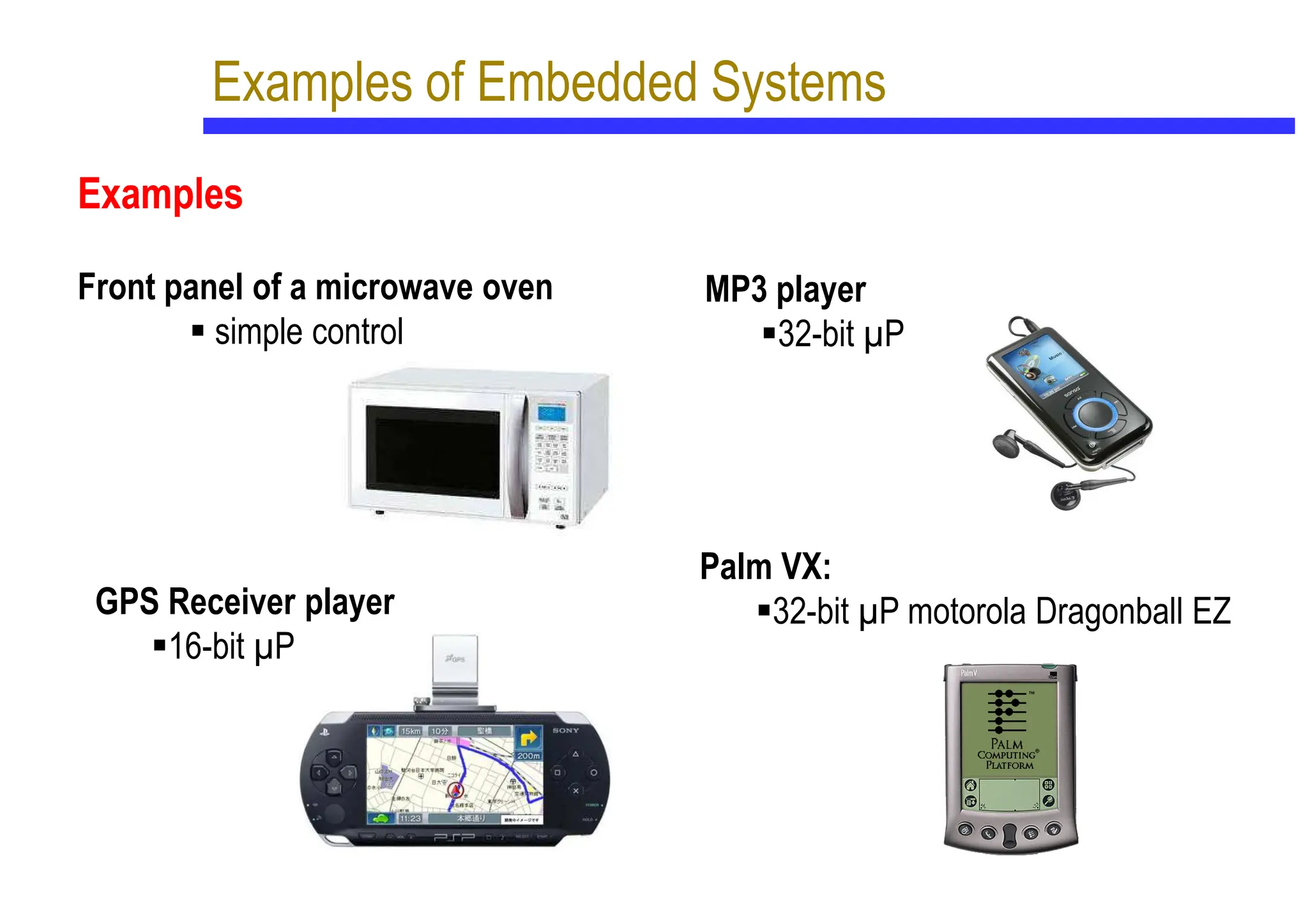
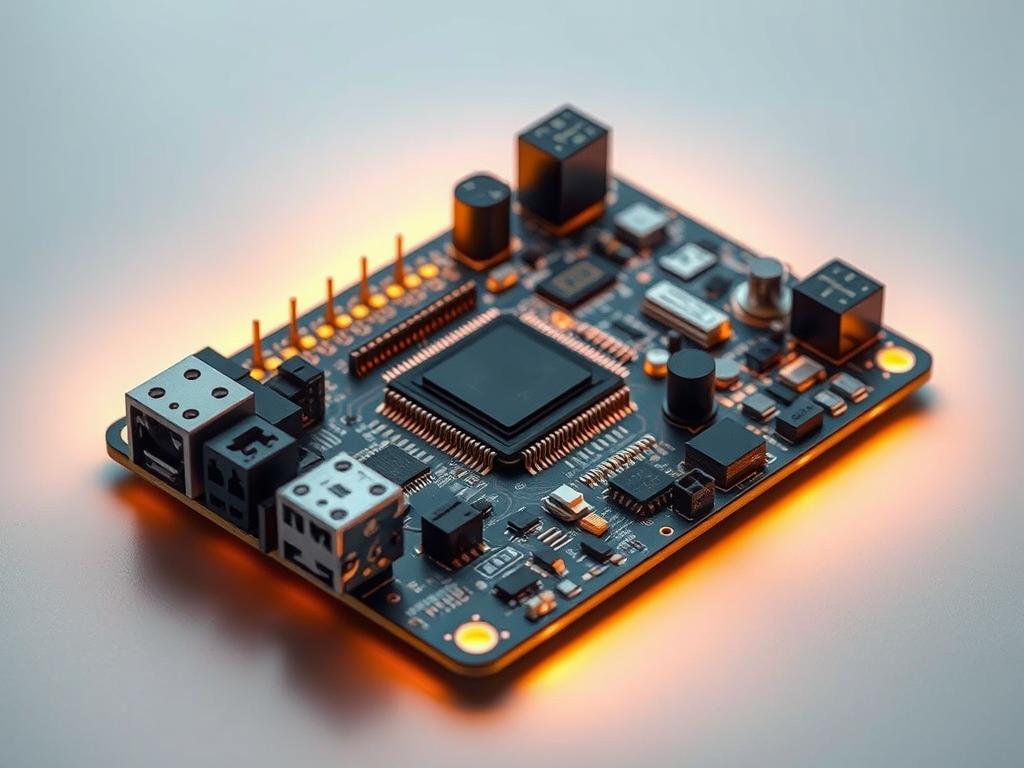
Embedded systems are specialized computing platforms designed to perform dedicated functions within larger mechanical or electrical systems. Unlike general-purpose computers, these systems are optimized for specific tasks, such as managing the fuel injection in a car or controlling the temperature of a smart oven, combining custom software with hardware to ensure reliability, efficiency, and real-time performance.
In the year 2026, it is virtually impossible to move through a single hour of daily life without interacting with an embedded system. These "hidden" computers are the backbone of modern infrastructure, consumer electronics, and industrial machinery. While the average user might only see a sleek interface or a simple physical button, beneath the surface lies a complex orchestration of microcontrollers, sensors, and firmware. This guide explores the most prevalent examples of embedded systems in everyday devices, detailing how they function, the technology that powers them, and why they are essential to our modern standard of living.
The Foundational Architecture of Embedded Systems
To understand how these systems manifest in everyday devices, we must first define their internal structure. Every embedded system consists of three primary layers: the hardware, the software (firmware), and the interaction with the external environment.
Hardware Components
The heart of an embedded system is usually a Microcontroller Unit (MCU) or a Microprocessor Unit (MPU). In 2026, the shift toward RISC-V architecture and advanced ARM Cortex-M series chips has allowed even the simplest household devices to possess significant computational power while consuming minimal energy.
- Sensors: These act as the system's "senses," converting physical phenomena (heat, light, pressure, motion) into digital signals.
- Actuators: These are the "muscles," taking digital commands and performing physical actions, such as turning a motor or opening a valve.
- Memory: Usually a combination of Flash memory for storing the program and RAM for temporary data processing.
Software and Firmware
Unlike the operating systems on a laptop, embedded software is often a Real-Time Operating System (RTOS) or "bare-metal" code. In 2026, the reliability of RTOS like FreeRTOS or Zephyr ensures that tasks are executed within strict timing constraints—a critical requirement for safety-sensitive devices like automotive braking systems.
Everyday Example 1: The Smart Washing Machine
The modern washing machine is no longer a simple mechanical timer connected to a motor. It is a sophisticated embedded environment designed to optimize water usage, electricity, and fabric care.
How the System Functions
When you select a "Delicates" cycle, the embedded controller initiates a specific sequence of instructions. The system utilizes fuzzy logic algorithms to interpret data from various sensors:
- Load Sensors: These measure the weight of the laundry to determine how much water is required.
- Turbidity Sensors: These optical sensors measure the "cloudiness" of the water to detect how much dirt is present, allowing the system to adjust the number of rinse cycles dynamically.
- Pressure Transducers: These monitor the water level to prevent overfilling.
Connectivity and the 2026 Standard
By 2026, most mid-to-high-end washing machines utilize the Matter protocol for smart home integration. The embedded system includes a wireless SoC (System on Chip) that allows the machine to communicate with a central home hub, notifying the user's smartphone when a cycle is complete or downloading updated wash profiles for new types of synthetic fabrics.
Everyday Example 2: Automotive Control Units (ECUs)
The automotive industry represents one of the most complex implementations of embedded systems. A modern vehicle in 2026 can contain over 100 individual Electronic Control Units (ECUs) connected via a high-speed network, often transitioning from traditional CAN (Controller Area Network) to Automotive Ethernet for faster data throughput.
Anti-lock Braking System (ABS)
The ABS is a classic "hard real-time" embedded system. It monitors wheel speed sensors constantly. If it detects a wheel is about to lock up during braking, the embedded controller pulses the hydraulic valves thousands of times per second to maintain traction. A delay of even a few milliseconds in this system could result in a catastrophic failure, which is why the software is written with extreme precision and failsafe redundancies.
Engine Management System (EMS)
In internal combustion or hybrid vehicles, the EMS manages the "air-fuel-spark" triangle. It reads the oxygen levels in the exhaust, the throttle position, and the engine temperature to adjust fuel injection timing. In 2026, these systems are increasingly using Edge AI (Artificial Intelligence at the edge) to predict component wear and optimize fuel efficiency based on the driver's historical behavior.
Everyday Example 3: Wearable Health Monitors
Wearables, such as smartwatches and fitness trackers, are masterpieces of miniaturized embedded design. These devices must balance high-performance biological sensing with a battery life that lasts days or weeks.
Sensor Fusion
The core of a wearable's utility is sensor fusion. The embedded system takes raw data from an accelerometer (movement), a PPG (Photoplethysmography) sensor (heart rate), and a skin temperature sensor. The firmware then processes these disparate signals to provide a cohesive "Health Score."
Power Management
Power management is perhaps the most critical embedded task in a wearable. The system uses sophisticated sleep modes, where the main processor is powered down for milliseconds between heartbeats, waking up only long enough to process a data point before returning to a low-power state. This is managed by a specialized Power Management Integrated Circuit (PMIC) controlled by the embedded software.
Everyday Example 4: Smart Thermostats and HVAC Systems
Smart thermostats have evolved from simple temperature-activated switches into predictive climate controllers. These devices exemplify the intersection of embedded systems and machine learning.
User Pattern Recognition
A smart thermostat records when inhabitants are home and what temperatures they prefer. The embedded system runs a lightweight learning algorithm that creates a schedule based on these patterns. By 2026, many of these systems integrate with the local power grid (Demand Response) to pre-cool or pre-heat a home when electricity prices are lowest, a process facilitated by the device's embedded communication module.
Safety Protocols
Embedded systems in HVAC (Heating, Ventilation, and Air Conditioning) also handle safety. If a flame sensor in a furnace fails to detect ignition, the embedded controller immediately shuts off the gas valve to prevent a leak—a critical function that operates independently of the Wi-Fi connection to ensure safety even during an internet outage.
Comparison of Common Embedded Systems in 2026
The following table compares different categories of everyday devices based on their embedded characteristics, processing needs, and typical connectivity.
| Device Category | Primary Processor Type | Key Sensors | Real-Time Requirement | Common Connectivity |
|---|---|---|---|---|
| Microwave Oven | 8-bit or 16-bit MCU | Humidity, Door Interlock | Low (Soft Real-Time) | None / Bluetooth (Basic) |
| Smartwatch | 32-bit Ultra-Low Power (ARM/RISC-V) | PPG, Accelerometer, GPS | Medium | Bluetooth, Wi-Fi, NFC |
| Automotive ABS | High-Reliability 32-bit MCU | Wheel Speed, Pressure | Critical (Hard Real-Time) | CAN Bus / Automotive Ethernet |
| Smart Thermostat | 32-bit MPU (e.g., Cortex-A series) | Temp, Humidity, PIR (Motion) | Low | Wi-Fi, Thread, Matter |
| Digital Camera | High-Speed DSP / Image Processor | CMOS Image Sensor, Gyro | High (For Image Processing) | Wi-Fi, USB-C |
The Integration of Edge AI in 2026 Everyday Devices
A significant development in 2026 is the democratization of Edge AI within embedded systems. Traditionally, complex processing like voice recognition or image analysis required sending data to the cloud. However, privacy concerns and the need for lower latency have pushed these tasks back into the local device.
Modern embedded systems now include NPU (Neural Processing Unit) cores. For example, a smart doorbell in 2026 doesn't just detect motion; its embedded system runs a local neural network to distinguish between a delivery person, a stray animal, and a falling leaf. This happens entirely on the device's local hardware, ensuring that video data doesn't leave the home unnecessarily, which enhances both speed and user privacy.
Challenges and Limitations of Everyday Embedded Systems
Despite their ubiquity, embedded systems face several engineering and operational challenges:
- Security Vulnerabilities: As more everyday devices (like refrigerators or light bulbs) gain internet connectivity, they become targets for botnets. In 2026, manufacturers are increasingly mandated to implement Hardware Root of Trust (HRoT) to ensure that only authorized firmware can run on the device.
- Legacy Support: Unlike smartphones that are replaced every few years, a washing machine or car is expected to last a decade or more. Providing software updates for embedded systems over long lifecycles remains a significant logistical hurdle for manufacturers.
- Environmental Constraints: Embedded systems must often operate in harsh conditions. An engine's ECU must survive extreme heat and vibration, while an outdoor security camera must remain functional in sub-zero temperatures. This requires specialized industrial-grade components that are more expensive than standard consumer electronics.
Troubleshooting Embedded Systems in Daily Life
When an everyday device "glitches," it is usually an issue with the embedded system's state. Because these systems are designed to be "always on," they can occasionally enter an undefined state due to a power surge or a software edge case.
- The Power Cycle: Most consumer-level embedded systems can be "fixed" by a hard reset (unplugging for 30 seconds). This clears the RAM and forces the MCU to reload the firmware from the Flash memory, effectively restarting the code from its known "golden state."
- Firmware Updates: In 2026, if a device is behaving erratically, the first step is to check for an Over-the-Air (OTA) update. Manufacturers frequently release patches to fix bugs in the embedded logic or to improve sensor calibration.
Frequently Asked Questions
What is the difference between a microcontroller and an embedded system?
A microcontroller (MCU) is a physical component—a single chip containing a processor, memory, and input/output peripherals. An embedded system is the complete functional unit that includes the MCU, the software (firmware), the circuit board, and the sensors/actuators it controls. The MCU is the "brain," while the embedded system is the "entire body" performing the task.
Can an embedded system work without an internet connection?
Yes, the vast majority of embedded systems are designed to function entirely offline. While "Smart" devices use connectivity for extra features, the core logic (like a microwave heating food or a car's airbags deploying) must work without an internet connection. In 2026, the trend is toward "Local-First" architecture, where connectivity is optional rather than a requirement for basic functionality.
Why do embedded systems use specialized languages like C or C++?
Embedded systems require high efficiency and direct control over hardware resources like memory and processor registers. C and C++ allow developers to write code that is very "close to the metal," meaning it uses very little overhead. This is essential for devices with limited memory or those that need to respond to events in microseconds.
How do I know if a device has an embedded system?
If a device has a digital display, performs automated tasks, reacts to its environment (via sensors), or has different "modes" of operation, it almost certainly contains an embedded system. Even simple items like a modern electric toothbrush or a programmable coffee maker utilize microcontrollers to manage timers and motor speeds.
Are embedded systems safe from hacking?
No system is 100% secure, but embedded systems in 2026 use several layers of protection. This includes encrypted bootloaders, which prevent unauthorized software from running, and TEEs (Trusted Execution Environments) that isolate sensitive data like passwords or biometric info from the rest of the system's operations.
Practical Recommendation for Consumers
When purchasing new "everyday" technology in 2026, prioritize devices that support the Matter and Thread standards. These protocols ensure that the embedded systems within your home can communicate seamlessly across different brands. Furthermore, always opt for devices from manufacturers that provide a clear "End-of-Life" (EOL) policy regarding security updates. Because these systems are so deeply integrated into our lives, ensuring their software remains patched is a matter of both digital and physical safety.