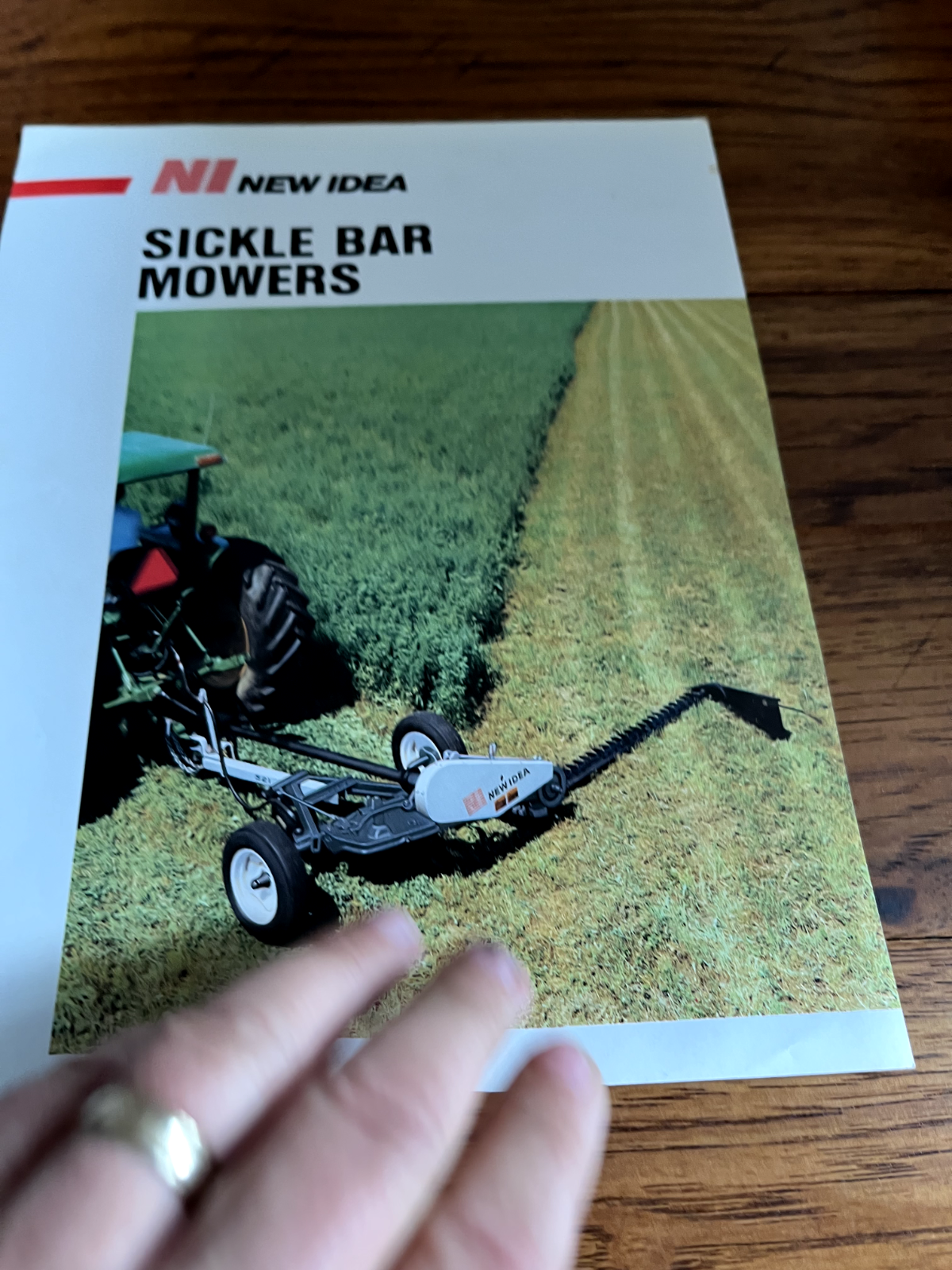
The 251 New Idea sickle mower is a legacy semi-mounted reciprocating cutter bar machine designed for historical and small-scale hay production. Highly regarded for its mechanical simplicity and clean cutting action, the 251 model remains a staple for enthusiasts and small-acreage farmers in 2026 who rely on vintage equipment to manage pastures or harvest grass hay, provided the operator understands its specific drive-line and timing requirements.
Understanding the Role of the 251 New Idea Sickle Mower
The New Idea brand, once a powerhouse in the agricultural implement industry, became synonymous with robust haying equipment throughout the mid-20th century. The 251 model fits into a category of semi-mounted mowers that utilize the tractor’s power take-off (PTO) to oscillate the cutter bar. Unlike modern disc mowers, which use high-speed rotating blades to shear through material, the 251 utilizes a reciprocating sickle—a series of triangular, serrated knives that move back and forth through stationary guards.
This design is deliberate and serves specific functions. The sickle mower excels in cutting tall, thin-stemmed grasses with minimal disturbance to the ground, which is often preferred for maintaining specific meadow habitats or for farmers who prioritize fuel efficiency over speed. However, because the technology is decades old, today's operators must approach the 251 as both an agricultural tool and a piece of historical machinery that requires a high level of mechanical empathy.
Technical Specifications and Design Architecture
To effectively operate or restore a 251 New Idea mower, one must understand its core components. The mower is characterized by its semi-mounted hitch, which allows the mower to follow the terrain with significant flexibility.
The Cutter Bar Assembly
The heart of the machine is the cutter bar. It consists of the heavy-duty bar itself, the ledger plates (which provide the shearing surface), the sickle sections, and the rock guards. The alignment of these parts is the primary factor in determining the machine's efficiency. If the ledger plates are worn or the guards are misaligned, the mower will drag or crush the hay rather than slice it, leading to "clogging" that frustrates many inexperienced operators.
The Pitman Drive System
The 251 uses a Pitman arm—a wooden or composite connecting rod that converts the rotary motion of the mower’s flywheel into the linear reciprocating motion of the sickle bar. The inclusion of a break-away hinge is a critical safety feature; if the mower strikes a significant obstruction like a hidden stump or large stone, the cutter bar is designed to swing backward to prevent catastrophic damage to the transmission or the tractor’s PTO shaft.
Operational Prerequisites and Safety Protocols
Operating a piece of vintage equipment in 2026 requires an adherence to safety standards that are often more stringent than those applied to modern, shrouded machinery.
Pre-Operation Inspection Checklist
Before engaging the PTO, the following checks are mandatory:
- Sickle Sharpness: Inspect every section on the sickle bar. Dull or nicked sections should be replaced immediately. A dull sickle creates excess vibration, which accelerates wear on the Pitman arm and the flywheel bearings.
- Guard Alignment: Ensure all guards are aligned. Use a straightedge along the bar to check for bends or twists.
- Ledger Plate Integrity: Ensure the ledger plates are sharp and securely riveted.
- Lubrication: The 251 features several grease zerk locations on the PTO shaft, the flywheel assembly, and the hinge points. Use high-quality lithium-based grease, as modern synthetic formulations may not be compatible with the specific metal-on-metal tolerances of the 1960s-era assemblies.
Safety Considerations
Because the 251 lacks the extensive safety shielding found on 2026-model equipment, the operator must remain hyper-vigilant. Never attempt to unclog the cutter bar while the tractor engine is running or the PTO is engaged. Always disengage the PTO and wait for all motion to cease before approaching the machine. Additionally, ensure that the tractor’s stabilizer bars are adjusted correctly to keep the mower frame from swaying into the rear tires.
Common Maintenance Challenges and Solutions
The most frequent issue encountered by 251 owners is "plugging," where the cut grass bunches up in front of the sickle, forcing the operator to stop and clear the material manually.
The Lead and Registration Concept
"Registration" refers to the distance the sickle section travels from the center of one guard to the center of the next. In a perfectly timed 251, the sickle section should be centered in the guard at the end of each stroke. If the timing is off, the sickle stops too early or too late, leaving a tuft of hay uncut.
"Lead" refers to the angle of the cutter bar relative to the direction of travel. The outer end of the bar should be slightly ahead of the inner end to account for the pressure exerted by the cut crop. Adjusting the lead ensures that the entire length of the bar is working at an optimal shearing angle.
Comparison of Mowing Technologies
| Feature | 251 New Idea Sickle | Modern Disc Mower |
|---|---|---|
| Power Requirement | Low (15–30 HP) | High (60+ HP) |
| Ground Speed | Slow to Moderate | Fast |
| Maintenance | High (Periodic adjustment) | Low (Periodic blade swaps) |
| Crop Disturbance | Minimal | High (Aggressive suction) |
| Safety Shielding | Minimal | Extensive |
Troubleshooting Common Failures
When the 251 New Idea fails to perform as expected, the solution usually lies in mechanical adjustment rather than part replacement.
- Broken Pitman Arm: Usually caused by extreme vibration from a dull sickle or hitting a hidden object. Always carry a spare Pitman arm and the necessary hardware to change it in the field.
- Excessive Noise/Vibration: Check the flywheel bearings and the wear on the sickle head. The sickle head must fit tightly in the drive guide; excessive "slop" here will destroy the drive assembly.
- Ragged Cutting: This is almost always caused by dull ledger plates or incorrect registration. Sharpen the ledger plates or replace the guards if the plates are beyond filing.
Procuring Parts in 2026
Finding parts for a machine that has been out of primary production for decades can be challenging. Fortunately, the "New Idea" brand legacy remains supported by a network of aftermarket agricultural suppliers. While original OEM parts are rare, many companies continue to manufacture standard replacement sickle sections, guards, and Pitman arms that are compatible with the 251 model.
When searching for parts, verify the specific sub-model version. Use the serial number, usually found on a brass or aluminum plate on the main frame, to ensure you are ordering the correct guard hole spacing and sickle length. Many specialized vintage tractor forums and restoration groups provide digital archives of original parts manuals, which are invaluable for identifying part numbers before contacting suppliers.
The Role of the 251 in Modern Small-Scale Agriculture
In the context of 2026, the 251 New Idea is not merely an antique; it is a viable tool for land managers who value biodiversity and low-impact farming. Because the sickle mower does not pulverize the forage, it is often favored for harvesting high-quality horse hay or for cutting wildflower meadows where preserving the seed heads is a priority.
Its lightweight design also makes it an excellent choice for smaller, older tractors that lack the hydraulic capacity or weight to handle modern, heavy-duty disc or drum mowers. By choosing the 251, the operator opts for a deliberate, slower pace of agriculture that emphasizes precision and machine maintenance over brute force.
Frequently Asked Questions
1. How often should the sickle sections be sharpened on a 251?
The frequency depends entirely on the type of forage and the cleanliness of the field. In clean, dry grass, a sharp sickle can last for several days of operation. However, if you are mowing near dirt or sandy soil, you may need to file the sections every four to six hours to maintain a clean shear.
2. Can the 251 be modified to use a modern hydraulic lift?
While the 251 was designed primarily for mechanical lift systems, many owners have retrofitted their units with auxiliary hydraulic cylinders. This requires professional welding to ensure the frame structural integrity is maintained. If you proceed with this modification, ensure the cylinder stroke matches the original lift arm range of motion.
3. What is the biggest mistake new operators make with this mower?
The most common mistake is attempting to mow at too high a ground speed. Sickle mowers require a steady, consistent forward movement matched to the PTO speed. If you drive too fast, the mower will "choke" and leave strips of uncut grass, necessitating frequent stops and cleanouts.
4. Is the 251 compatible with modern tractor Category 1 hitches?
Yes, most 251 models can be adapted to standard Category 1 three-point hitches, although they were originally designed as semi-mounted units. You may require a custom adapter bracket to ensure the mower maintains the correct level and angle when raised and lowered by the tractor’s lift arms.
5. How do I know if my Pitman arm is failing?
A failing Pitman arm often exhibits audible "knocking" or increased vibration through the tractor seat. Visually, inspect the wood or composite material for longitudinal splitting or "checking." If you see any signs of wood separation, replace the arm immediately, as failure during operation can lead to bent knife bars or damaged drive heads.
Next Steps for Owners
To maintain your 251 New Idea mower effectively, start by downloading or purchasing a period-correct operator’s manual. These documents contain the specific "timing" measurements required to synchronize the sickle stroke with the guard gaps. Once your machine is tuned to factory specifications, create a dedicated maintenance log. Tracking hours of operation, lubrication intervals, and part replacements will not only extend the life of your equipment but also make future troubleshooting significantly easier. If you are preparing the mower for a season of haying, perform a full "dry run" in a controlled area to ensure all moving parts are timed correctly before heading into the main field.