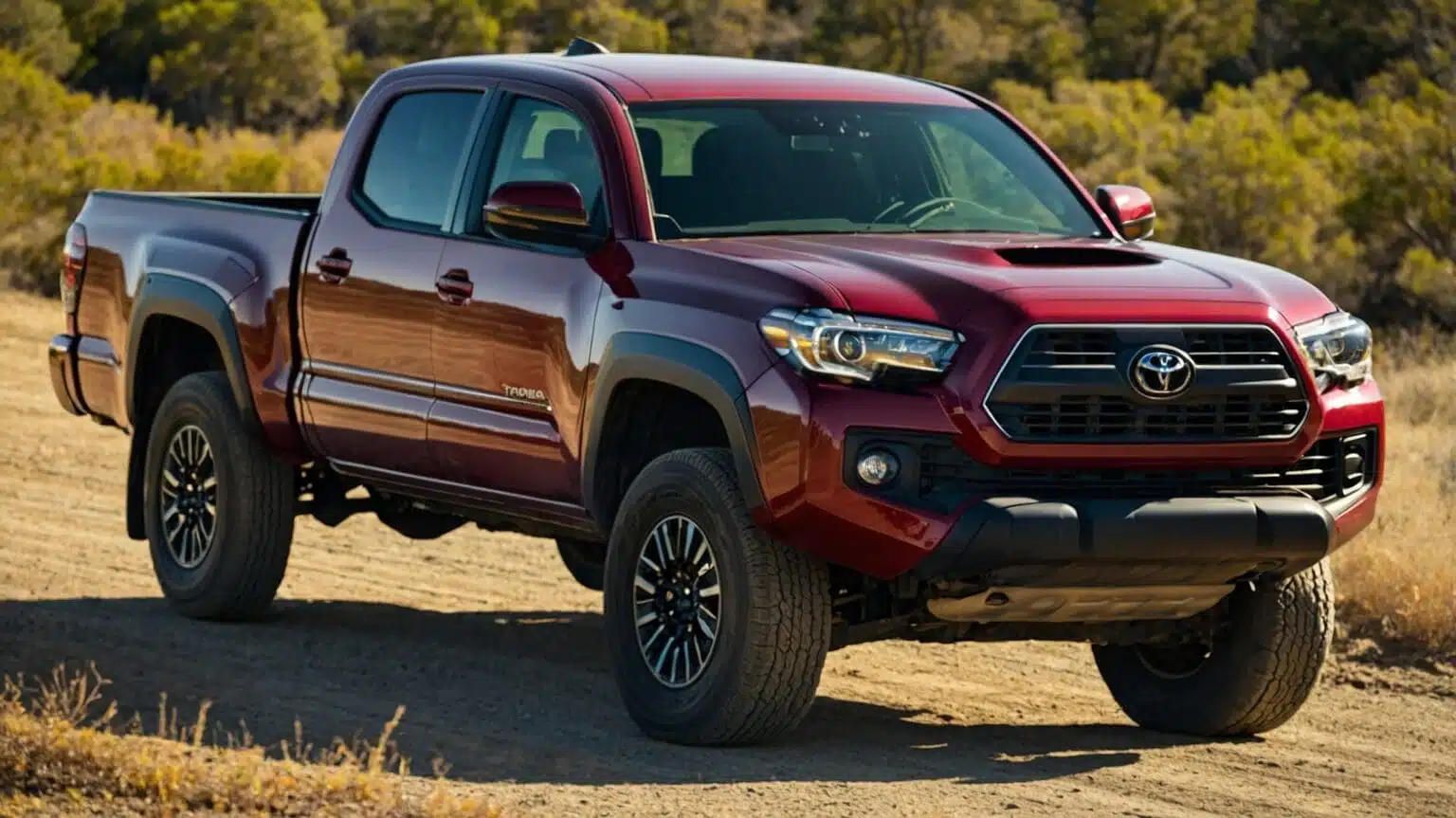
The 2016 Toyota Tacoma features a standard fuel tank capacity of 21.1 US gallons (approximately 80 liters) across all trim levels and configurations. This capacity remains consistent regardless of whether the vehicle is equipped with the 2.7L 4-cylinder engine or the 3.5L V6 engine, providing a uniform baseline for calculating total driving range.
The 2016 model year marked a significant milestone for the Toyota Tacoma, representing the debut of the third generation (N300). While the truck underwent a comprehensive redesign, including a new frame, updated interior, and a fresh powertrain lineup, Toyota engineers opted to maintain a single, standardized fuel tank size for the entire fleet. This decision simplified manufacturing and parts replacement, ensuring that whether you drive a base SR Access Cab or a fully loaded Limited Double Cab, your fuel volume remains the same.
In 2026, as these vehicles reach a decade of service, understanding the nuances of the fuel system—from the "Distance to Empty" calibration to the long-term maintenance of the fuel pump—is essential for owners looking to maximize the utility and longevity of this legendary mid-size pickup.
Detailed Fuel Specifications by Engine and Trim
While the tank size is fixed at 21.1 gallons, the efficiency with which the 2016 Tacoma uses that fuel varies significantly based on the engine choice, drivetrain (2WD vs. 4WD), and transmission. In 2016, Toyota introduced the 3.5L V6 with D-4S Dual Injection and the Atkinson cycle, which was a major technological leap over the previous 4.0L V6.
The 2.7L inline-4 engine was carried over with minor updates, primarily targeting drivers who prioritized a lower entry price point and urban maneuverability over towing capacity. Below is a breakdown of how these specifications translate into real-world fuel economy and estimated range under ideal conditions.
| Engine & Drivetrain | City MPG | Highway MPG | Combined MPG | Max Estimated Range (Miles) |
|---|---|---|---|---|
| 2.7L I4, 2WD (Automatic) | 19 | 23 | 21 | 443 |
| 2.7L I4, 4WD (Automatic) | 19 | 22 | 20 | 422 |
| 3.5L V6, 2WD (Automatic) | 19 | 24 | 21 | 443 |
| 3.5L V6, 4WD (Automatic) | 18 | 23 | 20 | 422 |
| 3.5L V6, 4WD (Manual) | 17 | 20 | 18 | 380 |
Note: Range estimates are calculated based on the 21.1-gallon capacity. Actual usable fuel is slightly less due to the fuel pump assembly and safety margins.
The Atkinson Cycle and Fuel Efficiency
The 3.5L V6 engine (2GR-FKS) used in the 2016 Tacoma was revolutionary for the segment. By utilizing the Atkinson cycle during low-load conditions, the engine keeps the intake valves open slightly longer during the compression stroke. This reduces "pumping losses" and improves thermal efficiency. When the driver demands more power, the engine switches back to the traditional Otto cycle. This technology allows the V6 to achieve nearly identical, and sometimes better, highway fuel economy than the smaller 4-cylinder engine.
Understanding the "Low Fuel" Warning and Reserve Capacity
One of the most common questions from 2016 Tacoma owners involves the discrepancy between the 21.1-gallon specification and the amount of fuel they can actually pump when the "Low Fuel" light illuminates. It is common for owners to report that they can only fit 17 to 18 gallons into the tank when the needle hits the "E" mark or the "Distance to Empty" (DTE) reaches zero.
This is not an error in the manual; rather, it is a deliberate engineering safety margin. Most modern Toyotas, including the 2016 Tacoma, maintain a reserve of approximately 3.0 to 4.0 gallons after the fuel light turns on.
Why the Large Reserve?
- Fuel Pump Cooling: The fuel pump in the Tacoma is an "in-tank" design. It relies on being submerged in cool gasoline to dissipate heat generated by its electric motor. Running the tank extremely low consistently exposes the pump to air, which can cause it to overheat and fail prematurely.
- Debris Prevention: Over time, heavy particulates and sediment can settle at the bottom of the fuel tank. By discouraging owners from running the tank to the absolute bottom, Toyota reduces the risk of these contaminants being sucked into the fuel strainer and clogging the system.
- Safety Margin: Given the Tacoma’s target audience—off-roaders and overlanders—a generous reserve is vital. If a driver is on a remote trail and the light comes on, a 3-4 gallon reserve provides roughly 50-80 miles of driving range to find a refueling station, which can be the difference between a minor inconvenience and a dangerous situation.
Factors That Reduce Real-World Range
While the EPA ratings and the 21.1-gallon tank suggest a range of over 400 miles, many Tacoma owners find their actual range is closer to 300-330 miles. This "Tacoma Range Gap" is usually the result of modifications or driving environments that the standard fuel capacity struggles to overcome.
Aerodynamics and Modifications
The Tacoma is highly customizable, but these upgrades come at a "fuel tax."
- Lift Kits and Tires: Installing a 2-inch or 3-inch lift kit increases the vehicle's frontal area and air turbulence. Replacing the stock highway tires with heavy, E-rated All-Terrain (AT) or Mud-Terrain (MT) tires significantly increases rolling resistance. It is common for a lifted 2016 Tacoma on 33-inch tires to see a 2-4 MPG drop.
- Roof Racks and Tents: A roof-mounted cargo basket or a hard-shell rooftop tent creates substantial aerodynamic drag. Even when empty, these accessories can reduce highway efficiency by 10-15%.
Towing and Payload
The 2016 Tacoma is rated to tow up to 6,800 lbs when properly equipped with the V6 Tow Package. However, towing a heavy trailer or hauling a bed full of camping gear will drastically alter the range. When towing near the maximum capacity, it is not unusual for the V6 engine's fuel economy to drop to 10-12 MPG. In this scenario, the 21.1-gallon tank effectively provides a safe range of only 200 miles between fill-ups.
Fuel Quality and Octane Requirements
For the 2016 model year, Toyota specifies the use of 87-octane regular unleaded gasoline (or higher). There is a persistent myth in the automotive community that using 91 or 93 octane premium fuel will "clean" the engine or provide a massive boost in power and range.
According to the official Toyota 2016 Tacoma Owner’s Manual, premium fuel is not required. The 3.5L V6 engine is equipped with knock sensors that adjust timing based on the fuel quality. While some owners report slightly smoother idling or marginally better throttle response with premium fuel in extreme heat or when towing, the cost-to-benefit ratio rarely favors premium fuel for daily driving.
Ethanol Blends (E15 and E85)
The 2016 Tacoma is designed to handle gasoline containing up to 15% ethanol (E15). However, it is not a Flex-Fuel vehicle. Owners should never use E85 (85% ethanol), as it can damage the fuel lines, seals, and injectors, which were not designed for the corrosive properties of high-ethanol concentrations. Furthermore, ethanol has lower energy density than pure gasoline; using E15 will generally result in a 3-5% reduction in total driving range compared to E10 or pure gas.
Long-Term Maintenance of the 2016 Tacoma Fuel System
In 2026, many 2016 Tacomas have surpassed the 150,000-mile mark. To ensure the 21.1-gallon tank and its supporting components continue to function reliably, certain maintenance items should be addressed.
The Fuel Pump Recall
Prospective buyers or current owners should verify that the major fuel pump recall (Safety Recall 20TB02 / NHTSA Campaign 20V012000) has been performed. This recall affected various 2013-2019 Toyota models, including the 2016 Tacoma. The original low-pressure fuel pump was prone to failure, which could cause the engine to stall while driving. You can check your VIN on the NHTSA website to confirm compliance.
The EVAP System and Charcoal Canister
The Evaporative Emission (EVAP) system prevents gasoline vapors from escaping into the atmosphere. A key component is the charcoal canister, located near the fuel tank.
- Overfilling the Tank: A common mistake is "topping off" the tank after the pump clicks off. This can force liquid gasoline into the charcoal canister, ruining it and triggering a "Check Engine" light (often codes P0441 or P0455).
- Gas Cap Seal: After 10 years of use, the rubber O-ring on the fuel filler cap may dry out and crack. If the seal isn't airtight, the system will detect a leak, resulting in a warning light. Replacing the cap with an OEM Toyota part is a cheap and effective fix.
Comparison with 2016 Competitors
To put the Tacoma's 21.1-gallon capacity into perspective, it is helpful to look at how it compared to other mid-size trucks available in the same era.
- 2016 Chevrolet Colorado / GMC Canyon: These twins featured a 21.0-gallon tank, almost identical to the Tacoma.
- 2016 Nissan Frontier: The Frontier offered a slightly larger 21.1-gallon tank but suffered from lower overall fuel efficiency due to its aging 4.0L V6 design.
- 2016 Honda Ridgeline: As it transitioned between generations, the Ridgeline typically offered a 19.5-gallon tank, reflecting its more "lifestyle" and urban-oriented design.
The Tacoma's tank size was positioned perfectly for the segment, balancing the need for a decent range with the physical space constraints of a mid-size truck frame.
Frequently Asked Questions
How many miles can a 2016 Tacoma go on a full tank?
Under ideal highway conditions with a stock V6 2WD configuration, a 2016 Tacoma can travel approximately 443 miles on a full 21.1-gallon tank. However, most drivers find that in mixed city/highway driving, the practical range is closer to 350–380 miles before the low fuel light necessitates a stop.
Does the 2016 Tacoma have a fuel filter that needs changing?
The 2016 Tacoma uses a "lifetime" fuel filter that is integrated into the fuel pump assembly inside the gas tank. It is not considered a standard maintenance item. Unless you are experiencing symptoms of fuel starvation (stuttering under load or hard starting), the filter does not need to be replaced. If it does fail, the entire fuel pump assembly is typically replaced as a unit.
Why does my "Range" or "DTE" disappear when it gets low?
Toyota programs the multi-information display (MID) to stop showing a specific mileage range once it drops below a certain threshold (usually around 20-30 miles). This is designed to prevent drivers from attempting to "time" their arrival at a gas station down to the last mile, which could result in being stranded or damaging the fuel pump.
Can I install a larger aftermarket fuel tank?
Yes, companies like Transfer Flow and LRA (Long Range Automotive) produce larger replacement fuel tanks for the third-generation Tacoma. These tanks can increase capacity to 30 gallons or more. While expensive and heavy, these are popular upgrades for the overlanding community who require 500+ miles of range in areas where fuel stations are non-existent.
Is the fuel tank metal or plastic?
The 2016 Tacoma uses a high-density polyethylene (HDPE) plastic fuel tank. Plastic tanks are preferred in modern trucks because they are lighter than steel, cannot rust, and can be molded into complex shapes to maximize volume within the frame rails. They are also highly resistant to impact damage during off-roading.
Recommended Actions for Owners
To maintain the efficiency and integrity of your 2016 Tacoma's fuel system, prioritize the following:
- Stop at the First Click: Avoid the temptation to "top off" your tank, as this protects your EVAP charcoal canister from liquid fuel damage.
- Monitor the Fuel Pump: If your vehicle was part of the 2020 recall and hasn't been serviced, schedule the replacement immediately through a Toyota dealership.
- Use Quality Fuel: Use "Top Tier" certified gasoline when possible, as it contains higher concentrations of detergents that keep the D-4S fuel injectors clean.
- Refuel at a Quarter Tank: To extend the life of your fuel pump, try to refuel when you reach a quarter tank remaining, rather than waiting for the low fuel light to illuminate.