At the 2000 Sydney Summer Olympics, Team USA finished at the top of the overall medal table, securing a total of 93 medals: 37 gold, 24 silver, and 32 bronze. This delegation was defined by the dominance of the "Dream Team" in basketball, the emergence of a 15-year-old Michael Phelps, and a massive performance in track and field.
The 2000 Summer Games, officially known as the Games of the XXVII Olympiad, represented a pivotal moment for United States sports. Held in Sydney, Australia, these games were hailed at the time by IOC President Juan Antonio Samaranch as the "best Olympic Games ever." For the United States, the event was a showcase of established superstars and the introduction of a new generation of athletes who would define the first two decades of the 21st century. Looking back from 2026, the 2000 games remain a benchmark for American athletic excellence, despite subsequent historical revisions due to doping disqualifications.
The Composition of the 2000 U.S. Olympic Delegation
The United States sent a massive contingent to Sydney, consisting of 586 athletes—333 men and 253 women—participating in 31 sports. This was one of the largest delegations in the history of the movement, reflecting the deep resources of the United States Olympic Committee (now the USOPC) and the robust collegiate pipeline that fuels American Olympic success.
The leadership of the team focused on maintaining the momentum from the 1996 Atlanta Games. The 2000 delegation was notable for its diversity and the increasing prominence of female athletes, who accounted for a significant portion of the gold medal haul. The team participated in nearly every discipline, from mainstream sports like swimming and athletics to niche categories like trampoline (which made its debut in Sydney) and synchronized swimming.
Key Demographics and Participation
- Total Athletes: 586
- Flag Bearer (Opening): Cliff Meidl (Canoeing)
- Flag Bearer (Closing): Rulon Gardner (Wrestling)
- Youngest Athlete: Michael Phelps (15 years, 82 days)
- Oldest Athlete: Libby Callahan (48 years, 235 days)
Basketball Dominance: The "Dream Team" IV
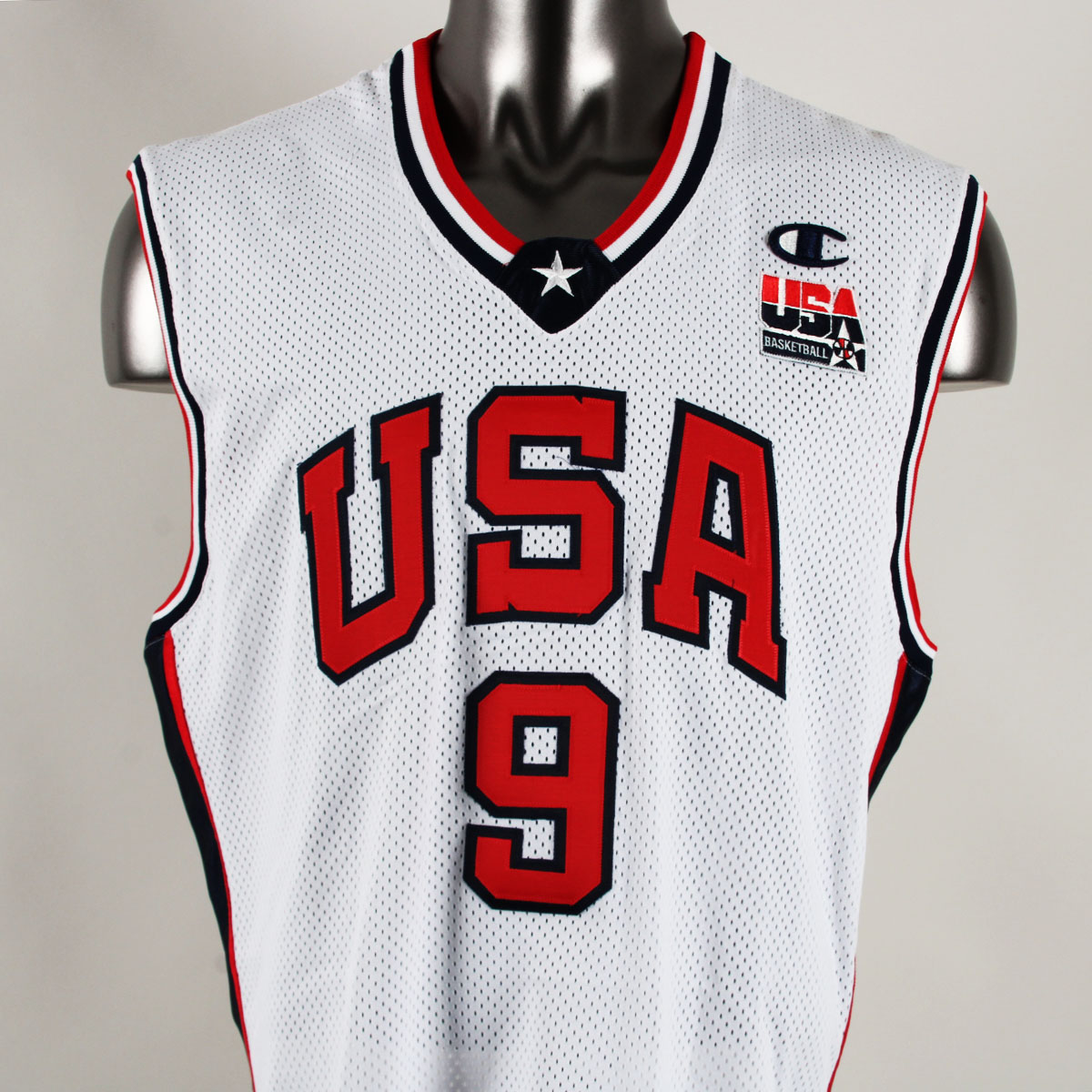
While several iterations of the "Dream Team" followed the 1992 original, the 2000 Men’s Basketball team is often remembered for its combination of overwhelming athleticism and the first signs of the narrowing gap between American professionals and international competition.
Coached by Rudy Tomjanovich, the roster featured stars such as Kevin Garnett, Ray Allen, Jason Kidd, and Vince Carter. The team ultimately secured the gold medal, but the path was far from easy. The semifinal against Lithuania was a narrow 85-83 victory, a game that served as a precursor to the 2004 struggles.
The "Dunk of Death"
Perhaps the most iconic moment of the 2000 Games occurred during the preliminary round against France. Vince Carter, in a display of unprecedented verticality, jumped completely over 7-foot-2 French center Frédéric Weis to deliver a monstrous slam dunk. Known in France as le dunk de la mort ("the dunk of death"), it remains one of the most famous highlights in basketball history.
The Women’s Basketball Team
The U.S. Women’s team, led by Lisa Leslie, Sheryl Swoopes, and Dawn Staley, was equally dominant. They finished the tournament undefeated, defeating Australia 76–54 in the final to claim the gold. This victory cemented a dynasty that would continue to rule international women's basketball for decades.
Track and Field: Triumph and Retrospective Controversy
Athletics (Track and Field) provided many of the highest highs and, later, the most significant lows for Team USA in 2000.
Maurice Greene and the Sprint Double
Maurice Greene entered Sydney as the world record holder in the 100-meter dash. He fulfilled expectations by winning the gold medal in the 100m with a time of 9.87 seconds. He also anchored the 4x100-meter relay team to gold, solidifying his status as the fastest man in the world at the turn of the millennium.
The Marion Jones Legacy
At the time of the 2000 Games, Marion Jones was the face of the Olympics. She attempted to win five gold medals and came remarkably close, finishing with three golds (100m, 200m, 4x400m relay) and two bronzes (Long Jump, 4x100m relay). However, in 2007, following the BALCO scandal investigation, Jones admitted to using performance-enhancing drugs. All five of her medals were subsequently stripped by the International Olympic Committee (IOC).
This retrospective change significantly altered the 2000 Team USA overview. From a 2026 perspective, historians view the 2000 athletics performance through a dual lens: one of incredible physical performance and one of a systemic failure in anti-doping protocols that were only just beginning to catch up with sophisticated chemical assistance.
Swimming: The Debut of Michael Phelps
The Sydney Aquatic Centre was the site of a major generational shift. While veterans like Lenny Krayzelburg (who won three gold medals in the backstroke events) dominated, all eyes were on a 15-year-old from Baltimore named Michael Phelps.
Phelps competed in the 200-meter butterfly, finishing fifth. While he did not medal in 2000, his performance was the youngest a male swimmer had been on the U.S. Olympic team in 68 years. His experience in Sydney is widely credited as the catalyst for his subsequent 23 gold medals over the following four Olympic cycles.
The 4x100m Freestyle Relay
One of the most heated moments in swimming history occurred during the 4x100m freestyle relay. The American team, which had never lost this event in Olympic history, was taunted by the Australian team, particularly Ian Thorpe and Michael Klim. The Australians suggested they would "smash the Americans like guitars." Australia won the race in a world-record time, and the sight of Thorpe playing "air guitar" on the pool deck became a symbol of the fierce but respectful rivalry between the two swimming superpowers.
Detailed Medal Breakdown by Sport
To understand the breadth of Team USA's success, it is necessary to examine the sports where the delegation focused its medal-winning efforts. The following table illustrates the distribution of medals across the most successful U.S. disciplines in Sydney.
| Sport | Gold | Silver | Bronze | Total |
|---|---|---|---|---|
| Athletics (Track & Field) | 7 | 4 | 5 | 16 |
| Swimming | 14 | 8 | 11 | 33 |
| Basketball | 2 | 0 | 0 | 2 |
| Tennis | 2 | 0 | 1 | 3 |
| Wrestling | 2 | 2 | 3 | 7 |
| Shooting | 1 | 1 | 1 | 3 |
| Soccer | 0 | 1 | 0 | 1 |
| Cycling | 1 | 1 | 0 | 2 |
| Beach Volleyball | 1 | 0 | 0 | 1 |
Note: Totals reflect official IOC records after disqualifications were finalized.
Tennis and the Rise of the Williams Sisters
The 2000 Games served as a major platform for Venus and Serena Williams. Venus Williams won the gold medal in the women's singles, defeating Elena Dementieva. She then teamed up with her sister Serena to win the gold in women's doubles. This performance was a harbinger of the "Williams Era" that would dominate the WTA for the next twenty years.
The success in tennis highlighted a broader trend in the 2000 games: the extreme competitiveness of American professional athletes in traditionally "amateur" Olympic settings. The integration of high-earning professionals into the Olympic movement was fully realized in Sydney.
Gymnastics: The Vault Controversy and the Bronze Medal
The U.S. Women’s Gymnastics team initially left Sydney without a medal, finishing fourth. However, the competition was marred by a significant technical error where the vaulting horse was set 5 centimeters too low for half of the competition, causing several athletes to crash.
More significantly, the Chinese team, which originally won the bronze medal, was later found to have used an underage athlete (Dong Fangxiao). In 2010, the IOC officially stripped China of the bronze and awarded it to the United States team, which included Amy Chow, Dominique Dawes, and Shannon Miller. This delayed recognition meant that the "Magnificent Seven" era of U.S. gymnastics technically ended with a podium finish, even if the athletes didn't receive their medals until a decade later.
Rulon Gardner and the "Miracle on the Mat"
One of the greatest individual upsets in Olympic history occurred in the Greco-Roman wrestling heavyweight final. American Rulon Gardner faced the legendary Aleksandr Karelin of Russia. Karelin had not lost a match in 13 years and had not even surrendered a point in six years.
In a display of grit and defensive mastery, Gardner won the match 1–0. The image of the humble farm boy from Wyoming defeating the "Russian Bear" became one of the defining narratives of the 2000 Team USA performance, earning Gardner the honor of carrying the U.S. flag during the closing ceremonies.
Soccer and Softball: Team Sport Excellence
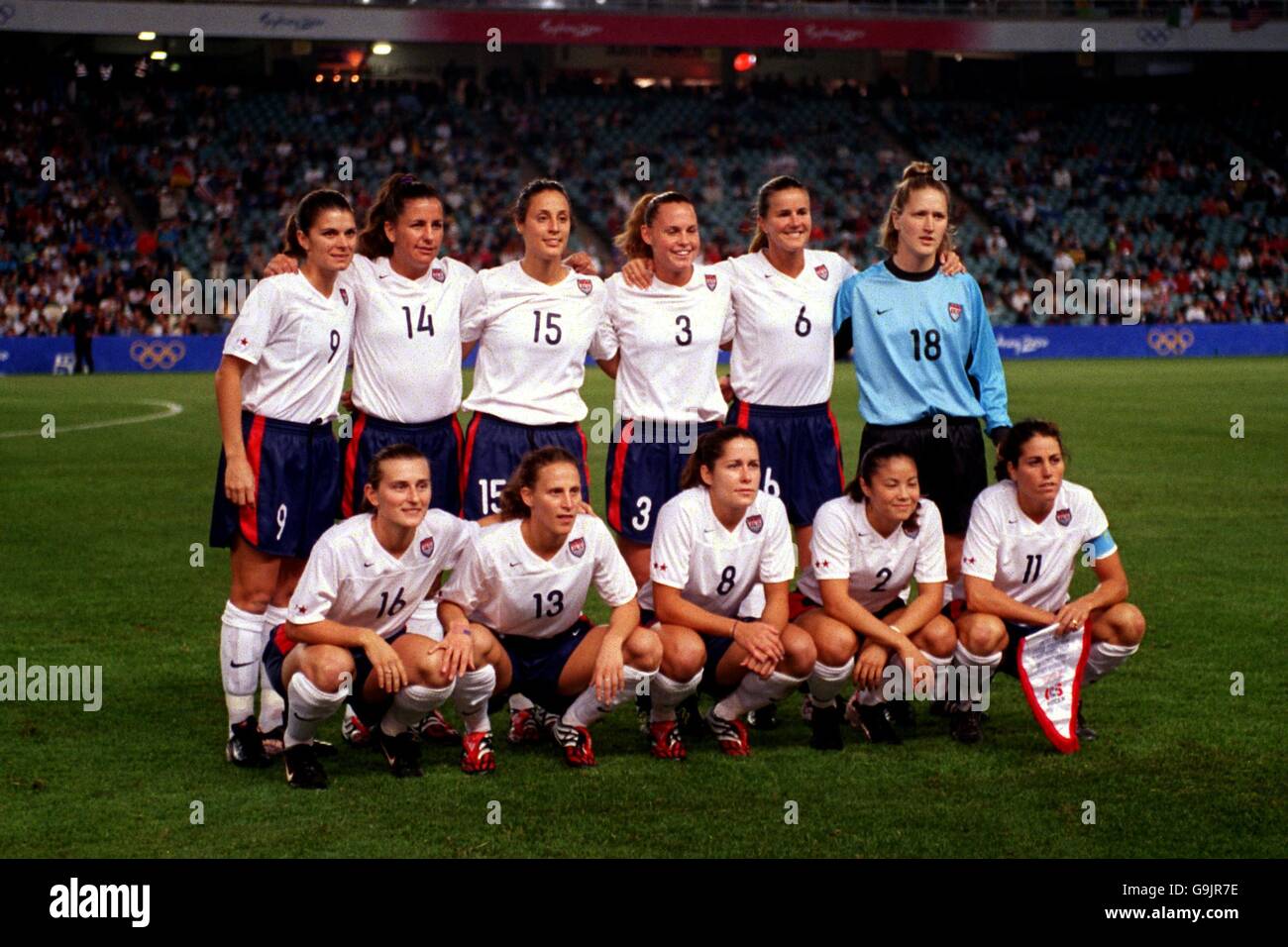
The U.S. Women’s National Soccer Team (USWNT), fresh off their 1999 World Cup victory, entered Sydney as favorites. However, they were defeated by Norway 3–2 in a thrilling "Golden Goal" final, taking home the silver.
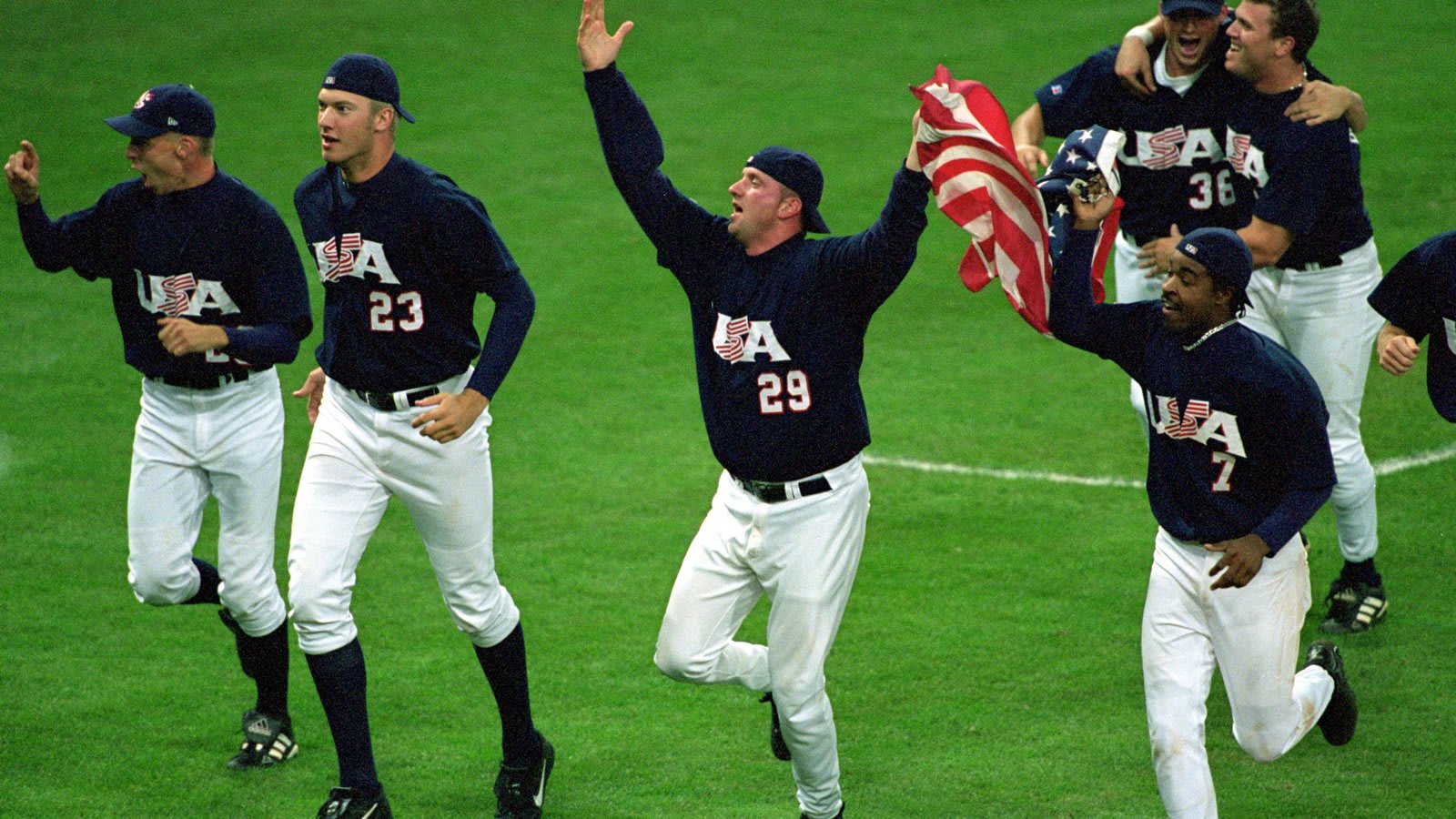
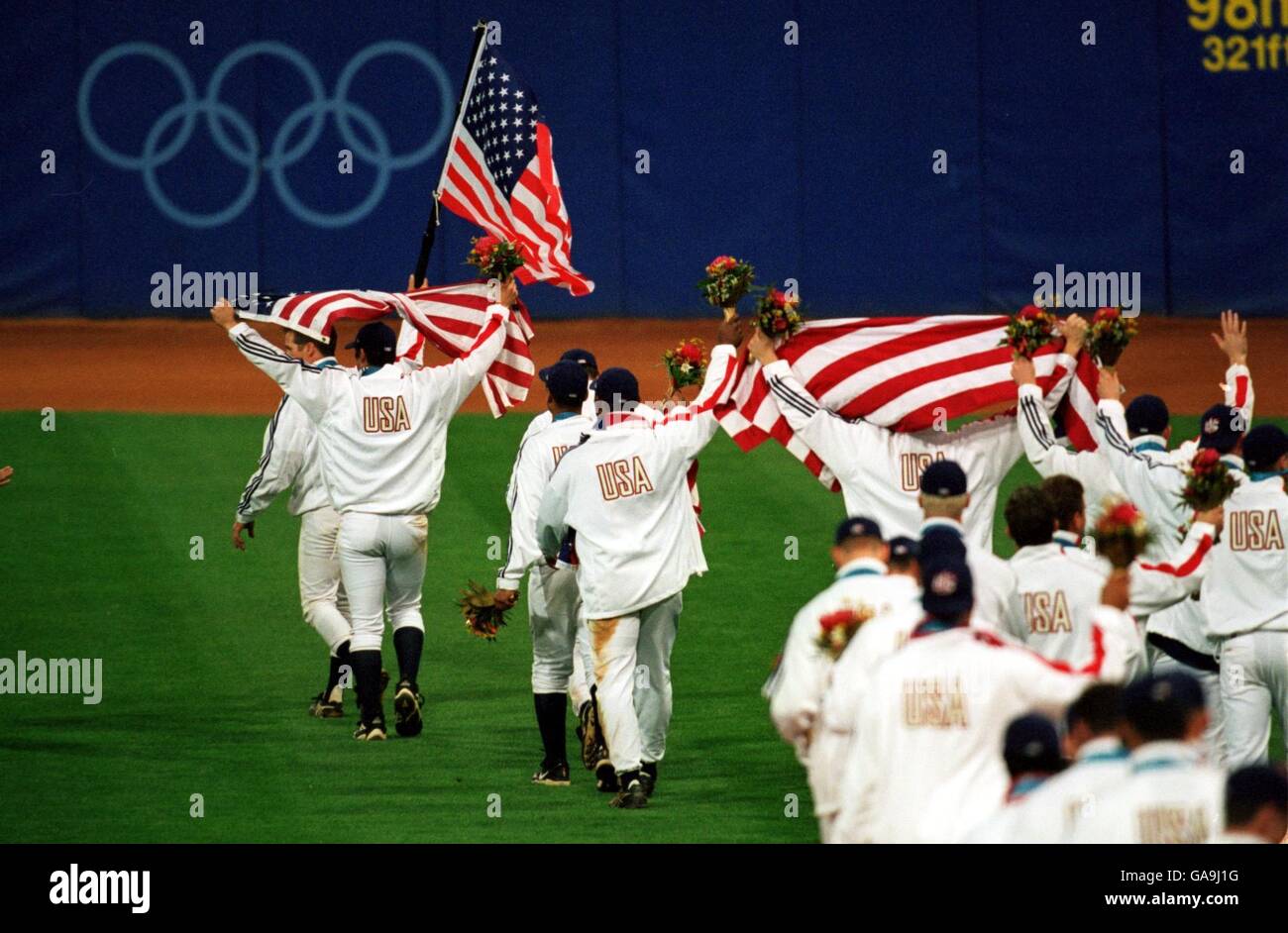
In Softball, the U.S. team continued its absolute reign. Despite a few scares in the round-robin phase, the Americans defeated Japan in the final to win the gold medal. At the time, the U.S. softball program was considered perhaps the most dominant single-sport program in the world, having won 112 consecutive games leading up to the Olympics.
Operational and Economic Impact of the 2000 Games
For the United States, the 2000 Games were a massive television event. NBC held the broadcasting rights and utilized a tape-delay format due to the 15-hour time difference between Sydney and the U.S. East Coast. Despite the delays, the ratings were strong, proving that the American public had a deep appetite for Olympic content even in the early digital age.
The economic support for Team USA in 2000 came largely from private sponsorships and the USOC's fundraising, as the U.S. government does not provide direct funding for its Olympic teams. This model allowed for the development of high-performance centers that began to yield significant results in sports where the U.S. had previously struggled, such as water polo and fencing.
Frequently Asked Questions
Who won the most medals for Team USA in 2000?
Following the disqualification of Marion Jones, the leading medalists for the U.S. were swimmers. Dara Torres won five medals (two gold, three bronze), while Jenny Thompson and Lenny Krayzelburg also had multi-medal performances. Torres’ performance was particularly notable as she was 33 years old, making a historic comeback to the pool.
How did the 2000 basketball team compare to the 1992 Dream Team?
While the 2000 team won gold, they were not as dominant as the 1992 team. The 1992 team won its games by an average of 44 points and never called a timeout. The 2000 team struggled in the semifinals against Lithuania, winning by only two points. This indicated that the rest of the world was rapidly improving in basketball.
Did Michael Phelps win any medals in Sydney?
No, Michael Phelps did not win any medals in the 2000 Sydney Olympics. He competed in only one event, the 200-meter butterfly, and finished in fifth place. However, he was the youngest male to make the U.S. swim team in nearly 70 years, and his performance set the stage for his record-breaking career.
Why were Marion Jones' medals taken away?
Marion Jones' medals were stripped in 2007 after she admitted to using "the clear," a designer steroid provided by the BALCO laboratory. She also admitted to lying to federal investigators. This resulted in her returning all five medals won in Sydney and serving a prison sentence for perjury.
What was the final medal count for the U.S. in Sydney?
The final official count for the United States was 93 medals: 37 gold, 24 silver, and 32 bronze. This placed the U.S. first in the overall medal table, ahead of Russia (88 total) and China (58 total).
Final Recommendation for Researchers
For those looking to explore the 2000 Team USA overview in greater detail, it is recommended to consult the official IOC historical archives and the United States Olympic & Paralympic Museum. Understanding the Sydney Games requires looking beyond the initial box scores to the long-term impact on athlete training and the evolution of anti-doping regulations. As we observe these events from 2026, the 2000 Sydney Games stand as a bridge between the analog Olympic past and the highly technical, professionalized era of modern international sport.