Local independent car insurance agents are generally worth it for drivers who value personalized risk assessment, ongoing claims advocacy, and the convenience of having a single point of contact who can shop multiple carriers. While digital-first insurance models offer speed and lower overhead, independent agents provide a layer of professional advisory services that can prevent coverage gaps and simplify complex insurance renewals.
Understanding the Independent Insurance Agent Model
To determine whether an independent agent is the right choice for your financial situation, it is necessary to first understand the distinction between the two primary distribution channels in the insurance industry: captive agents and independent agents.
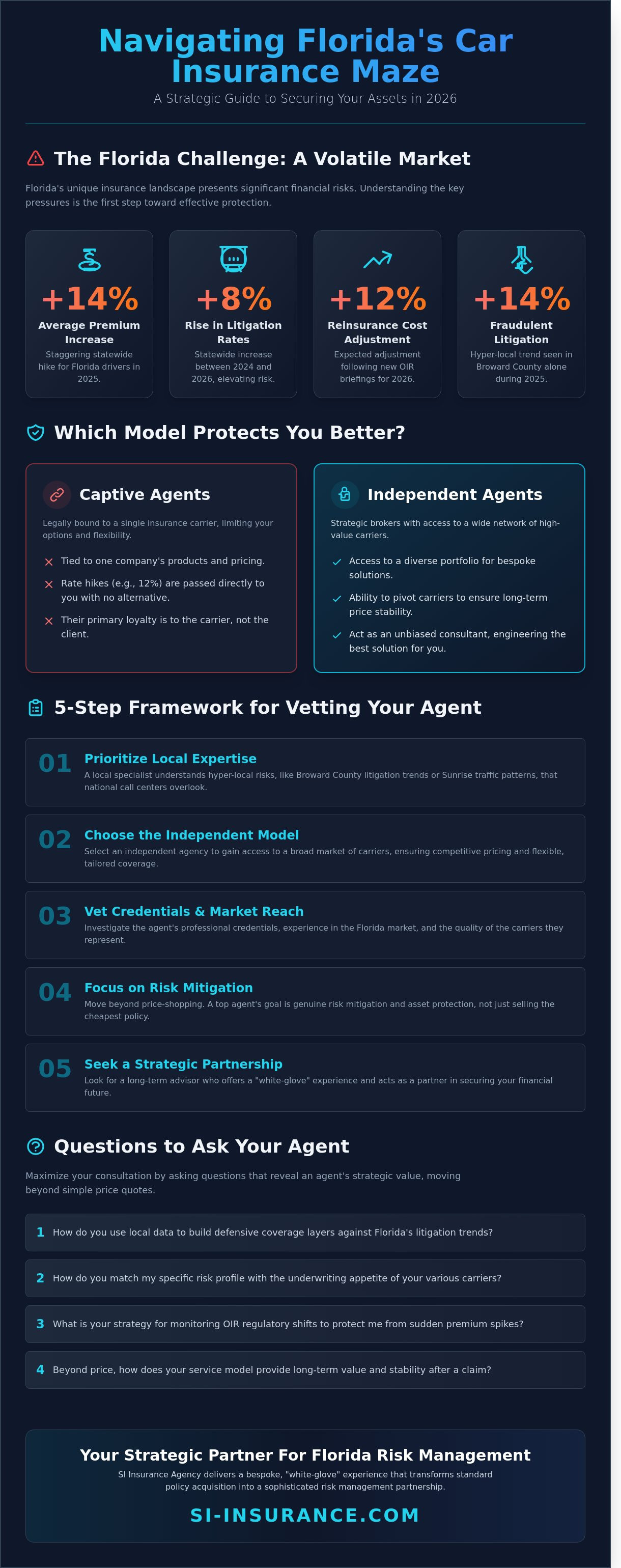
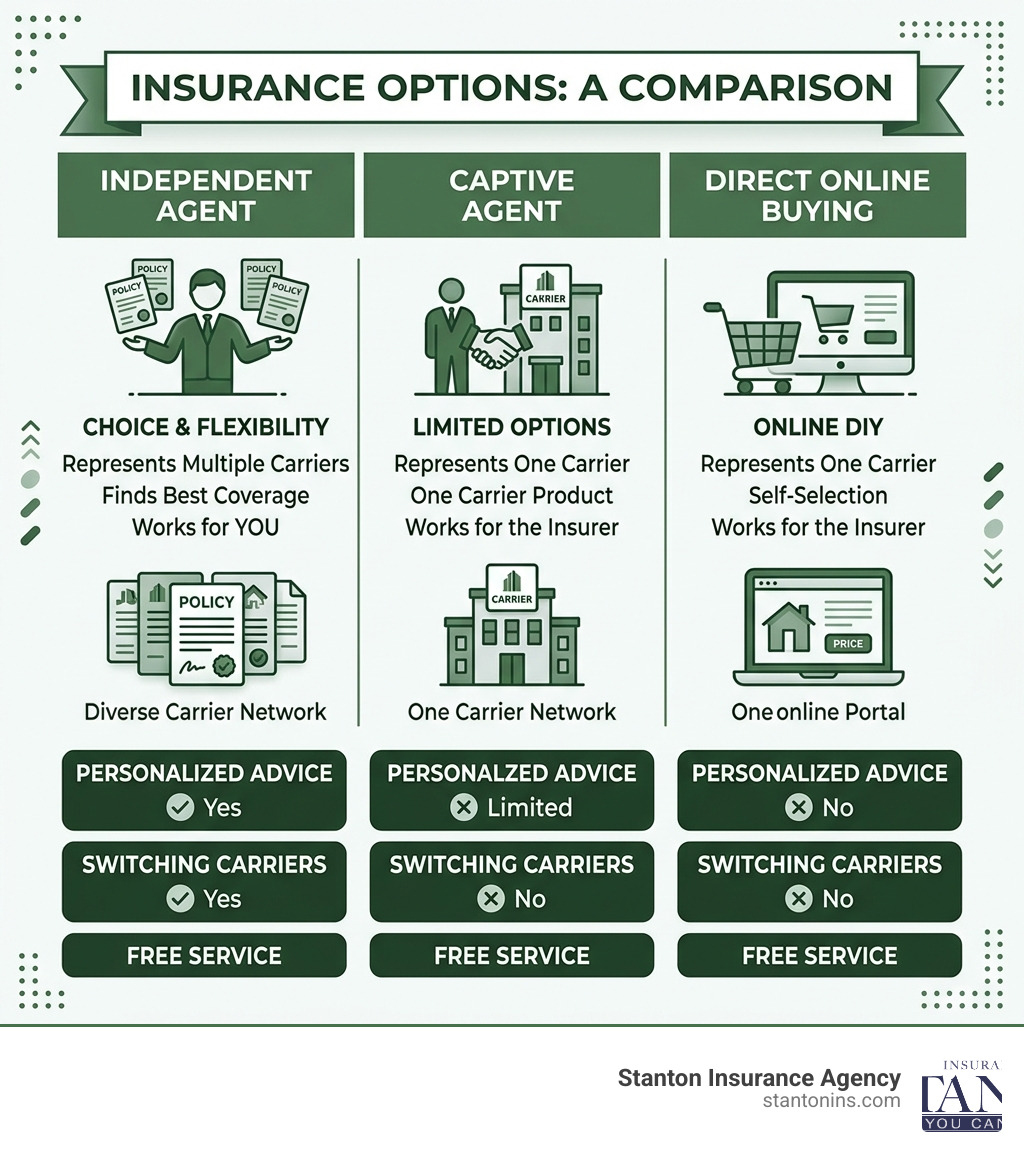
Captive agents are employed by or contracted exclusively with a single insurance company. When you approach a captive agent, their mandate is to sell you the products of that specific carrier. They are experts in that brand’s internal systems, discounts, and underwriting guidelines, but they lack the ability to provide an objective comparison across the broader market.
Independent agents, by contrast, act as brokers. They hold appointments with multiple insurance carriers. This allows them to function as an intermediary, pulling quotes from various companies to find a policy that aligns with your specific vehicle, driving history, and financial risk tolerance. In 2026, as the insurance market faces increasing volatility due to climate-related risk and rising vehicle repair costs, the ability of an independent agent to shift your policy to a different carrier when premiums spike at your current provider has become a significant strategic advantage.
The Tangible Benefits of Working with a Local Professional
The "worth" of an independent agent is not measured solely by the premium price, though competitive pricing is a common goal. The value is often found in the non-monetary aspects of policy management and advocacy.
1. Expert Risk Analysis
Many consumers purchase car insurance based on state-mandated minimums without considering their personal asset protection needs. An independent agent conducts a needs assessment. They will ask questions about your household assets, your commute, and your risk tolerance. If you have significant savings or a high net worth, they may suggest higher liability limits or umbrella policies that a simple online checkout process might not emphasize.
2. Advocacy During the Claims Process
The true utility of an insurance policy is tested during a claim. When you work with a direct-to-consumer digital insurer, you are often routed through an automated triage system. An independent agent serves as your advocate. If a claim is denied, delayed, or handled improperly, your agent can intervene with the carrier to resolve disputes. Because the carrier values their relationship with the agency, the agent has more leverage to push for a fair resolution than an individual policyholder might.
3. Continuous Market Comparison
Insurance premiums are dynamic and fluctuate based on proprietary algorithms that change quarterly. An independent agent monitors these changes. If your current carrier raises rates significantly due to a regional adjustment, an independent agent can proactively remarket your policy to their other carriers. This saves you the time and cognitive load of manually researching and reapplying for insurance every year.
Financial and Operational Considerations: Are There Hidden Costs?
A common misconception is that using an independent agent makes your insurance more expensive because you are paying a "middleman" fee. In reality, the commission structure for independent agents is already baked into the premiums offered by insurance carriers. Whether you buy directly from the carrier’s website or through an agent, the base premium remains largely the same.
However, there are two distinct financial realities to acknowledge:
- The "Service Fee" Reality: While rare for personal auto policies, some agencies may charge a "broker fee" or "policy fee" for their administrative time. These fees must be disclosed upfront. If an agency charges a high fee, compare that against the potential savings they find for you.
- Lack of Direct-Access Discounts: Occasionally, a massive direct-to-consumer insurer may offer a minor discount for purchasing directly through their portal. You must weigh the value of that minor discount against the value of having a professional manage your policy.
Comparison: Independent Agents vs. Direct-to-Consumer Digital Platforms
| Feature | Local Independent Agent | Direct-to-Consumer (Online) |
|---|---|---|
| Pricing | Multiple carrier options available | Locked into one carrier's pricing |
| Accountability | Professional liability and relationship-based | Transactional, algorithm-based |
| Ease of Use | High (personal contact) | High (self-service speed) |
| Claims Support | Active advocacy and mediation | Self-service reporting and automated updates |
| Coverage Tailoring | High (customizable) | Low (limited to standardized tiers) |
When Are Independent Agents Not Necessary?
While the benefits are significant, there are specific scenarios where an independent agent may not provide additional value. If your driving record is spotless, you own a standard vehicle with a low replacement value, and you have no complex asset protection needs, you may be comfortable managing your own policy.
For consumers who are highly tech-savvy and prefer to avoid human interaction, the digital-first approach is efficient. If you choose to manage your own policy, you must commit to being your own risk manager. This means reading the fine print of every policy renewal, understanding how liability limits impact your personal wealth, and taking the initiative to shop for new quotes every 12 to 24 months to ensure your premium remains competitive.
Common Pitfalls and How to Avoid Them
If you decide to engage a local agent, your success depends on the quality of that partnership. Avoid these common mistakes:
- Choosing the First Agent You See: Interview at least two agencies. Ask which carriers they represent. If an agency only represents one or two carriers, they are functionally similar to a captive agent and will not provide the market breadth you need.
- Withholding Information: To provide accurate advice, an agent needs the truth about your driving history, vehicle modifications, and household members. If you hide information, the agent cannot protect you, and the carrier may deny a claim due to material misrepresentation.
- Ignoring the Agency’s Tech Stack: Even if the agent is "local," they should provide modern conveniences. Can you sign documents electronically? Do they have a mobile app or a secure portal? A local agent should combine the best of personal service with modern digital accessibility.
- Focusing Only on Price: A policy that is $50 cheaper but provides inadequate liability coverage is not a good deal. Focus on the value of the protection, not just the premium dollar amount.
How to Select a Reliable Agent in 2026
When searching for a local agent in your area, prioritize those who have established themselves in your community. You can look for certifications such as the Certified Insurance Counselor (CIC) or Chartered Property Casualty Underwriter (CPCU). These designations indicate that the agent has undergone rigorous, ongoing professional education.
Contact the local Better Business Bureau or check state insurance commissioner websites to verify that the agency is licensed and in good standing. During your first conversation, assess their communication style. Do they focus on selling a specific brand, or do they ask questions about your lifestyle and financial goals? A good agent acts as a consultant; a bad agent acts as a salesperson.
Frequently Asked Questions
Does an independent agent have access to every car insurance company? No. An independent agent can only provide quotes from the carriers they have a signed contract with. When you speak to an agent, ask them how many carriers they represent and confirm that they work with some of the larger, nationally recognized insurers as well as niche carriers.
Will an independent agent automatically switch my insurance if my rate goes up? Not necessarily. While a proactive agent will monitor market trends, you should still touch base with them annually or before your policy renewal. Ask them, "Are there better options available for my profile given the current market?"
Can an agent help me if I have a poor driving record? Yes, and this is often where they are most valuable. An independent agent can identify "non-standard" insurance carriers that specialize in high-risk drivers. Finding this coverage on your own through a standard digital platform can be difficult and time-consuming.
What happens to my policy if my local agent retires? Reputable agencies have succession plans. Your policy remains with the carrier, and the agency will transfer your account to another qualified agent within their firm. Always ask about the agency’s long-term structure if you are concerned about consistency.
Is it cheaper to use a digital-only insurer? Not always. Digital-only insurers often spend significantly on marketing and technology, which is reflected in their expense ratios. Independent agents work on a commission model that is often highly competitive. You should compare quotes from both channels to verify which is more cost-effective for your specific profile.
Final Recommendation
The decision to use a local independent insurance agent hinges on whether you value a professional advocate over a self-service experience. If you are comfortable interpreting complex insurance contracts, monitoring your own renewals, and managing claims paperwork, you can likely handle your auto insurance independently.
However, for most families and individuals, the complexity of 2026 insurance market conditions makes the independent agent a superior choice. They provide a vital buffer against the impersonal nature of digital insurance, ensuring that you are not just a policy number in a database, but a client with specific coverage needs. Start by identifying two or three local agencies with strong professional credentials and schedule a consultation to review your current coverage. This initial investment of time often yields long-term financial security and peace of mind.