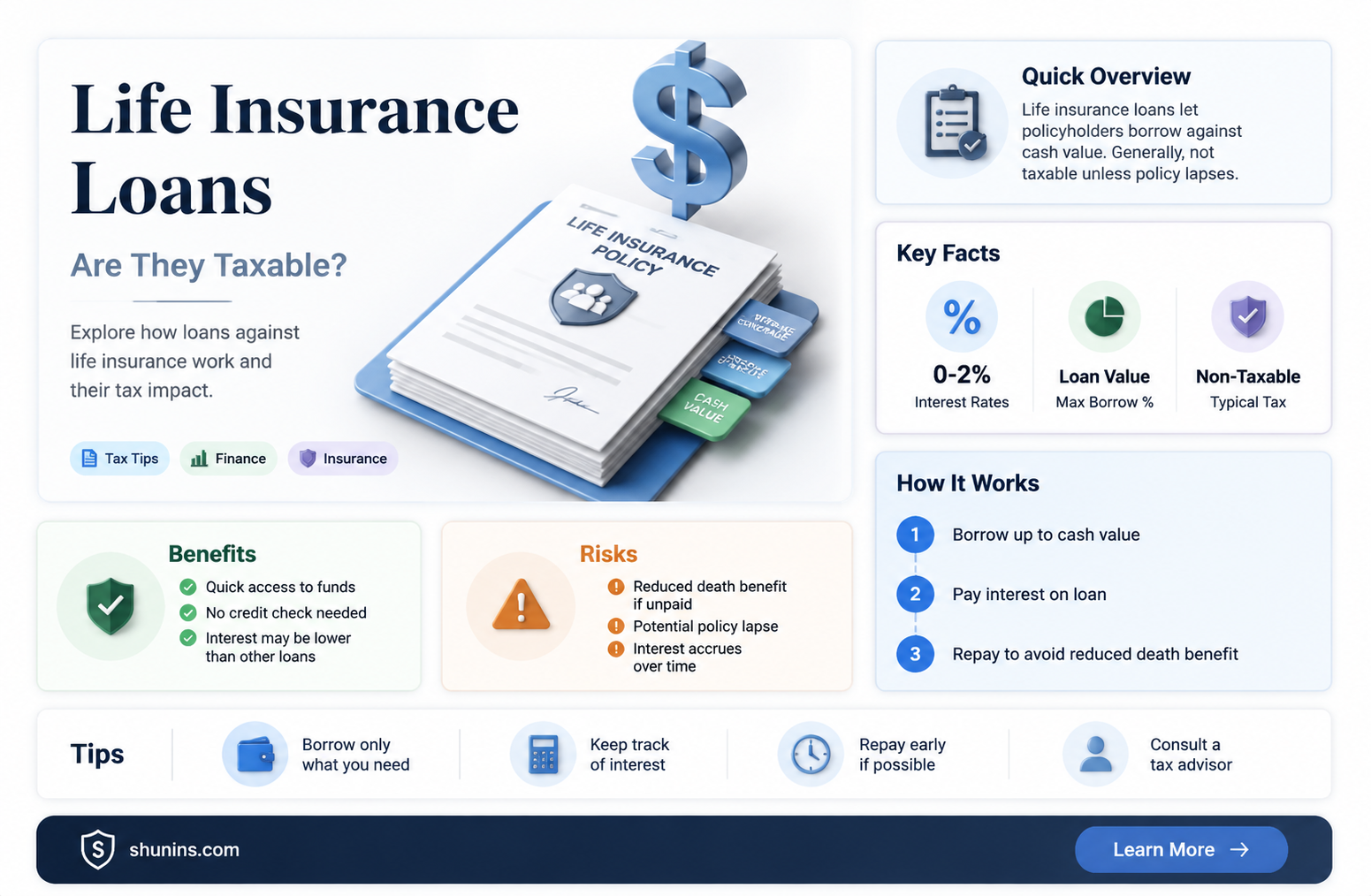
Generally, taking a loan from the cash value of a permanent life insurance policy is not considered a taxable event. Because the money you receive is treated as debt rather than income, the Internal Revenue Service (IRS) does not require you to report it as taxable earnings, provided the policy remains in force and is not classified as a Modified Endowment Contract (MEC).
Understanding the Mechanics of Life Insurance Loans
When you hold a permanent life insurance policy—such as Whole Life, Universal Life, or Variable Life—a portion of your premium payments is directed into a cash value account. This account grows over time, often based on a fixed interest rate, dividends, or market performance, depending on the policy type. This cash value represents an asset that you can access while the policy is active.
A policy loan allows you to borrow against that accumulated cash value. When you initiate this process, the insurance company does not actually "withdraw" the money from your account in the sense of closing out an investment. Instead, they provide you with funds using your cash value as collateral. Because this transaction is technically a loan—a financial agreement where you are expected to pay back the principal plus interest—it does not constitute "income" under current U.S. tax law.
The Critical Distinction: Basis vs. Earnings
To understand why these loans are typically tax-free, it is helpful to look at the concept of your "cost basis." Your basis is the total amount of premiums you have paid into the policy.
Under the "first-in, first-out" (FIFO) accounting rules often applied to life insurance, the money you withdraw or borrow is generally viewed as coming from your basis first. Even if you were to withdraw the money rather than borrow it, you are simply reclaiming your own after-tax contributions. Since you have already paid income tax on the money used to pay those premiums, the government does not tax you again when you access that principal.
The Role of Modified Endowment Contracts (MECs)
The most significant risk to the tax-free status of a life insurance loan is the status of the policy as a Modified Endowment Contract (MEC). The Technical and Miscellaneous Revenue Act of 1988 (TAMRA) introduced the MEC designation to prevent life insurance from being used primarily as a tax-sheltered investment vehicle.
If a policy is funded too quickly—specifically, if the premiums paid in the first seven years exceed the "seven-pay test" limits set by the IRS—it is classified as a MEC. If your policy is a MEC:
- LIFO Accounting: Withdrawals and loans are treated as "Last-In, First-Out" (LIFO). This means the IRS assumes you are withdrawing the interest or gains first, which are fully taxable.
- Taxable Income: Any distribution, including loans, may be subject to income tax.
- Penalty Taxes: If you are under the age of 59½, you may also face a 10% penalty on the taxable portion of the distribution, similar to early withdrawals from an IRA or 401(k).
Before taking a loan, you should confirm with your insurer or a tax professional whether your policy has MEC status. Most standard policies are designed to avoid this, but if you make large, irregular "dump-in" payments, you risk triggering this classification.
Risks of Policy Loans: The "Lapse" Scenario
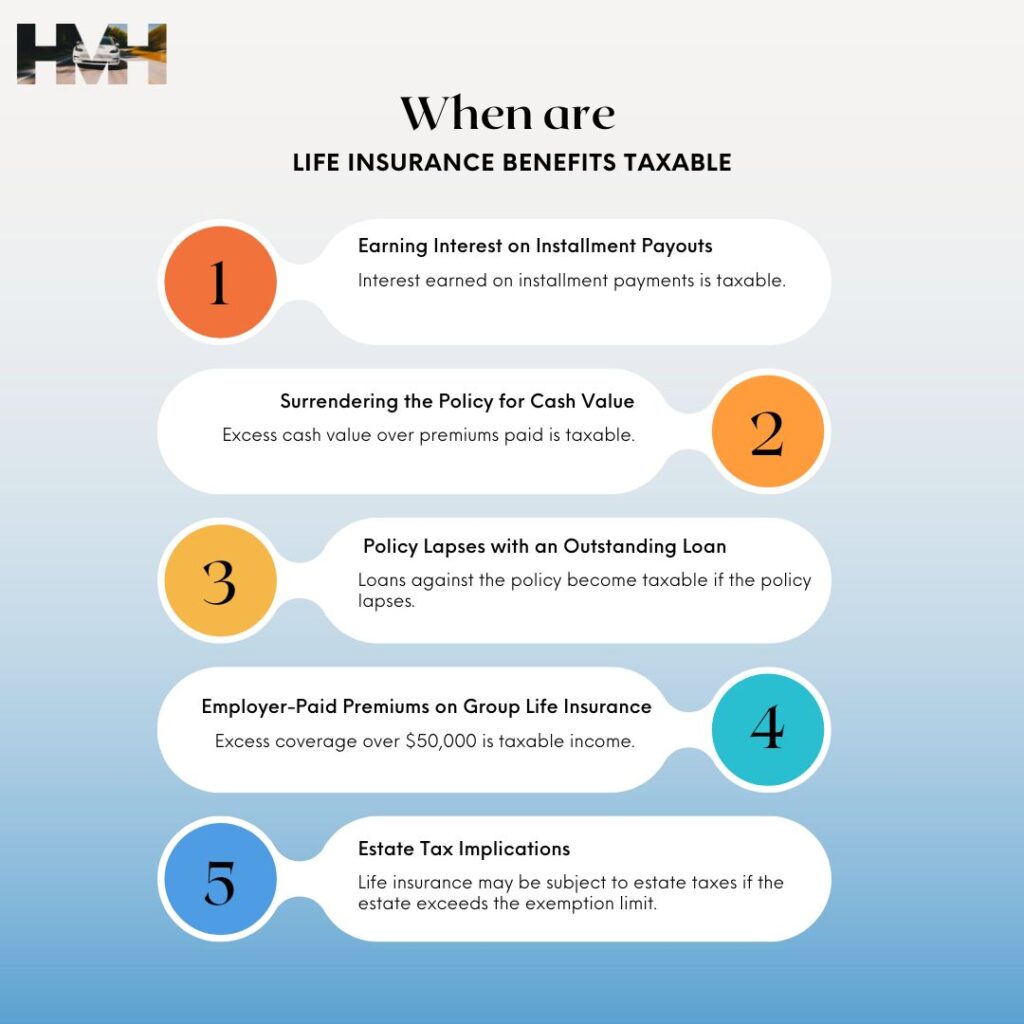
While a loan is not taxable while the policy is active, the tax situation changes drastically if the policy lapses. If you take out a loan and the policy terminates—either because you stop paying premiums, the policy is surrendered, or the loan balance exceeds the remaining cash value—the IRS views the situation as a "deemed distribution."
At the moment of lapse, the unpaid loan balance becomes taxable income to the extent that it exceeds your total basis in the policy. If you have borrowed a large amount and the policy is underwater, you could face a significant, unexpected tax bill. This is often referred to as "phantom income" because you may have spent the loan money years ago, yet you are now faced with a tax liability without the policy’s death benefit to offset the cost.
Comparing Financing Options
When considering a life insurance loan versus other forms of debt, it is essential to weigh the tax implications against the costs and risks.
| Feature | Life Insurance Loan | Personal Bank Loan | 401(k) Loan |
|---|---|---|---|
| Tax Impact | Generally tax-free | None | Generally tax-free |
| Credit Check | No | Yes | No |
| Repayment | Flexible | Fixed | Payroll deduction |
| Impact on Asset | Reduces death benefit | None | Reduces market growth |
| Interest Type | Paid to insurer | Paid to lender | Paid to your own account |
Managing Repayment and Interest
When you take a loan from your life insurance, the insurer charges interest. Unlike a bank loan, you are usually not required to make monthly payments to pay back the principal. However, if you do not pay the interest, the insurance company will add it to the loan balance.
If your loan balance grows to the point where it exceeds the cash value of the policy, the policy will lapse. This is a common pitfall. To keep the policy in force, you should monitor the loan-to-value ratio. Many policyholders choose to pay the interest annually to prevent the loan balance from eroding the underlying cash value and the eventual death benefit.
Practical Steps for Policyholders
If you are considering a loan against your life insurance, follow these steps to ensure you remain within favorable tax parameters:
- Request a "Loan Illustration": Contact your insurance carrier and request a projection of how a specific loan amount will affect your policy's cash value and death benefit over the next decade.
- Verify Policy Status: Specifically ask if your policy is a MEC. If it is, reconsider the loan or consult a tax professional about the immediate tax consequences.
- Plan for Repayment: Even if the insurer does not mandate a payment schedule, develop a plan to pay back the loan or at least the interest. This protects your death benefit and ensures your beneficiaries receive the intended payout.
- Monitor the Policy: Never treat a life insurance loan as "free money." It is an advance on your death benefit. If you drain the account, you risk leaving your family without the coverage you initially purchased.
- Consult a Professional: Because individual tax situations vary, speak with a CPA or a certified financial planner. They can help you determine if a policy loan is the most tax-efficient way to access liquidity compared to other assets.
Frequently Asked Questions
Does the IRS know about my life insurance loan? Yes. While you do not need to report the loan as income on your tax return, insurance companies are required to report certain policy transactions to the IRS, particularly if the policy is a MEC or if the policy is surrendered.
What happens to my death benefit if I have an outstanding loan? If you pass away with an outstanding loan balance, the insurance company will subtract the loan amount (plus any accrued interest) from the death benefit paid to your beneficiaries. The net amount received by your beneficiaries will be reduced accordingly.
Can I take a loan from a term life insurance policy? No. Term life insurance provides coverage for a specific period and does not accumulate cash value. Since there is no cash value, there is no asset to borrow against. Loans are exclusive to permanent products like Whole, Universal, and Variable Life.
Are there any state-level taxes on these loans? Generally, states follow federal tax treatment regarding life insurance loans. However, it is prudent to check with your state’s department of revenue if you live in a jurisdiction with complex or unique tax laws regarding insurance products.
Is there a minimum amount I must borrow? Most insurers set a minimum loan amount (often $500 or $1,000) to cover administrative costs, but this varies by carrier and policy contract. Check your policy document for specific requirements regarding loan requests.
Final Recommendation
Taking a loan from your life insurance policy can be an effective way to access liquidity without triggering an immediate tax event, but it carries significant long-term risks to your coverage. Before proceeding, verify that your policy is not a MEC and ensure you have a clear plan for repayment to avoid a policy lapse. Treating the loan as a serious financial obligation—rather than an inheritance advance—will help you maintain your financial safety net while meeting your immediate cash needs. Always review your annual policy statement to track the loan balance and its impact on your total death benefit.